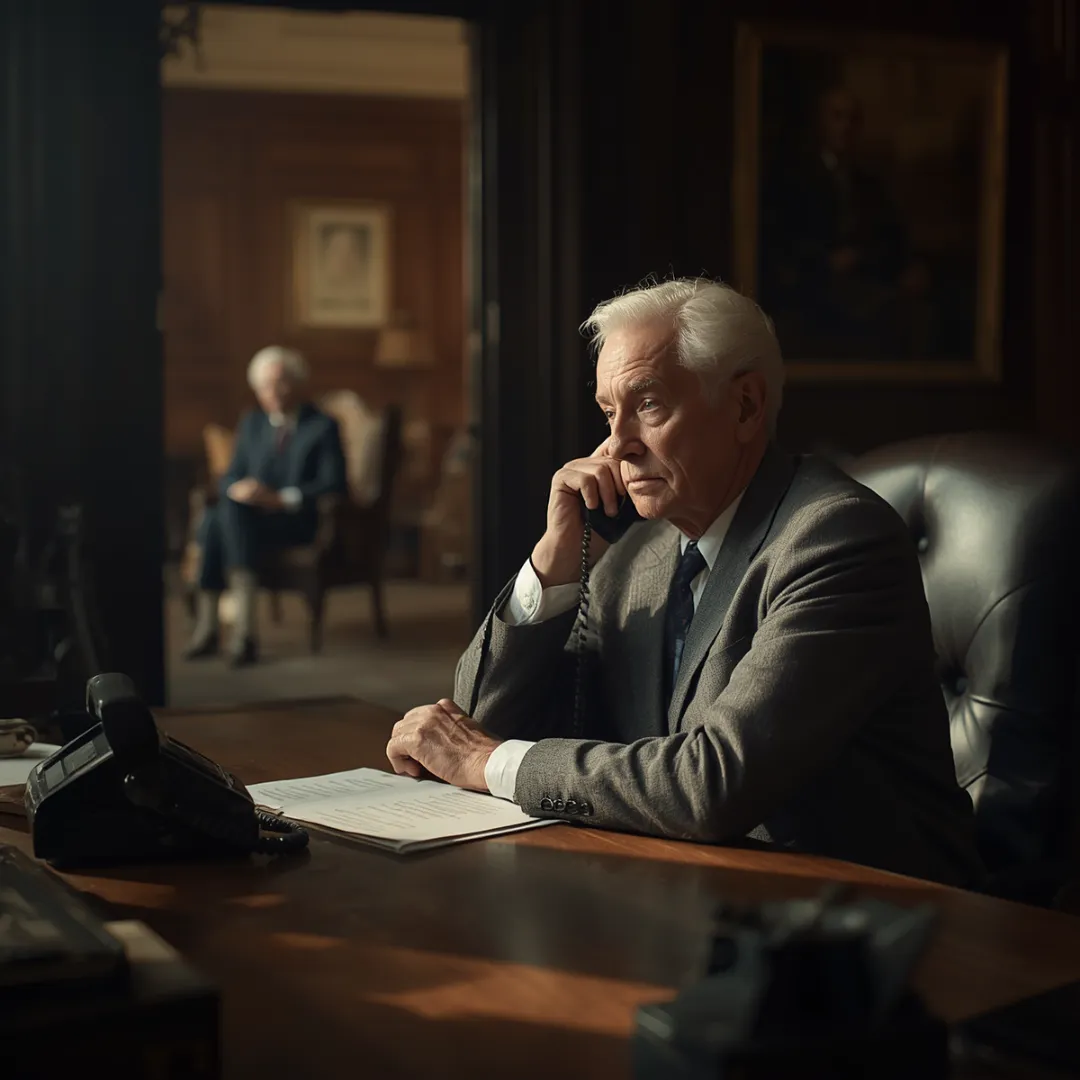
Old but not an elder
About this Video:
I’ve spent most of my life thinking about mentors, but lately I’ve been thinking about something different: what does it actually mean to become an elder?
At seventy-three, I want something I’m a little embarrassed to admit. I want somebody to call me an elder. Not old. Old happens automatically. Elder is something someone else has to give you.
In this video, I tell the story of Shields Harvey, the man who had the biggest influence on my working life. He never once called me. I was always the one who picked up the phone. For years, I thought that meant he was simply busy. Now I wonder if he was doing something much more intentional.
I’ve also started to understand the difference between an old person who gives advice and an elder who waits until someone asks. And maybe that’s the real test of wisdom: not how much you have to say, but whether people know to call you when something important is on the line.
Transcript:
There was a man in my life for about fifteen years who never once called me.
Not once.
I always called him.
I thought that was just how busy men stayed in touch.
I was wrong.
It took me thirty-five years to see what he was actually doing.
His name was Shields Harvey.
He was about fifteen years older than me, the most influential man in my working life.
You know, I’m seventy-three, and I want something I’m embarrassed to want.
I want somebody to call me an elder.
Not old.
Old I’ve got.
Old arrives on its own.
Elder is different.
Stephen Jenkinson says it’s conferred, anointed by the world.
His phrase, “You can’t take it. Somebody has to hand it over.”
I can’t say that at a dinner table.
It sounds like a man asking to be admired.
Close enough to true that it stings.
So I ask myself the obvious question, have I ever conferred it on anybody?
And Shields came up.
Did I ever tell him what he was to me?
No.
I told him he was my mentor, and I meant it every time.
But that’s not the word.
And here’s what I didn’t expect.
I couldn’t have told him.
I didn’t have the concept.
Nobody had handed me the word.
This is the center.
Here’s the difference I finally have words for.
Old people love to tell you what to do.
Elders wait until they’re asked.
That’s the whole thing.
I’ve watched old men my entire life walking into rooms and start dispensing unprompted, constantly.
I’ve been that man.
I’m still that man some days.
An elder doesn’t volunteer.
He sits there with everything he’s got and says nothing until somebody wants it, which makes elders almost impossible to spot.
They’re quiet by design.
Now, let’s go back to Shields.
Never calling me.
He wasn’t that busy.
He was following the rule.
He had all of it, and he sat on it until I dialed, which means my phone call was the conferring.
Not a sentence, not a tile, , the dial tone.
And if that’s true, the taper wasn’t neutral.
You know, our calls got further apart.
Nothing dramatic, and that’s how it usually goes.
By his own rule, Shields couldn’t reach out.
That’s not how he worked.
He’d have waited.
And I stopped dialing.
You know, ten years ago, I went to find him and had nothing current.
No working number.
I didn’t lose him in a fight.
I lost him the way you lose a phone number.
He’d be near ninety now.
I suspect he’s gone.
Here’s where my whole complaint fell apart.
You know, I have a client.
Before any decision that could hurt him, he calls me every single time.
He called me this week.
He’s buying property, and he wanted to know if it was a responsible thing to do.
He calls me his mentor.
If he had the other word, I think he’d probably use it.
The phone ringing is the conferral.
It already happened.
It keeps happening.
I’ve been sitting at a full table complaining about the menu, and I didn’t realize I was looking at the wrong menu.
So who’s yours?
The one you call before a decision that could hurt you.
Don’t tell me their name.
Just tell me whether you ever said it.
And if you haven’t called in a while, consider that they might be waiting.
That’s what the good ones do.
Hey, the comments are open.
I read all of them.
Hey, this is Josh.
You’re on the long, strange trip with me and I’m glad you’re here, and I hope to see you next week.
