What to Say When Someone You Love Gets a Cancer Diagnosis (And Why Your Brain Suddenly Forgets How to Talk)
This piece was inspired by a wonderful article written by Annabelle Gurwitch, a writer, actress, and faculty member at Maine Media College. You can find her work at mainemedia.edu/annabelle-gurwitch. My friend Paul Downs sent it to me, and it landed at exactly the right moment. Thank you, Paul. Thank you, Annabelle.
Let me paint you a picture.
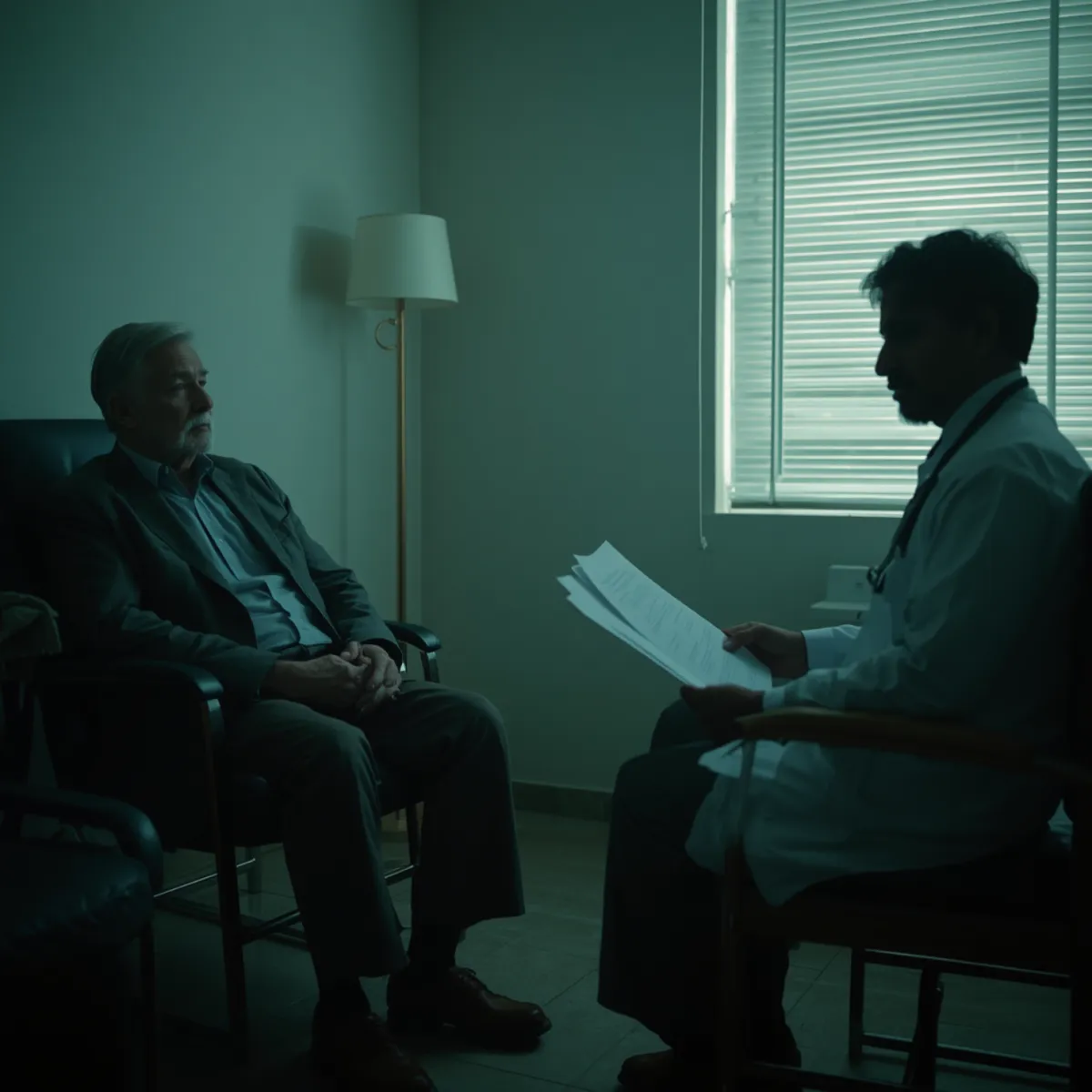
It’s eighteen years ago. I’ve just been told I have Mantle Cell Lymphoma — a particularly aggressive form of non-Hodgkin’s lymphoma that, at the time, had survival statistics that would make your stomach drop. My oncologist is using words like “stem cell transplant” and “aggressive treatment protocol” with a calm that I find simultaneously reassuring and terrifying.
I’m sitting there trying to process information that feels like it’s being delivered in a foreign language. My brain is doing that thing where it’s both hyper-alert and completely numb at the same time.
And here’s what I’m thinking — not about the cancer, not about the treatment, not about the statistics.
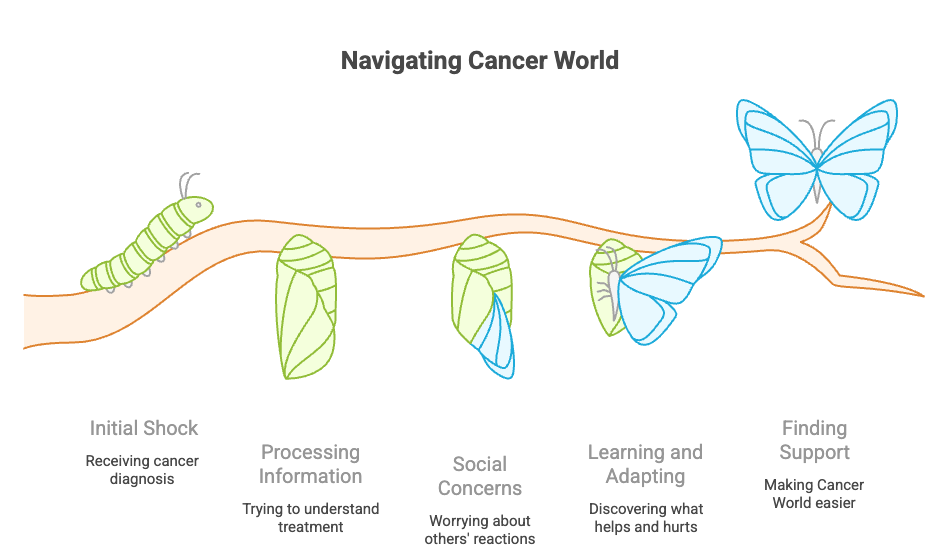
I’m thinking: What are others going to say to me?
Which tells you something about how social creatures we are, even in the middle of a crisis. Even when we’re staring down something genuinely life-threatening, part of our brain is already bracing for the awkward conversations ahead.
Seventeen years later, having been through that stem cell transplant and come out the other side — and now navigating a whole new chapter of health challenges — I’ve had a lot of time to think about this. What helps. What doesn’t? What people say that lands beautifully. What they say that makes you want to fake a phone call so you can escape the conversation.
This is what I’ve learned.
And I want to be clear about something up front. I’m not writing this from some expert position. I’m not a therapist or a grief counselor or a social worker. I’m a 73-year-old guy who’s spent a fair amount of time in Cancer World, and I’ve got some pretty strong opinions about what makes that world easier to be in — and what makes it harder.
I’m the fellow seeker here, not the authority. You’re the guide.
The Hero Nobody Auditioned For
Here’s something worth sitting with for a moment.
When someone gets a cancer diagnosis, they get handed a story they didn’t write and didn’t ask for. Overnight, they become the protagonist of a narrative full of uncertainty, fear, medical jargon, and decisions that feel impossibly high-stakes.
In my case, seventeen years ago, the treatment for Mantle Cell was brutal. We’re talking a stem cell transplant that essentially wipes out your immune system and rebuilds it from scratch. What that looks like in practice — not in the clinical language, but in actual human experience — is something I don’t think people understand unless they’ve been through it.
The mouth sores alone were something I wasn’t prepared for. Not the annoying kind you get when you bite your cheek. The kind where eating anything at all becomes impossible. Where you’re already depleted, and your body desperately needs fuel, and you simply cannot get food in because the pain is too much. You just… don’t eat. For days.
And then there were the chills. Unrelenting, bone-deep chills that no blanket could touch. The kind that shakes you from the inside and doesn’t stop.
But the thing that sat in the back of my mind through all of it — the thing that made everything else feel small by comparison — was the white blood cell count. When you go through a stem cell transplant, your immune system is essentially zeroed out. You have no white blood cells. None. Which means no ability to fight infection.
Every day was a quiet race. Would my body regenerate white blood cells before I picked up an infection that my body had no tools to fight?
I was lucky. My body came through. The white blood cells regenerated. The story continued.
But “lucky” is doing a lot of work in that sentence. And the weeks of not knowing — of lying in a hospital bed with chills that wouldn’t quit and a mouth too sore to eat and an immune system that was essentially a blank page — those weeks were some of the most disorienting of my life.
Here’s what I noticed during that time: almost nobody knew what to say. And I get it. Completely.
What Froze People (And Why)
They were afraid of saying the wrong thing. Of bringing up death when I was trying not to think about it. Of being too cheerful and seeming out of touch. Of being too somber and seeming like they were already writing my eulogy.
They were afraid of crying in front of me when they thought I needed them to be strong. They were afraid of asking questions that were too personal. They were afraid of not asking enough questions and seeming like they didn’t care.
Basically: they were afraid of the situation I was in, and what it stirred up in them.
Here’s what I wish someone had told them: the bar is lower than you think.
I wasn’t looking for eloquence. I wasn’t grading anyone on the quality of their words. I was just hoping they’d show up. That they’d stay in the room. That they’d resist the urge to make it about their discomfort and just be present with mine.
The people who got this right — and some of them got it beautifully right — weren’t the ones with the most poetic things to say. They were the ones who kept coming back.
What Actually Helps: The Short Version
Before we go deeper, here’s the quick version for those of you who have a friend in crisis right now and need something you can use today.
Short is good. Calm is good. True is good.
“I’m so sorry. I’m here. No pressure to respond.”
That’s enough for the first text.
What you don’t need: anything that starts with “at least,” “everything happens for a reason,” “you’re so strong,” or “my neighbor had that and she’s totally fine now.” Those sentences are for your comfort. And right now, this isn’t about your comfort.
And the word “battle” — let’s retire that one. When you tell someone they’re going to “fight” cancer and “beat” it, you’re setting up a framework where, if things don’t go well, they somehow failed. That’s not a framework I’d wish on anyone.
You’re not fighting cancer. You’re treating it. There’s a difference.
The Long Middle — Where Most People Disappear
Here’s where I want to spend some real time, because this is where the support system tends to break down.
The first two weeks after a diagnosis, you’re surrounded. People call, text, bring food, send cards. It’s overwhelming and genuinely moving.
And then, around week three, the world gets back to its regular programming.
Your cancer doesn’t.
The treatment I went through stretched over months. Months of hospitalizations, of isolation — when you have no immune system, you can’t be around people, which is its own particular loneliness — of fatigue that makes your body feel like it’s been filled with wet sand.
By month two, the casseroles had stopped coming.
I’m not complaining. I understand why. People have lives. They have their own problems. And in the absence of clear signals about what’s needed, most people default to backing off and “giving space.” And on top of that, when I was going through my stem cell transplant, I couldn’t eat anyway.
Here’s what I’d tell them, if I could go back: don’t give space. Give presence.
Not 24/7 — nobody needs that. But a text on a random Wednesday that says “thinking about you today, no need to respond” costs you approximately nothing. And it means everything.
The specific help matters too. There’s a real difference between “let me know if you need anything” — which sounds caring but puts the burden back on the sick person — and “I’m dropping off dinner on Tuesday, does 6pm work?”
One requires the sick person to think, plan, decide, ask, and follow up. The other just solves a problem. When you’re depleted, scared, and dealing with a treatment protocol that’s making you feel terrible, the second one is a gift. The first one is more work.
The Person Nobody’s Talking About
I want to stop here and talk about someone who almost never comes up in these conversations.
The caregiver.
In my case, seventeen years ago, that was Suzanne. My partner, my person, the one who showed up to every appointment, tracked every medication, managed every logistical detail that I was too exhausted or too foggy to handle myself.
Suzanne held the whole thing together.
And here’s what I noticed: almost nobody asked how she was doing.
The cards and calls and casseroles came to me. I was the one with cancer. But Suzanne was living in her own private version of terror — watching someone she loved go through something brutal, carrying the logistical weight of our entire life while I was essentially out of commission, managing her own fear about what the outcome might be.
Nobody brought her dinner. Nobody texted just to check on her. Nobody said “this must be incredibly hard for you too.”
She’s not unique in this. It’s a pattern I’ve seen over and over. The caregiver becomes invisible. They’re so focused on the patient that they don’t have bandwidth to ask for help for themselves. And the people around them are so focused on the patient that they forget the caregiver is also in crisis — quietly, without anyone noticing.
Here’s what I’d ask of anyone with a friend or family member going through serious illness: check on the caregiver separately. Deliberately. Specifically.
Not “how’s Josh doing?” Ask how they’re doing. What do they need? When did they last sleep? When did they last eat something that wasn’t grabbed on the way out the door? When did they last have an hour that wasn’t spent managing something medical or logistical or emotional?
Caregiver burnout is real. It’s serious. And it often happens quietly, because caregivers feel guilty taking up space with their own needs when their person is the one who’s sick.
The best thing you can do for a cancer patient is take care of the person taking care of them.
Don’t forget Suzanne. Whatever her name is in your life, don’t forget her.
Listening Is a Skill, Not a Passive Activity
Most people think supporting someone means saying the right things. It doesn’t. It means listening well.
And listening well isn’t passive. It’s a practice.
It means putting your phone away — actually away, not face-down on the table where you can still see the notifications lighting up. It means letting silence sit without rushing to fill it. It means reflecting back what you’re hearing instead of jumping to solutions. It means asking follow-up questions that show you were actually paying attention.
It also means resisting the urge to compare.
When I told people about my stem cell transplant, well-meaning friends would sometimes share stories about people they knew who’d been through something similar. I understand the impulse — they were trying to normalize it, to give me hope, to show me they understood.
But here’s the thing about cancer: it’s not one story. Two people with the same diagnosis can have completely different experiences based on their age, their overall health, the specific characteristics of their cancer, and about a thousand other variables. When you tell me your neighbor’s story, I’m not hearing hope. I’m hearing a script I might not be able to follow.
Better questions look like: “What has this week felt like for you?” Or: “Do you want to talk about it, or would you rather just hang out?” Or even: “What do you need most right now?”
Give them the choice. Cancer takes away so much control. The small gift of being asked what they want — rather than being told what you’ve decided they need — matters more than you might expect.
When You’ve Already Said the Wrong Thing
Most people do at some point. You panic, over-explain, reach for a silver lining too fast, or say something cheerful that lands like a thud.
It happens. The fix is simpler than you think.
Own it. Don’t spiral. Don’t write a long apologetic email explaining your intentions.
Just say: “I realize what I said wasn’t helpful. I’m sorry. I want to show up better.”
Clean apology, no drama, move forward. The relationship can handle a clumsy moment. What it can’t always handle is the defensiveness that follows when someone gets called on it. Own it and let it go. They will too.
The Gift of Normal
Here’s something I didn’t expect to value as much as I did.
The conversations that weren’t about cancer.
My friends who talked to me about basketball. About bad television. About Vermont weather and the particular misery of mud season. About their own lives and their own ridiculous situations — treating me like a person who was still interested in the world, not just a diagnosis walking around in a body.
That was oxygen.
Cancer has a way of making every interaction feel weighted. People approach you carefully, speak to you gently, look at you with this specific expression of concerned compassion that — after a while — starts to feel suffocating. You become, in people’s minds, your illness.
The friends who refused to let that happen were doing something profound. They were insisting that I was still me. That the cancer was something happening to me, not something that had replaced me.
If you have a friend going through treatment right now, talk to them about something completely unrelated. Tell them something funny. Ask their opinion on something that has nothing to do with their health. Make them laugh if you can.
That’s not disrespect. That’s respect of the highest order.
Showing Up After the Crisis
The stem cell transplant is seventeen years behind me now. I survived it — barely, but I survived it.
And here’s what I can tell you about the aftermath: the loneliness doesn’t end when the treatment ends.
There’s a particular kind of isolation that comes when the world decides you’re fine now. Treatment’s over, the crisis has passed, everyone breathes a sigh of relief and gets back to normal. Meanwhile you’re sitting with a fear that never fully goes away. The scan every six months. The awareness of your own body that never quite returns to the casual obliviousness of before.
The friends who showed up eight months after the transplant — who still checked in, who still remembered that recovery is long and non-linear, who didn’t treat “treatment’s over” as the end of the story — those people are still my people. They earned something irreplaceable. The people who know the transition isn’t complete and are willing to sit in the messy middle with you.
You don’t have to do anything elaborate. A text on scan day. A call a year later that says “I was thinking about you today.” That tells the person: I’m still in this with you. The story didn’t end when the medical crisis did.
What This Is Really About
Here’s where I land, seventeen years and a lot of hard miles later.
You don’t need magic words. You need honesty, consistency, and the willingness to keep showing up — even when it’s uncomfortable, even when you don’t know what to say, even when you’ve already said the wrong thing once and you’re scared to try again.
Show up. Be specific with your help. Check on the caregiver. Listen more than you talk. Make room for normal. And then keep showing up.
That’s the whole thing.
I’m genuinely curious about your experience with this — on either side of the conversation. Have you been the friend who froze? The person with cancer who watched people disappear? Have you figured out something that worked beautifully that I haven’t mentioned here? Tell me in the comments.
We’re all figuring this out together.
And if you’d like to read Annabelle Gurwitch’s original piece that sparked this one — thank you again to Paul Downs for sending it my way — you can find her work at mainemedia.edu/annabelle-gurwitch. She wrote about this with a clarity and warmth that I’ve been chasing ever since.
Josh Patrick writes about business transitions, retirement, mortality, and the conversations most people would rather avoid. More at www.thelongstrangetrip.com

Facebook
LinkedIn
Youtube