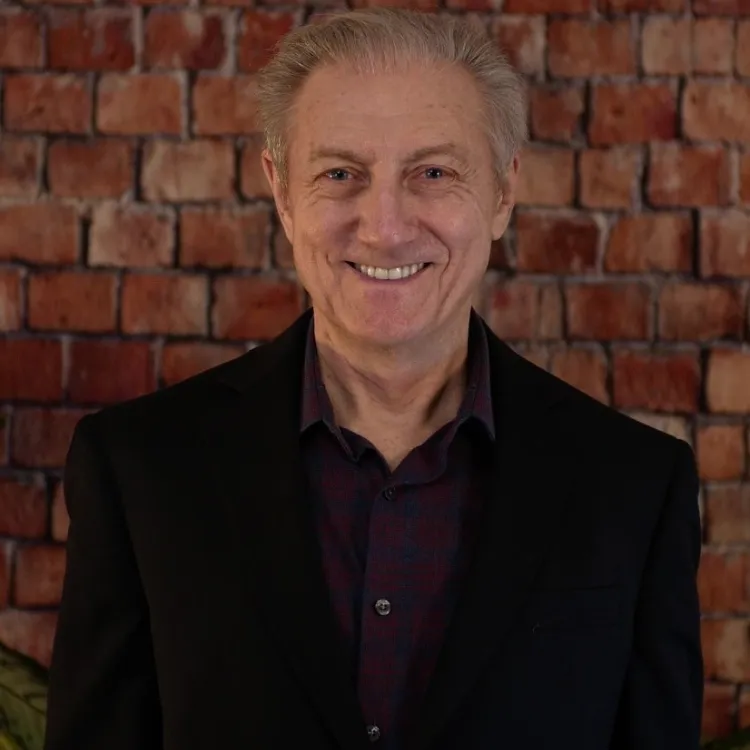
The Long Strange Trip Episode 3: Reinvention and Renewal: Navigating Life's Unexpected Paths
About the Episode:
Picture a teenage boy strumming rhythm and blues in smoky bars, who then ascends the professional ladder to conquer the insurance field, only to transform into a healer within natural healthcare, and eventually earn degrees in psychotherapy. Richard, our remarkable guest on this episode of Long Strange Trip, embodies the art of reinvention at every stage of life. He now channels his journey into business coaching and classical music composition, offering a treasure trove of insights into managing life's unpredictable turns. Richard's story is a testament to the resilience needed to transition between careers and the courage to pursue one's true passions, no matter the age.
As we explore the challenges faced by those in their mid-70s yearning to redefine their purpose, the episode casts a light on the often-unspoken struggles of retirement. Financially secure yet yearning for purpose, many retirees find themselves adrift without the anchor of a career. With my experience as a psychotherapist, I discuss how guided career assessments and imaginative exercises can reveal hidden interests and new paths. The conversation is a gentle reminder of the importance of seeking professional guidance from career-savvy therapists during this pivotal life transition.
In a poignant segment, we share the inspiring journey of an octogenarian who found renewed purpose through memoir writing. Initially chronicling her own story, she evolved to write for others nearing the end of life, bringing solace and closure to families. Her journey highlights reinvention's transformative power, underlining the profound impact of hospice care in offering dignity and peace. We wrap up with an open invitation to our listeners to share their thoughts and consider joining us as guests on this ongoing exploration of life's unexpected paths. Your stories could be the next chapter in our Long Strange Trip.
Transcription:
Josh Patrick (Host)
At the Long Strange Trip podcast, and today we're going to be talking about reinvention and retirement. It's a topic that I think is a really big one, and one that we don't always do a good job of taking care of. So, instead of me yammering on about what we're going to talk about, let's bring Richard on so we can actually talk about it. Hey Richard, how are you today?
Richard Chandler (Guest)
Very good Josh. Thank you. Good to see you again.
Josh Patrick (Host)
Yes, thank you for being on the show. So why don't you give me a little bit of background about what you've done and what you're doing and what you're reinventing yourself into?
Richard Chandler (Guest)
Gladly it's. It's a long, strange trip. Starting more at the beginning, I had an interest in music when I was a kid. I played in a rock and roll band when I was a kid and
Josh Patrick (Host)
Really, what type of music did you play?
Richard Chandler (Guest)
It was. It was like it's a bunch of white guys doing rhythm and blues
Josh Patrick (Host)
Okay
Richard Chandler (Guest)
And hindsight, oh, I don't know how we even pulled that off, but it was a lot of fun because I was 15 years old and in bars and I thought that was pretty cool. And back then, when I was 15 years old, people didn't pay much attention to the fact that the 15-year-old was in a bar playing and I could have a beer or two if I wanted once in a while. I did, and I had to be careful because I wasn't very good at holding that alcohol. I haven't gotten much better over the years either. Anyway, so I did that.
I ended up going to music school for the first part of my career. I basically kind of had a health issue and I had to stop. I had to stop before, like in the middle of my senior year, and I couldn't get back to it financially because then I got married, kids had a career, so I got into the insurance business because somebody said, well, you can always sell insurance and I couldn't think of anything better at the time. So that's what I did.
After a while it occurred to me that I was more interested in keeping things from going wrong, in other words risk management, than I was in financing things after they went wrong. So I was interested in risk management, did that for a few years and taught the technical side of insurance and risk management. Then I took a completely different change in my career. I became a natural health care practitioner, which is a very strange thing to do and I had no idea that's what I was going to do, but somehow I did it. I had a 25-year career in it and the last eight years of the career my wife and I both decided to go back to school, finish our four-year degrees that we hadn't done and get a master's degrees in psychotherapy, which we both did, and we did that, finished that up around age 61.
Josh Patrick (Host)
So you've been through a lot of transitions already.
Richard Chandler (Guest)
Yes, absolutely.
Josh Patrick (Host)
So can you talk to some that were easy and some that were hard to do.
Richard Chandler (Guest)
They were all challenging economically because my need for cash flow remained constant, and so I literally had to build one career while I did another one. So, for instance, the last six years of the natural health care practitioner career, I was also launching counseling psychotherapy, a lot of couples counseling things like Myers-Briggs, with assessments and career. I did all that concurrently and then, until finally I was able to the last, I stopped doing it eight years ago completely and then I started building then from psychotherapy to business partners and executive coaching, which is primarily what I'm doing now for livelihood.
Josh Patrick (Host)
So you were doing two transitions at the same time.
Richard Chandler (Guest)
Yes, I did that throughout my career.
Josh Patrick (Host)
Right, and talk a little bit about that. Where were the challenges and where were the successes?
Richard Chandler (Guest)
The challenges were managing my time well enough and my energy well enough and cash flow, as I said before, and the successes were that I was able to pull it off. I was able to continue over time, allocating more and more time to what I was going toward and less and less time to what I was doing, but maintaining enough of the cash flow from the goodwill and the business I built before. So it was a smooth transition, financially smooth enough, and I've been doing the same right now as you and I visit about. I'm back to music again. I'm a composer, classical music.
I do play saxophones and perform my own music to some extent, but mostly I write for other people, other musicians, and I'm doing that now. And yet my business now is supporting that financially. I'm enjoying my business with business partners, counseling, executive coaching and some psychotherapy, but I'm doing that again. I found that it's worked well for me and it's an interesting way to go because I don't feel like I don't know what I will do when I retire. I mean, I'm just going into my next career, which would be like my retirement career, which would be music.
Josh Patrick (Host)
So it appears to me it's like you're in the psychotherapy business, the couples counseling business, stuff. You're actually moving towards ending of that portion of your life, And with the music you're either well, you're past anticipation and you're probably into what we call the messy middle or the or no, just say the messy middle, that's a good enough term,
Richard Chandler (Guest)
Yeah,
Josh Patrick (Host)
And you know you're going one way, then you go another way, then you go another way, then you go another way and you go another way, and it kind of feels like you've got 14 arrows facing you all at the same time.
Richard Chandler (Guest)
Sometimes some days for sure, and my transition actually is. I am actually transitioning less and less psychotherapy couples, counseling, individual, so it's really three and then into business partners counseling. I'm doing mostly that and executive coaching now, and then from that I'll be transitioning more and more into music. I mean, I'm doing music right now. I'm having pieces being performed and writing new pieces and going to conferences and things with music, but it's about maybe 15, 20% of my time right now.
Josh Patrick (Host)
Yep. So when you look at it becoming 100% of your time, what's the steps you expect you'll be taking?
Richard Chandler (Guest)
I expect that I will have more and more of my team in place, which is my son, who I have a partnership with, and my team, and so the intellectual property that I built up. Other people can do it. In other words, other people could actually do the actual coaching of business partners counseling, probably. Executive coaching, maybe not so much. There's more people that can do that, but this is a very specific set of skills. I have other people that can do that and we'll have other coaches to do that. I'll feel like my legacy and that will continue, because the work will go on, but it will go on without me.
Josh Patrick (Host)
So, I mean it's challenging to do partner’s counseling because you have, I mean especially. I mean let's talk about a scenario which I see happen a lot.
Richard Chandler (Guest)
Yeah
Josh Patrick (Host)
You have one partner or two partners that are 60 years old and looking down at retirement, and there's another partner that's 35 or 40 years old and those 60-year-old partners expect the 40-year-old partner to pay them enough money to ride off into the sunset, whether the business can afford it or not.
Richard Chandler (Guest)
Yeah, yeah.
Josh Patrick (Host)
So you have two people or three people at very, very different places.
Richard Chandler (Guest)
Yes yes, and that does affect things.
And your podcast is really about that is to really look at those dynamics much more specifically and intelligently so people can actually make better decisions because they have a more realistic outlook of what's really happening rather than what they might think is happening.
Josh Patrick (Host)
Well, I think I've done this. I've been through more than one of these sort of transfers and what I find is that the senior members often have a very unrealistic opinion of what the business is actually worth.
Richard Chandler (Guest)
Absolutely. I find the same thing.
Josh Patrick (Host)
And the junior partner has a better sense of what the business is worth.
Richard Chandler (Guest)
Yes, because the junior partners continue asking this question. Would I be better off just doing this on my own versus buying something that's overpriced?
Josh Patrick (Host)
And we've done this a couple times with businesses. I mean, it's really easy to do with a professional service company. It's not so hard to do with a manufacturing or service company because you've got all these hard assets and things of that nature.
Richard Chandler (Guest)
Yeah
Josh Patrick (Host)
So, what happens when you have the elder partners who are adamant about getting paid a of money and the junior partner is just as adamant about not? How do you deal with that?
Richard Chandler (Guest)
That's why it takes an outside person, so I'm sometimes the outside person for that, and it's about telling the junior partner listen, you're buying an ongoing business that's worth something more than just the hard assets. It is worth something.
Josh Patrick (Host)
Yeah, well, they, they generally will recognize that
Richard Chandler (Guest)
Yeah, yeah, and you tell the older partners and what you think it's worth is overpriced, it's not worth that much. It's not worth as much as you think it is, because the person could start out on their own and they and you and if you burden them with too much debt or too much, they're not going to be able to, they're not going to be able to run a profitable business anyway.
Josh Patrick (Host)
They're not going to be able to pay you. That's really the problem.
Richard Chandler (Guest)
Right, right, right. And so it needs to be good. Often owner financing is a big part of it, and maybe not totally, but a big part of it. And also the amounts and the terms have to be quite reasonable.
Josh Patrick (Host)
That's also true. So let's go back to you and talk about where you are right now? You're what? 72 years old.
Richard Chandler (Guest)
I'll be 72 in May. I'm 71.
Josh Patrick (Host)
Okay, 71 years old, so you're probably four years away from what I'm seeing as the cliff. Have you seen this in the work you've done? People get to be 75 years old and what they used to be able to do, they can't do anymore.
Richard Chandler (Guest)
I would say it differently. I would say that if there mid 70s and they're, they're looking for a way to not stop completely, nor keep doing it at the same pace, and they're in a quandary because they don't know how to do that and they
Josh Patrick (Host)
Yeah
Richard Chandler (Guest)
So it can. Can they get realistic that I really don't want to or have the energy to do it like I did it before, and yet I still want to do it to some extent? Is there some creative way to work with that?
Josh Patrick (Host)
Well, the question for me is can you do something completely different?
Richard Chandler (Guest)
Yes
Josh Patrick (Host)
I mean, that's what you're in the process of doing. If you're going to be moving from doing partner’s consulting to music, and that's a completely different thing to do.
Richard Chandler (Guest)
Yeah
Josh Patrick (Host)
What I see is that and this is something I want to do some more testing around. But what I see is owners, specifically business owners or senior executives, get to a point in their life where they've left their business, they've left their job or whatever it is they're doing, and they sort of are wandering around, lost in the world.
Richard Chandler (Guest)
Absolutely. I've seen that a lot of times too. Not healthy, not healthy for them at all.
Josh Patrick (Host)
No, so that's where reinvention comes in.
Richard Chandler (Guest)
Yes.
Josh Patrick (Host)
So since you're a psychologist, we can ask you this question.
Richard Chandler (Guest)
Well, let me be clear, Psychotherapist, it's a specific license.
Josh Patrick (Host)
Okay, psychotherapist
Richard Chandler (Guest)
Yeah
Josh Patrick (Host)
So we would go. I would. I'm going to ask you what would you be advising people who are kind of lost in the wilderness. They don't have a business to go back to and they don't have the energy to start all over again, nor do they really want to. And let's just say they're financially independent. So they're not. You know they're. The money is fine. That's not the issue. The issue is how do I fill my days?
Richard Chandler (Guest)
Yeah, yes, the best case scenario is they've thought about this before they got to
Josh Patrick (Host)
let's say they haven't thought about it before
Richard Chandler (Guest)
then they have to just absolutely think about it very, very specifically and devote the time to thinking about it and not to not to think that playing golf and fishing and hunting more and doing more with the grandkids will fulfill them, because it actually won't they they I've seen it happen. They fall apart. They need to have something that's career-like. It doesn't have to be what they did. It can be something completely different, but it has to be career-like in that they have a reason to get up and get out of the house and do something different and unless it's career-like, they're in trouble.
Josh Patrick (Host)
So how would you help them find that career-like?
Richard Chandler (Guest)
I would help them if they came to me. I would actually do a career assessment. I would do first I do a sophisticated Myers-Briggs, because that's good to do. Maybe if they're with a partner or a wife, husband, partner do that with them too. That's going to help them get along. And then I have them do something called a strong interest inventory. It's a career assessment that helps them to discover sometimes that they may have leanings towards areas they didn't know they had leanings for, like artistic leanings or other leanings. They may assume, just because they've been a very successful business person, that, that that's all they can do. But it may not be true. So I, I do those assessments and I do a lot of interviewing.
I talk about, I do an exercise with people. This is a fun exercise for people that you might want to pass this on to some of your guests. I have them imagine alternative lives. You say, okay, I want you to imagine you have an alternative life. I want it to be like you're not living on Mars. It's not something that's not within the realm of physical possibility, but an alternative life. If you had a completely different life and let's pretend you're not at any particular older age right now. Don't feel the pressure that what would you do for an alternative life? And people will create an alternative life. I have them create, usually three of them three alternative lives what they'd be doing, where would they live, what kind of things would they be doing, who would they be hanging out with, what would they do for fun? And when people create these alternative lives, it is tremendously informative for them for what they might want to do.
Josh Patrick (Host)
And do you find that they often go down and do one of those three things?
Richard Chandler (Guest)
I've done this exercise primarily when people have not been at that age, and what it has done, though, is help them understand what they can start doing for an advocation, or how they can take what they're now doing and build more of that into that, and I've certainly done that for myself. You know, an alternative life I've had for years and years and years has been to be a composer and to perform classical music, and now I'm doing my, I'm transitioning into my alternative life, so it can be done, but that's very informative. Between the assessments, a good interview process with somebody who's objective and alternative lives that's a real good way to discover.
Josh Patrick (Host)
So if you're feeling stuck and you're feeling that you're kind of just wandering around the world, I'm assuming you would think it would make a lot of sense to work with a therapist.
Richard Chandler (Guest)
Absolutely, absolutely. It would make a lot of sense.
A therapist, and I would say, if you don't have a therapist already lined up, look for a therapist that also has a career as part of their skill set, that they know about careers and they can talk about careers intelligently. Because, in essence, even though you're mid-70s, if you want to do this well and stay healthy, you're going to embark on a new career, but the new career is going to be much more exactly what you want and none of what you don't want, unlike the career you've had.
Josh Patrick (Host)
It would seem to me that, and I'll ask you as a question, not as a statement. Do you find that, when people are in retirement and they're putting together an alternative career, that it doesn't have a revenue stream attached to it?
Richard Chandler (Guest)
Generally, it does not have much of a revenue stream if it has one at all,
Josh Patrick (Host)
Right
Richard Chandler (Guest)
But if it doesn't need to be, that's fine. You know so. So what you know, it's fine.
Yeah, you know.
Josh Patrick (Host)
Well, the point is there's a lot of things that we can do in life that are not revenue focused.
Richard Chandler (Guest)
Yes, absolutely. I'm not anticipating to make a ton of money being a classical music composer, but it does have a revenue stream. And the revenue stream tells me a little bit that people are willing to pay for what I do Not nearly kind of as much money as what I've been doing, you know, with business partners, counseling probably, but they're still willing to pay. So that's good. But to put my worth on the line for a revenue stream no longer makes sense. You know, for most people that are finished their main career and want to embark on a, if you will, a hobby career or an application career.
Josh Patrick (Host)
What should they be focusing on?
Richard Chandler (Guest)
What they want. What do I want? That's fascinating. What do I want? That would be really interesting. What do I want? That's going to put me in touch with people that I'd love to be in communication with.
Josh Patrick (Host)
So where does why fit into this?
Richard Chandler (Guest)
Then it gets larger. Larger for me, it gets larger. We need to look at death, the afterlife. What's important in those cases? I'd love to just tell a little example of my mom.
Josh Patrick (Host)
Sure, please do. I was about to ask you that.
Richard Chandler (Guest)
Yeah. So my mom, when she was in her mid-70s, after she finished or mid-60s, I'm sorry, mid-60s, early 70s after she finished her career, she wanted to have a college degree. She never had a college degree, only high school, and she just wanted it. There is no good reason to have it economically but she wanted it. She went to a two-year community college, got a two-year degree. She was so proud of that, she had so much fun. She went on to get a four-year degree and she was just so pleased with that and she was able from that to learn to write better.
She decided then to write a memoir about her life. She did that. I helped her with that, I was edited for her and then at some point something switched. She thought you know, I could do this for other people and the people she would do for people that were maybe close to death and the families wanted the stories. And she did that for one person, then another person. She probably did about 10, 12 people as a service. She did it free and boy did it transform my mom.
Josh Patrick (Host)
She
Richard Chandler (Guest)
She became a better person. She did.
Josh Patrick (Host)
Oh really, in what way?
Richard Chandler (Guest)
I think she was less selfish.
Not that my mom was selfish. I'm not trying to say she was selfish but she was a little bit more. She was more self-referential and when she started doing this for other people, you could just see her just becoming just a much more evolved, more interested in other people than before. It was really just a delight to see how she evolved that way.
Josh Patrick (Host)
Cool. How old did she live to?
Richard Chandler (Guest)
Just before age 90.
Josh Patrick (Host)
Yeah
Richard Chandler (Guest)
And she did that all the way up to the end, until maybe the last half year of life. The last person she finished was a priest.
Josh Patrick (Host)
Oh, really.
Richard Chandler (Guest)
Yeah, and she did his life story and he was in his 90s.
Josh Patrick (Host)
Wow, so when she wrote these memories, how long were they?
Richard Chandler (Guest)
Her own was a little longer. It was a regular, like a fairly okay book, like, look, it'd be maybe three-quarter-inch-thick book. For other people she tended to do it in kind of eight-and-a-half-by-eleven paper and she'd have a photograph in there too, and so it'd be maybe 30, 40 pages like that. But they're those kind of big pages. I guess in terms of a book form, maybe 50, 60, 70 pages.
Josh Patrick (Host)
Okay.
Well, she certainly found a good next chapter in her life.
Richard Chandler (Guest)
She did. Yeah, she had purpose, because it wasn't just, it was not just writing her story that was the first purpose but to do this for other people it was very transformative. We could see the change in her. It was really tremendous to see.
Josh Patrick (Host)
So what kind of changes did you see in her?
Richard Chandler (Guest)
Well, her interest in other people became much greater. Her compassion for other people and what they went through became greater, and she saw that she felt purpose because she was doing something that nobody else was doing for them, and the relatives loved her and appreciated that, because they now have the stories that they wouldn't have had otherwise.
Josh Patrick (Host)
Well, I'm sure their family appreciates that.
Richard Chandler (Guest)
Oh, yeah, they certainly did, and the person appreciated it too, because they wanted to get their stories down, but they didn't know how to do it. So they can just, my mom could just interview them and talk with them and write notes, and then she'd type it all out.
Yeah, she did that.
Josh Patrick (Host)
That's cool, cool. How old was she when she started doing this?
Richard Chandler (Guest)
I would say she started doing this probably in her early maybe early 80s.
Josh Patrick (Host)
Okay.
Richard Chandler (Guest)
Maybe around 80. Yeah,
Josh Patrick (Host)
Yeah. So she did a reinvention of herself.
Richard Chandler (Guest)
Yes,
Josh Patrick (Host)
And she became
Richard Chandler (Guest)
a writer. She became a writer.
Josh Patrick (Host)
She became a happier person.
Richard Chandler (Guest)
Yes, she did.
Josh Patrick (Host)
And I think that's one of the keys that we might want to be thinking about is if you can reinvent yourself with purpose.
Richard Chandler (Guest)
Absolutely.
Josh Patrick (Host)
Probably your happiness quotient will go up.
Richard Chandler (Guest)
Yes
Josh Patrick (Host)
Out of curiosity, was her death an easy death or a hard death?
Richard Chandler (Guest)
It was an easy death. The other thing my mom did better than most people is she stayed ahead of the curve. A lot of people wait till they fail out. They keep falling in the homes too much and then eventually you have to move. She always was a step ahead. She always moved before.
She was very proactive that way and when it came to time to die, getting closer to dying, she just you know she wanted hospice. So we had a hospital bed put in the living room where my brother was, where she was living with my brother the last few years and it was a really good death that way. And before that she was in a nursing home for a little while and I remember she couldn't talk as much. She had some small strokes and she couldn't talk as much. And I'd just hang out with her and we wouldn't talk, we'd we'd sing. She could still sing a little bit but she couldn't talk that much. So we'd sing some songs.
I'd play her tunes on on my saxophone or record the little wooden flutes, because saxophone got a little loud for some of the nursing homes and we just, and we played a little, we tossed balls back and forth together and we just communed the way she was able to commune, because she she lost her capacity to talk before she went to hospice. But even in hospice she was good. I'd play her music and she'd kind of brighten up a little bit and then she'd conk out again. It was delightful. She had a great death.
Josh Patrick (Host)
Yeah, I'm going to do a show at some point on hospice and palliative care, because it's a big deal.
Richard Chandler (Guest)
It's so much better for families.
Josh Patrick (Host)
And too many people go. You know poo-poo that as being no. We want all the medical stuff we can possibly have done, and that's never a good death. That's always a bad death.
Richard Chandler (Guest)
Yeah, that's right,
Josh Patrick (Host)
or at least it appears that way.
So, Richard, unfortunately we are out of time, so I thank you for being a guest today. This was kind of fun. I learned a bit and I thank you for that, and I hope the folks who are watching or listening or whatever you're doing found this useful. And if you did leave a comment below and let us know, and if you want to, you can always go and leave a rating and reviewing wherever you see this or listen to it. And if you're interested in being on the show, send me an email at jpatrick at stage2planning.com and we'll have a conversation and see if you would be a good guest for the long strange trip. So thanks a lot for stopping by. I hope to see you back here really soon.
