The Long Strange Trip Episode 9: Journey Through Cancer: Wisdom and Strength from Survivors with Paul Bond
About the Episode:
Have you ever had a moment where life just... stops? One day you’re focused on growth strategies and quarterly goals, and the next, you’re staring at a diagnosis that doesn’t care about your business plan. It’s a very disconcerting place to be.
In this episode, I’m talking with Paul Bond, the CEO of Bond Safety. Paul and I share a club that neither of us ever applied to join: we’re both cancer survivors who had to figure out how to lead a company while fighting for our lives.
What We Navigated Together:
The Transparency Choice: We talk about the terrifying decision to go public with a struggle. Does showing "weakness" hurt the brand, or does it actually build a bridge to the people who need help navigating their own transitions?.
The Strength of the Tribe: Paul and I both realized that while we might "teach this stuff," we aren't very good at asking for help ourselves. We dive into how family support becomes the literal backbone of your survival.
Business on Autopilot: What happens to your company when you physically can't be the "engine" anymore? We discuss the hard lessons in resilience and delegation that only a crisis can teach.
Post-Traumatic Growth: It sounds a bit "navel-gazing," I know, but there is a strange kind of wisdom that only comes from staring down your own mortality. Paul shares how his perspective on leadership has shifted from being the "expert" to being a "fellow traveler".
I’ve often said that transitions are the most difficult part of the human experience. But as Paul and I discussed, when you stop fighting the experience and start embracing the support around you, you find a level of resilience you didn't know you possessed.
If you're going through your own "dark night of the soul"—whether it's health, business, or just a loss of identity—I suspect this conversation with Paul might make the trip feel a little less lonely.
Transcription:
Introduction (Josh)
Welcome to the Long Strange Trip. I'm Josh. the host of the show. We're going to dig into six areas together, finding real work-life integration. Instead of that brutal 9 to 5 5 split too many business owners to live with. We're going to approach retirement as an actual reinvention. Rather than just stopping work. and we're facing death honestly, and avoiding PTSD around it. We're also building resilience,
when life throws us curve balls. We're sharing wisdom across generations. And finally, we're understanding the patterns that show up in all our transitions. I'm not coming at this as an expert I'm a fellow traveler figuring this stuff out in real time.
Especially now as I navigate my own dual cancer diagnosis at 73.
Welcome to the Long Strange Trip. I'm glad you're here.
Josh Patrick (00:01.026)
Hey, how are you today? This is Josh Patrick and you're at the Long Strain Strip podcast. And my guest today is Paul Bond. Paul owns a company called, I think it's Bond Safety, isn't it, Paul? Yeah, Bond Safety. And Paul and I have had a similar experience. And one I hope you never have to experience yourself. Both Paul and I are cancer survivors of going through a very serious cancer treatment.
while trying to run a company. And at least for me, it was trying to run a company. For Paul, he may have been doing it better than I, but we'll find out. So we're going to start there and let's bring Paul on. We'll start the conversation. Hey, Paul, how are you today?
Paul (00:38.434)
you
Paul (00:46.307)
Josh, I am fine and dandy. Thank you for asking.
Josh Patrick (00:49.358)
I love that fine and dandy. By the way, Paul is very funny and is one of the most prolific and interesting writers you're ever going to come across if you want to read fantasy. He writes fantasy incredibly well. But we're not going to talk about that right now. So Paul, you had a very serious cancer event a couple of years ago.
And you are the CEO of your company, which means that you probably have some responsibilities that you tried to take advantage of while going through cancer treatment. So can you talk a little bit about both what your treatment was and what you had to do to try to keep the company afloat while you're going through cancer treatment?
Paul (01:34.574)
Mm-hmm.
Paul (01:37.967)
Yeah, well, three and a half years ago now, I discovered that I had what proved to be a tumour in my bladder and it was initially diagnosed as being relatively minor, straightforward operation.
should be able to sort it out. And then after that operation, it proved to have been more advanced than they thought, which led to a referral to a second consultant and necessitated 16 weeks of chemotherapy and then a further operation, which resulted in the removal of my bladder.
prostate, left kidney and various lymph nodes that were in the way. it had me out of action really from the very beginning of the 16 week chemotherapy and I was...
I'm very fortunate in our company as a family company. I run it with my two brothers. so it was a very, for me, was a very straightforward thing to delegate. And they insisted on me just focusing completely on, you know, going through what I was going through and recovery out the other side. So I effectively absolved myself of all responsibility and
It's one of those very, very humbling things in that in my eight month absence, the company did much, better than it had done at any point in the previous 10 years. So. Yes, yes. So it turned out I was I was dispensable. But yeah, so. Yeah, so so since then, so I was I was probably.
Josh Patrick (03:37.219)
Funny how that happens, isn't it?
Paul (03:55.826)
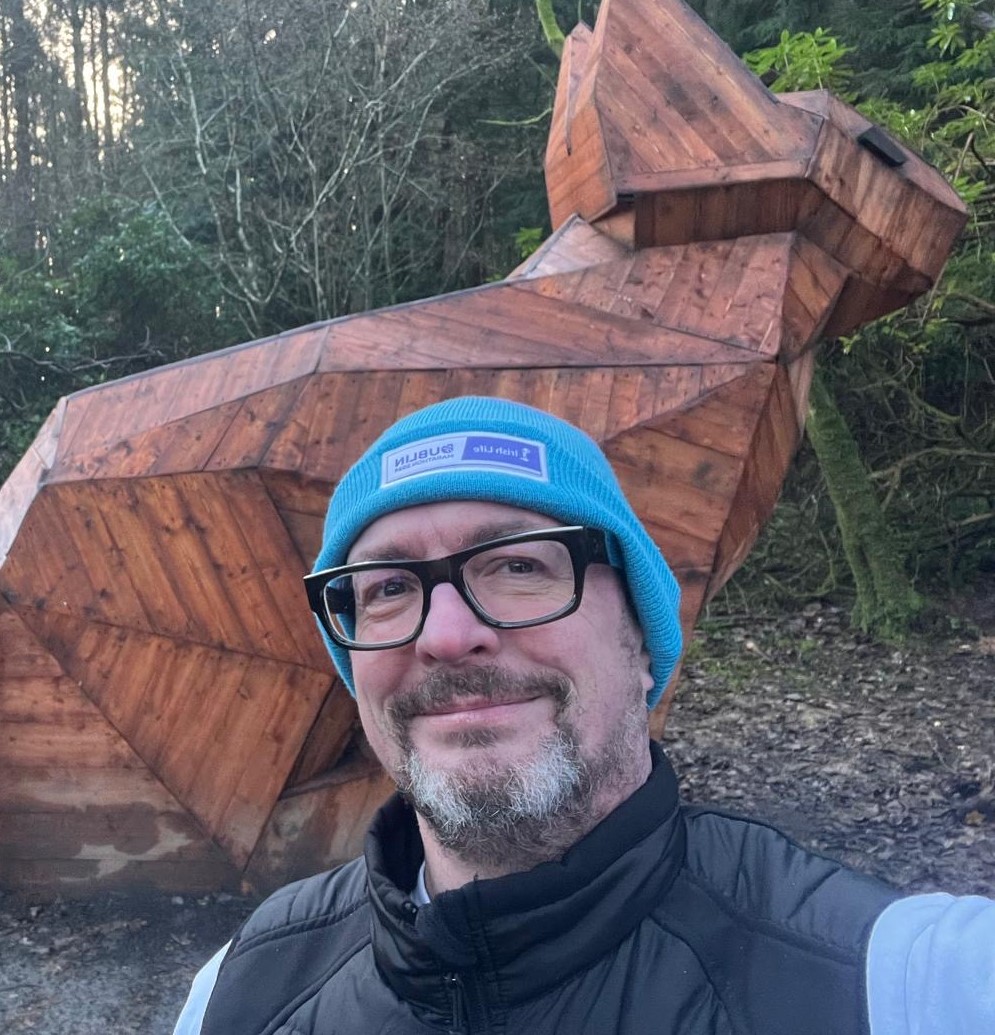
Eight months out completely and then ever since I sort of come and go, you know, there's areas of the business that I have to focus on at times, like contracts that come up. so I might be quite busy at those for a while, but they're quite happy for me to potter about in between those times. I got involved in a project we built, large wooden
sculptures out in a local park. And so I putter about doing that. And I have for three years, past three years, I've had, you know, CT scans and various tests every six months. And just last June, were, I spaced them out to 12 months because everything seemed to be sort of holding its own. So the nature, sorry.
Josh Patrick (04:51.789)
That's great news. I know that when I was after my cancer treatment, every time we had a screening, I was waiting for the doctor to come into the room. I was always panicked because for some reason I was expecting bad news, not good news.
Paul (04:55.757)
Yeah.
Paul (05:03.502)
Yeah.
Yeah.
Yeah. Yeah.
Paul (05:14.765)
Yeah, well, I think that's a perfectly natural thing. my wife, says that in between, because here I'll probably get called for the CT scan maybe four months before, or sorry, four weeks before my appointment with my consultant. So my wife says that four weeks all the time, she notices now.
not the easiest person to live with and don't sleep. So like exactly what you said, a test has been done. Somebody has the results sitting somewhere in a drawer and until that person in a white coat walks into an office, you know, just at that split second, it's Schrodinger's cancer. I have it back or I don't until they smile or look serious.
Josh Patrick (06:09.014)
Yeah. And if you're unfortunate like me, you can wait 18 years to have her come back again, which I actually guess is pretty fortunate if you really want to think about that because I'm assuming your cancer had a relatively low survival rate as mine did.
Paul (06:15.769)
Yeah.
Paul (06:19.651)
Yeah. Yeah.
Paul (06:29.09)
And yeah, it seemed to be quite aggressive for, it's not very often that I'm in the younger age bracket of anything anymore, but it seemed to be I was in the younger end of getting that particular type of cancer. And that type of cancer I had, it's normally associated with people who smoke, which I hadn't.
I did smoke when I was younger, but I hadn't smoked in, I think, 25 years. So that wasn't a factor. then subsequent to my operations, they discovered a second unrelated cancer in the prostate. So I think like yourself, one of the narrow band of people who had two active different types of cancer at the same time. yeah, no, I consider myself very fortunate.
But they did tell me the nature of the cancer, the original one that I've had, is that it will come back at some stage. So that's kept me under surveillance that hopefully spotted early enough.
Josh Patrick (07:40.31)
Yeah, hopefully if it comes back they have something they can do about it.
Paul (07:43.767)
Yeah, exactly, exactly. Well, I have other organs that I'm prepared to sacrifice.
Josh Patrick (07:48.846)
And what might that be?
Paul (07:54.703)
I'd rather not put them in order right now.
Josh Patrick (07:57.839)
Well...
Paul (08:01.337)
Hopefully one of the ones that, hopefully something that I have two of and they can take one.
Josh Patrick (08:06.552)
That would be a good thing. So, smokers get bladder cancer. That's something I did not know.
Paul (08:08.484)
Yes.
Paul (08:13.827)
Well, they're more prone to it. Apparently, men, they just said 90 % of the cases they come across, somebody who is smoking.
Josh Patrick (08:26.036)
interesting. Interesting. So, what was your, you know, as you're going through diagnosis and treatment and all that kind of good stuff, you seem to be a pretty positive guy. Were you able to stay positive during all that?
Paul (08:27.96)
Yeah.
Paul (08:45.167)
Yeah, I was very, very much so because, you know, our health service, probably like everybody's health service is constantly derided in the media. But once I was involved in it, like I just marveled at the care and attention that I was getting and...
You know, obviously we're very fortunate over here in Ireland that we have a public health system. So even though I had private health insurance, the second operation was at a level that it wasn't covered by any, you know, private hospital or couldn't be facilitated in a private hospital. my whole chemo and second operations and everything has been on the public health system. And as I said, I just
marvel that's the care and attention I got, how prompt it was. I just, the only time it sort of got very down was after the first operation, which in advance they had thought this will sort everything out and being told, I went and that was during COVID. So my wife couldn't come into the consultant's room with me to get the results and everything. So,
She was sitting out in the car. So he told me, this is a lot bigger than we had hoped. And, you know, it will necessitate removal of the bladder and possibly the left kidney. so that was that was a shock. But the worst thing then was walking back out into the car park and having to to say that out loud, you know, to my wife and.
So that was the lowest point throughout everything. After that, as I said, would go up to Dublin every Wednesday for my chemo treatment. one day, just I counted going into the hospital that Wednesday from the receptionist greeting me, the nurse coming to take my bloods.
Paul (11:07.415)
a lady coming round with tea and Madeira cake and I think it counted 26 people on that day ward that I interacted with that day and they all said my name and it was a day ward so they were seeing maybe 100 people that day every other day and when I'd go back the second week they'd ask, is Eileen with you today? Is she in the car? Did remember your kids name? I just couldn't.
They were seeing hundreds of people. I was just seeing these five or six chemo nurses and I couldn't remember their names from one week to the next.
Josh Patrick (11:46.446)
You know, that's that's pretty typical for me also. But your care seemed to be a much higher level than what I got. My oncologist was great and the nurses were good. But nobody, you know, I was greeted by name by everybody I ran across. But that that's incredible. You know, it makes probably made it easier. So how did your thing?
Paul (11:50.159)
Hmm.
Paul (12:05.965)
Yeah, yeah.
Paul (12:10.223)
no, it certainly did. It certainly did.
Josh Patrick (12:15.055)
How did your family handle all this stuff,
Paul (12:17.935)
My mother, she had been diagnosed with non-Hodgkin's lymphoma, gosh, 35 years ago. So we sort of within, you know, with my parents and my two brothers, we had some familiarity with.
you know, someone who had cancer, it was still, it was a shock to everybody. But I think probably, as you said, I would be quite a positive person. So I think me being positive about it, you know, maybe kept them going. And then in my own family, you know, my wife just, you know, she did everything, looked after everything and...
she'd be quite a positive person too. And we have three of our own kids who are all now in their, you know, early to mid twenties. And I would imagine it was tough on them because, you know, as I said, I think it hit...
So we have our eldest son Jake, daughter Robin and our youngest son Elliot. And I think it hit Robin, you know, the hardest that this was just something that wasn't supposed to happen. yeah, it probably affected her more than the others.
Josh Patrick (14:01.459)
And so did you go public with your cancer or did you keep that private?
Paul (14:07.094)
no, told everybody.
Josh Patrick (14:10.064)
I actually think that's the right thing to do. And did you find the more people you told, the more support you got?
Paul (14:12.969)
yeah.
Paul (14:18.871)
absolutely. Yeah, yeah, yeah, yeah. People were very, very, people were generally very supportive, you know, and, you know, I know, you know, but I write a weekly blog every Friday. so I think, you know, from the earliest treatment, I think I used a photograph of myself in a gown with a, you know, an infusion of something going into it. So like everybody knew.
you know, week by week how I was getting on. it led to, you know, people that I didn't know very well, you know, called to my house with, you know, baked a cake. I had been involved, an old friend of ours, do remember Carol Dublin from that writing thing years ago? And she had a Facebook group I run for, you know, where she matched
Josh Patrick (15:07.758)
Mm-hmm.
Paul (15:18.151)
and, you know, sort of ill children who couldn't run with runners. And you were you it was a private Facebook group. So I went out for a run or took part in a race. I take photographs and then let the parent, the child I was paired with, you know, know about it. And it was just sort of an interaction that somebody far away was interested in them and whatnot. But that was that was years ago. And the chap that I had been paired with, Jarrett, you know, he
think he's a young man now, but I stayed in touch with him and his mother. And I think about three, four weeks into my chemo treatment, a parcel, a care package arrived, you know, from America with, you know, warm socks and ginger lollipops and, you know. So, yeah, so like sort of letting it, letting everybody know sort of allowed people to be nice about it. So, yeah.
It was very much a positive thing.
Josh Patrick (16:18.255)
How about your customers? they have any reaction?
Paul (16:21.615)
Yeah, yeah, no, no, they did. They did. know, lots of them reached out and probably didn't hassle my brothers too much for discount during that time. Yeah, no, as I said, everybody, everybody was, you know, couldn't have been more helpful and supportive.
Josh Patrick (16:34.701)
Ha ha ha ha ha!
Josh Patrick (16:44.015)
Yeah, I found when I was going through my treatment that, or my major treatment, that my customers were very, that's what I'm trying to think of.
They were very accepting of what I was going through. And they only called if they actually had a reason, you know, an important thing to talk to me about. Otherwise, they pretty much left me alone for almost two years. And that was a really good thing because unlike you, I didn't have any brothers who could step in and take over the business.
Paul (17:18.093)
Right, okay.
Paul (17:29.231)
Yeah.
Josh Patrick (17:32.51)
It was sort of me, myself, and I and a few associates. But we all had our own book of business and we didn't actually work as a firm even though we were under the same firm. It was sort of like a bunch of try-outs set up around the world. But at any rate, that was, it was interesting. So what kind of advice would you have for somebody
Paul (17:35.137)
Okay.
Hmm.
Paul (17:45.241)
Yeah.
Josh Patrick (17:57.562)
who is about to or who gets diagnosed with a life-threatening cancer diagnosis.
Paul (18:07.989)
and
Paul (18:11.759)
Wednesday.
I'm not usually short for words, but when I was going through my treatment, I embraced it. I don't know if that makes sense. And I just had...
You know, I had I had an oncologist, had my urologist consultant and I had all these wonderful nurses and literally they had training. did not. didn't look. Don't look. Don't Google anything. That would be. Yeah. Do not do that. And don't Google anything and just do what your nurses and doctors tell you. That would be the best advice. And also, you know,
Keep the diary, tell everybody, know, write down how you're feeling about different things and don't be afraid to tell everybody what you're going through, you know, because, you you'll be surprised at the support you get and sometimes where you get it from. You know, I had had fellas that I was at school with and hadn't seen in maybe 30 years reach out to me and, you know, so.
You know, and it's a very, very odd thing to say, I like, you know, obviously it's it's life changing, but it was my my my brother, Stephen, said to me, I think it was only last year. I he just said, he said, Paul, don't take this the wrong way. But you haven't that cancer has been the making of you.
Josh Patrick (19:57.424)
I was told that by a couple of people also. They said, you've gotten a bit softer. Well, okay.
Paul (20:01.777)
You should start to think.
Yeah, probably, probably. When you do different things, your perspective and your focus, what's important to you obviously changes dramatically, you know, because up until something like this happens, you know, we're going to live forever. you know, and then you realize, you know, that, you know, quite possibly you're not unless it's going to be a head in the jar somewhere, which I don't fancy either. But, you know, my wife...
said, somebody said, how's Paul getting on with his treatment? And she said if he was any more enthusiastic about it, he'd be recommending it to people.
Josh Patrick (20:46.351)
Somehow I'm not surprised by that. My goal going through cancer treatment was just to stay in the present. In other words, just show up, put one foot in front of the other and whatever the day brought, the day brought. Not catastrophizing or saying life is going to get just great in X amount of time. And it's interesting.
Paul (20:48.119)
So...
Yeah, so what?
Paul (20:56.879)
Yeah.
Paul (21:02.073)
Yeah.
Paul (21:07.439)
Hehehe.
Paul (21:12.238)
Yeah.
Josh Patrick (21:16.335)
in Victor Funko's book, Men of Meaning, he talks about the people in the concentration camps who survived. And they were people who did not think about what the future was going to bring. Are they going to be out by a rosh Hashanah? Are they going be out by a Passover? Well, you know, if you just stayed neutral, you had a better chance of surviving. And if you
Paul (21:26.788)
Hmm.
Paul (21:34.009)
Hmm.
Paul (21:40.111)
Mm-hmm.
Josh Patrick (21:44.865)
either catastrophize or think things are going to be great. And I think that's pretty much true for cancer treatment,
Paul (21:48.548)
Yeah.
Paul (21:53.827)
Yeah. Well, no, it definitely is. you know, a couple, you know, everybody, as I said, everybody was very supportive and some people probably despite themselves or, you know, they would almost, you know, be commiserating with you, you know, like they would mean well, would say, this is this is terrible. You must feel awful or, you know.
how will you ever manage to get through this? So you quickly start to avoid people like that. I know they mean well, but they were nearly hoping for, have you any more bad news?
Josh Patrick (22:33.763)
Well, I don't know what those people hope for more bad news. I think what it is is that they're really talking about themselves more than you.
Paul (22:42.477)
Yeah, yeah, yeah. But I would say to people, you anybody who did say that, and I said in my whole, you know, treatment journey and everything, I said probably the time it was at greatest danger was probably driving from Monaghan to Dublin and the journey home in the car, you know, because everybody, you know, you leave your house every day, you don't know what's going to happen. And it's probably, you know, it is definitely a positive thing.
Josh Patrick (23:00.175)
Yeah.
Paul (23:12.023)
I'm sure you found it like true a kid, you know, a treatment or an illness like we've had in that. And so you can prepare to for, you know, makes you think about what way you want things to be left, not, you know, to the nitty gritty or who's going to get that vinyl album or that signed piece of memorabilia. But just in general, that.
I do want to speak to this person or that person or I want this person to know how I feel about them and not leaving any of those things longer than the next time I meet them from now on.
Josh Patrick (23:53.004)
And when you read about people who are in the last stages of life, that's one of the main things that people are sorry they didn't do more of, which is tell people how they feel about them. You know, I'm about to write a Substack article that basically is saying we all need more hugs. I don't think we have enough hugs in life. And I think the people who
Paul (24:07.331)
Yeah, yeah, yeah.
Mm-hmm.
Paul (24:15.96)
Yes.
Josh Patrick (24:20.591)
Fine giving hugs, off putting, really should re-examine that because it's one of those things where physical contact is important.
Paul (24:24.813)
Yeah.
Paul (24:33.134)
No it is, yeah. Yeah. No, I am, I'm an active hogger myself. Yeah.
Josh Patrick (24:35.811)
Yeah.
Josh Patrick (24:40.813)
Yeah, you know, I would invite anybody who runs across me, wants to give me a great big hug, go right ahead and do so. I will reciprocate.
Paul (24:46.735)
Yeah, I also, I had two of my best friends, Mickey and Ronan, like we were at school together and we'd always tried to meet up once a year, but you know, as we've all got married and Mickey lives in Dublin, Ronan lives in London and we've families and whatnot, sometimes that would slip. But when I was ill,
They were both very keen, you know, as soon as you're out of hospital and as soon as you're up to it, you know, we want to go out and have dinner and whatnot. And I said, yeah, so we arranged a date and then I think it was Ronan said, Oh, you know, another friend Milo, you know, would he call Murray and talk to it? And then somebody had said, what about Sarah? So we, ended up having, there was 10 of us went for dinner that night. And some, some of us hadn't seen each other. Certainly as that group hadn't been together in
since 1984 when we left school and we called it the Not Dead Yet dinner and we've had it annually now for the last three years. It's up to 25 of us were there last November. But again, it's great, know, guys, you know, that shared a formative time together and, you know.
Josh Patrick (25:50.447)
you
Paul (26:10.135)
It's so like, you know, my my sort of illness led to that and other things like that. That's, you know, I made this. Well, it wasn't a stupid idea, but I decided I wasn't going to say no to anything. And the stupid part was was writing it in my blog that other people were aware of it. So if I ask, if they ask me to anything, they know I can say no.
Josh Patrick (26:24.856)
Yes.
Josh Patrick (26:29.152)
Hahaha
Josh Patrick (26:37.399)
Yes.
Paul (26:38.317)
Yeah, so I've been, I've go to different concerts and festivals and, you know, if anybody wants to meet, you know, for dinner or a pint or go anywhere, you know, I don't say no anymore. just, yeah, let's go. So it's, yeah, it's good attitude.
Josh Patrick (26:54.465)
It is a good attitude. So, Paul, unfortunately, we are out of time. So if somebody wanted to talk to you was in their own cancer experience, would you be willing to do so?
Paul (27:00.111)
Very good.
Paul (27:04.535)
Mm-hmm.
Paul (27:08.013)
absolutely, absolutely.
Josh Patrick (27:09.955)
So if they wanted to contact you, how would they go about doing that?
Paul (27:13.855)
And well, my my blog has its own website and it's the superjetrobotdinosaurs.com. So they can contact me through that.
Josh Patrick (27:25.881)
Mm-hmm.
Josh Patrick (27:29.997)
Okay, that sounds good. And I've got something I would like you to do, if you're interested, that is, if you're watching or listening to this podcast episode and you say, hmm, that was kind of interesting. I think I have something to add about the long strange trip. Why don't you just send me an email and we'll set a time to talk to see if being a guest on this show would be right for you.
Paul (27:36.909)
Yes.
Josh Patrick (27:54.96)
And it's pretty easy. Just send me an email at jpatrick at stage2solution.com. That's the number two and solution is singular. So that's jpatrick at stage2solution.com and we'll stop the time to talk and see if this will be right for you. So thanks a lot for stopping by and listening or watching or whatever you're doing. And I hope to see you back here really soon.
Outro:
Thanks for spending this time with me today. I really appreciate you being part of this journey. I'd be grateful if you leave an honest rating and review. It helps other people find these conversations. Lets me know what's landing with you and what isn't. If you love this show, give us five stars, and if you hate it, give it one star and I'll just cry a little bit.
Keep asking the hard questions, keep being honest about what's difficult, and remember. We're all just trying to figure this out together.
I'll talk to you next time on the Long Strange Trip. Thanks for stopping by.
