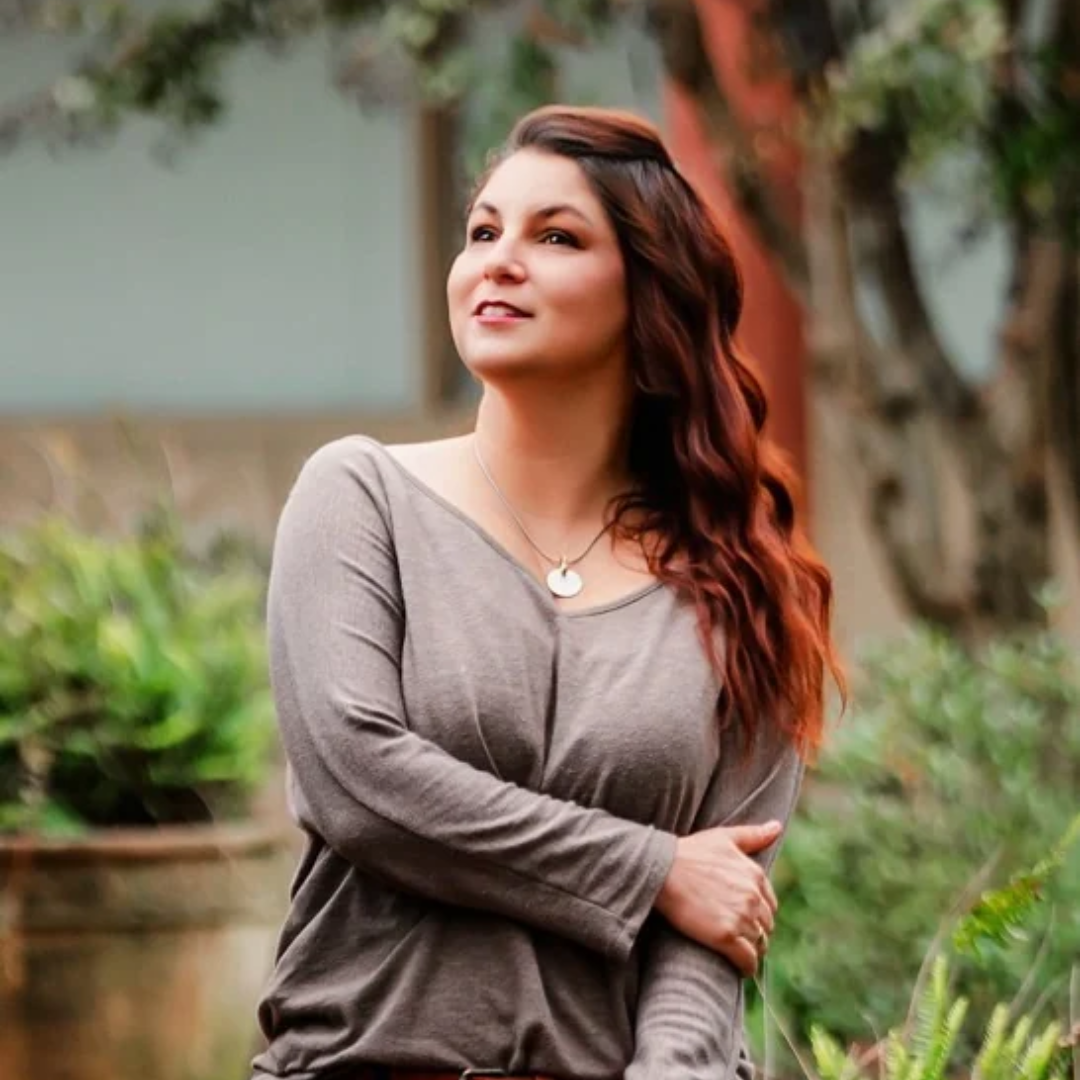
The Long Strange Trip Episode 40: Nobody Wants to Talk About Death—Until It's Too Late | Alexis Hughes
About the Episode:
What Are We Leaving Behind for Our Families?
Most of us spend a lot of time collecting things. We buy houses, accumulate possessions, build businesses, and fill our lives with stuff that means something to us.
But how much time do we spend thinking about what happens to all of it when we're gone?
I've been thinking about this because getting our affairs in order isn't just about paperwork or money. It's also about making things easier for the people we love. And I think that's one of the most meaningful gifts we can leave behind.
I sat down with Alexis Hughes of Without Fear Doula to talk about the practical and emotional work of preparing for death. We explored what death doulas do, why families need to have these conversations, and how avoiding them can leave a pretty difficult mess for the people who come after us.
Getting Our Affairs in Order Is About More Than Money
When people hear estate planning, they often think about wills, trusts, and deciding who gets what.
Those things matter. But there's a lot more to consider.
What happens to our personal belongings? Who knows what we want done with them? Are there things that have special meaning to us or to other family members? Have we made our wishes clear?
Alexis works with families on these questions, including organizing possessions and coordinating estate sales. It's practical work, but it can also bring up a lot of emotion.
The things we own often carry memories and stories. What looks like an ordinary object to one person may mean a great deal to someone else.
If we don't talk about those things while we're here, our families may be left trying to figure out what we would have wanted.
The Conversations We Keep Putting Off
We also talked about trusts, advance directives, powers of attorney, and final expense planning.
These aren't necessarily enjoyable subjects. Most of us would rather talk about almost anything else.
But what happens when someone becomes unable to make decisions for themselves? Does the family know who has the authority to act? Do they understand what that person wants? Are the important documents in place and accessible?
Having the paperwork isn't enough if nobody knows where it is or what it means.
I think we sometimes confuse avoiding an uncomfortable conversation with protecting our families from worry. In reality, we may be leaving them with even more difficult decisions to make at the worst possible time.
Unspoken Wishes Can Tear Families Apart
One of the things Alexis brought up that really caught my attention was how easily disagreements can develop among siblings after a death.
Everyone may have a different understanding of what Mom or Dad wanted. One person remembers a conversation. Another remembers something completely different. Someone feels they should have had a say. Someone else feels guilty about a decision they had to make.
And suddenly, the family is dealing with conflict on top of grief.
A lot of that can be avoided by having conversations earlier. Not every disagreement will disappear, but at least people have a better chance of understanding one another.
We shouldn't expect our families to read our minds. If something matters to us, we need to tell them.
A Death Doula Helps Families Prepare
I find the work of death doulas interesting because it brings together the practical and personal sides of preparing for the end of life.
It's not simply about making arrangements. It's about helping people think through what matters, communicate their wishes, and give their families some direction.
That can mean talking about end-of-life care, organizing belongings, planning for expenses, or making sure the right people understand what needs to happen.
There's no reason all of this has to be left until a crisis.
We can start while we're healthy, while we have time to think, and while the people we love can be part of the conversation.
What Kind of Legacy Are We Leaving?
I came away from my conversation with Alexis thinking about the difference between leaving our families an inheritance and leaving them a problem to solve.
We can't control everything that happens after we're gone. But we can make some things easier.
We can put the right documents in place. We can talk about our wishes. We can decide what happens to the things we've accumulated. And we can give our families the chance to ask questions while we're still here to answer them.
I don't think getting our affairs in order is morbid. I think it's an act of care.
Why leave your family a mess to sort through when you can start making those decisions together now?
Transcription:
Intro (Josh)
Welcome to The Long Strange Trip. I’m Josh, the host of the show. We’re going to dig into six areas together, finding real work-life integration instead of that brutal 95/5 split too many business owners live with. We’re going to approach retirement as an actual reinvention rather than just stopping work, and we’re facing death honestly and avoiding PTSD around death.
We’re also building resilience when life throws us curve balls, we’re sharing wisdom across generations, and finally, we’re understanding the patterns that show up in all our transitions. I’m not coming at this as an expert. I’m a fellow traveler figuring this stuff out in real time, especially now as I navigate my own dual cancer diagnosis at 73.
Welcome to The Long Strange Trip. I’m glad you’re here
Josh
Hey, how are you today? This is Josh Patrick. We’re with Alexis Hughes, and you’re at the Long Strange Trip podcast. A very long, strange trip. And Alexis is a death doula, and we’ve had some death doulas on before. And what I’m finding is there is no really good definition of what a death doula is except they deal with death. instead of me meandering on about this, let’s bring Alexis on, and we’ll start the show. Hey, Alexis. How are you today?
Alexis 01:45
So far so good. How about you?
Josh 01:50
I’m doing pretty darn well. It’s been a nice day. Had a great birthday yesterday. I’m now 74 years old, which is hard for me to believe, but there you go. So Alexis, one of the things that I’m really curious about, ’cause we’ve never really talked about on this show, is that how do you people...
how do you help people figure out what to do with the stuff? ’Cause I think the research shows that the average estate takes something like 15 to 18 months to settle, which means somebody is being tortured for a year and a half about this stuff, there has to be a better way. I think I’ve come... I thought...
The reason I’m thinking about this so much is I thought I had all my affairs in order. I had done all the stuff I needed to do, as I’ve been writing some Substack articles about what to do with the stuff, one of the articles was called Nobody Wants a Stereo, which I think really like for a title. have this great big stereo. But any rate I realized that I had actually left my family with a mess. And I’ve realized that I need to clean up that mess before I die. So how do you help people do that?
Alexis 03:08
It depends on when they come to me because obviously there’s a lot more we can do sooner in the process. Beforehand, we’re always gonna set up a trust. If you own anything a lot of people have the misunderstanding that a trust is for like rich people, and it’s not. A trust is for everyone.
Josh 03:35
Yes
Alexis 03:38
Going to help us take care of the physical assets. The non-physical assets, we don’t really worry about a lot. A lot of those have what are called a, a pay on death benefit. And I’m saying that from the position of not only being a death doula, but I am a licensed insurance agent, and I deal with pre-need final expense policies and things like that.
So those things are... They wash out in everything that’s going on. But your physical assets can be a little more complicated, especially when looking down the lens of probate court and things like that. So first thing first is always gonna be a trust. Then within those trusts, even if you don’t have a trust and you want a will or something like that, you can have letters of intention or things like that within those legal structures that are gonna say, “I want my daughter to get grandma’s wedding ring.”
Those special items that might have a special or emotional significance or worth within a family. We wanna get those taken care of next. Outside of that, I work very closely with an estate sale company because if I were to get hit by a bus tomorrow, I have no idea what is in this house and it would be left to my husband to deal with.
And so he would have to have a company come in and help him out or his friends. And there’s kind of the in-between of there’s a lot of things of Swedish death cleaning and the memento mori philosophy,
Josh 05:10
Can
Alexis 05:12
and there’s also-
Josh 05:14
you explain what a memento mori philosophy is?
Alexis 05:18
Yeah.
Josh 05:20
idea.
Alexis 05:22
Remember you must die. As we are experiencing the joy of life, but always have the prescience into looking forward and remembering that we will one day leave this place. And so that kind of partners with like the Marie Kondo philosophy of does this spark joy? Do I really need this? Do I want to keep this thing?
And then there, one thing that I work with clients a lot is I call it the poop rule. If this thing that we’re talking about was covered in poop, do we wash it and save it and preserve it or do we throw it away? And that really helps us go through what is truly important and why, and make our two piles of stuff, the things that are important to us and why, and who they’re going to go to when we no longer need or want it, and then the things we can just get rid of
Josh 06:40
So let’s talk about the estate sale people for a minute, because, I’ve got the... I’m, I personally have the trust. My stuff is in the trust, and cars are in the trust, and our house is in the trust, and all the stuff in the house is in the trust. But nobody has said I want or don’t want, which is a first step. My suspicion is there’s gonna be very little that people want except for the 27,000 pictures I have, literally, that are stuck in my computer or ac- actually up in the cloud, but they think they’re on my computer. This idea of an estate salesperson, what do they do and how do they do it, and how do you find somebody?
Alexis 07:42
It is a bit of a Wild West. It’s not really a, a licensed profession, a lot like death doula is, and there are several companies out there that do it. I have a, a colleague named Eric who works with Blue Moon Estate Sales here in Chattanooga with me, and the way they do it is they come in and they have a wide research network of being able to identify things.
And they come in, they go through, they get the home sale-ready. They price and list and inventory all of the items. They open the estate sale in the home for two days and all of the money that is raised, they take their kind of fee out for the payroll of their people doing it, their administrative fee, and then all the rest of that money returns to the estate, to the family, to the folks whose stuff it was
Josh 08:34
And the stuff that’s left over, what do you call, grunts move junk and they take all of it and dispose of it?
Alexis 08:48
Essentially. This company specifically that I work with, they have a person that they work with who takes it away, and they have some caveats like you must donate X amount of things to charity or things like that, just to make sure it does end up where it needs to
Josh 09:10
So the stuff, the, the stuff you donate to charity has to be, I assume, relatively good shape so they can turn around and resell it
Alexis 09:27
Right
Josh 09:29
And how difficult is it to engage these people and to find them?
Alexis 09:37
Generally, not at all. They very much want to work so you can check out who is local to you and of course look at Google reviews and all of that sort of thing just to check and see who has good reviews and who might have a great customer relationship
Josh 09:59
So how far in advance someone’s death do you need to actually engage these folks, or should you engage them? should you plan for it anyhow?
Alexis 10:11
Plan for it anyway. Sooner is always better. So there’s kind of a timeline along which things can happen. You can engage them after the time of death, a lot of people will go through the probate process with the house itself, and then have the stuff, and they can’t sell the house because it’s full of the stuff, and so they’re dealing with that.
Or what my colleague and I are working around is to go ahead and put an earmarked amount of funds to deploy upon death to be paid by the trust so that the the rollout of the estate sale auto deploys.
Josh 10:53
That makes a lot of sense to me. In fact, that’s one thing I’ve written about, is that, if you are in the position to do so, and you’re gonna leave a mess, or you’re gonna leave a mess that needs to be cleaned up, you should be leaving the funds to pay for cleaning up that mess
Alexis 11:17
Exactly. Exactly. And a trust is such a wonderful vehicle that you know how much is in there if you... for example, when I set my families up, I make sure that they have their trust, that they have all their documents in it. One of the first things that we set up is their pre-need for whatever they’re going to do with their vessel.
Are you gonna be cremated or are you gonna be buried and all like that? The second fold of that is setting up what’s called a final expense policy that can be used for anything. It’s just a, a cash value insurance policy for X amount of dollars that when they die, that money disperses and is allotted to things like hiring a death doula, hiring estate sales, being there to support your family to make sure that, they can go out to dinner and grab something to eat instead of having to cook if there’s not, a line of casserole dishes waiting outside for them.
So there’s a lot of pre-planning that can go into the death bubble that makes it so much easier for a family on the other side of it.
Josh 11:53
Now, if you do this right, instead of 15 to 18 months, how much time would it take to settle the estate and move on?
Alexis 12:05
That’s really gonna depend on a lot of things. One, if you have to go to probate. If for whatever reason you have to go through probate, it’s gonna take as long as probate costs, or probate court takes. Other than that, then we’re just relying on the other bodies that are involved, your insurance companies, your real estate agent, and things like that.
It could be done in weeks, it could be done in months, or depending on the complexity, it might still take as long as we hope it doesn’t
Josh 12:39
Okay. I would like to keep it a month or two if I could possibly do that.
Alexis 12:49
Most certainly. Of course, the more effectively you plan beforehand and everything deploys seamlessly, that is absolutely possible
Josh 13:03
Cool. So besides helping people plan for their estate, what do you do?
Alexis 13:08
Everything else.
Josh 13:10
Okay
Alexis 13:12
End of life doula is a profession that is really emerging into the professional space of death care. So we don’t have a licensing board. There are certifications out there by kind of the preeminent bodies who teach the scope of practice, who have been doing it a very long time and wanna teach other people how to do it.
We don’t do anything that crosses over into licensed territories unless we also have those licenses, and it is not a conflict of interest for them to move together. As I mentioned, I’m a licensed insurance agent, and I got licensed specifically to do what I do alongside my doula work. Not everyone have these licenses, but what I explain us to other people who might not have heard of us is we’re a wedding planner for death, essentially.
When you think of a wedding planner, they’re there not only to be your logistics professional, your concierge, your emotional support through everything, but they’re also there to make sure that all of your vendors are talking to each other, that everything is going correctly, that everything looks right, that everything deploys correctly, and that’s exactly what we do for a family in an end of life situation
Josh 14:50
Out of curiosity, ’cause I’ve never asked this before- how much does a death doula cost? What’s the range?
Alexis 15:02
It’s gonna depend on everything, and I hate to keep saying it depends.
Josh 15:10
That’s how most stuff in life is, by the way, so
Alexis 15:17
It’s gonna depend on your region. It’s gonna depend on what the market can bear. It’s going to offer bi- depend on the offerings that your death doula has, their scope of services, any additional education and licenses they might hold.
Generally the best estimate for pricing that I’ve seen, and this is actually coming down from one of the schools who train, is to look for private health care in your area and then approximate that and add for your additional qualifications
Josh 15:53
Okay. So let’s switch topics again, ’cause I have a habit of doing that. And what do you do to prepare the family for death? Not the person themselves, but the family, especially at the time of death itself
Alexis 16:11
Grief is such a funny thing, right? We’re all doing this for the first time, and no one got an instruction manual when they got here.
Josh 16:18
It’s like having kids
Alexis 16:20
And so it’s gonna... A lot of it is going to depend on how the process of dying has been in the family. If there have been a lot of open conversations and a lot of closure and things like that, people can be more ready for the moment of death than if none of that has happened, and, you get a call and suddenly, God forbid, mom is in stage four failure or cancer, and you have days to weeks to...
we’re calling from the hospital or something like that. Sudden changes are harder to deal with because you’re just not ready. You’re never ready for it. But there can be things done to, to mitigate the shock and guilt that are around preemptive grief. And I say preemptive grief because we’re already sad when we find out, because we know that this time that we have with our beloved person is coming to an end, and we’re gonna try to do a lot of stuff before we lose them.
But the way I help is assessing that. I come in and find out the family dynamic, if there’s anything that has happened or has been done, or is there any mitigating circumstances that we maybe need to talk about? Is there a family member that we don’t speak to anymore? Why is that? Do we wanna talk to them?
Do we want closure? And then go down that road for whatever the family dynamic is, to sort through and make sure there’s no regrets, no- nothing is missed, no stone not overturned
Josh 18:10
So how many people what’s the percent that you think of families that actually have the open conversation before you’re brought in versus families who look at death with PTSD, which is my I think most people are actually at that, but I’m not sure
Alexis 18:34
I’ll give you that answer in the form of another statistic. At least local to me, only 6% of the population have any sort of pre-death documentation in place, and that’s even something as simple as a DNR, which is a do not resuscitate. So not many, only 6%.
Josh 18:58
I thought doctors were required to do that these days
Alexis 19:03
They can ask for them, but you don’t... you can’t force someone to have it
Josh 19:11
Sure. Interesting. So that means that 94% of the people in this, in, at least in your neck of the woods are, have done literally nothing to prepare for death.
Alexis 19:28
Correct
Josh 19:30
Now, is that because they have PTSD around it, or is it for, they’re just lazy, or what might the reason be for that?
Alexis 19:42
So I’m in the South, so we’re a superstitious people, and I’m trying to try to... Because I think it is, right? We don’t want to ta- we don’t want to talk about it at all. And in the South, you’ll hear, when we try to talk about it and have a conversation around it, it’s like, “Oh, don’t talk about it.
Don’t talk about it. It’s gonna bring it here. That’s bad luck,” and things like that. We have all these superstitious beliefs around the end of life, and you just don’t wanna talk about it, right? Because you’re staring down the barrel of the void to talk about your mortality. Nobody wants to think about that.
We don’t get up every day and think, “I wonder how much longer I have on this earth. I really should get my affairs in order.” You’re just trying to get through the day, and you don’t want to think about there’s going to be a day that I’m not here anymore, and that’s really tough, especially considering how busy people are nowadays with the economy and people working two jobs and, families where both partners work and kids and caring for parents and things like that.
There’s no time for logistical preparation just about, so there’s certainly not a lot of time for waxing poetic and thinking about our own mortality in between everything else going on.
Josh 21:28
I have a strong belief that is incredibly important to have a family meeting once a year you talk about this stuff.
Alexis 21:37
Absolutely
Josh 21:39
Doesn’t have to be seven hours. It can be 45 minutes or an hour.
Alexis 21:47
Right Even if it’s something as simple as saying, “Hey everybody, I put a trust together. I have a DNR. Here’s my wishes. If something were to happen to me, I don’t want to leave this up to chance. Here’s your documents. My copy’s in the safe deposit box.”
Josh 22:09
Yeah. My,
Alexis 22:11
Good.
Josh 22:13
Is to say, “Okay, here’s what I’ve done. What would you like that we haven’t done?”
And what, Like I w- I thought I was giving my family a gift saying, “Okay, I’m gonna control my life up until I die. Once I die, it’s up to you.” And I realized that once again, I was leaving them a mess because that should be a conversation that we have, which I’ll facilitate, but they’ll decide what they think is the appropriate thing to happen after I’m d- gone
Alexis 22:51
And that’s exactly the, the crux of where I find a lot of families is I will be trying to have these discussions with them, and inevitably the person who is on hospice or is the person that is the matter of sub- of subject will just hand wave and be like, “I don’t care. I’ll be dead.” And I have to look at them and just say very gently, “Okay, so tell me you don’t love your family.”
What do you mean? That’s not what I said.” I said, maybe not in a word, but absolutely in action because when you die, yeah, it’s not gonna matter. You’re gonna be dead and none of this matters to you. But they have to deal with what you leave behind, exactly as you said, the mess of the logistics and the heart-wrenching guilt, grief, void of you not being here anymore and able to tell them.
Josh 23:53
It’s also, I, one of the things I plan to do is, as a family, is to decide it a green death? Is it a composting death? Is it, is it cremation? It’s not gonna be a traditional burial, I can tell you that.
Alexis 24:12
Right
Josh 24:14
But, there’s so many choices now out there for w- how we dispose of a body.
Alexis 24:21
All right, and
Josh 24:23
that bluntly, but that’s what we’re doing
Alexis 24:29
And like there’s no... yes, we put it bluntly, but it is still something that needs to be talked about. It’s not disrespectful. It’s not creepy. It’s not grim. It is a logistical question of, I have to do something with your body, your vessel, your person, your whatever. What do you want done?
Because we assume that our families know us well enough that they’re gonna be able to make those decisions. But I guarantee you, if something were to happen to me, ’cause my husband and I drive everywhere together, so knock on wood that, God forbid something happened to us, but if something were to happen to us and he could not advocate for me, my dad wouldn’t know that I want terramation.
He wouldn’t know that I was considering aquamation. He would have me cremated and be done with it.
Right
And that’s on me. I... Here I am, physician heal thyself, about not having these, these conversations, but I also have my documentation. But again, he doesn’t know where they are. Even I, a professional in the industry for 10, 15 years, don’t have my ducks in a row.
So-
Josh 25:39
I find that’s unbelievably common. I would coach business owners how to retire, and then I just stopped my business and went into retirement with no plans.
Alexis 25:50
Right.
Josh 25:52
So
Alexis 25:54
You would think I would learn. I was literally in the middle of giving a, kind of a death doula 101 for people who were curious about what we do and what our scope of practice is, and I was talking about advanced directives. And I was in the middle of telling them it was so important, as you say, to update your documents and have a meeting about it once a year.
Mid-sentence I just stared off at that, the thousand yard stare, and they’re like, “Oh my gosh, are you okay?” And I’m like, “I just realized that my ex-husband is still my power of attorney.”
Josh 26:39
Yes
Alexis 26:41
And it was like, oh my God, I need to go home right now and adjust those documents. Not that he would’ve done anything nefarious because, he’s not that kind of person.
But on the off chance that he was not a decent human being, that could have gone off the rails
Josh 27:01
Yeah. And the other part I think which is really important for us to talk about, because this is, following the d- advance directive or not, is, or how to dispose of the body or not, siblings disagreeing with each other about that.
Which can be a huge issue. It’s, you have one sibling says, “No, we’re gonna do everything we can to help the middle industrial complex make a zillion dollars to keep mom or dad alive.” And then the other person says, “No, we really need to let them go. We can do it in the hospital, but I’d prefer to have it done at home
Alexis 27:37
So that is a quagmire that’s gonna honestly depend a lot on your state and what is going on and the doctors who are attending. Because we can have those legal documents, but whether they are followed or not is, I’ve been in situations where the advance directive was pretty clear about not wanting CPR, not wanting any life-sustaining treatments, and the family essentially bullied the medical facility with threats of legal action to keeping someone alive.
Now, I’m not a lawyer. Was that legal? Was it ethical?
Josh 28:10
not.
Alexis 28:12
No. Was it ethical? No
Josh 28:15
probably not legal either, but that’s
Alexis 28:17
And so that’s my job as the end of life doula to come in and hold up the papers and be like, “No, this is what it said, and this is what we need to do.” And that’s also why it’s so cr- incredibly important to have your power of attorney.
Because at the end of the day, whoever’s on that piece of paper as your power of attorney is who makes the call. And it, a lot of time it’s not out of anything malicious, right? We were talking about preemptive grief a moment ago. We’re expecting people that are in the depths of the worst and most vulnerable time in their lives of seeing the one that they deeply care about leaving this earth into the great mystery that is death, and we are expecting them to make good decisions un- clearly in the middle of it, and that’s just impossible.
You can’t. So write it down. Get the documents so there is no question. Because without that, even though they think they know you, they’re going to be second-guessing themself. They’re going to be questioning everything and each other and fighting with each other and things like that. So you just really are doing your family a disservice to not prepare them
Josh 29:51
There’s one more topic I would like to cover, but unfortunately, we don’t have enough time. And that topic is what I call life between lives,
Alexis 30:04
Is,
Josh 30:06
And there’s a whole bunch of research done in this area right now, which is quite interesting. But it’s what happens when someone’s actually in the act of dying, and they
Alexis 30:19
Mhm
Josh 30:21
to people that nobody else sees. And there ne- at least this is my opinion, there needs to be training about this so people don’t freak out.
Alexis 30:42
Yes
Josh 30:44
First time it happened, my sister f- was freaking out with my father, and I said, this is what happens, Nancy. It’s not, this is to be expected.” And we had some good hospice people there that helped along with that.
Alexis 31:03
Mhm
Josh 31:05
I am really sorry, but we are out of time
Alexis 31:08
That’s okay. There’s a lot to talk about
Josh 31:12
There is a ton to talk about. So how would people find you, and what would you like them to do?
Alexis 31:20
Withoutfeardoula.com and I am Without Fear Doula on everything else, on all the platforms. I am happy to do free consultations with people to kinda get their act together on these documents, and if I can’t do it, I will find someone that can. But for a call to action please at least have an advance directive.
Start there and get more, but go to some of the resources online, like fivewishes.com, and get a five direct- or a, get a advance directive done today
Josh 31:52
Cool. And they would find you at withoutfeardoula.com?
Alexis 31:56
.com. That’s it
Josh 31:58
Okay, cool. I have two things I’d like you to do. I’d like, first of all, please rate and review the show. If you love the show, go on wherever you’re listening and give us five stars, and I’ll be, do a little happy dance. And if you hate the show, go to wherever you’re listening to it, give us one star, and I’ll cry some big crocodile tears and end up on my feet and get me all wet, but you won’t see it, so it doesn’t matter. And the second thing is, if you think you’d be a great guest for this show, cover six topics. Go to thelongstrangetrip.com, and you’ll find all the stuff that we write about and do for podcasts and our videos. And you can figure out whether you would be a good guest. And if you think you might be, send me an email at [email protected]. That’s the number two, and solution is singular. That’s [email protected], and we’ll have a conversation to see whether being on this podcast will be good for you. this is Josh Patrick. We’re with Alexis Hughes. You’re at the Long Strange Trip podcast. Thanks a lot for stopping by, and I hope to see you back here next week
Outro (Josh)
Thanks for spending this time with me today. I really appreciate you being part of this journey. I’d be grateful if you’d leave an honest rating and review. It helps other people find these conversations, lets me know what’s landing with you and what isn’t. If you keep asking the hard questions. Keep being honest about what’s difficult. And remember, we’re all just trying to figure this out together. I’ll talk to you next time on The Long Strange Trip. Thanks for stopping by.
