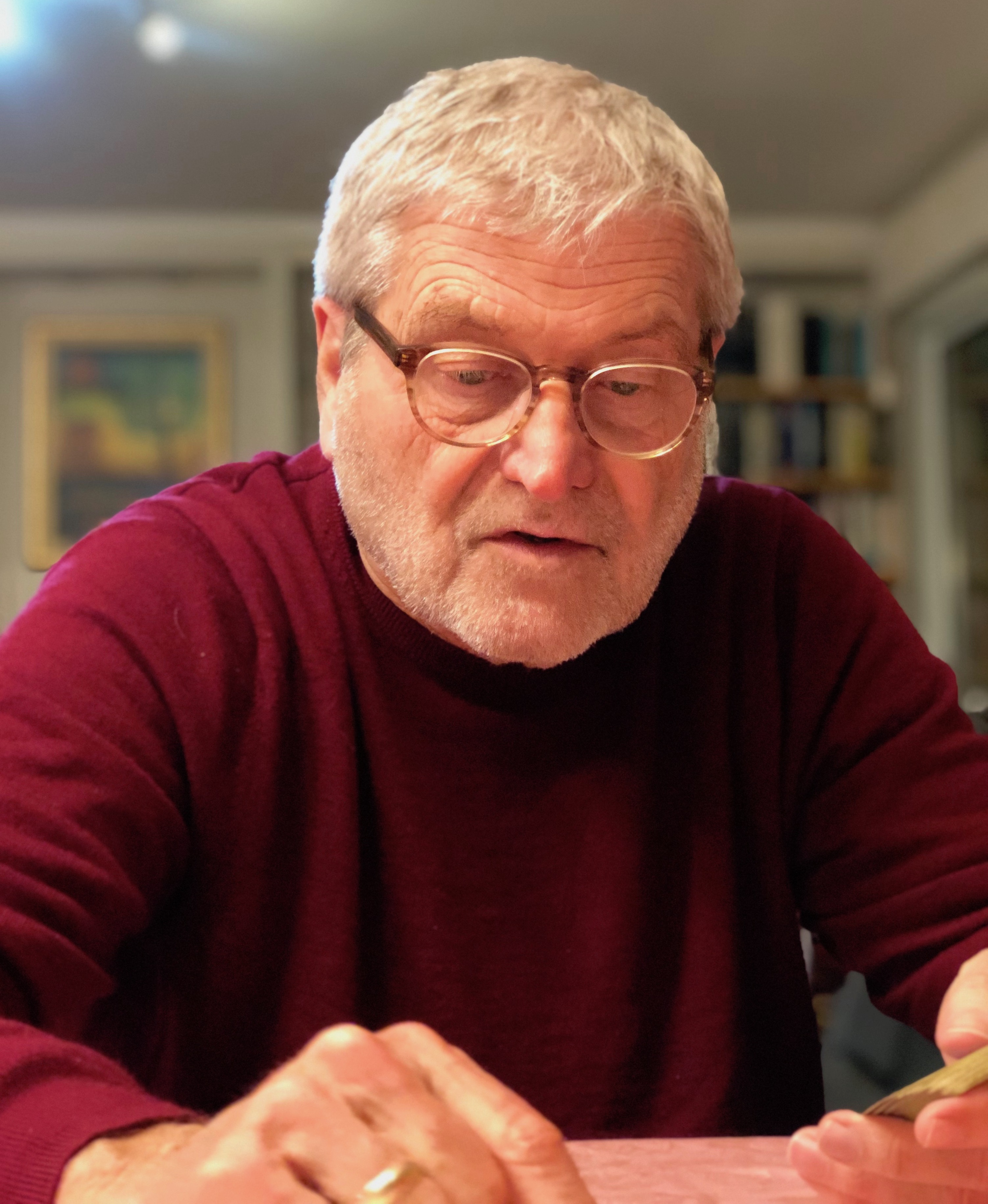
The Long Strange Trip Episode 4: Balancing Family and Work: Bruce Peters' Journey:
About the Episode:
Life has a way of pulling us in a hundred directions at once—work, money, deadlines, while the people we care about most sometimes get whatever energy is left over. On The Long Strange Trip Podcast, Bruce Peters sat down with Josh Patrick to talk about a pretty unconventional idea that helped him flip that script: treating his family life with the same intention he brought to his business.
It might sound a little intense at first, but stick with it because this one idea completely changed how Bruce showed up as a husband, a dad, and a human.
How the Family Business Plan Got Started
Bruce is an attorney with a long career in law and business, but the wake-up call didn’t come from home it came from work. During a frustrating partner meeting where big issues were brushed aside, Bruce realized something important: if businesses need a clear plan to work well, why wouldn’t families?
That moment hit close to home. Bruce grew up watching his own father struggle, and he was determined not to repeat the same patterns. He didn’t want his family to feel like an afterthought. So he did something bold, he wrote a plan for how he wanted to show up for them.
What’s in a 17-Page Family Plan Anyway?
Yes, it’s 17 pages long—but it’s not as stiff as it sounds. Bruce built it like a business plan: a mission, a vision, a strengths-and-weaknesses breakdown, and a clear action plan.
The difference? This one focused on being a better husband and father. It spelled out things like regular date nights with his wife, intentional time with his kids, and family retreats—real, scheduled moments that couldn’t be pushed aside by “being busy.”
Keeping Himself Honest
Bruce didn’t stop at writing the plan. He created a commitment scorecard to track how he was actually doing. And here’s the wild part: while his business commitments hovered around 92%, his family commitments hit 100%.
Seeing that on paper was powerful. It wasn’t about perfection it was about awareness. The scorecard became a reminder that relationships, just like businesses, need attention if you want them to thrive.
Talking With Family (Without Turning It Into a Board Meeting)
Bruce didn’t hand his family a copy of the plan or ask them to sign off on it. Instead, he focused on being more present. He set up regular breakfasts and walks with his wife, low-pressure time to talk about life, not logistics.
With his kids, he met them where they were. Some talked more easily than others, so Bruce learned to notice when the door was open. Car rides became a surprisingly great space for deeper conversations, no eye contact, no pressure, just time.
What Parenting Taught Him
One big takeaway? There’s no one-size-fits-all approach to parenting. Each child communicates differently, processes emotions differently, and opens up on their own timeline. Bruce learned to stay flexible, patient, and available instead of forcing conversations.
The Big Picture
Bruce Peters’ story isn’t really about a document—it’s about intention. By putting real thought into how he wanted his family life to look, he created space for better conversations, deeper connections, and fewer regrets.
The lesson here is simple but powerful: if you plan for what matters, you’re more likely to protect it. And when it comes to family, that might be the most important investment you ever make.
Transcription:
Introduction (Josh)
Welcome to the Long Strange Trip. I'm Josh. the host of the show. We're going to dig into six areas together, finding real work-life integration. Instead of that brutal 9 to 5 5 split too many business owners to live with. We're going to approach retirement as an actual reinvention. Rather than just stopping work. and we're facing death honestly, and avoiding PTSD around it. We're also building resilience,
when life throws us curve balls. We're sharing wisdom across generations. And finally, we're understanding the patterns that show up in all our transitions. I'm not coming at this as an expert I'm a fellow traveler figuring this stuff out in real time.
Especially now as I navigate my own dual cancer diagnosis at 73.
Welcome to the Long Strange Trip. I'm glad you're here.
Josh Patrick (00:00.802)
Hey, how are you today? This is Josh Patrick and you're at the Long Streams Trip podcast. And my guest today is Bruce Peters. Bruce is an old friend. He has done a huge variety of stuff. He's an attorney. He was a major player with Vistage in part of his life. And he has a new project going on with a young lady, which he's very excited about. But we're probably not going to get there today because we're going to talk about
Bruce and his family. Bruce has done some really interesting things. And instead of me just talking about it, let's bring Bruce on and we can start the conversation. Hey Bruce, how are you today?
Bruce Peters (00:41.555)
So far so good. Thank you.
By the way, yesterday I ran into a person and they asked me that question and I said, so far so good. And she said, I said, how are you? And she said, so far so great.
Josh Patrick (00:54.222)
I like that. That's great.
Bruce Peters (00:57.707)
Yeah, that was certainly a one-up-ish for me.
Josh Patrick (01:00.984)
Yeah. So, so Bruce, we've been talking on and off for years about stuff that you've done, which is really interesting. And something that really caught my attention was you said you do a business plan for your family every year. And the first one was 17 pages long. So can we get to the genesis of how that came about?
Bruce Peters (01:23.061)
Yeah, so thank you for asking because I didn't use to tell the story very much, but here later in life, you know, I just did it because I did it. It didn't seem unusual to me and I did it for all my own reasons. And here later in life, I'm finding out that actually people think it's unusual. It is a measure of how I know compulsive I am about a lot of things occasionally. And so with ADHD every once in a you dive in really deeply. So.
In 1985, I actually did a TEDx presentation, basically telling a version of this story about 10 years ago or so called Bruce Peters' Promises Made, Promises Kept. We did a TEDx Rochester, and it was a 15 or 20 minute version of this story. As you mentioned, Josh, I had practiced law and
and had a fascinating career, gave me an opportunity to do a whole bunch of things that I love doing. so, but in 1985,
I had started an entrepreneurial law firm here in Rochester and we were the first attorneys for Chase Manhattan Bank in upstate New York. And actually David Rockefeller came to Rochester and welcomed us as their first attorneys in upstate New York, which was a pretty high moment in my legal career. But in any event, we grew so fast in the practice that had so much business coming in the door because we had an expertise in banking law and
One of our clients was the Phoenix Institution for the failed SNLs all over the country. And anyway, so we had to merge our firm into a large firm. A large firm bought our firm out because we could not service all the work that we had. And so in that role, I became the co-managing partner for the firm. And there was a spin-off firm that I joined. in that spin-off firm, I was also the co-managing partner doing this expertise in this particular work.
Bruce Peters (03:32.663)
And there were 160 lawyers in that law firm. And I don't know if it's hard to manage and work with and lead other people and other organizations, but it's particularly difficult to lead 160 lawyers to go one place or another. And so I had gotten frustrated with the work in the firm. so the genesis of the 17-page business plan
was I had come home after a meeting and this particular time in the firm and I'll never release the name of the firm, but we had almost $6 million of receivables that were over a year due. And we just came back from a partnership meeting and with conversations at the partnership meeting where I had all these real issues to deal with, we had spent several hundred thousand dollars on a strategic plan and the lawyers, they were not doing anything to execute it. Sorry for the long winded story. However,
The whole meeting we spent talking about, are we going to use long legal pads or are going to use short legal pads?
Josh Patrick (04:31.809)
So Bruce, Bruce, can I interrupt you please? Can we get to talking about your children and your business plan? I mean, it's great to talk about. Well, let's get there. Let's get there a little more quickly, please. Thank you.
Bruce Peters (04:38.302)
Yeah, I'll be there, but the backgrounds are important. Okay, okay. So I come in the back door after the meeting with that. I've come in the back door that night. Maxine says to me, what happened? I said nothing, gosh darn it. I said, I just resigned as my partner in the law firm. I had no business plan. I had no plan at all. I decided to go out on my own.
What I did was I packed a bag full of groceries. went up to a place for a friend of mine place in Compton, Little Compton, Rhode Island. I went out the next morning to create the business plan for my business and I could not make the business plan for the business. I was stuck. I wandered around most of the day. I walked off and down the beach. It was a Christine day in Little Compton, Rhode Island. I walked back to the cottage that night. I put a fire in the fireplace. I've got a glass of wine out.
And I realized why I was stuck. I was scared to death. I was scared to death because I was on the streets as a 16 year old. I left home at the age of 16. My father was an alcoholic wife abuser and I was scared to death when my name went up on the door and it became my firm.
Josh Patrick (05:35.853)
What were you scared of?
Bruce Peters (05:55.435)
that I said to myself, everything, I want my family to be the most important thing in my life. And I tried very, very hard from the time I met Maxine to that day. And I was scared to death when my name went up on the door that I would become my father, that I would destroy my relationship with my family.
That was the genesis for the 17-page business plan.
Josh Patrick (06:20.053)
Okay, so you did this when your kids were teenagers, correct? So what was the relationship with your family between the time they were born till they were teenagers?
Bruce Peters (06:23.124)
Yes, yes.
Bruce Peters (06:32.168)
It was all of the things that I wanted to do, but I was not ever fearful because as a partner in a law firm, I was able to design the life. I had designed the life that I wanted to design, but this was a big change for me. I was going out on my own. My name was going to be on the door and I'm a, mean, I was an all state basketball player as a five foot, eight hundred and thirty pound guy.
You don't get to play basketball at an all-state level and not be tenacious about things. And so I was scared to death that I would just become my father essentially and destroy my relationship with my family when I went out on my own in the business.
Josh Patrick (07:11.629)
So this business plan was an antidote to that?
Bruce Peters (07:15.018)
Yes, I realized I was stuck. just could not, I could not write the business plan. I just couldn't write the business plan until I said to myself, my family is the most important thing in my life. I'm gonna do the family plan first.
Josh Patrick (07:29.773)
Okay, so I assume after you wrote the family plan, the business stuff went fine. Okay, so let's talk about 17 pages is a long business plan. It's even a long business plan for an operating business, much less a family. So what's in that 17 page plan?
Bruce Peters (07:33.384)
It was easy. It was actually easy.
Bruce Peters (07:38.389)
Yes.
Yes. Yeah. Yeah. Yeah. So I did, I had run strategic planning for large law firms. So I had a come, I had a model for a business plan for big firms. Started with mission and vision external and do a SWOT analysis, strengths and weaknesses, external influences, internal competencies. What's worked well up to now. I put all of that detail in it. Then
Josh Patrick (07:53.228)
Yeah.
Bruce Peters (08:07.206)
What's our, what's my strategy? What kind of a father or husband do I want to be? What kind of, created a role description for my role as a father. What kind of a father did I want to be? What kind of a husband did I want to be?
Then I had a tactical implementation plan for how I would be that kind of father and husband. I scheduled a weekly date with my wife. I scheduled sick every six weeks, a weekend retreats with my wife. created a detailed implementation plan for my relationship with my kids, what they needed with me. Then I, I did all of that. Then what would be success look like? Then I made a promises and commitment scorecard and I created in 1985.
I've kept a scorecard of my commitments in life. Business scorecard for business, my score was 92%. Family commitments, my scorecard was 100%.
Josh Patrick (09:02.571)
Okay, so let me ask you something, because I'm just curious about this. You've got teenage children, you write the 17 page business plan, you give it to them, how much were... Okay, so how did they know what was in it?
Bruce Peters (09:05.236)
Yeah. Yeah. Yes.
Bruce Peters (09:12.584)
No, I do not. I do not give it to him.
Bruce Peters (09:17.93)
They did not.
Josh Patrick (09:20.609)
Did they ever?
Bruce Peters (09:23.702)
wife found out when one of my Vistage members spilled the goods to her at a Vistage retreat. Because my group knew about it, but my wife did not know about it.
Josh Patrick (09:35.383)
So was there a reason that you didn't want your family to know about it? What was the reason?
Bruce Peters (09:38.58)
Yes.
several reasons. One is my wife didn't need a business plan. She would not understand my need for a business plan.
Josh Patrick (09:42.551)
Okay.
Josh Patrick (09:51.85)
I don't think your family would understand the need for it, but that's okay. But so here's the question I have, because I think it's an interesting idea. And I think it becomes more interesting if you found a way to share it. So if you were to have shared that with your family, you're one of the most emotionally intelligent people I know. How would you have gone about doing that?
Bruce Peters (09:53.92)
Correct. Correct. Correct.
Bruce Peters (10:15.476)
did share it, but not in the way you're describing. So I I would have a conversation with I would have with the kids would be almost talk about a conversation with Maxine. So I have a weekly I schedule. Let's go to breakfast this week or let's go to lunch with Maxine. So we have the meeting and she's talking about stuff and Maxine as she would do in what I'm in my mind is a weekly date.
Josh Patrick (10:18.079)
OK, so how did you share it?
Bruce Peters (10:45.646)
And during that weekly date, she'd try and talk about me and I would reverse the conversation and make it about her.
Josh Patrick (10:53.453)
What does it, how would that look?
Bruce Peters (10:56.638)
Well, she would say she'd start talking about the kids. said, well, how are you doing? So, so I'd use my skills as a coach, which I didn't, you know, and, get better at that. And whenever the conversation would get to me, I would find a way to be skillful and turn it back on her before, before, when we, before we would leave that conversation, I would schedule the next one. The next week. And so.
Josh Patrick (11:00.787)
okay.
Bruce Peters (11:24.458)
this worked out. Okay. Was this a good place? You want to do this again next week, or do you want to do it someplace different or you wanted to go and some, you want to take a walk. Then we scheduled after, after five o'clock every day, when the kids got a little bit older, I scheduled, we scheduled a walk every day on the canal here in Rochester at five o'clock. I'd meet her at a canal place. We'd walk for 45 minutes. So that became the date. It came to walk in the talk. So I always had a methodology where I would turn the conversation about her.
There was plenty of time that the conversation would be about me, but in my mind was, want to give that time to her. Then I would do things like what was good about this conversation? What was not so good about the conversation? What do you want to increase? What do you want to decrease? I literally used all those skills that we learned in adjusting in business and tried to turn them into something valuable in our, as our personal life, not like a business.
but in an effort to increase the value of the relationship we had.
Josh Patrick (12:24.329)
So, so Bruce, it sounds like you started this about 15 years into your marriage. So what did you do in the first 15 years and what caused the pivot for you?
Bruce Peters (12:29.984)
Yes.
Bruce Peters (12:37.29)
Well, I did a version of all that, but I didn't codify it quite that way.
Josh Patrick (12:41.389)
Okay, what would that look like?
Bruce Peters (12:43.062)
Um, so, um, I just, you know, how everybody talks about blend in life. We're gonna, I'm going to balance and blend things. Yeah, it is one of my pet peeves. And to me, I want to be all in at home and I wanted to be all in at work. And so, and so, so I was a trial lawyer early in my career.
Josh Patrick (12:51.893)
Yeah, yeah, yeah, that's one of my pet peeves.
Bruce Peters (13:03.892)
And trial lawyers, there's a lot of pressure on the trial lawyer things. And a lot of that stuff, lawyers have a tendency to take home with them. So what I used to do is I'd drive home and I'd stop at a lake, a little park with a lake at it before I go home. And I'd stop and meditate for 15 minutes or 20 minutes to transition. So when I walked in the back door at home, I could be all in at home.
Josh Patrick (13:26.305)
Okay. So that's a piece of gold right there is that too many business owners rush out of the office because they're late getting home and whatever is bothering them when they walk out the door is still bothering them when they walk in their house. And because they haven't made a formal transition from work to life or the family, which is probably more accurate, they screw it up. That was me. That was me.
Bruce Peters (13:28.693)
Yes.
Bruce Peters (13:53.29)
Yeah, yeah. Now, and I have to, met, yeah sorry.
Josh Patrick (13:55.982)
And I applaud you for having the foresight to sit there and say, I need to make a formal transition from what I was just doing in my law office to what I'm going to be doing when I walk in the door and how I'm going to present. Is that pretty much correct?
Bruce Peters (14:17.78)
Yeah. And, and even, because if you think, if you get clear about what your objective is, then you begin to adapt the tools in your toolkit and you take whatever tools you know, and whatever tools you can add to, to your object. That was the benefit of the strategic plan because I got much more intentional about it. Intuitively, I had been doing all of that.
Josh Patrick (14:25.996)
Yes.
Josh Patrick (14:43.573)
Yes.
Bruce Peters (14:45.074)
And, but what I did was codified in 1985.
Josh Patrick (14:48.469)
Right. We've talked a bit about what you've done with your spouse or what you did with your spouse. How about your children? What did you do different with your children?
Bruce Peters (14:56.598)
Well, I did a version of the same thing, but it was different because of the kids. So my son is the older one. So my son, you could talk about anything. He'd tell you more than anything you want to know. He's very much like his mother. would just, you say, Jeff, how was your day? And you got, you know, you just get the dump. My daughter, however, was a little more oppositional. And so, the style was different for each one of them given their style. And so with Naomi,
I had to be ready. My daughter would only talk to you when she was ready. And so I had to have a strategy to provide opportunities for her to be ready. So if she needed a ride somewhere, she's riding with me in the car. She wants to go somewhere. She wants something. If she just had a fight with her mother and her mother was not talking to her at all. If the window opened with Naomi, I would drop everything to be.
Josh Patrick (15:32.438)
Okay.
Josh Patrick (15:37.933)
So what kind of strategies did you use?
Bruce Peters (15:55.285)
that window, open that window as far as I could get it open. When it's shut, I get out of the way. And so strategically, I would have to be more clever, resourceful about finding the opportunities to connect with her. So it had to be in her pace and her schedule and had to be now, you and I talked about this a little bit last week. I've done a piece of the same thing with my grandkids.
You have to meet people where they are. You don't have to love what they're doing and what they're, but you have to meet them there. And so.
Josh Patrick (16:31.149)
So how old are your grandchildren, Bruce?
Bruce Peters (16:34.255)
I've got grandkids in college now.
Josh Patrick (16:36.189)
Okay, so they're basically adult children.
Bruce Peters (16:39.51)
Yeah, but I've had the thing on my wife passed away many years ago. So I took over a portion of her role. And so I have two grandkids here in town. One is at Brandeis now and mother's one's a 17 year old in high school. So I have every Monday. I had every Monday night with Jordan for 18 years.
Josh Patrick (17:01.366)
Wonderful.
Bruce Peters (17:02.454)
And I have every Thursday night with Max who's in town. And then every six weeks in the plan was Maxine and I would go down to Bethesda where our other kids are. And I've got three grandkids down there and while the kids were younger, not in college, Maxine and I would go down and I continued to go down every six weeks. And I kicked my daughter-in-law and my son out of the house and I'll stay with the grandkids for the weekend. I will not go if my daughter-in-law and son will be there.
Josh Patrick (17:26.116)
nice.
Josh Patrick (17:30.189)
Ha ha ha ha ha ha ha.
Bruce Peters (17:31.87)
because the relationship is different, the kids act different when the parents are around.
Josh Patrick (17:38.343)
Absolutely. That is pure gold.
Bruce Peters (17:41.079)
So, so well, I learned from my wife, if you're going to have a relationship with your grandkids, you can't wait for them to establish the relationship or your kids to establish it. They have other priorities. You have to make it central. So that's why the business plan continues because I'm looking for opportunities to connect and working at it.
Josh Patrick (18:03.497)
So Bruce, in your working career, I mean, I'm not talking last 20 years, but in your legal career, how did you carve the time out? Because that's really, you're always a boss.
Bruce Peters (18:14.976)
I was always the boss.
Josh Patrick (18:19.671)
So the junior lawyers, so the other lawyers in your firm, did they look at your as being strange? Did you get pushback from them?
Bruce Peters (18:20.392)
Even people with Laptime were my boss, were not my boss.
Bruce Peters (18:26.39)
Yes. Friday night is very common. Everybody goes out to have a drink Friday night after work in the practice hall. I could not. I went home. I happened to be Jewish. We do the Friday night with the family. We do the blessings. My kids continue to do it via Zoom to this day. So.
Josh Patrick (18:36.503)
Right.
Josh Patrick (18:46.865)
that's nice.
Bruce Peters (18:49.224)
So, the kids, you know, the kids when they were in high school, there a lot of pressure not to do it. You can go out afterward, but this is what we do as a family, invite your friends in, whatever we did, we were very conscious about every religious tradition that was family oriented, we adopted. And when my kids were involved in sports, I'd run out of the office at four o'clock.
Josh Patrick (19:05.323)
Right.
Bruce Peters (19:14.96)
I ran for town justice when the kids were seven, one, year and a half and two and a half years of age. Maxine was the lead in the Penfield players play at the same time I was running for town justice. And we managed that during that period of time. I'd run home, get peanut butter delish sandwiches to run out the thing. Then I go pick up Maxine. know, and so, so we designed everything as a, as a partner. And I had a wife who insisted that I be that kind of a husband.
Josh Patrick (19:44.983)
That's great. So did your other lawyers give you a hard time about what you were doing? So how did you handle that? Because that would be a difficult thing, I would think.
Bruce Peters (19:50.165)
yeah, yeah, all the time.
Well, I always build more hours than anybody else. And I always got more pet client reviews, better client reviews than anybody else. And I got better results than anybody else.
Josh Patrick (20:04.141)
So how did you build more hours? I mean, there's only a certain amount of hours in a day.
Bruce Peters (20:06.518)
Well, but I'd run home at four o'clock, we'd put the kids to bed, and then I would run back to the office. Or I'd find some time over the weekend when we weren't doing something. So I would always get the hours.
Josh Patrick (20:13.079)
Okay.
Bruce Peters (20:20.726)
So they couldn't complain about it. I brought more business in, terms of client attraction. And I worked as many hours as any, I built as many hours as anybody in the firm. then somebody would say, well, you're running out of the office at four o'clock. said, the day you put the numbers up like I can, you can run out anytime you want to. But it's important in my life and just the way it is. My scorecard was a hundred percent on family commitments.
92 % on business commitments. And even to this day, I'll tell a client I will never reschedule a meeting, a business meeting for another business meeting. But I will if something comes up in the family, I'll try not to abuse that privilege, but I'm living family first.
Josh Patrick (21:04.876)
Yeah.
Josh Patrick (21:09.101)
Yeah, I do that with my doctors. I tell people we're fine for an appointment, but that can always change because I've got five doctors that just make appointments and don't ask me.
Bruce Peters (21:16.426)
Yeah, yeah, yeah, yeah. But people are fine with that and it makes a statement.
Josh Patrick (21:24.651)
Yeah, I get that. Most people would say, why don't I do that? So someone make a pivot here, Bruce. You're one of the people has more wisdom than almost anybody I know. And I was having a conversation yesterday about how people gain wisdom. And it was I got an interesting answer. So let me ask you that question. How did you gain the wisdom that you have today?
Bruce Peters (21:33.814)
Sure.
Bruce Peters (21:58.058)
Chas.
Bruce Peters (22:03.858)
It was just before I turned age three.
The police were in my house.
Bruce Peters (22:13.344)
My father, in retrospect, I understood my father had beaten up my mother. The police were in the house. And I didn't have language for it at the time, but I understood that I was the adult in my family.
that the world was a dangerous place and that I was going to have to figure out a way how to navigate that. From that day on, everything I ever did, if I look back in hindsight, when you had forks in the road and you go left or go right, everything emanated from that. I arrived in this world with that understanding some way, somehow.
Josh Patrick (22:35.82)
Mm-hmm.
Josh Patrick (22:51.127)
So are you a believer of what somebody would call an old soul?
Bruce Peters (22:57.642)
I don't know what the right language is. And if that's an old soul, then that's the understanding that I had. But there was an insight that was beyond words.
Josh Patrick (23:09.261)
So as you got older, what specific things did you do to build on that wisdom?
Bruce Peters (23:22.74)
Maxine walks, I'm the head resident of the grad dorm at the University of Illinois, graduate school. I'm in law school, just finished first year of law school.
Maxine walks in across the door. She's transferring from Wash U to go to the U of I. She walks across the floor. I take one look at her. I check her in. I check her out. We go out every single solitary. I ask her out for coffee. They don't have coffee. She invites me back to her room. We talk to four o'clock in the morning. Six weeks later, after going out every single solitary night, I proposed to her. She said, yes, we were different religions. We got married a year later.
Josh Patrick (23:58.836)
And how did that... So how did that add to your wisdom?
Bruce Peters (23:59.063)
When you know, know.
Bruce Peters (24:05.718)
I don't know that it added to my wisdom, I was always in tune with what was right for Bruce.
Josh Patrick (24:14.507)
Okay. So let's, let's go to your Vistage experience for a little while. Did you gain wisdom by running Vistage groups? And how would that happen? Cause I would expect that would be the answer, by the way.
Bruce Peters (24:23.328)
Yes.
Bruce Peters (24:29.076)
Yes.
The thing that I brought to the Vistage experience that was different than others is I, when I went out to training at Vistage, I was the only person of 30 people in the room who had been a member of a group and who had actually built, these are people training to be chairs. Okay, and so I walk into the room, I was the only person in the room that had been a member of a group, of a CEO of your group.
And I was the only person in the room that had ever built a business. Everybody else was psychologists, business people, trainers, vice presidents of big companies and that sort of thing. The insight of that was that I was not a consultant in that room, that I was a facilitator for the conversation, that it's not about me as the leader in the room, it's about them as the members.
My language when I would walk in to facilitate a group meeting would be leave everything you know behind. When a question or issue would come up in the room, it's not like I didn't have a business answer to it, it would pop up in my head, Bruce, that's my answer. My self-talk was, that's my answer. I wonder what question I could ask that would change my mind.
I tried to use my experience and my background to ask and help the group to get the answer from the group. What I learned over time was the answer that came out of the group was always better than my answer.
Josh Patrick (26:04.221)
That's the madness of the crowds.
Bruce Peters (26:06.362)
Yeah, it was always better than my answer. if I had, so I learned about trusting the process and less about having the right answer.
Josh Patrick (26:16.215)
So I would bet, in fact, I know that you're a very curious person. And as a result, being a very curious person, you became a very good listener.
Bruce Peters (26:23.051)
Yes.
Bruce Peters (26:31.508)
Yeah, not that I always was, but I got better at it. Yes.
Josh Patrick (26:34.549)
Well, I don't think if you look back at me, at my 25 year old Josh, you would say, what a disaster. think that, we all hopefully when we get to our age, have learned some skills that are worthwhile for us to do. And the truth is most of the people watching or listening to this podcast are going to be over 60 years old. So we've all had life experience, but not all of us.
have gained the type of wisdom you have because of the extreme things you've been through in life and the fact that you're extremely curious.
Bruce Peters (27:14.932)
Yes, I mean, I think.
The irony is Josh is, it's only here late in life I began to tell my own story a little bit. So, but the household that I grew up in, there was not a book in my house. Yeah, there's not a book in my house. When I look back, where the hell were the books? I mean, I'm watching my kids and grandkids books everywhere. I I live in a place that's got books everywhere. I've read a book a week since 1985 that was on my agenda. So, so, so the...
Josh Patrick (27:31.735)
Yes, you've mentioned that.
Josh Patrick (27:40.203)
No.
Bruce Peters (27:49.867)
But where did it start? I spent my fourth and fifth grade in the hallway. To this day, I have no idea what I was doing that was so disrupted in the classroom, but I had my own desk in the hallway. What did I do in my desk in the hallway? I read every freaking book that was in the school library.
Josh Patrick (28:06.999)
Ha ha ha ha!
Josh Patrick (28:15.234)
Wow.
Bruce Peters (28:16.34)
They tried to bring me back into the classroom for spelling or math, and I'd bring one of my library books in with me, and I'd tuck it behind the other book. They'd ask me to spell a word, and I'd have to go find the word that they were talking about. So now the irony is, back in those days, I didn't tell my parents, and the teachers didn't tell my parents. I had a desk in the hallway. I had status in the classroom. When we went out on the playground, Bruce is in the hall, it was Bruce.
Josh Patrick (28:28.524)
Right.
Josh Patrick (28:34.573)
Sure. Yeah.
Josh Patrick (28:45.061)
Ha
Bruce Peters (28:46.258)
So it's what's the why of that? mean, to this day, I don't I know I must have been disruptive because I was out there, right? But I but but that's where I learned to read.
Josh Patrick (28:54.273)
Yeah. Yeah.
Josh Patrick (28:59.639)
Well, I am, as usual, very impressed with you, very impressed with our conversation. And if somebody wanted to find you, basically out of time, so we have to wrap this up. Yeah, it does. It does. So if you could tell people how to find you or if you want to be found, that would be great.
Bruce Peters (29:12.328)
Okay, okay. My god, that went fast. Thanks.
Bruce Peters (29:23.434)
Well, I do. Our new venture is called Beyond Ownership. And you can find us on the web at just beyondownership.com. And you can also find me in that fashion. Our work is primarily around and focused on
Second and third stage businesses, people who are in this silver tsunami, thinking about succession and transition. And that's our, that's our work. That's where we have so much affinity with what you're talking about and what you're doing on your podcast. So I appreciate the opportunity to be here and be welcome conversation with anybody.
Josh Patrick (29:57.483)
Right. I have a request, which is my usual request, which is to go wherever you're watching this or you're listening and give us an honest rating review. And you'll hear this again in our outro, but if you love us, give us five stars. And if you hate us, give us one star. And I'll just cry a little bit like I usually do. And I hope you enjoy this and tell your friends about the podcast. It's a brand new one we've redone for nine years. We were talking about how to create great businesses.
Now for the next nine years, we're going to talk about how we create a great life. So thanks a lot. And we're doing this as a role of seekers. What Bruce told you is one way of skinning the cat. It's not the only way. And as we investigate and the areas we went to the day was how to run, how to do a business without ruining your family, how to gain and use wisdom. Those are two of the six areas that we investigate here. So thanks a lot for listening.
Bruce Peters (30:39.37)
Yeah, please.
Josh Patrick (30:56.053)
I hope to see you back here really soon. This is Josh Patrick. We're with Bruce Peters and you're at the long strange trip. And boy, isn't it that. Thanks so much.
Outro:
Thanks for spending this time with me today. I really appreciate you being part of this journey. I'd be grateful if you leave an honest rating and review. It helps other people find these conversations. Lets me know what's landing with you and what isn't. If you love this show, give us five stars, and if you hate it, give it one star and I'll just cry a little bit.
Keep asking the hard questions, keep being honest about what's difficult, and remember. We're all just trying to figure this out together.
I'll talk to you next time on the Long Strange Trip. Thanks for stopping by.
