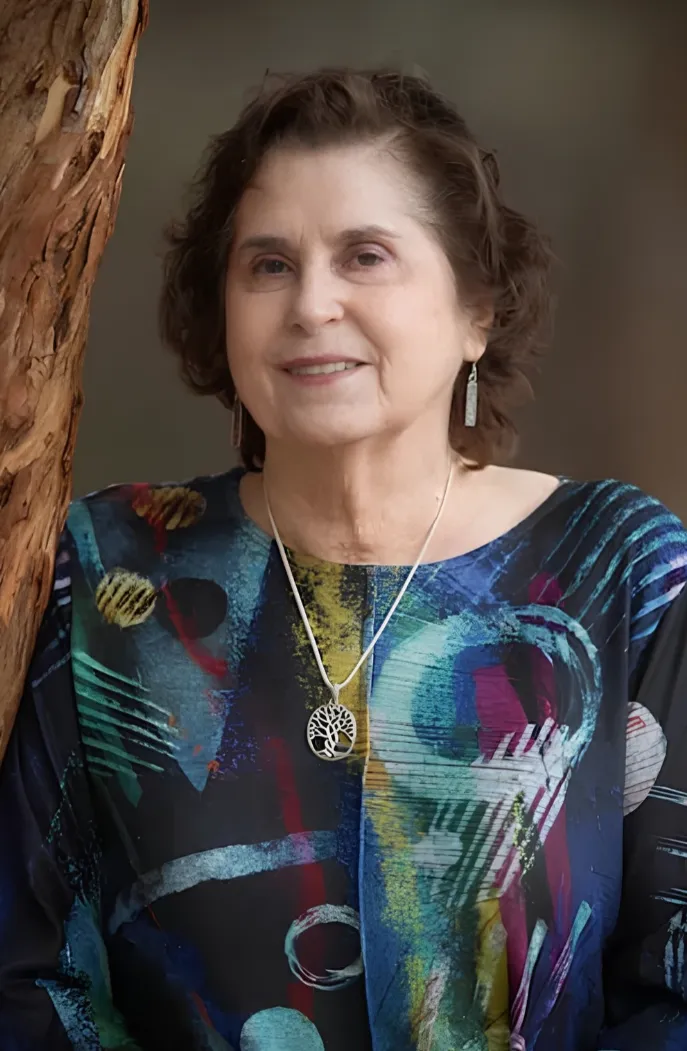
The Long Strange Trip Episode 38: Grief Doesn't Have a Timeline - Learning to Live With Loss | Judy Iannaccone
About the Episode:
What If Grief Isn't Something We Need to Get Over?
What if we've got grief all wrong? We tend to think of it as something we need to get through, put behind us, and move on from. But what if grief isn't something we get over? What if it's something we learn to live with?
And what if the way we prepare for death is one of the greatest gifts we can leave the people we love?
I sat down with Judy Iannaccone of Spirited Crossings, a death doula and grief coach, to explore those questions. We talked about grief, dying, caregiving, and the ways we can support people when life is coming to an end.
One thing became clear to me: there's no single right way to grieve.
There's No One Way to Grieve
We all experience loss differently. And grief doesn't always look the way we expect it to.
Judy explains that grief can bring sadness, anger, confusion, and even relief. For someone who has spent months or years caring for a loved one, losing that person can bring a complicated mix of emotions. You can miss someone terribly and still feel relieved that their suffering—or the demands of caregiving—has ended.
That doesn't mean you loved them any less.
We don't always give ourselves permission to feel those things. We think grief is supposed to follow a certain pattern, but it doesn't. And trying to force ourselves into someone else's idea of what grief should look like doesn't help.
What Does a Death Doula Actually Do?
Before this conversation, I wanted to understand more about the role of a death doula.
Judy describes the work as helping people and their families navigate the dying process. That can include reviewing someone's life, creating legacy projects, talking through end-of-life wishes, and helping families have conversations they might otherwise avoid.
It's not about taking control of someone's final chapter. It's about helping them approach it with more intention, support, and understanding.
There's something important about having someone who can help make room for these conversations before a crisis forces them to happen.
Preparing for Death Is a Gift to the People We Love
Most of us don't want to think about our own deaths. I understand that. But avoiding the subject doesn't make it go away.
When we haven't talked about our wishes, the people we leave behind may have to make difficult decisions while they're already dealing with loss.
What do we want at the end of life? What kind of burial or arrangements matter to us? Have we talked about those things with the people who may have to carry them out?
Judy and I also explored alternatives to traditional burial, Death Cafés, and the value of creating spaces where people can talk openly about death.
These conversations may feel uncomfortable, but they can make an enormous difference to the people we love.
Grief Changes Us
One thing I keep coming back to is that losing someone isn't just losing their physical presence. It can change how we see ourselves and how we understand our place in the world.
Grief can reshape our identity. It can leave us wondering who we are without the person who played such an important role in our lives.
And I don't think there's a timetable for figuring that out.
Maybe the goal isn't to get back to the person we were before the loss. Maybe it's to find a way to carry that relationship, those memories, and that love into whatever comes next.
Are We Willing to Have These Conversations Now?
I came away from this conversation thinking about how much we put off talking about death. We wait until someone is seriously ill, until a decision has to be made, or until a family is already in crisis.
But we don't have to wait.
We can talk about what matters to us. We can make our wishes known. We can give the people we love a better understanding of what we want—and what they may need when we're gone.
And when grief comes, we can give each other room to experience it without judgment or expectations.
I'm still figuring out how to have some of these conversations myself. But I believe they're worth having.
What could we do today to make the end of life—and the days that follow—a little easier for the people we love?
Transcription:
Intro (Josh)
Welcome to The Long Strange Trip. I’m Josh, the host of the show. We’re going to dig into six areas together, finding real work-life integration instead of that brutal 95/5 split too many business owners live with. We’re going to approach retirement as an actual reinvention rather than just stopping work, and we’re facing death honestly and avoiding PTSD around death.
We’re also building resilience when life throws us curve balls, we’re sharing wisdom across generations, and finally, we’re understanding the patterns that show up in all our transitions. I’m not coming at this as an expert. I’m a fellow traveler figuring this stuff out in real time, especially now as I navigate my own dual cancer diagnosis at 73.
Welcome to The Long Strange Trip. I’m glad you’re here
Josh
Hey, how are you today? This is Josh Patrick and with, with Judy Iannaccone. Is it Inaconie or Iannaccone?
Judy 02:05
Yeah, Iannaccone, but close enough
Josh 02:10
Iannaccone. And you’re at the Long Strange Trip podcast, and Judy has two things that she’s got going on for her. One, she’s a death doula, and we’ll get to that a little bit later, but she’s also a grief counselor, she’s the first grief counselor we’ve had on the show.
So let’s bring her on and we’ll talk about grief counseling for a while. Hey, Judy. How are you today?
Judy 02:50
I’m great. Before we get going though, Josh, I do wanna clarify something. I’m a grief coach. There is a difference. I’m not a therapist.
Josh 03:10
Okay, well, grief coach, how’s that? Um, what is a grief coach and what do you do?
Judy 03:25
Well, basically it’s very similar to, Josh, to what I do as a death doula. I sit with people who are in grief. I don’t try to fix them because there isn’t fixing that. One has to live in the space of grief and allow it to move through as it does, and I hold that for them and allow opportunities to talk about their person or possibly even their pet.
Uh, it could be a, it could be a dog or cat or even a bird. But it’s certainly a space to accept whatever’s moving through them and allow them to recognize that their grief is their love. It’s just taking another form and it’s transforming
Josh 04:22
So you don’t try to help solve the grief, but you help them move through the grief
Judy 04:30
I allow them to sit with the grief. I allow them to move at their own pace. I think that’s the most important thing. Our society has a sense, just as with death, that it’s just something to get through and move on and carry on our lives exactly the way they were. All of those things, death and grief, change us, and it’s possible, I think, the, the thing that I see with clients is getting them to understand that it’s possible to sit in the space of grief, and at the same time allow some joy into their lives minute by minute
Josh 05:25
Well, how do you go about doing that?
Judy 05:30
Well, I give them the space to be. I think that’s the key. Uh, so many people, you know, they lose a loved one, and their family, their friends, you know, they’re there to begin with. They’re there with the casserole dishes. They’re there with the conversation, the phone calls, the flowers. But at a certain point, they’re done.
They, they think, “Well, you know, it’s been a couple weeks. It’s time for so and so to get to a better place and to be exactly the way they were before.” And they’re not gonna be the way they were before. They’re gonna be changed, and I think we learn to accept in grief our new identity, and I think that’s a real challenge.
Because for many people, you know, Josh, they’ve been caregivers. They’ve been sitting at the bedside. They’ve been paying attention to their person, and now their person’s gone, and they’re not quite sure who they are at that point. So it’s a step-by-step. It’s offering tools. Maybe it’s a soft suggestion.
“Have you been outside today? Would you consider taking a walk today?” If that’s something they like to do. Clearly, if it’s not their thing, I’m not...
Josh 06:50
Hmm
Judy 06:52
But, but it is, it is offering tools
Josh 06:58
You know, it’s really interesting. I just wrote a, um, Substack post essentially about n- a similar topic where people are going through transitions, major transitions, and certainly grief is a major transition, i- in that others will try to run their agenda through you for what they think you should be doing instead of sitting with them like you’re doing and probably asking very good questions about what’s important for them and how would they like to maybe honor the person or the animal that is gone.
Does that make sense to you?
Judy 07:40
It totally makes sense. It’s sometimes it’s allowing them to come up with a ritual, especially in cases of disenfranchised grief, and that could be the case of losing a pet. It could be losing someone in your life that maybe isn’t recognized by larger society for whatever reason. Not for me to judge, and I think that’s the key thing.
I don’t judge. A person is sitting in their space, and that’s where they are. So it’s, it’s sitting with them. It’s asking the question about, “Well, why, why is this person, this, this pet,” whoever, whatever it is, “why, how, how did they affect your life? What do you remember the most?” Giving them the space to explore that, and perhaps offering tools.
Sometimes death has happened suddenly or transition has happened suddenly, was in- was unexpected, and there’s no way that they could have said goodbye. But maybe in the space, they can talk about what they would have said. Maybe they could think about writing a letter to that person. Whether or not the letter’s received, it doesn’t matter.
They’re given the opportunity to process what’s going through them, and that’s so important. We all, we all deserve that, Josh
Josh 08:58
I would agree with that. The other thing which you mentioned, which I think is given short shift in our society caregivers. And as a, as a grief, um, coach, I was about to say counselor again, but as a grief coach, I have-- sometimes my brain doesn’t work very well. As a grief, uh, coach, suspicion is that when someone’s a caregiver they’re-- and-- or they were a caregiver and they’re grieving, may be a sense of relief that goes along with the grieving
Judy 09:45
100%. There’s, there’s so many emotions that go through somebody. And, um, having sat in that place myself, I think that, uh, one of the ones is that relief, and then not necessarily in this order, and it’s not necessarily for everybody. Each experience is individual. But it might be guilt. It might be, “Oh, I’m feeling relief that, that my, that my person is gone.
Oh, I shouldn’t feel that way.” All emotions are welcome, and they’re allowed to move through us and at the time that they want to, and it’s all normal. I think that’s the key to this. Every piece of it is normal. There is no one way to grieve
Josh 10:28
That makes a lot of sense to me. So, um, a first cousin to being a grief counselor is being the death doula, would assume. I mean, a grief counselor is after the event happens, and a death doula is before the event happens. So for the listeners that haven’t heard our past episodes with death doulas, what is a death doula and what do they do?
Judy 11:08
Okay. Well first I wanna remind you again, I’m a grief coach, and I see it as a continuum, and that’s really why, ’cause I, the g- the death doula part of me came first, and then I just wanted to go in a little deeper on the, on the grief coaching side. Because we are grieving as our loved person is going through the death process.
It’s not just something that happens afterwards. So what does a death doula do? Basically, I meet a client wherever they are. Uh, I’ll give an example. I, I walk into a room. I may have a sense of what their diagnosis is, of what perhaps the prognosis of, of life is, but, you know, none of that matters. What really matters is where the person is and how they’re feeling the day that I meet them.
And I have things in my toolkit, if you will, and certain standard things that, that death doulas do. Uh, certainly starts with something that’s referred to as life review, and basically that’s getting to know the person. What were the highs, what were the lows of that person’s life? Something that they can share with you, and also maybe is there unfinished business?
That’s, that’s the thing that’s keeping them up at night when they’re wondering about when is their end coming and, oh, but I’ve never a- apologized to so and so, or I’ve never made amends with that person. So it’s exploring, is there a way to do that before the individual dies, or do we just need to talk about it and sit with it and hold it?
And we do those kind of things at the individual’s own pace. There’s no schedule for what a death doula does because I may sit with a client and all we ever do is, is life review, and I certainly had clients like that. Other clients want to get into what’s called legacy work. Maybe they’re very concerned about leaving their loved ones, that we all are at that time, or we will be, and they want to leave something.
Maybe it’s just a letter and not a just. It’s a, it’s a big one. To their, to their spouse, to their children, something that leaves those last thoughts that they wanna share. Um, possibly it’s, it’s thinking ahead to milestones in their children’s or grandkids’ lives. Birthdays, uh, celebrations, graduations, uh, weddings, whatever it is.
Maybe it’s writing a card that can be saved and presented at that time. Something that will allow them to share themselves after they’re gone. Could be a video, uh, a video with sage advice that you don’t want somebody to forget. The best things you figured out in your life that you want to be remembered or at least memorialized in some way.
Those are things, and there’s so many. I mean, legacy work, uh, is just v- vast. Uh, uh, planting a garden for somebody ahead of time, um, could be, “Oh, I’m... You know, I have an end date,” and we all do, by the way, we just don’t always know. Um, “I really wanna have the celebration of my life now. I don’t wanna wait.
Let’s have a party.” So there’s so many things that death doulas can help plan. And of course... Go ahead.
Josh 15:10
Gå i hell
Judy 15:14
I was gonna say, of course, planning towards, towards how they want their death to be. That’s the other one. Um, it could be as simple as working up a vigil plan for what they want or don’t want in their last days.
Could be more complicated. I work with clients, uh, one, one daughter wanted me to do a complete death plan for her mom, and that was to include many things. The vigil certainly was among them. It was really thinking about the celebration of life that she wanted. Basically having a, a, a scheme, if you will, for what she could do so afterwards she didn’t need to think, “Oh, what do I need to remember?”
It was all there. “Oh, now’s the time I should be getting in touch with people,” these kinds of things
Josh 15:50
Have you ever had this happen where you’re brought in as a death doula there’s a major disagreement about what sort of care should be at end of life for your
Judy 16:07
This is a common thing that happens because obviously families don’t all agree, and sometimes, uh, if people have thought ahead, and I didn’t mention this, uh, the planning, the documents, the thinking about what you want at the end or don’t want at the end is so important. But sometimes what you’ve decided is very difficult for people to do.
And I would say that the, um, the death doula plays as an advocate for you even when you’re not able to speak. However, we can’t force things. Families need to come to their own agreement and, and I know that, um, sometimes things happen that maybe once you’re gone, you wish they hadn’t, but it’ll all be okay.
I think we, we learn to work together at that point
Josh 17:10
So do you ever have to walk away from a, an, an engagement because you might have a brother and sister or a sister and sister, one wants to go through the entire medical industrial complex death, excuse me, and the other wants to go through, wants to have their parent, die as naturally as possible at home?
Judy 17:38
Well, fortunately I haven’t had to walk away. There have been disagreements sometimes and I think, you know, where we as a death doula can help is creating a little bit of a calm space to talk about those things
Josh 18:05
Yes
Judy 18:08
or dad might want based on what we know, what they’ve left, what they’ve shared, and hopefully come to a conclusion that, that will serve all people to their highest good
Josh 18:30
Now, I’m assuming that occasionally you get brought in early enough to help people decide what their good death might be. Am I correct in that?
Judy 18:50
Absolutely. Uh, a lot of people think that death doulas are for the end days only. And some doulas, and I will say this, only work with people once they’re on hospice. I am not that death doula. I believe that we all need to prepare for our death, truthfully, every day. It’s not something we wanna, most people wanna think about.
But the more we put our arms around the fact that we are finite in terms of our time on this planet, the more we can add value to our lives and be at greater peace when the end is approaching. So yes, I, I, I have worked with clients sometimes two years, um, year and a half. Sometimes, uh, I know one gentleman I’ve been working with with Parkinson’s.
I’m not working with him at the moment, but I suspect that I will come back when that time is more present in him. But I did work with him for six months and helped him deal with those kinds of things that were definitely keeping him up at night about, uh, his approaching, um, uh, end
Josh 20:25
Uh, it would seem to me world there are options that many people not even aware of that exist when it comes to dying. And is part of your work educating people what all the options might, may be?
Judy 20:48
Absolutely, if they’re open to those options. My, my goal is not to convince anybody of anything, but I certainly have that awareness. Uh, there are so many, obviously it depends on where you live in the United States, if you do live in the United States or elth- elsewhere. There are laws that keep people from doing certain things, but certainly I happen to live in California, and in California we have medical aid in dying.
That is an option that is available if somebody has a six-month diagnosis, has two doctors agree that it’s an appropriate action to take if that, if that’s their desire, and that they’re able to take it themselves, because that’s the key, they must self-administer. So that’s one option. Then other option that is available and legal to my knowledge everywhere is called, uh, voluntary stopping eating and drinking, which sounds difficult and for some people might not be attainable.
But it is something that people with, um, uh, varying, um, uh, diagnoses that are not six-month diagnosis but perhaps multiple that they’ve been living with for a long time, pain that they’re not happy with, quality of life that they’re not happy, it’s a choice, and they, they basically stop eating and drinking and, uh, to the much, especially the drinking part, as possible.
And, uh, then once that process begins, they’re able to go on hospice and, uh, care is provided as far as, um, comfort care, uh, uh, drugs that will keep them so that they’re not in pain. So those things are definitely available
Josh 23:30
So, um, when it comes to actually the, um, what happens to the body after people die, seems to be a lot of new options there also. Um, is that a discussion that you have with your clients?
Judy 23:50
Certainly. It is something that I ask, um, from the beginning when I do an intake with a client. Uh, have they already made plans? If they’ve already made a choice, there, there’s no discussion needed. But, um, if they haven’t and they’re open to hearing about options, then, then I certainly get into sharing them.
And yes, there’s, you know, there’s the standard of, of, if you will, traditional burial that, that has happened for, for many years. Um, um, many people, for example, assume that certain things such as embalming are necessary and required. They’re not. So that’s something that can be educated upon. Then there’s obviously cremation that has become, uh, and I’ll call it fire cremation for clarity.
That’s become, I would say, more popular in recent years. Uh, and, and, and most people prefer to do that over, over the other just sometimes because of practical, uh, expense issues. Um, then there’s so many green burial iss- uh, opportunities now. Depending where you are, they’re not always accessible to everybody.
I wanna be clear on that. Uh, I, again, I’m in California. We have what’s called water cremation or aqua cremation, which basically is using, uh, alkaline water to reduce the body and, um, you wind up with something not dissimilar as far as what happens when somebody’s cremated because there’s still some remains at that point.
But, um, but, um, it’s, it’s for some people a green option. Then, um, there are green burial sites that do not require what traditional caskets, if you will, but maybe just a shroud or a wicker, um, basket kind of container. And again, it’s gonna vary from where you are. There’s something called the Green Burial Council, and information is available online that you can probably find, uh, something that’s close to your area that works.
Um, people are opting towards, um, also, um, com- co- human composting, depending on the state. Not all states have this. We’re just getting this in California ourselves. So, so many options, and it’s just a question of, as I say, the Green Burial Council has all kinds of information on their website
Josh 26:25
That’s great. Um, how often do you find clients that say, “Okay, I think I’m gonna be, do, I, I wanna get cremated,” and then you say, “Well, you know, there’s some other...” Do you ever say, “You know, there are some other options besides cremation that you may wanna consider”?
Judy 26:52
Occasionally I mention it, but if somebody’s really definite on what they want because it’s been, you know, a family tradition if you will to do this, I, I’m not gonna try to convince them of a d- a different path. That, that’s absolutely the-
Josh 27:25
Not, I’m not talking about that. I’m just talking about somebody who is curious
Judy 27:40
Oh.
Josh 27:42
really doesn’t know what their options are. They say, “I think I wanna be cremated, I don’t know. Are there other things I can do?”
Judy 27:55
Yeah. Uh, absolutely. I, I will explain what’s out there and, oh, and I did fail to mention one option that most people don’t think about, and that’s donating their body to science, especially if they’ve had some kind of illness that they think somebody would benefit from that. And that, by the way, is a no-cost option.
Uh, and once, uh, if the medical school or whatever it is that you’ve d- chosen is, is finished, uh, your family still gets your remains after cremation
Josh 28:40
So what is the challenge you have as a grief coach and the biggest challenge you have as a death doula?
Judy 28:55
Well, as a death doula, I think that it’s pretty simple. Our society has become so death adverse in recent years. It’s that thing that’s hidden away, um, in the hospital room behind the closed door that, um, isn’t discussed and maybe even i- if you’re a child and, or a young person and you bring it up, “Oh, we don’t want to talk about that now.”
And I, see this a lot with clients that are ready to talk about it. They, they want to talk to their families about what their desires and their wishes are. But the son or daughter says, “Oh, mom, oh, dad, we don’t need to think about that.” And of course, you do. And so I think it’s getting people to normalize the conversation, to do things such as being willing to attend a death cafe and sit and talk about death and dying or possibly, um, simply to explore what’s, what’s out there.
Not to, not to change the channel when a show comes on that might tell you something important.
Josh 30:30
So what is a Death Cafe?
Judy 30:36
Aha. Well, originally it was designed for people to go to a, a, a physical place where you would sit and, um, have coffee or tea and cake, and you’d look across the table and you’d bring up conversations that you want to have with people that also want to have them. So in other words, it’s the space that it’s okay to talk about death and dying and be comfortable because everybody’s gone there for that reason.
It’s confidential. It’s a space that, um, is not in- designed to try to convince you of any particular course of action, and it’s also a space that’s always held free. And again, people can find them by going to deathcafe.org, and they’re listed there. Uh, it’s been around for quite a while. With, um, COVID, many death cafes went, uh, online, and there are still many of those available anywhere, basically
Josh 31:40
So, um, what’s your biggest challenge as a, uh, grief coach?
Judy 31:48
Well, I think it’s just, it’s getting people to recognize that they, they can sit with somebody like me and talk about their grief and it’s a non-threatening environment. It’s not clinical, ’cause I’m not clinical. I’m not a therapist. It’s a place to begin addressing grief, um, and enter that space. Um, some people need, um, a, a space that is clinical and basically that’s something that I’ll recognize and offer them, um, referrals if needed
Josh 32:28
Cool. So, um, what’s the most enjoyable part of this job for you?
Judy 32:38
Well, I think it’s all actually enjoyable. Um, I get to s- I get to be with people at moments that are not easy for them, and some people can’t imagine doing that. But what I do is I get to see them opening to possibilities, and there’s nothing more magical than when people are willing to think of a different way of approaching what, what is happening with them
Josh 33:10
Yeah, you know, in, in “The Long Strange Trip,” I- one of ours that we are investigating is what I call death without PTSD. And I, I think most people, or at least many people, but I would say most people have PTSD around death. Um, you know, it’s, it’s really interesting. In my own case, I’ve been writing a bit about, what kind of planning do I need to do to leave my family in good shape? I thought I had done pretty good work, and after writing a few posts, I said, “Boy, do I have a lot of work to do,” that I really never had a discussion with my kids about what they want. You know, it’s... I, I’ve been pretty clear about, okay, I’m gonna control me up until the point I die, but after I’m dead, what do they want? And I think that needs to be a family conversation, and we’re gonna have that family conversation. And then there’s the conversation about the stuff, is that we often just leave the stuff, and somebody has to come around and clean up after it.
Judy 34:30
Thanks so much
Josh 34:33
you know, so again, this is, you know, we’re gonna have a conversation.
How do you wanna clean up after Mom and I are gone? do you want, you know... The, you know, my, my post was titled, is, is titled is, “Nobody Wants a Stereo.” I’ve got this very good, huge stereo that I’m sure neither of my kids want, but how do you dispose of the darn thing?
Judy 35:02
Yeah.
Josh 35:05
And, and
Judy 35:08
It’s,
Josh 35:10
to talk about that beforehand so I don’t leave them a mess. Um, and I think that some of this stuff is just that maybe it’s my own PTSD around death, which I don’t think I have, but obviously I didn’t do what I thought I did
Judy 35:40
Well, there’s so much and, and you bring up a important point of what’s referred to as, as... And it’s a, it, it’s a title that people don’t like either, but it’s called death cleaning, and we can do that ahead of time. We can think it through. We can get r- we can start offloading things that we don’t need. We all have those things.
We have closets full. We have garages full, storage areas full, h- houses full, and it’s just a step-by-step so that... And, you know, do you want any of it? That’s the question because lots of times people don’t anymore. They don’t want that big armoire standing in the corner that’s not gonna fit in their apartment.
So those are, those are beautiful gifts. All of that planning, Josh, for your family, for your loved ones, whether it’s your wishes, your desires, your things, that is such a gift. And talking about it, yes, another gift
Josh 36:50
Yeah, and leaving, and if they don’t wanna do it... You know, I was thinking, I would read someplace that the average takes something like 500 and some odd days to settle, and I think that’s mostly around the stuff. And if we can find a way to handle the stuff in 30 to 60 days, it saves a lot of time, a lot of effort, and a lot of mess that somebody else doesn’t have to clean up against us. I mean, I’m fortunate in that we have the funds to just call, you know, Grunts with Junk and come take it all away and do whatever you want with it. Or keep some stuff and send the stuff with Grunts and, you know, and, and frankly, I think that it’s important to fund this, not expect your kids to fund it, or who’s ever behind to fund it. But that’s just my opinion, so.
Judy 37:52
It’s a great one.
Josh 37:56
And well, you know, it’s one of the things is that what I’m learning with this project is that, um, there’s a lot more than one way to skin a cat, and this is where I’m, um, I’ve moved my of being an expert a, a seeker or a student. what I’m finding is that when you change your mindset around that, you find that there are a lot more ways to get to place than you as an expert might decide that this is the way you do it, ’cause I’m the expert, and I kinda like this. rate, Junie, unfortunately, we are out of time.
Judy 38:50
Oh, wow.
Josh 38:53
Yeah, it got us by fast all the time. So, um, how would people find you? What would you like them to do?
Judy 39:05
Awesome. Well, my business name is Spirited Crossings. So I have a website, spiritedcrossings.com. I’m also ... They can find me on Substack. I write there, not only about death and dying, but that is an undercurrent about what I write. I write about life and discovery and travel and different things as well.
But, uh, they can find me online and also on LinkedIn. I’m on all of those places.
Josh 39:38
Cool. And, um, I would encourage folks to talk with Judy if you have an interest in understanding what she does and how it could affect you, especially if you live in Orange County, California, because that’s where she is.
Judy 40:00
and grief coaching and more
Josh 40:04
Yeah. And, uh, I have two things I’d like you to do. The first is please give us an honest rating and review. you love us, you go to wherever you’re listening or watching this and give us five stars and say nice things about us. And if you hate us, you go there and give us one star and say horrible things about us, and just sit here and cry some big crocodile tears and make a big wet, wet mess on the floor. But you won’t see it, so it doesn’t matter. Um, the second thing is, is that if you think you’d like to be a guest on the show, why don’t you send me an email? It’s [email protected]. That’s the number two, and solution is singular. That’s [email protected]. We’ll set up a time to talk and see if The Long Strange Trip podcast is right for you. this is Josh Patrick. We’re with Judy Iannaccone. You’re at The Long Strange Trip, and I hope yours is a good one, and we will see you back here next week.
Outro (Josh)
Thanks for spending this time with me today. I really appreciate you being part of this journey. I’d be grateful if you’d leave an honest rating and review. It helps other people find these conversations, lets me know what’s landing with you and what isn’t. If you love the show, give us five stars, and if you hate it, give it one star and I’ll just cry a little bit.
Keep asking the hard questions. Keep being honest about what’s difficult. And remember, we’re all just trying to figure this out together. I’ll talk to you next time on The Long Strange Trip. Thanks for stopping by
