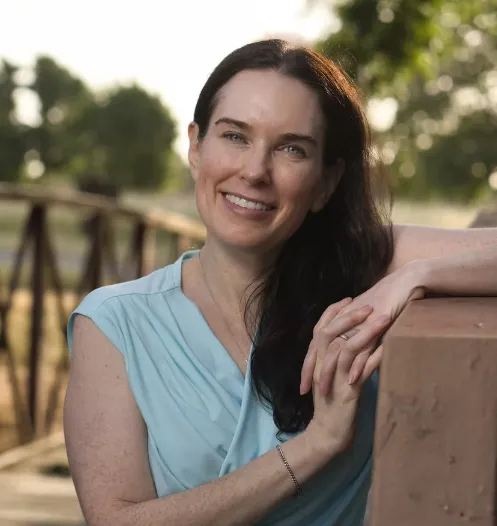
The Long Strange Strip Episode 36: Why We Need to Talk About Death Before It's Too Late | Traci Arieli
About the Episode:
Why Are We So Afraid to Talk About Death?
Most of us know we're going to die someday.
But you'd never know it by the way we talk about it.
We avoid the conversation. We put off making decisions. We tell ourselves we'll deal with it when we have to.
And then something happens. Someone gets sick. A loved one is nearing the end of their life. Suddenly, we're trying to make some of the biggest decisions we'll ever face at the exact moment we're least prepared to make them.
I've been thinking a lot about death lately. At 73, and navigating my own cancer diagnoses, it's not exactly an abstract subject anymore.
So I sat down on The Long Strange Trip with Traci Arieli, a death doula who provides non-medical support to people nearing the end of life and the families who care for them.
We talked about something most of us would rather avoid: how to prepare for death in a way that helps us and the people we love when the time comes.
We Wait Until There's a Crisis
I think one of the biggest mistakes we make is assuming we'll have time to figure things out later.
We'll talk about our wishes when we're older. We'll get the paperwork done when things settle down. We'll explain to our families what we want when there's a reason to do it.
But life doesn't always give us that kind of warning.
And when a crisis hits, families are often left trying to make decisions without knowing what their loved one would have wanted.
That's a terrible position to be in.
You're dealing with fear, grief, and uncertainty. You're trying to understand what's happening medically. And on top of all that, you may be wondering whether you're making the right decision for someone you love.
Traci helped me think about how much of that difficulty we might be able to avoid by having these conversations earlier.
Not because preparation makes death easy. It doesn't.
But it can make an incredibly difficult time a little less confusing.
Writing It Down Isn't Enough
One of the things we discussed was advance directives and why it's important to document your wishes about medical care.
That's a good start. But it's only a start.
What good is a document if nobody knows it exists? What happens if the person who's supposed to speak for you doesn't know what you actually want? And what if your family members have very different ideas about what should happen?
These are questions worth asking before you're in a hospital room trying to answer them.
You need to talk with the person you've chosen to be your healthcare advocate. They need to understand your wishes, and they need to know how to access the documents when they're needed.
More importantly, they need to understand what matters to you.
Because making medical decisions isn't always as simple as following a list of instructions. Sometimes circumstances change. Sometimes the choices aren't clear-cut.
The people speaking for you need more than a piece of paper. They need to understand the person behind it.
Caregiving Takes a Toll on Everyone
We also talked about the emotional and financial burden of caregiving.
When someone you love is nearing the end of their life, it's easy to focus entirely on that person. You're trying to make them comfortable, manage appointments, coordinate care, and make sure nothing gets missed.
But what happens to the people doing all that work?
Caregivers can become exhausted. They can feel guilty about needing a break. They may struggle financially or find that their own health and relationships are suffering.
And sometimes, they don't ask for help because they think they're supposed to be able to handle everything themselves.
I understand that instinct. A lot of us are used to solving problems and taking responsibility.
But caregiving isn't something one person should have to carry alone.
Part of preparing for the end of life is thinking about the people who will be there to help. Who can share the responsibility? Who can provide emotional support? What resources might the family need?
You can't plan for every possibility. But you can start having the conversations that make it easier to ask for help when you need it.
Preparing for Death Is Also About Helping the Living
I think we sometimes treat conversations about death as if they're only about the person who's dying.
They're not.
They're also about the people who will be left behind.
When families understand what's happening, know what their loved one wanted, and have some idea of what to expect, they may have more room to focus on being together instead of trying to solve every problem in the middle of a crisis.
That doesn't mean there won't be grief. It doesn't mean everyone will agree or that the experience will be peaceful.
But honest conversations can give people something important: a better chance of understanding what's happening and making decisions with less confusion.
And after someone dies, the people who are grieving still need support. They need room to process what happened, to talk about it, and to find their own way forward.
There isn't a neat timeline for grief. There isn't a single right way to do it.
Sometimes the most helpful thing we can do for someone who's grieving is simply be there.
The Conversation We Keep Putting Off
I know talking about death isn't easy.
We don't want to frighten the people we love. We don't want to think about losing them, and we certainly don't want to imagine our own lives coming to an end.
But avoiding the subject doesn't make it go away.
I'm not suggesting we need to turn every family dinner into a conversation about dying. But I do think we need to find ways to talk about it before circumstances force us to.
What kind of care would you want if you couldn't speak for yourself?
Who would you trust to make decisions on your behalf?
What matters most to you near the end of your life? And have you told the people who need to know?
These aren't easy questions. But they're important ones.
I'm not coming at this as an expert. I'm a fellow traveler trying to figure this stuff out in real time, and my own experiences have made it harder to pretend these conversations can wait forever.
Maybe preparing for death isn't really about trying to control something we can't control.
Maybe it's about making our wishes known, giving the people we love a little more clarity, and making room for the conversations that matter while we still have the chance.
What would change if we stopped waiting for a crisis to talk about death?
Transcription:
Intro (Josh)
Welcome to The Long Strange Trip. I’m Josh, the host of the show. We’re going to dig into six areas together, finding real work-life integration instead of that brutal 95/5 split too many business owners live with. We’re going to approach retirement as an actual reinvention rather than just stopping work, and we’re facing death honestly and avoiding PTSD around death.
We’re also building resilience when life throws us curve balls, we’re sharing wisdom across generations, and finally, we’re understanding the patterns that show up in all our transitions. I’m not coming at this as an expert. I’m a fellow traveler figuring this stuff out in real time, especially now as I navigate my own dual cancer diagnosis at 73.
Welcome to The Long Strange Trip. I’m glad you’re here
Josh
Hey, how are you today? This is Josh Patrick. We’re with Traci Arieli. I think I pronounced the last name correctly. And you are at the Long Strange Trip podcast. Traci is a death doula, and I’m gonna let her explain what death doulas are because I, although I have a sense, I’m gonna bet she will do a much better job than I.
So let’s bring Traci on, and we’ll start the conversation. So Traci, what is a death doula?
Traci 02:00
Good morning, and thank you so much for having me on. I appreciate it.
Josh 02:08
My pleasure
Traci 02:10
A death doula or an end of life doula, um, provides non-medical holistic help and support f- to people who are terminally ill, um, and their family, their loved ones, and their communities, and that runs an entire, a whole gamut.
Uh, it, it could be from planning, helping people with their advanced directive, helping those conversations that they need with loved ones, setting up their home environment to make sure it’s as comfortable as possible. We sit in vigil. We companion. We provide respite for those caregivers when they need some time, and also a lot of grief work. Uh, we also help with, uh, you know, life review and any legacy projects
Josh 03:06
So, um, you mentioned one of my hot topics, which is caregivers. I believe that caregivers are given a huge short shift by society. We always ask how was the patient who was dying. We never talk about the caregiver. So how do we help caregivers get the attention and, um, respect and, and I’m drawing a blank.
Um, what’s the word I want? Appreciation that they deserve
Traci 03:32
Well, c- caregivers, it is so difficult in our country to be a care- caregiver, and I really say in our country because there are so many factors there. We, we don’t talk about grief and, and death and, and, uh, you know, getting ill our country. So it’s, it’s kind of hidden in the corner. So that’s difficult. Um, but then also people don’t talk about what it really means to be a caregiver and how much you have to give up. Um, people don’t realize that many times people who are caregivers have to, have to step away from their job. So there is a, a, a real f- there’s a financial burden, right? And then there’s that emotional burden, um, that energetic burden. You’re basically on call almost 24 hours a day. So people who are not paid caregivers, who are family members, who are friends, it is very difficult. Um, and, uh, as I said, unfortunately, um, caregivers, right now they’re, the, the government is starting to work and, and caregivers are able to be reimbursed, but it’s not to the point where as if they’re working full time, and caregiving is a full-time-plus job
Josh 05:06
Yeah, I would think that for the most part, caregiving is more emotionally draining than financially draining. Although I’m sure there are plenty of times where it’s financially draining too. But if we look at, you know, the average death in the United States, it’s not 50, although there are plenty that happen at 50.
Traci 05:54
Yes
Josh 05:58
They’re typically 70, 80, 90, now 100, and typically the caregiver will be a family member who is likely retired. So it seems to me that the emotional strain is more often than not much larger than the financial strain. Or maybe I’m wrong about that
Traci 06:08
and, and, it, and more, yes, it used to be that the person was retired, but you think about that. A person who is a caregiver, it’s a physical job also. And so people who are retired, who are in their 70s and 80s, is very difficult to do. I see more and more now that the Gen Xers, that sandwich generation,
Josh 06:24
Ja
Traci 06:26
they are having to do more of that caregiving. I’m even going to take it a step further. It’s usually women who are doing that caregiving, that
Josh 06:40
Yes
Traci 06:42
And that affects so much more than just, uh, you know, the job loss. It affects their Social Security. It affects, you know, we can... This is a whole different conversation, right? But it, it, it is, um, so there is a big financial burden to it because it doesn’t only affect the present, it could affect the future and, and how, uh, down the road, uh, you know, Social Security and how, how that might be affected
Josh 07:20
Yeah. Um, there are plenty of people who talk about the finances of, uh, retirement and death, so we’ll leave that to the other folks. And so,
Traci 07:30
Exactly
Josh 07:32
So when are you generally brought in, and what is it that triggers the reason you are brought in?
Traci 07:44
Well, I’m very fortunate because most of my clients get in touch with me they find out they or their loved one terminally ill. And so that could be a year, even two years down the road. And I’m usually pulled in, as I said, when a person or their loved one has found out they’re terminally ill.
Again, a lot of Gen Xers now are giving me a call because they’re more in touch with the work I do and, and death doula, end of life doula role. Um, but, y- you know, a- a- and s- so I’m brought in most of the time, um, well before the death actually happens. And, um, I’m sorry, was the, the... Y- you also asked what, what that
Josh 08:30
What trig- what trig- what triggers you being brought in?
Traci 08:36
Yeah, yeah. So it’s usually that terminal illness. Sometimes, um, I do get calls from people when their loved one enters hospice, and then it is a mad rush. It is, uh, people are overwhelmed, and they’re in crisis.
Josh 08:52
Yes
Traci 08:54
That is the least, y- the, the, the worst time to be brought in because, the family really is in crisis.
Um, again, if we talked about death and what that actually looks like in a s- in our society, uh, if we talked, made that, uh, more available, those conversations, then people, I think, would be better prepared
Josh 09:22
I agree 100%. From, you know, one of the, um, areas which I name for The Long Strange Trip is death without PTSD, wh- which translates into how to have a good death. But I kinda like the death without PTSD because for most people, you start talking about death, they’re, they move into PTSD immediately. They just aren’t willing to engage on that.
Traci 10:10
Yes
Josh 10:12
One of the questions I have is that, you know, I didn’t, I’ve never even heard of a death doula till I started The Long Strange Trip podcast, and all of a sudden I’ve had a bunch of death doulas appear. Um, how do you get the word out to more people that there’s people like you that can help in this very, very difficult time in someone’s life?
Traci 10:34
Yeah. I think that being on, you know, doing exactly what we’re doing, talking about it, being on podcasts. I, I take and do presentations at community centers, libraries. Ideally, I would love, as crazy as this is going to sound, I would love when a person has health class, you know, in, in high school
Josh 11:00
Yes
Traci 11:02
To talk about, you know, death, to talk about advanced directives.
Um, it als- you know, to... We talk about everything else. Um, again, death is taboo. Um, but I’d also like families to talk about it and be more When children are young, we shelter them from I remember when my gram- my grandfather passed away. I was in high school, so I was a little bit older than a child But I saw his bo- uh, he died at home.
Josh 11:36
Right
Traci 11:38
Were there. I saw his, his body. Uh, we talked about it. I, I think that’s important. Uh, I think that when there are certain, um, know, tasks that we do, when a, when a, uh, when a teenager gets their driver’s license, as an example, and they have to decide if they wanna be an o- organ donor or not, that’s a great time for a parent to step in, talk about that, and also talk about an advanced directive and what their advanced directive says and why. So these are just these, some points in time to, y- where we can have these discussions in order to make illness and, and death and grief more mainstream
Josh 12:34
Yeah. One of the things that I’ve decided for sure, there’s a lot of... We’ve actually, I’ve actually done a ton of work around death for myself and my family, and what I’ve discovered by doing the work that I’ve done and the writing that I’ve done, that I’ve not even scratched the surface. So, um, that’s gonna be required with family meetings.
Traci 13:14
Yes
Josh 13:16
And, um, so one of the things I think that people don’t do is they aren’t willing to have this, this discussion. Um, you know, advance directives are important. But so my question is about advance directives. Why is there so few done in the United States? I mean, it’s less, I think it’s less... I know it’s less than fifty percent.
I think it’s less than thirty percent of people have wills, and when you get a will is typically the time you do your advance directive. Um, doctors will always ask for it, but they never push it. They just say, “Do you have an a-advance directive?” And if you say yes, they’ll, “Please send me a copy.” But other than that, if they said, no, I haven’t seen doctors, you know, general practitioners say, “You really need to get one, and I’m gonna make an appointment for you, or I’m gonna give you a name and keep up on it until you get it done.”
Um, but again, it requires you to think and talk about what sort of death do you want. Do you want a death that, that involves the medical industrial complex? And, uh, most when you actually explain what that means will say no, but the truth is most actually get it ’cause they haven’t made a decision
Traci 14:34
Yeah. I, I think most people don’t know what an advance directive is. They’ve never heard of it. I think that doc, that the medical community, for many reasons, they don’t talk about death. Many reasons, not only because doctors are uncomfortable with death, many of them, I would say most of them.
Josh 14:54
I would say the vast majority.
Traci 14:58
Yeah. I, I would also say that it’s very difficult for them to find the time talk to a person about it.
I remember when I had a colonoscopy, as many people who are o- over 50, 45 have them now, and, um, I brought my advance directive. It was a new uh, facility that I was going to, and I brought my advance directive with me because that’s what I do. And the nurse, I, uh, I, I gave the nurse a copy of it, and I s- and she, she looked at it and she said, “I don’t know what to do with this.” And then I’m like, “Can you please just call the surgeon? 10 minute, it’s gonna take less, it’ll take five minutes,” right? And the, the surgeon came out. no. As I was being wheeled in, I handed it to the surgeon, and the surgeon looked at it and laughed and said, “Oh, you’re not gonna need that. Yeah, you’re not gonna need this.”
And I said, “Yeah, yeah, you’re right. I know I’m not gonna need this, but just in case, give me two minutes.”
Josh 16:30
Ja
Traci 16:32
um, I, so I think that the medical community doesn’t have time to talk about it most of the time, and isn’t comfortable with, uncomfortable with it. And I also think that w- we, you know, I, I’ve worked with estate attorneys who are really uncom- they, they do living wills, um, which are different than advance directives because living wills don’t say you know, who your advocate, who your power of attorney for healthcare should be. And I always tell the people I work with, “Here’s the advance directive. Let’s fill it out and give it to your attorney if you have a, an attorney, estate attorney, and they will put it at the end of your, your, all your doc- your estate plan.”
Josh 17:20
Right
Traci 17:22
I, I also think that, um, we’re not willing... Yeah, there’s the advance directive, but you have to take it a step further and have those conversations.
Josh 17:32
And you have to file them in the right place. If you just give it to your attorney and you stick it at the end of your revocable trust or w- living will or whatever it is, it will do you absolutely no good because no one knows you have it
Traci 17:54
Yeah, and I’ve, I’ve talked to people who have filled out an advanced directive And I ask them, do y- y- your, your healthcare advocate that you’ve named on the, the advance directive, have you talked to them? So many times they’ve never even talked to, the person doesn’t even know. That’s not gonna be very helpful. And I’d like just to say one more thing. When I have these conversations about advance directives, I really start off with a conversation about what quality of life is to this person. Because once you really truly understand what you want your life to look like, your quality of life, those decisions that you need to make for the advance directive and anything else related to, to death care or, or, know, healthcare becomes really so much easier to make
Josh 18:48
Yes. So the, um, there’s a national registry for advanced directives, and even if you have an advanced directive and you give it to your doctor and you give it to your dentist or whatever, it’s likely not at the hospital. And if it’s at the hospital, they’re not gonna bother looking for it if you’re brought in and you need CPR, whatever it is, and you- advanced directive says no CPR.
So now you’re into a fight. And let’s assume that you’re, uh, the person you’ve nominated to be your, you know, your voice, um, comes in and says, “No, we can’t do that.” Now you’re into a fight in a time where you’re under incredible stress with the emergency room who refuses to follow the directions in the advanced directive.
Until you sit-- Until somebody says, “Stop. Get that advanced directive and read it and follow that.” Which means people need to be trained how to enforce an advanced directive, not just how to have an advanced directive, at least in my opinion
Traci 20:06
Yeah. And, and also use the state advance directive. I know that there’s, like, the five wishes, and
Josh 20:24
Yeah
Traci 20:26
Not gonna sit there and read five, six, seven, 10 pages. The-- They’re familiar with their own state directive, and I know that s- yeah, so use that. Uh, there... I, I know that some, uh, like Kaiser, they actually have their advance directive also that you could fill out.
I’d fill out both. Uh, make sure that you follow your state’s legal requirements
Josh 20:58
Ja
Traci 21:00
For that advance directive. And if you get to a point where you’re terminally ill or if you’re older, if you’re, you know, 60, 70 years above, 70 years of age, fill out a POLST or a MOLST. That’s a physician order of life-sustaining treatment,
Josh 21:16
So what is that?
Traci 21:20
Of it. It’s a
Josh 21:26
What, what
Traci 21:28
Of pap- paper. And make sure you have it easy. Put it on your refrigerator. And the reason why I say that is because if you have a heart attack or something happens, and you
Josh 21:48
Joo.
Traci 21:50
coming to your home,
Josh 21:52
Joo
Traci 21:54
that’s what they’ll follow. They will not legally follow your advance directive, but they will follow that POLST or that MOLST
Josh 22:06
Right. Well, that’s a good, that’s good advice for that. So what is the most challenging part of your job?
Traci 22:14
The most challenging part of my job
Josh 22:20
Yeah, I, I change direction with no reason.
Traci 22:28
that, that’s fine. Uh, I would say the most challenging part of my job is making sure that I am taking care of myself so I don’t burn out. can handle everything else. I could handle, uh, the conversations. I love facilitating those conversations with the family members. Uh, that’s the majority, the major part of my job. I love doing life review. I love sitting with people. I love the companioning and the vigil-ing and the grief work I, I could do it every day. It’s the taking care of myself so that I have the energy to do it
Josh 23:12
What do you do to take care of yourself?
Traci 23:18
Uh, I have three non-negotiables, and when I’m really good, I make sure I do these three non-negotiables, and they are to meditate every single morning, to get physical exercise, and to spend time with my husband every single day, even if it’s only dinner. I, uh, but the, the, uh, so those are the three major things, and also making sure I eat well.
Yeah, just the, the health things that all of us should be doing. Making sure I get enough sleep, which sometimes is really difficult being an end of life doula
Josh 24:06
Yes. ’Cause I, I, I assume that you spend a lot of time, um, late at night with your, your, your, uh, clients or patients or whatever. What do you call the people you work with? Are they clients or are they patients?
Traci 24:24
Their clients
Josh 24:28
Okay. Um, so I, I assume that much of the work you do is late at night
Traci 24:36
When people are actively dying, yes. But if they’re not actively dying,
Josh 24:44
No, I’m, I’m c- I’m, I’m talking about actively dying people.
Traci 24:52
yes. And I do team up with, with other death doulas or end of life doulas because I can’t be there 24 hours a day
Josh 25:06
Sure, sure. Do you do much with preparing, um, the family with what would likely happen or could possibly happen when the person is actively dying and they talk to people who are not in the room? Um, you know, there’s a, a ton of, of stuff going on between what’s generally we call life between lives, and people appear in the room that only the person actively dying sees, and many people say, “Well, these are guides to bring you to the other side.”
And if you’re not prepared for that... I mean, I was prepared for it with both... Well, not with my mother, but with my father I was prepared for it, as I’d been doing a fair amount of reading about this. Great book, by the way, is, uh, uh, by two hospice nurses, is... What the hell’s the name of it now? Uh, sorry, I can’t remember.
Uh, it’ll, it’ll come to me. Um, that it’s, it’s very disconcerting, at least it was for my sister. So how do you go about preparing people for that, um, possibility?
Traci 26:24
Yeah. of my job is educating people, and yes, that’s one of the conversations, making sure that people know that that’s going to happen. When it does happen, you know, making sure that they know that this is okay, that the person is physically here but not mentally here anymore. And, and a lot of times leading up to people seeing their loved ones or seeing other, other people or beings or whatever you, you want, other spirits, um, that they are starting to step out of this world, and they’re living between the two worlds.
So they are spending less and less time awake or aware. And I’m sure that some people say, “Well, it’s because the changes are happening in the brain and, and medically, you know, the brain is starting to atrophy,” and, you know, they’ll give scientific reasons or, or try to give scientific reasons. Um, I’m a spiritual person, um, I do believe that you’re s- this person’s stepping into the other, the afterlife, the other world.
And, um, so that’s how I, I phrase it, um, that this person is... you know, might be talking to a loved one or might be talking to another being or person who is there to help usher them to their next stage in their l- in their life. Um-
Josh 28:06
And that could lead into a very interesting conversation, but unfortunately we don’t have time for it, ’cause I’ve, uh, I’m happy to be a believer that, um, doing guided journeys is a really good thing to do, ’cause it helps you prepare for what might be on the other side, and allows you to ask some really important questions that likely would not be answered without the aid of a skilled guide and psychedelics.
But we don’t have time for that, so maybe some other day. So Traci, how would people find you, and what would you like them to do, since we’re at the end of our time together, unfortunately?
Traci 28:48
Yeah. They, they could find me via my website, comfortingclosure.com.
Josh 28:56
Ja
Traci 28:58
I also have, uh, a podcast myself that w- talks, you know, that deals with issues around aging, death, and grief and illness. Aging because I found that aging is just as taboo, uh, as, as, uh, death and grief. Um
Josh 29:26
the last allowed, um
Traci 29:30
I’m drawing a blank on the word again. Sorry. The last allowed, uh
Josh 29:38
Never mind. Go ahead. Sorry
Traci 29:42
You’ll, you’ll remember at 2:00 in the morning
Josh 29:46
And I’ll remember about five minutes, but that’s okay
Traci 29:52
Um, so yes, and, um, so those are the... And you can find, and you can find that on my website. Um, I’m on YouTube. I’m on a host of other podcast platforms also. So just look me up
Josh 30:18
Cool. I’ve got two things I’d like you to do, I ask every time at the end of a podcast episode. The first is giving me an honest rating review. If you love us, you give us five stars. I do a happy dance. And if you hate us, you give us one star, and I cry great big crocodile tears. But you won’t see it because you’re not around to watch while I’m doing it.
Uh, second thing is, I would love it if you would, and you think you might be a good guest for this show, is to send me an email at [email protected]. That’s the number two, and solution is singular. [email protected], and we’ll set up a time to talk and see if this, being on this podcast is right for you.
So this is Josh Patrick. We’re with Traci Arieli, and you’re at the Long Strange Trip podcast, and I hope to see you back here next week
Outro (Josh)
Thanks for spending this time with me today. I really appreciate you being part of this journey. I’d be grateful if you’d leave an honest rating and review. It helps other people find these conversations, lets me know what’s landing with you and what isn’t. If you love the show, give us five stars, and if you hate it, give it one star and I’ll just cry a little bit.
Keep asking the hard questions. Keep being honest about what’s difficult. And remember, we’re all just trying to figure this out together. I’ll talk to you next time on The Long Strange Trip. Thanks for stopping by
