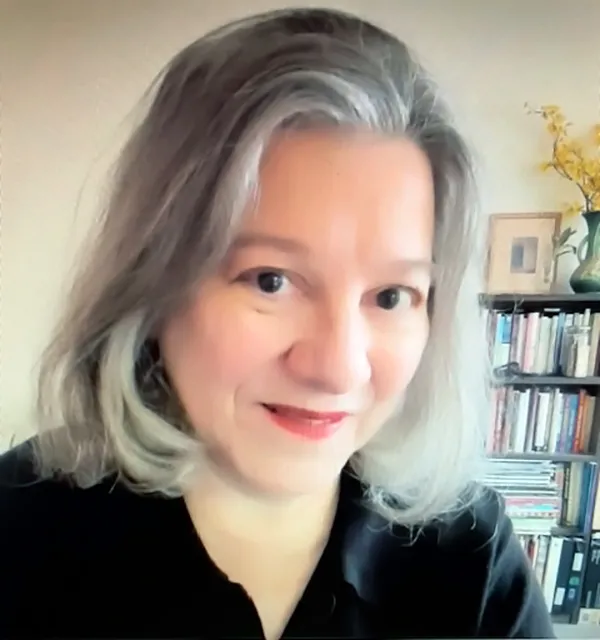
The Long Strange Trip Episode 34: Aging Sideways: Rethinking Aging Wisdom | Jeannette Leardi
About the Video:
What If Getting Older Isn't About Getting Worse?
I've been thinking a lot about what it means to get older.
There's a pretty strong message out there that as we age, we become less capable. We slow down. We stop learning new things. We become less relevant.
I'm not sure I buy that.
Sure, there are things that get harder as we get older. I'm 73, and I'm not going to pretend otherwise. But I also think we have a tendency to focus so much on what we lose that we forget to look at what we gain.
I sat down on The Long Strange Trip with Jeanette Leardi, a social gerontologist and author of Aging Sideways, to talk about aging, ageism, and why we might want to rethink some of the assumptions we've carried around for years.
What Do We Get Wrong About Aging?
I think we've built a pretty narrow picture of what getting older is supposed to look like.
At some point, we're expected to slow down, step aside, and let younger people take over.
But why?
Older people bring something to the table that you can't get from a textbook. We've lived through things. We've made decisions that worked and decisions that didn't. We've seen patterns repeat themselves. We've had to adjust when the world didn't turn out the way we expected.
That experience matters.
It doesn't mean we're always right. I've been wrong plenty of times, and I suspect I will be again.
But maybe getting older isn't about having all the answers. Maybe it's about having enough experience to ask better questions.
The Problem With Believing the Stories We Tell About Age
One thing Jeanette and I talked about was ageism, including the kind we absorb ourselves.
It's easy to see ageism as something other people do. Someone assumes you're too old to learn something new, or that you can't keep up with technology, or that your best years are behind you.
But what happens when you start believing those things about yourself?
You stop trying new things because you think you're too old. You avoid opportunities because you assume younger people will be better at them. You begin to limit your life based on expectations that may not even be true.
That's a problem.
I'm not suggesting we pretend age doesn't change us. It does. But there's a difference between recognizing your limitations and deciding that getting older means you should stop growing.
One is being realistic.
The other is giving up before you've even tried.
Experience Doesn't Automatically Make Us Wise
Here's something I've had to think about: just because we've been around a long time doesn't mean people want to hear what we have to say.
We may have learned some valuable lessons. We may even know a few things that could help someone avoid making the same mistakes we made.
But that doesn't mean we should automatically start handing out advice.
Jeanette and I talked about how older adults can share their wisdom in ways that other people are actually willing to hear.
The answer isn't necessarily to talk more. It's to listen first, ask questions, stay humble, and sometimes ask permission before offering advice.
That last part is important.
There's a big difference between someone asking, "What do you think?" and us deciding they need to hear what we think.
I've spent a lot of my life solving problems. It's easy to assume that because I see a problem, I should offer a solution.
But relationships don't always work that way.
Sometimes people need to figure things out for themselves. Sometimes they need someone to listen. And sometimes the most useful thing we can do is keep our mouths shut long enough to understand what's actually going on.
What Can We Learn From Each Other?
I don't think wisdom should only travel in one direction.
Older generations have experience. Younger generations have their own knowledge, perspectives, and ways of seeing the world.
Neither group has a monopoly on being right.
If we want to pass wisdom along, we need to be willing to learn something ourselves. That means being curious about how younger people see things, even when their approach is different from ours.
It also means accepting that some of the things that worked for us may not work for them.
The world changes. Circumstances change. What made sense 30 years ago may not make sense today.
Being willing to question ourselves isn't a sign that we've lost our wisdom. It may be one of the best ways to keep it useful.
Getting Older Doesn't Mean We're Finished
My conversation with Jeanette got me thinking about how we define a meaningful life as we get older.
Are we measuring ourselves by the things we can no longer do? By the roles we've left behind? By whether we're still as productive as we used to be?
Or can we start asking different questions?
What am I still curious about? What can I learn? What experience do I have that might be useful to someone else? Where might I need to change my mind?
I don't have all the answers. I'm still figuring this out myself.
But I suspect that getting older doesn't have to mean becoming a smaller version of who we were.
Maybe it means learning to use what we've gained while staying open to what we haven't learned yet.
I'm not coming at this as an expert. I'm a fellow traveler trying to figure it out in real time.
And here's the question I keep coming back to:
Are we willing to keep growing as we get older, or are we going to let other people's assumptions about aging decide what comes next?
Transcription:
INTRO (Josh)
Welcome to The Long Strange Trip. I’m Josh, the host of the show. We’re going to dig into six areas together, finding real work-life integration instead of that brutal 95/5 split too many business owners live with. We’re going to approach retirement as an actual reinvention rather than just stopping work, and we’re facing death honestly and avoiding PTSD around death.
We’re also building resilience when life throws us curve balls, we’re sharing wisdom across generations, and finally, we’re understanding the patterns that show up in all our transitions. I’m not coming at this as an expert. I’m a fellow traveler figuring this stuff out in real time, especially now as I navigate my own dual cancer diagnosis at 73.
Welcome to The Long Strange Trip. I’m glad you’re here.
Josh:
Hey, how are you today? This is Josh Patrick. We’re with Jeanette Liardi. I think that’s right.
Jeanette 01:14
Угу
Josh 01:16
Strange Trip podcast, and today we’re gonna talk about, or at least we’re gonna start talking about Jeanette’s book, Aging Sideways. And I have no idea where we’re gonna go from there, but we usually go someplace interesting. So instead of me trying to figure out where we’re gonna go, let’s bring Jeanette on and we’ll start the conversation. Hey, Jeanette. How are you today?
Jeanette 01:44
Hi Josh, I’m fine, thanks. Thanks for inviting me
Josh 01:48
My pleasure. So aging sideways, what is that?
Jeanette 01:52
Aging sideways, I’m a social gerontologist. I, I write and teach about aging issues. So aging sideways is a way to look at aging in surprising, quirky ways, but that are accurate. More accurate than the ways that we normally assume aging to be. And, uh, I wanna set people’s, uh, minds straight about what aging is about, because we have a lot of misunderstanding and misperceptions about aging.
So that’s what my book is about. And the sideways notion of it, if, if that’s what’s, uh, kind of puzzling to people, is, uh, I got that idea from a book written in 1979 by an art teacher named Betty Edwards, called Drawing on the Right Side of the Brain, and she gave her students all kinds of art exercises to do, and one exercise was called an upside down drawing.
She would give them a photograph of an object, let’s say a chair, and they, she would ask them to draw what they see, so you know, they would take a good stab at it. But then she would have them turn the photograph upside down, and then she would ask them, “Now draw exactly what you see.” And what it did was it put their left hemisphere of their brain, the judgmental, preconceived notion part of their brain, the one that had all these notions about what chair-ness is all about, put that to sleep, and the right hemisphere took over, and what they saw were just the lines and the spaces between the lines.
And so when they finished those drawings and turned those drawings right side up, those drawings were more accurate than the drawings that they made when they were looking straight on at the chair. So I said to myself, “We’re doing the same thing with aging. We’ve got these preconceived notions about what aging is, and they’re wrong.”
So I think we need to just tilt our heads to the side. You know, we don’t have to turn them completely upside down, but tilt our heads to the side a bit and say, “We need to look at this in a different perspective, with a different perspective,” and that’s what the book is about
Josh 03:40
So what do we have wrong about aging?
Jeanette 03:44
The biggest thing we have wrong about aging is assuming that it’s a process solely of deterioration and decline, that that’s all there is. That at some point you hit the top and then it’s downhill from there. That’s the main storyline that our culture tells us about aging, that, you know, it’s really kind of a sad end and, uh, we- we’re just gonna kind of decline from a certain point in our lives.
And, you know, we do decline in some ways. I mean, I’m not delusional about aging. There are some changes our bodies go through, and our minds can go through, and, and, uh, and, and our lives can go through. But there are some wonderful, uh, ways of growth in which we grow as we get older, and we don’t seem to know about those.
And once people really hear about those ways, they become more realistic and more confident ab- and more positive about getting older. So,
Josh 04:44
Now
Jeanette 04:46
that’s the
Josh 04:47
some of the-- so what are some of those ways of growth?
Jeanette 04:52
Well, um I, I like to talk about the ways that the older brain changes. Young brains have certain skills and old brains have certain skills. Let me tell you about the ways that older brains, first of all, tend to decline. We tend to lose a speed of processing. Our reaction times aren’t as fast as when we’re younger.
Uh, we may lose some difficulty with mult- multitasking, get some... have some difficulty, I should say, with multitasking. Um, w- uh, and so... And our, and our short-term memories tend to be a little bit harder to retain. So for example, when I enter a, a room full of strangers and I’m introduced to all kinds of people, it may be a little harder for me to remember their names than when I was 30 years younger.
I’m 74, by the way, and I always believe we should declare our age, not just, uh, state our age. No matter what age we are, we should be proud of whatever age we are. So it’ll be a little harder for me to memorize people’s names. I’d have to make extra effort, and actually, I do teach about how to boost your memory and, and different techniques for doing that.
So those are some ways in which our brains decline as we get older. But as we get older, we also... The, our brains physiologically change so that we are able to use both hemispheres of our brain better, simultaneously better than we did when we were younger. And that’s because we have a bridge of tissue in the middle of our brain called the corpus callosum.
Our hemispheres don’t actually touch. They are connected by a bridge of tissue in the center of our brain, and we’re born with that bridge of tissue. It’s very fragile and thin. But as we get older and more experienced and we build our brains up, that bridge of tissue matures, uh, up to when we’re in our 50s.
And so by the time we’re in our 50s, we have this maximum ability to, to reach to both hemispheres of our brain better to problem solve. So as we get older, we problem solve differently than when we were younger. Younger brains tend to want to use one side of the brain or another, basically favor one side or another when doing a task.
It’s not to say young brains can’t use both hemispheres simultaneously. Of course they do. But they tend to favor one side or the other. When we get older, we favor, we have both sides totally engaged, and so we’re able to judge situations from many different perspectives. So young brains might want to say, “Hey, let’s do this” or “Let’s do that” or “Yes or no.”
It’s a black or white kind of answer. Older brains, we tend to see the gray areas of life. We tend to see the exceptions to the rules, the what ifs, and that’s why you need both young brains and old brains together in the workplace, because we problem solve in different ways and we add to each other. We contribute to each other’s knowledge.
Um, and they are the more, most productive parts of the, of the, uh, business if you have younger and older brains together. So that’s one skill we develop. Another skill we develop is our long-term memories are better, and that may sound kind of, um, counterintuitive because you would think, “Well, young people don’t have that much to remember.”
Well- And their long-term memories be better? But it’s because as we experience life and we learn new things, we build many trillions more connections between the nerve cells in our brain. And so we’re able to get to certain information in many different ways. Um, the way-
Josh 08:50
what do you mean by long-term memory?
Jeanette 08:54
Long-term me- remembering things from the past, from the distant past, or, or the knowledge that you’ve stored in your brain that you’ve already learned.
Nothing, not what you’re learning right now, the new things you’re learning, but what you have already learned and internalized in your brain. So long-term, going back in time. Um, so the way I like to describe it is, um, if you have, uh, let’s say a young 35-year-old brain... Let’s say our, our brains are like libraries, and everything we’ve known, everything we’ve experienced, it’s like a library in our heads.
So a young 35-year-old brain, let’s say, has a library of 100,000 books in it, and you ask that 35-year-old brain, “Go find me Huckleberry Finn.” Well, that brain’s gonna go right to the shelf, pull down the book, here it is. Fast, remember I said faster reflexes. Younger brains are faster at processing information.
But now you ask a healthy, and the keyword is healthy, 75-year-old brain, “Go find me Huckleberry Finn.” That brain doesn’t have 100,000 books in it. That brain now has 100 million books in it. So that library, uh, is going to be much bigger. The shelves, there are many more shelves. Floors have been added to the library.
The aisles are longer. So it’s gonna take us longer to get to Huckleberry Finn. Um, gee, is it in the room in, room in the back? No, I think it’s in the box in the basement. Give me a minute and I’ll get to that. But here are the two advantages of the older brain. One is the longer you live and the more you experience, the more likely it is you have Huckleberry Finn, that piece of knowledge in your head.
And then the second advantage is because we come from, uh, problem-solving with both hemispheres of our brain more easily, we make all these different assumptions. The older brain can tend to say, “Hey, and if you like Huckleberry Finn, I can recommend five other books you’re gonna enjoy.” So those are just some of the, the gifts that the older brain can develop, and there are more, and I can go into those
Josh 11:34
Well, um, wouldn’t it make sense that, because you’ve lived longer, you have more experiences and you can bring more experiences to the table?
Jeanette 11:44
Yes, that’s, uh, that, and that’s what I mean by, by building up your brain. Our brains, all, all our experiences, all our knowledge creates more connections between the nerve cells in our brains. We’re constantly building connections. So the more you know, the more you challenge yourself, the more variety of things you do, the more connections you build.
So I, right now, my brain has trillions more connections than it had 40 years ago. Trillions more connections. Think of the, our brains like super highways. And so you get to, you, you have many more ways of getting to a certain point in the distance, a certain fact, to retrieve a certain piece of information.
Many more ways, uh, of getting to it than when you’re younger, and that’s what maturing the brain, uh, is all about, making those connections. And our brains love two things, variety and challenge. So keep doing different things, and the things that you do do that you’re familiar with, keep kicking them up a notch.
Keep challenging yourself. That’s how you build trillions of connections in your brain.
Josh 13:00
So, um, there’s a lot of old people in the world,
Jeanette 13:06
Mhm
Josh 13:07
many of these old people, um, have wisdom,
Jeanette 13:11
Угу
Josh 13:12
just old. So what’s the difference between the two?
Jeanette 13:16
We all have wisdom as we grow. I don’t know how you’re defining wisdom, but, um, not yet
Josh 13:24
I would argue that. And the reason I would argue that that there’s a lot of people I’ve known who are 50 years old and have one year of experience 50 times.
Jeanette 13:38
Угу
Josh 13:39
anything to grow. In fact, I would say that’s the norm, not the ad norm from what I’ve seen in the world. So you’re saying here, okay, we’ve got all these great wisdom great connections, but if we’ve done nothing to develop those connections along the way, there, good chance they’re not there.
I mean, they ha- might have memories, but the memories aren’t especially useful for anything
Jeanette 14:05
Well, I mean, you make a good point. I would challenge you to say I would not feel that the majority of old people are not wise. I would think the majority of old people are wise. Many of us are not wise, but it’s bec- and many young people are not wise either. There, there are all kinds of wisdom, you know?
But I think a lot of it is because our society does not value being old, and so a lot of times we internalize that message, and so we don’t continue to strive to improve ourselves. We don’t have a positive sense of being old. And, uh, a very important study was done in 2002,
um, by a psychologist at Yale University named Becca Levy and her team. They found that people have po- more positive, proactive ideas about getting older tend to live on average seven and a half years longer. They boost their immunity. They see doctors less, uh, often. They rely on fewer medicines. They sleep better, and they may even, um, reduce their chance of getting dementia by 50%.
So it’s a matter of getting rid of our own internalized ageism that keeps telling us, “No, we can’t do this,” or, “I’m too old to do that,” or, “I don’t even wanna try.” But again, our, how much does our society support us if we want to keep learning? Um, so I think it’s a, it’s a combination of our own, um, ambition and whether or not that ambition is supported and engaged by society.
So, um, so I would say that there, there, yes, there are old people who are not, quote, wise in that way. Um, most of the old people I’ve ever known are wise in their own ways, but, uh, but again, it’s a matter of being encouraged to keep challenging ourselves and, uh, and to keep doing different things.
Josh 16:17
I know a lot of people who do everything in their possible life not to challenge themselves about anything. Challenges are scary. That requires change. That requires a whole different mindset than people who don’t. And the truth is, as a species, we’re not especially fond of change
Jeanette 16:39
Well, I would say, this is what I say to people who say that old people don’t like to change. Uh, we...
Josh 16:47
people, I’m to my law people
Jeanette 16:51
or old people don’t like to change. Um, uh, you know, this is what I say about, about not wanting to change. We change all the time, whether we know it or not. We’re changing all the time.
Josh 17:05
we don’t like it
Jeanette 17:08
We, we don’t like it because maybe we’re not rewarded for doing it.
We’re not, we don’t see the benefit in doing it. We’re not encouraged to do it. Um, and it is scary. Change is scary, and, and especially when change comes very quickly. We, we, uh, we, a lot of times we need the time to adjust to the change, and I think a lot of our, of our anxiety today is because change comes so quickly.
Um, but this is what I say, uh, to, to people who say ol- you know, especially older people don’t like to change, is that we’re changing all the time. I, when I grew up, I had, uh, what kind of a phone do you have? You know, I grew up with a rotary phone stuck on the wall with the cord, the spiral cord that kept getting tangled up, and you could only go as far as the cord.
There was only one phone in the house, that kind of thing. And now I have a smartphone. 80% of people over the age of 65 have smartphones. 80%. Um, we, we are the, uh, largest consumers, buyers of laptops and desktops today, um, and Kindles, users of Kindles. So there are many of us who are adapting to change.
Again, how are we supported in that? How are we encouraged to do that? So, um, so I would tend to push back on that.
Josh 19:20
so what do you do about society? I mean, society, it says, “You’re old. Get over on the sideline and don’t bother us.”
Jeanette 19:30
What we do is we, we, we are advocates. That’s ageism. We are pro- we are anti-ageism advocates. That’s what we need to become. We need to call it out. We need to call it out in our government. Um, we need to call it out in our everyday lives. If someone makes an ageist comment in my presence, I don’t let it slide by.
Now, I don’t, I don’t get angry, I don’t get, um, antagonistic. A lot of times I like to use humor, and I like to say, “You know, that, that doesn’t really, that doesn’t really jive with what I know or what I experience.” Or, you know, when someone says, “I’m too old to do this,” you know, when they say about themselves, “I’m too old for that,” I say to them, “Is it really age that’s stopping you, or is it something else?
Could it be something else that’s stopping you? Are you too afraid to do that?” I used to say to myself sometimes, “I’m too old for this,” but what I meant when I would say it that way is I’m too wise for this. Been there, done that. I don’t wanna waste my time on this kind of particular thing anymore. So how do we use the word old?
When we have these little comments that people say, “She’s... Wow, you’re 74. You’re 74 years young.” No, I’m 74 years old. I have earned every single year of my life, and I’m proud of that. So we need to be pushing back, even in our daily conversations, and one of the best ways to start changing society is to have more intergenerational, healthy intergenerational relationships.
A lot of times we older people, and people of all ages, are kind of isolated from other generations, um, by, by their lifestyles. S- you know, millennia ago, people used to grow up in the same house, in the same hut, people of generations. Today, a lot of times we don’t, a lot of old people don’t have, um, relationships with young people.
Or if they, they hardly... They may have grandkids, but they’re far away from their grandkids. But the ways in which we get rid of ageism is to be with people of different generations and interact as individuals, because stereotypes are based on lazy thinking. We just assume that groups all act alike, and one of the worst things to call people like me is to group me to, uh, uh, put me into a group called the elderly.
We become more different the older we get. We’re more diverse from one another than when we were kids because of all the experiences that lead us to choices, that lead us to other experiences. So the, the biggest assumption is by saying all old people are alike. That is, like, the biggest mistake people can make.
So don’t judge me and the-
Josh 22:58
the tru- but the truth is stereotypes get started for a reason. When you say old people are X, that’s a stereotype, and there’s enough people that fit into that stereotype that it becomes the belief of the general po- population. seen this in a gazillion different areas. When I used to be in the food service business, the vending business specifically, people would say, “Well, you know, we’re so honest in what we do.”
I say, “No. Well, about the person that loses money in your machine? Do they think you’re honest?” No, they don’t. So they think that vending companies as a rule are un- un- trustworthy. that’s a stereotype, and the stereotype was based on some reality. So when you have ageism where people act this way, there’s a stereotype there that we really need to pay attention to and fight against the stereotype, not just sit there and say that. On the other hand, and what I’m seeing today, when you see elders in 55 and older communities that don’t allow kids, elders are building their own walls. It’s
Jeanette 23:56
Right.
Josh 23:57
you know,
Jeanette 23:58
Right
Josh 23:59
you know... What I’m hearing you talk about is a relatively, at least in my experience, small part of the population. I know people my age, I’m 73, and I don’t see any of them wanting to go and live in multi-generational communities.
They kind of want to go to old people’s places
Jeanette 24:23
Yeah. And that’s because we have become inured to the concept, uh, we’ve, we’ve grown away from the concept of intergenerational communication. We have created systems in our country that segregate us, and when you get segregated for a long time or you get used to the segregation, you start to want ... You feel comfortable in the segregation, and that’s what keeps people, uh, all of us, um, um, um, uh, giving, giving credence to the stereotype because we let those stereotypes go unchallenged.
What I’m saying is we need to break down the stereotypes, uh, because ultimately we are individuals. When someone says to me, uh, if someone boxes me in, they see I’m 74 and they make assumptions about me, that’s lazy thinking. I want to be seen as an individual. So we need to all start working against the stereotypes, and we need to build a society that is more integrated.
We are interdependent and we real- we ref- many of us, our society has, has created a, an atmosphere in which we refuse to see how interdependent we are. And so we place, we build walls against each other, build, build these barriers against each other. So what I’m talking about is a major movement, just like any other civil rights movement, any other type of civil rights movement.
Ageism is one of those big movements that we need to be working to, to, um, improve in our society
Josh 26:19
it’s the last, um, discriminatory group that’s allowed
Jeanette 26:24
Well, it’s, uh, it, that and the, and the ableist community. The ironic thing about, about aging is, or ageism, is that we’re all aging. We’re ... Ageism is the prejudice we are all vulnerable to. Not all of us are vulnerable to sexism or racism or homophobia, but we’re all getting older. And so ageism is, is one prejudice we are all susceptible to, and ableism is as well, because any of us can become disabled in a minute.
So those are the one, the two big, um, forms of discrimination that we could all be vulnerable to, and that’s what we need to work among, uh, you know, in addition to the other civil rights movements, we need to have those kinds of movements as well, and we do. And more and more of us are joining it, and that’s what I encourage other people to do too.
Josh 27:24
Okay, so, um, can one do besides working on themselves towards fighting against this? I mean, you- it’s great that you’re doing what you’re doing for you, it affects you and your community that, of people who know you. There’s thousands of people out there who don’t know you, and they have their belief system, so how is that gonna change?
Jeanette 27:56
It changes when each of us learns about ageism, which we’re trying to spread the word about, as each of us understands what ageism is about. And by the way, October 9th this year, every year, October 9th is Ageism Awareness Day. So I would really encourage your listeners and your viewers to, uh, to go to the American Society on Aging website, asaging.org, and learn about Ageism Awareness Day, and learn about ageism.
And once people start to learn about it, they bring it into, they bring those messages into their own lives among their family, their friends. So it’s a movement that spreads individual to individual. We are also pressuring our, our, um, political leaders to put, uh, to stop the talk about gerontocracy, that our, our government is a gerontocracy.
It’s, it’s not a gerontocracy. It’s run by other things. There are other conditions that are causing it. We don’t have more old people in our Congress than we had in 1775. During the, during the Continental Congress, the average age of, of, uh, the members of the Continental Congress was 44, but the life expectancy in 1775 was 35 to 40 years old.
So there were more, quote, older people running the Congress in 1775 than there are today because the average age of the Senate is fif- is 62, and the average age of the House of Representatives is 58, but our life expectancy is anywhere from 77 to 82 years. So it’s something else, not gerontocracy, that’s running our government.
So that kind of thing,
Josh 29:56
Well,
Jeanette 29:57
those kind of messages
Josh 29:59
wanna get into a political conversation with you, but I disagree 100% with what you just said.
Jeanette 30:09
Well, okay. That’s fine
Josh 30:12
so, a- and the truth is, do many other people in the country.
Jeanette 30:18
Yeah. Well, that’s, uh, yeah. I, I understand that, and if, you know-
Josh 30:25
And there’s
Jeanette 30:26
Since I can’t-
Josh 30:27
there’s good reasons for it
Jeanette 30:29
Yeah. There, there are, there are reasons, but there are other, other... It’s the way our government is set up in terms of, uh, of, of, um, uh, incumbency and, uh, and money, where the money comes from. But that’s, as you said, we’re not gonna get into that today.
Josh 30:49
gonna get into that conversation. We don’t do that here.
Jeanette 30:55
Right
Josh 30:56
So, um, so I’m sitting here saying, “Okay, I’m very active and I do lots of sort of stuff,” and truth is, um One of my, one of the things I talk about here at this Long Strange Trip is how to gain and share wisdom so others wanna listen. So do you have some suggestions around that?
Jeanette 31:20
How do, how do...
Josh 31:23
People who are old,
Jeanette 31:25
Yeah
Josh 31:26
who have gained wisdom,
Jeanette 31:28
Угу
Josh 31:29
they wanna share it with others so it’s heard,
Jeanette 31:32
Угу
Josh 31:33
how do they do that?
Jeanette 31:35
They can do all kinds of volunteering and, uh, uh, uh, you know, getting
Josh 31:40
about when they’re talking to people. They’re gonna talk to people, I’m gonna share my wisdom with you. How do I share my wisdom with you so it’s going to be heard?
Jeanette 31:50
Uh, I, I think a good strategy’s always listening to the other person first to find out where they’re at and asking them questions, and then based on what they say, you can respond with your experience
Josh 32:06
Yeah, I think that’s where a lot of ageism comes from. It’s old people tend to wanna lecture and not listen.
Jeanette 32:15
Угу
Josh 32:16
And that’s been my experience with old people, and frankly, I’ve done more than my share of it myself. And I think you’re correct, start off with listening. And the problem is, is that we’re shuttled off to the side because people don’t wanna take us seriously because we’re so, What’s the word I’m trying to think of? We’re so s- convinced that what we’re about to say is a pearl of wisdom that somebody may or may not wanna hear. And until we ask for permission to share our wisdom, it’s likely not to be heard, at least in my experience
Jeanette 33:00
Well, and, uh, and part of that assumption may also be that, that we don’t, that there isn’t something a younger person can teach us as well. So we need to kind of disavow ourselves of the, uh, of the idea that we are the fount of wisdom, that there are other kinds of wisdom that we haven’t gotten yet and we can get from people who are younger than us.
So we need a sense of humility about things like that, and a sense of perspective again.
Josh 33:34
Yeah. Jeannette, unfortunately we are out of time, I’m gonna bet some people who are listening to this, and probably a lot of people are listening to this, may wanna learn more about you, your book, and what you do. So how would they find that out?
Jeanette 33:58
They can go to my website. That’s www.jeanetteleardi.com, and I’ll spell out my name. J-E-A-N-E-T-T-E L-E-A-R-D-I.com. They can go to my website
Josh 34:10
Cool. Now I’ve got two things I’d like you to do. One is, uh, since you’re listening to this or watching this, this podcast, please give us an honest rating and review. If you like it, give us five stars, and if you hate it, give us one star. And, know, if you give me one star, I’ll probably cry a little bit, or maybe I’ll cry a lot and just have great big tears falling all over the floor. And if you saw it, you could laugh a lot, but you’re not gonna see it, so there. The second thing is, if you’re interested in being on the show and you think you have something you could add, let’s have a conversation. It’s really easy. Just send me an email at [email protected]. That’s jpatrick@stage two, number two, solution.com, and I’ll send you a link.
We’ll set up a time to talk, and we’ll have a, a conversation. So this is Josh Patrick. We’re with Jeanette Liardi. You’re at the Long Strange Trip podcast. Thanks a lot for stopping by.
OUTRO (Josh)
Thanks for spending this time with me today. I really appreciate you being part of this journey. I’d be grateful if you’d leave an honest rating and review. It helps other people find these conversations, lets me know what’s landing with you and what isn’t. If you love the show, give us five stars, and if you hate it, give it one star and I’ll just cry a little bit.
Keep asking the hard questions. Keep being honest about what’s difficult. And remember, we’re all just trying to figure this out together. I’ll talk to you next time on The Long Strange Trip. Thanks for stopping by
