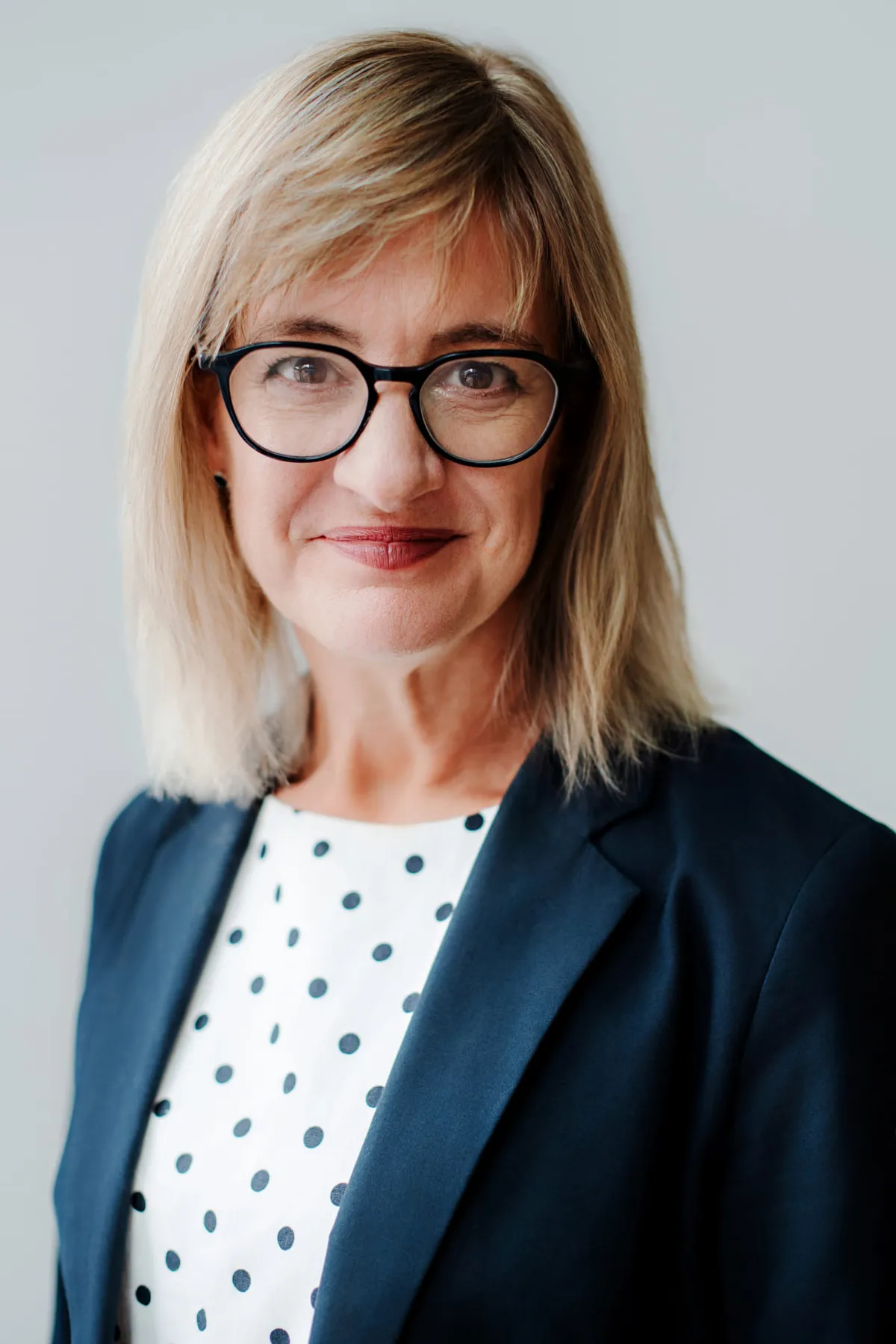
The Long Strange Trip Episode 32: You Can’t Skip the Fog: Learning to Navigate Life’s Transitions | Rebecca Sutherns
About the Episode:
Life doesn't move from one stable chapter to another as neatly as we'd like to think.
At least mine hasn't.
We like to imagine that one thing ends, there's a little space, and then the next thing begins. But real life doesn't seem to work that way. Sometimes we're dealing with several transitions at once, all moving at different speeds. One might be ending while another is just getting started. And somewhere in the middle of all of it, we're trying to figure out what the hell is going on.
I've been thinking about that a lot lately.
I sat down on The Long Strange Trip with Rebecca Southerns, a transition coach and author of the forthcoming book In Between Is All the Time, to talk about what happens in that space between what was and what comes next.
The Messy Middle Isn't Just a Phase
We tend to think of transitions as having a beginning, a middle, and an end.
But Rebecca made me think about how rarely our lives actually work that way.
You can be anticipating one change while already dealing with another. You can be excited about what's coming and scared about what you're losing at the same time.
And sometimes the transition doesn't even have a clear ending.
That's what makes the messy middle so uncomfortable.
There's no roadmap. There's no guarantee that if you do the right things, everything will suddenly make sense.
I've experienced that myself. I've learned that sometimes the best you can do is stay curious about what's happening instead of trying to force it into a neat story.
Preparing Doesn't Mean You'll Be Ready
We talked about anticipation and the way our minds can run ahead of us.
Sometimes that's useful. Sometimes it turns into catastrophizing.
We imagine everything that could go wrong before anything has actually happened.
I've done plenty of that.
The problem is that preparing for change doesn't mean you get to skip the uncertainty when the change actually arrives.
You can plan. You can think things through. You can try to anticipate what's coming.
And then reality shows up and reminds you that you don't actually control very much.
That's not necessarily bad news.
It just means we might need a different way of dealing with uncertainty.
Action Can Create Clarity
One idea that came up in our conversation really resonated with me: sometimes clarity doesn't come from thinking harder.
It comes from doing something.
I've always liked the idea of small experiments.
Try something. See what happens. Learn from it. Adjust.
You don't have to know exactly where you're going before you take the first step.
In fact, waiting until you have complete clarity may be one of the things keeping you stuck.
Sometimes you have to move through the fog before you can see what's on the other side.
Learning to Surf
Rebecca uses surfing as a metaphor for adaptability.
I like it because you don't control the waves.
You can't tell the ocean to calm down before you're willing to get on the board.
You learn to read what's happening. You adjust your balance. You respond to the wave that's actually in front of you rather than the one you wish were coming.
That feels a lot like life to me.
We're going to get knocked around. Things are going to change. Plans are going to fall apart. Sometimes several things will happen at once.
Maybe adaptability isn't about becoming better at controlling all of that.
Maybe it's about becoming better at responding to it.
And there's an interesting possibility Rebecca and I talked about: what if adaptability isn't just about surviving change?
What if it can actually make us more energized by change?
Can We Stop Waiting for Calm Water?
I'm still figuring this stuff out.
At 73, I've had plenty of opportunities to practice.
Business changes. Retirement questions. Health changes. Relationships. Losing things I thought would always be part of my life.
I've learned that the goal probably isn't to get back to some perfectly stable place where nothing is changing.
That place may not exist.
Maybe the goal is to get better at living in the middle of the change.
I'm not coming at this as an expert. I'm a fellow traveler trying to figure it out in real time.
And that's what I took away from my conversation with Rebecca:
We don't get to choose all the waves.
But maybe we can learn to surf them.
The question is, can we stay curious long enough to find out what's possible on the other side?
Transcription:
Intro
Welcome to The Long Strange Trip. I'm Josh, the host of the show. We're going to dig into six areas together, finding real work-life integration instead of that brutal 95/5 split too many business owners live with. We're going to approach retirement as an actual reinvention rather than just stopping work, and we're facing death honestly and avoiding PTSD around death.
We're also building resilience when life throws us curve balls, we're sharing wisdom across generations, and finally, we're understanding the patterns that show up in all our transitions. I'm not coming at this as an expert. I'm a fellow traveler figuring this stuff out in real time, especially now as I navigate my own dual cancer diagnosis at 73.
Welcome to The Long Strange Trip. I'm glad you're here.
Josh 00:00:43
Hey, how are you today? This is Josh Patrick, and we're with Rebecca Southorns at, we're at the Long Strange Trip podcast. And I'm really excited to have Rebecca on today because we're gonna get a chance to talk about transitions in a kind of a different way than you might normally think about them. Instead of me going on and on and on about Rebecca, let's bring her on and we can start the conversation. Hey, Rebecca, how are you today?
Rebecca 00:01:10
Hi Josh, thanks for having me.
Josh 00:01:12
Great. So life is a continuous in-between state. Can you expound on that a little bit more?
Rebecca 00:01:18
Sure. I, um, it's a bit ironic. I mean, I do help people navigate transitions, and the traditional way of conceiving of transitions or kind of moving into your next season or chapter is usually that you've had some sort of steady state, maybe it's a job or an identity, a relationship, and it ends, and then there's this foggy patch for a short or a long time, and then something new begins.
And if I were going to draw it on paper, it would be, you know, kind of a straight line, a squiggly line, and another straight line. But I think what is more accurate to most of our lives is that even if one transition in our life does look roughly like that, other ones might not have any straight parts, right?
It might be a wiggly line leading to a wigglier line leading to another wiggly line, and probably you have more than one of those happening at a time such that the very wiggly part is overlaid from one transition on the slightly straighter part of another. And, you know, the actual lived experience of this is that there are multiple transitions going on at once, and that they are all in varied stages of messy.
And so this idea of the messy middle being bracketed by stable, steady, known states is, is one that I, um, that just doesn't ring true in my experience or the experience of the people that I coach quite as much. And so I think if we can set expectations that... The, the title of my forthcoming book is In Between Is All the Time, and, um, I think if we can set expectations around that, I'm not seeking to be depressing about it.
I just think that if we have a realistic, uh, set of expectations, we'll have a better chance to navigate it well.
Josh 00:03:04
I have to agree 100% with you on this. I do have a, a, a question for you though, because, from the research I've done, and I'm not sure this is accurate, but it's what wherever I found this, and I don't remember it, is that we have six major transitions in our life and 26 minor ones. And it seems to me what you're describing is the minor ones stacking, I think the major ones actually do have a process they go through, even though it's not even close to a straight line. You know, for example, one of the things that I think about a lot that most of the major transitions we have, even death of a loved one, see that coming. And there's a stage that I call anticipation, or actually Susan Bradley calls it anticipation, think it's missed a lot by the folks in the transition world, and that's a really squiggly line.
Because you're anticipating this and you're anticipating that, and you're anticipating that, and you're probably con- contat- catastrophizing a bunch of stuff because when we think about transitions, it tends to be the bad things we're thinking about. So we're catastrophizing as we go into that messy middle, so we might be going into the messy middle with four, five, six, seven st- threads running around at the same time.
Rebecca 00:04:20
Yeah.
Josh 00:04:20
That make sense?
Rebecca 00:04:21
It does. And I've got a bunch of ideas on this. I love this idea of anticipating transition because Jim Collins' new work, he's the one that wrote Good to Great in the corporate world, and he's transitioned more into speaking about personal transitions in his new book. And he talks about that fog that we go through, and that if we anticipate the fog coming, you don't get to skip it, but you can foreshorten it, would be his, his suggestion there.
Um, I was just reading some work by a woman named Jane McGonigal. Her book is called... Well, she has more than one, but the one I was reading was called Imaginable, and I really liked it. It's how to build your imagination muscles. And what she would say is that by anticipating, almost visualizing future states that are maybe unthinkable to us right now.
So your example of maybe losing a loved one is a good example where we call things unthinkable because they are painful, and we don't want to pre-imagine them. But her argument is that by pre-imagining what would be previously unthinkable things, not just negative things, but sometimes just literally unimaginable things, uh, we train our brain not to panic when they actually do happen.
So there is actual evidence behaviorally, in terms of behavioral science, that some level of pre-imagining or anticipation does make, uh, the sting of transition easier to bear. Um, so I think there's, there is definitely something to that about, um, looking ahead. But it's interesting, um, as we are recording this today, uh, Wendell Berry passed away yesterday, and his-- one of his poems, um, I will get the actual lyric wrong of it, but he talks about, uh, birds and other, uh, creatures in nature not taxing their lives with forethoughts of grief.
And I,
Josh 00:06:05
Which is true, by the
Rebecca 00:06:06
Right? I think about that too, and I go, there are times when we borrow trouble ahead that we shouldn't or don't need to, and that we are taxing our lives with forethoughts of grief. And so I think it's a both/and for me.
Josh 00:06:21
You know, it's really interesting, while you were talking about that, thinking, and I don't know where this comes from, I think it's NLP, which is pre-framing. And, um, what you just described to me sounds like pre-framing. And pre-framing, I think, helps save people from catastrophizing. 'Cause I, uh, in, in my experience, people tend to go to catastrophizing off the top of their head and, um, they sort of get stuck in that, especially if somebody is a glass half full person. Um, and I'm not sure how many are glass half full versus glass half emp- I mean, glass, uh, half empty, not glass half full. Glass half empty versus glass full. But my suspicion is there's a lot more glass half empty people in the world than glass half full people, which makes it... could make it, I would think, at least in my experience, a more difficult thing to happen when these transitions interrupt your life.
Rebecca 00:07:15
I mean, we know that, for example, we know that hope is one of the strongest predictors of our ability to be adaptable. And so, um, there's all kinds of good science around the science of hope and, and it's more than just kind of Pollyanna optimism, and we can certainly talk about that more if you want to.
But I think that it's true that hopeful people, uh, by definition are, uh, more adaptable. And going back to what you said about, you know, there being a certain number of big and small transitions in any given life, Bruce Feiler's work, um, Life Is in the Transitions, talks about that. That might be what you're remembering.
And
Josh 00:07:54
Where I was
Rebecca 00:07:55
Remembering it,
Josh 00:07:56
Yeah.
Rebecca 00:07:56
I I have mixed feelings about it in the sense that, um, his work is a pretty small sample size, and I suspect mostly in the US, and so I'm not sure exactly. He doesn't say a lot about who he asked. But if we put my nerdy research methods brain aside, um, I think it's also true that we, we may experience that net number of transitions, but they may be stacked, as you said, on top of each other, not just the minor ones, but the major ones and the minor ones.
And, um, and so that the whole idea of, um, how we-- how our mindset around that helps us navigate it is of interest to me because I think it isn't just anticipation, but it's also our worldview and our values and our degree of hopefulness and where we choose to focus our attention that can really impact how easily we are able to, to navigate.
Um, and so, you know, if I'm expecting a lot of transitions, some big, some small, I'm gonna go into the-- my life, um, when those transitions hit and be like, "Oh, I've, you know, I, I, I knew this was gonna happen." This wasn't a... I'm not dealing with almost like the double shock of the thing and the surprise of the thing.
Um, I've kind of muted the surprise channel a bit by saying, "Hey, this is gonna happen." But that doesn't require me to be Eeyore, you know, of like, "Oh, the sky is falling." For me, at least, that's a, that's a, um, you know, it might be maybe a pragmatic or more realistic way to look at it because I think you can sit with that knowledge and also sit in a highly hopeful place.
I don't think those two things necessarily have to work against each other. But I do think that all of us, and Jim Collins' work would support this, his research, would say that you don't get to skip the fog just because you knew it was coming. And I think sometimes knowing something is coming can make those of us who are planners want to think that we get to skip it just because we knew it was on its way.
And that's not really how it works either, that we, we, we still have to go through it, and there's something about going through it that is qualitatively different than anticipating it. And, um, yeah, if only, if only those anticipatory, uh, thoughts would allow us to skip the pain of it. I think part of what I, what I write about is, is that, is to help people not be shocked by the soup of mixed feelings that we have in the midst of transitions because, um, they aren't easy, even when they are planned, even when they are anticipated, even when they are wanted.
Um, maybe they've been orchestrated by us, and it can still generate a really mixed bag of emotional reactions to it. So my interest is in helping people kind of reconcile that lived experience of mess with what we also know about, um, you know, how much of our lives are spent in that space.
Josh 00:10:57
You know, to me, I think anticipation allows you to prepare for middle, whatever you wanna call it, the fog, the fog better actually. And, um, the truth is, gets to miss the fog. The fog is gonna be there whether you like it or not. Now, some people get stuck in the fog. I recently wrote a piece where I was talking about people I knew back in the New Age seminar days I was in, and they were always...
They got into the fog because they were waiting for clarity,
Josh 00:11:28
and clarity never came, and they stayed there, and stayed there, and stayed there. And my, my, my attitude is, you know, you gotta take small steps along the way, you know, fail fast, fail cheap, little steps, little experiments, um, back to staying away from the sunk cost of behavioral economics, where you get into this black hole and you can never dig yourself out. The other thing which I think, I have a, a little saying myself that when I get into something that, uh, I may not be prepared for, I like to sit back and reflect if possible, and this, it goes to the thinking part of our brain, not the acting part of our brain, and say to myself, "My, that interesting?" Because if you can say that, and you can actually do that, I think you will move someplace. And the last thing would be, and I'll let-- I'll turn it back to you is that, uh, now I lost what my, my thought of what it was. Never mind. Back to you.
Rebecca 00:12:27
Start there. Um, yeah, I'm right with you. I think that it's true that action precedes clarity, uh, more often than the other way around. And I think most often in our heads we think it's the other way around, that we need clarity before we act, and I think that the action itself is probably what's going to bring clarity a lot of the time.
And then I really appreciate the, the curiosity that you were bringing up in the, in the last part about isn't that interesting, where if we can show up with curiosity, um, there's a level of openness at that moment that is different than if we are shutting down. And I think that that is partly the, the, the neuroscience behind some of this, is that if we are feeling under threat, our brain does often go into that fight, fly, fight, fight or flight or freeze, fawn, those kinds of things that we hear from, you know, our psychology classes.
None of those make us open to learning or open to being curious. It's very much a self-protective kind of state. And so we need to work really hard to stay open when we feel under threat, because evolutionary biology would say that that's exactly the opposite. You know, if you feel under threat, it's circle the wagons and, and, you know, hunker down and protect.
And that idea of curiosity is, is an openness where I literally picture instead of those wagons circling, I picture them making space in the circle, and that is a really, um, vulnerable stance if you feel like you're under attack. But if you can see that change or that pending transition, whatever it is, as a, a learning opportunity that you wanna be open to and curious about, our whole posture is different.
But I don't wanna, um, underplay how hard that is, because we are working against our wiring often in trying to be that in that moment.
Josh 00:14:19
You know, I would say, you know, there's two parts to our brain. There's the fast part and the slow part. If you go back to Daniel Kahneman's stuff, Thinking Fast, Thinking Slow. And what you described is the fast part of our brain, which gets us into trouble. And so we'll take an action, we'll think an action, or we'll do something, and then we go to our thinking part and justify what we just did. Now, if we can control that... I call that hard Joshy, by the way, for me. That was the part of me that would react negatively to someone and get them before they got me. That was my strategy. Still is my strategy, probably, if I feel under attack. And we al- I think it's important for us to kind of figure this stuff out. The other thing is I have a, always this convers- I thought about my third thing. I always have this conversation going, is it action or mindset first? And I think what you're talking about is mostly mindset first. If your mindset is in a place and you've worked on getting your mindset in a place, the transition happens, you're ready for it. You haven't worked on your mindset, a pretty good chance you're going to default to the fast thought of what, how can I shut this down and make sure it doesn't hurt me? Does that make any sense?
Rebecca 00:15:40
No, I mean, I, I, it does make sense. I don't know if it's always that way or if it is kind of a both/and, or if the two are kind of interacting with each other at different times. But certainly, um, you know, my personal default is to, to try to pos- possibly overthink things, but certainly think things in advance so that I have an understanding, and whether I'm able to translate that when the actual time comes or not, I don't know.
I was reading a post this week of a colleague that wi- that went and visited, um, an art gallery where Vincent van Gogh's Starry Night painting was there, and she saw it in person in real life for the first time. And she was talking about the difference from having seen it on a million, you know, postcards and tote bags and things, versus seeing the painting in real life.
And I do have a sense that, you know, there's only so much cognitive preparation we can do for something that we've not yet experienced. And when we actually experience it, I think that preparation does buffer and help us, but it, it doesn't, um... Yeah, we might have to revise our understandings, right, from that lived experience.
Not only does it not let us skip it, it also might cause us to rethink. And I think our ability, another component of adaptability is our ability to unlearn, and having, um, a level of mental flexibility that says, "Huh, you know, ideas, mindsets, ways of being and behaving that served me well in the past may not be serving me as well as I thought now, or might not be as relevant as I expected them to be in this moment."
And so, you know, that, that ability to be open to revising and, um, thinking differently and approaching something differently, um. Yeah, so I don't wanna put too much stock in getting our head on, head on completely straight and assuming that it's gonna stay on straight, right through the turbulence of, um, you know, dramatic change.
But, uh, can't hurt.
Josh 00:17:39
I don't think that ever the issue as you're gonna go into it, 'cause once you get there, what you thought was gonna happen is usually not what actually happens. And that adaptability you're talking about I think is really, really important. And I think adaptability is, you know, one of those keys saying, "Gee, can I question myself, and can I change direction because I have evidence that says I was wrong?"
Josh 00:18:03
Ja.
I think that's a... For me, that's been a really key part of my life.
Rebecca 00:18:09
Mm-hmm. Yeah. And I think
Josh 00:18:10
Need to
Rebecca 00:18:11
One of the things that I find... A metaphor that I really come back to a lot is the idea of surfing. I don't, I don't know how to surf in real life, but the metaphor helps me. Um, that if I were a non-surfer and the waves were very high on a given day, that would look like bad news to me.
That would look like a threat. That would look like a not a good day to lie at the beach. I don't know what. But I'm not, I'm not a fan of big waves in and of themselves. But if I have the skill and the interest in surfing, all of a sudden the meaning that I attach to that very stormy day is very different because I might look at those big waves and go, "Cool.
That is the best surfing day ever." I'm a confident surfer enough that those waves requiring a surfboard, that's a win for me now as a skilled surfer. And I feel like adaptability is like that because when we are not particularly adaptable people or if we are needing to really strengthen our adaptability muscles in a certain area, when we see that kind of turbulence emerging, we are put off by it, right?
We retreat to calmer waters somewhere else. But if I actually come to that turbulent time with a skill set like surfing that says, "Actually, I'm really good at navigating that turbulence. I can stay on my board. I love it. It's gonna be a great ride," we actually look forward to those turbulent times. It's not just that we barely cope with it.
We actually love it. And that is what we learned actually through some of the adaptability coaching work I do and the data that came out of the pandemic years with that, is that the people that have built those adaptability skills, they're not only just sort of objectively more adaptable, but their emotional experience of adapting is different and they like it.
And so to me, that's the good news of this story, is not just like, oh, we need to become more adaptable people to cope with change. When we do, it actually energizes us. And so that narrative of, oh, you know, people don't like change, actually some people do, and we can learn how to, and that I think is exciting.
Josh 00:20:26
One of them. I, I, you know, the whole m- the whole point of The Long Strange Trip to think about things that we think we know, but there is a gazillion different other ways to think about it. And you're bringing some really important stuff to think about, which, you know, maybe some of our listeners or watchers haven't thought about.
I certainly haven't. So it's, um, it's welcome, and, uh, I really appreciate it, so I thank you for that. So the question I have is, I've read a, uh, I was just doing some research on what we call, um, retirement reinvention, which is one of the six areas we talk about here. And in the research I found, and I'm not sure this is true, uh, I, I'm always very, very skeptical of statistics, that 65% of retirees never make it to being happy.
35% do and 65% don't. And I think that kinda fits with, like, what you see in life is that 35% are probably adaptable to at least to some level, 65% are not. You know, I have some family members who are definitely not adaptable. They are the most stutter- stubborn humans on the face of the earth. And when something hits them that is a hard transition, they go into the fog. They really stru- I mean, they really, really, really struggle. How do you help those people? 'Cause it's, you know, it's a very large... And they don't think they need help, nor will they look for help.
Rebecca 00:21:52
Yeah, two things on this. I think, I think there's a difference between-- I think there's, there's people who struggle with adaptability but who want to get better at it.
Josh 00:22:02
Yes.
Rebecca 00:22:02
And then there's people who don't, or don't think that they do, or don't... You know, it doesn't occur to them to want to get better at it.
And I think that latter group is harder to work with because, you know, if you think about Carol Dweck's work on fixed and growth mindsets, for example, I always laugh when I read her book because I think people-- if what she's writing about is true, people with fixed mindsets will never read her book. Why would they read her book?
Because they don't believe that there's any opportunity to change anyway, so why make the effort of reading a book about how to have a growth mindset because there's no possibility of having one if you have a deeply ingrained fixed one. And I feel like it's a little bit like that, where there are going to be people, and I don't know the percentage, but there are going to be people who aren't, uh, seeking that level of, um, of learning or that level of, of adaptability.
But for those who struggle with it but who are open to the possibility of learning their way through it, I think there's a ton of, um, opportunity there. Because one of the other pieces of good news around adaptability is that it is learnable, and a related piece of good news is that there are so many different ways to be good at it.
So it may be that some of us really struggle with certain elements of adaptability. And I think of it like a toolkit where-- a toolbox, where I got a whole bunch of tools and I might not be very good with, I don't know, with a hammer, but I'm really good with a drill, you know? And it's like, okay, don't make me use the hammer.
I could grab it. I can use it okay. But give me a drill and I can, I can do what that drill is supposed to do beautifully. So it's like that with adaptability. For example, I might not have really high grit, for example. Maybe I'm not someone who's terribly persistent. But I might have really good mental flexibility, so I can see lots of different ways to solve a problem.
I not, might not be as good at sticking with one way, but I can imagine that there are lots of ways. And so if one way appears blocked, I can, I can find a different pathway. Other people might not have that mental flexibility, but they might have really strong team support, and so they lean into the people that they work with or, or live with to help them be more adaptable when they themselves are not feeling it.
Whereas someone else might say, "I'm actually-- um, I really love to... I've got a really big picture view of the world." And people who have a very big high altitude view of the world tend to be more adaptable because they can see down the long road, and they don't get really caught up in the details of things.
And so even just those few examples can show you that even if you aren't someone who is amazingly adaptable in certain ways, there is a very good chance that there is a tool in that toolbox that you would be good at. And that's-- when I do adaptability assessments with people, that's what we're trying to discern because my preferred approach to this is to say, what are you already good at that is like an adaptability resource that you can, you can use easily?
You, you like it, you're already energized by it, you know how, it's a tool that's well molded to your hand already. Let's use that. And so there's lots of ways to be an adaptable human, and we need that meta skill because it's much more effective to be adaptable than it is to try to be predictive of what the next chapter's gonna hold.
I would much rather surf those waves than only be able to go to the beach on days when the weather's perfect.
Josh 00:25:54
That was a great little soliloquy. And unfortunately, Rebecca, we're out of time.
Rebecca 00:25:59
Goes quickly.
Josh 00:25:59
Yeah, it always goes fast. Um, so I am sure people watching or listening to this are gonna wanna find you and do whatever it is that you do and help them with. So how would they go about doing that?
Rebecca 00:26:13
The easiest way, and thanks for that offer, Josh. The easiest way is to go to my website. It's the same as my name, rebeccasutherns.com, and it's S-U-T-H-E-R-N-S.com. And on there they'll find all kinds of things. If they go to the, the page that has a forward slash podcast, they'll see some resources there. Um, but they're welcome to scout around.
We've got, um, retreats that help people navigate transitions. There's coaching, there's card decks, uh, there's speaking opportunities, and so it depends what people are looking for. But, um, I'd really welcome hearing from some of your listeners if what I've been talking about is, um, of interest to them. And hopefully sometime early in the new year, uh, the book In Between Is All The Time will be finding its way to bookshelves near them as well.
Josh 00:27:00
Cool. And, uh, I hope they do this, do the same also. I hope they go and look at your website and engage you at some level, I think you can really help people with the fog,
Rebecca 00:27:12
Thanks.
Josh 00:27:12
That's, uh, an important thing. Now, I've got two things I would like you to do. Is I would like you to go to wherever you're listening to this podcast and give us an honest rating and review.
If you love us, you give us five stars. If you hate us, you give us one star, and I cry and big tears fall on the floor, but you don't see it, so I... really doesn't matter. Second thing is Rebecca is a great guest. I mean a great guest, and I would love to have more people who are great guests like Rebecca. And I hope you'll raise your hand and say, "Hey, I'm that person," and wanna have a conversation with me about being on our show. It's really easy. You just go to [email protected]. That's the number two, and solution is singular. [email protected] and say, "Hey, I saw your podcast. I think I'd be a great guest."
We'll have a conversation, and we'll see if it's right for you. So this is Josh Patrick. We're with Rebecca Southorns here at the Long Strange Trip Podcast, and I really should have some Grateful Dead music playing us out right now. A lot for stopping by. I hope to see you back here next week.
Outro
Thanks for spending this time with me today. I really appreciate you being part of this journey. I'd be grateful if you'd leave an honest rating and review. It helps other people find these conversations, lets me know what's landing with you and what isn't. If you love the show, give us five stars, and if you hate it, give it one star and I'll just cry a little bit.
Keep asking the hard questions. Keep being honest about what's difficult. And remember, we're all just trying to figure this out together. I'll talk to you next time on The Long Strange Trip. Thanks for stopping by.
