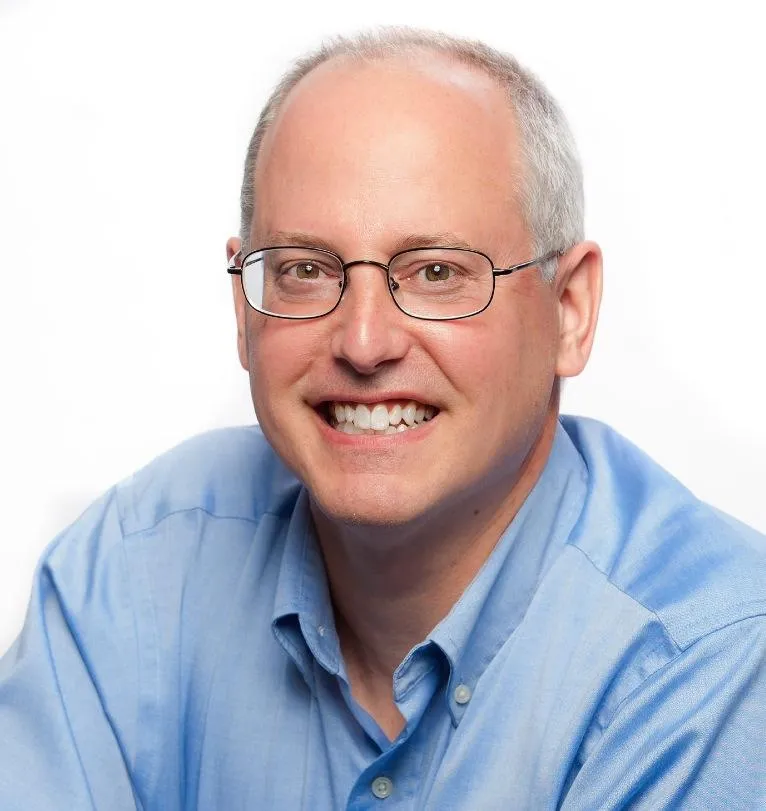
The Long Strange Trip Episode 31: Retirement Isn’t About Money. It’s About Who You Become | With Fritz Gilbert
About the Episode:
Retirement isn't just about replacing your paycheck. It's about figuring out what replaces everything else that work gave you.
For a lot of us, work is about a whole lot more than money.
It's structure. It's relationships. It's purpose. It's accomplishment. And if you've spent decades building a business, it can also become a pretty big part of your identity.
So what happens when you don't have it anymore?
I've been wrestling with that question myself.
I sat down on The Long Strange Trip with Fritz Gilbert, author of The Keys to a Successful Retirement and creator of The Retirement Manifesto, to talk about what really happens when you retire.
Not the financial planning part.
The human part.
What Does Work Give Us?
We spend a lot of time preparing financially for retirement.
Do I have enough money? When should I take Social Security? How much can I spend?
Those are important questions.
But there are other questions that don't show up on a spreadsheet.
Who am I going to spend my time with?
What am I going to accomplish?
What gives me a reason to get up in the morning?
What happens when the thing that gave my life structure for 30 or 40 years suddenly isn't there?
Those questions can be a lot harder to answer.
The Messy Middle of Retirement
Fritz and I talked about what I call the messy middle.
You've left the old life behind, but you haven't quite figured out the new one yet.
That's where a lot of people get stuck.
I know I've experienced it myself. When I stepped away from my business, I discovered that selling the company was the easy part.
Figuring out who I was without it was much harder.
And I don't think there's a single answer to that question.
Stop Waiting for Clarity
One thing Fritz and I talked about really resonated with me: you don't have to have everything figured out before you start moving.
I'm a big believer in small experiments.
Try something.
See if you like it.
If you don't, try something else.
We can get so caught up waiting for clarity that we never actually do anything. But sometimes clarity doesn't come first.
Sometimes you have to move before you know where you're going.
Think of Life as a Hand of Cards
Fritz shared an idea I really liked: think about life as a hand of cards.
You pick up new cards.
You put down cards that don't work anymore.
And sometimes you're dealt a card you never expected.
That's pretty much what getting older looks like to me.
Some things I loved doing aren't possible anymore. Other things have become more important than I ever expected.
The trick isn't holding onto every card forever.
It's being willing to put some down and see what new cards you can pick up.
Who Am I Without My Business?
That's really the question underneath all of this for me.
Who am I if I don't own a business anymore?
I'm still working on that one.
And maybe I always will be.
I'm not coming at this as an expert. I'm a fellow traveler trying to figure it out in real time.
Retirement isn't a finish line where everything suddenly becomes clear.
It's another transition.
And maybe the best thing we can do is stay curious, keep experimenting, and remain open to the possibility that the next version of our life might look very different from the one we planned.
Transcript:
Intro
Welcome to The Long Strange Trip. I'm Josh, the host of the show. We're going to dig into six areas together, finding real work-life integration instead of that brutal 95/5 split too many business owners live with. We're going to approach retirement as an actual reinvention rather than just stopping work, and we're facing death honestly and avoiding PTSD around death.
We're also building resilience when life throws us curve balls, we're sharing wisdom across generations, and finally, we're understanding the patterns that show up in all our transitions. I'm not coming at this as an expert. I'm a fellow traveler figuring this stuff out in real time, especially now as I navigate my own dual cancer diagnosis at 73.
Welcome to The Long Strange Trip. I'm glad you're here.
This is Josh Patrick here at the Long Strange Trip podcast, and my guest today is Fritz Gilbert. He has written a book called The Retirement Manifesto, and it's not about finances, because we don't talk about retirement finances here. We talk about what's called the soft side, which is often way more challenging.
So let's bring Fritz on and we'll start the conversation.
Josh
Hey, Fritz. How are you?
Fritz 01:20
Hey, Josh. I'm doing great. Thanks for having me on your show. I love the concept of figuring out how to deal with change in life. It's an interesting topic, so I'm glad to be a guest.
Josh 01:34
It is a really interesting topic. I am learning more about myself than I think my readers are learning about themselves. So that kind of fits in with why I'm doing this in the first place. So you're the author of The Retirement Manifesto. What is that?
Fritz 01:53
Yeah, actually I've got two things. The Retirement Manifesto is my blog, and I started that 10 years ago, three years before I retired. I've been writing pretty consistently for 10 years on just about anything and everything related to making the transition to a successful retirement.
It's won some awards. I've got a pretty steady following, and I really enjoy the exercise of writing and exercising my mind and engaging with the readers and the community.
Then the second thing I've got is a book called The Keys to a Successful Retirement, which I wrote two years after I retired, looking back and saying, "Okay, my transition went exceedingly well. What did I learn through that process that I could share with others?" I came up with 26 keys, the things I'd encourage people to focus on during the transition, drawn from research, my own experience, and the experience of others I've studied, that lead to the highest probability of a smooth transition.
The change to retirement is a big transition, and some people fear it more than death, like 40-something percent in a recent survey I saw. A lot of people are intimidated by it. So one of my purposes in retirement is generating content that can help people figure out how to do it, from somebody who's walking a little bit further down the path than them.
Josh 03:27
So you have 26 things people need to pay attention to. What are one or two of the biggest potholes people can avoid, and how would you recommend they go about it?
Fritz 03:40
The number one issue I see is people focus too heavily on the numbers. The numbers are important, but they are not sufficient. Typically, if you're a planner working through this and preparing for the change, there's a period of time when your numbers are close, but you're still waiting for them to get there before you actually retire.
Rather than take that, let's call it nine months, and just reiterate your numbers, run more models, look at more what-ifs, shift your focus. You're thinking about the paycheck when you think about the numbers. But there are five other areas you get from your job that you probably aren't thinking about. I encourage people to spend those last nine months thinking about: What about your sense of identity? What about your relationships? What about the structure you've had in your day? What about the sense of accomplishment when you do a good job? What about your purpose, your meaning for getting up?
Spending time working through each of those non-financial benefits of work, the same way you've thought through replacing your paycheck, that's the number one pothole. I actually make that recommendation twice. It's the only one I list twice, on purpose, because research has proven that people who focus on both the financial and non-financial have the smoothest transition to retirement. That's the single most important key.
Josh 05:12
Yeah, I would agree with that. I call that "who am I if I'm not an ex-something."
Fritz 05:19
Yep. Love it.
Josh 05:20
I spent my business career working with business owners, and the question I'd often ask is, "Who am I if I don't own a business anymore?"
Fritz 05:30
Yep.
Josh 05:31
And the answer "retired" is not an appropriate one.
Fritz 05:34
Yep.
Josh 05:35
And the other thing I always counsel people on, as we were talking about selling businesses, which meant retirement for them, that happens when the phone stops ringing.
Fritz 05:47
Yep.
Josh 05:47
Your social circle, all the people you thought were good friends, they were good friends, but because you're not on the radar anymore, you don't get those calls.
I often tell the story: when I sold my food service business, I was 44 years old. I was one of the five best-known people in the National Vending Association. I'd go to trade shows and people would stop me all over the place. I sold my business, and I got two phone calls in the following year from people in the industry.
Fritz 06:24
Yeah.
Josh 06:25
For the last 10 years, essentially, I've had zero contact with anybody in the industry, and frankly I don't think they even remember who I am.
Fritz 06:35
Yeah.
Josh 06:35
So it's a hard thing to come across, and I used to teach it and I still deal with the issue. You get what's called seller's remorse, I wasn't unhappy I sold the business, I was unhappy about what happened to me after I sold it.
Fritz 06:54
Yep.
Josh 06:55
And then I stopped doing wealth management, and that was even worse because I really hadn't thought about what's next. I just said, "This is gonna be the end." And that's how the Long Strange Trip came to be. It was a slow, small process.
Fritz 07:13
Well, and there's a key right there, what you just said, a slow, small process. The way you figure this stuff out, and it's difficult, especially for the more engineering, analytical minds, this is more right-brain stuff.
Josh 07:29
Right-brain stuff.
Fritz 07:29
Okay, right-brain stuff. And the key to figuring it out is those small, slow steps. Find something that interests you, I don't care what it is. Hopefully you find like 10 of them over a couple months' time. You can do this before you retire, before you sell your business. As a matter of fact, you should.
Start experimenting. Experimentation and curiosity are your two best friends, and you want to listen to your curiosity. Find something that interests you. My writing is an example, I was three years away from retirement and had an interest in starting a blog. Looking back 10 years later, it's become a huge part of my life.
But it all started with curiosity, and I experimented with it, and it started getting traction. That's almost universally true when you talk to people who've had a smooth transition through this kind of change, it almost always goes back to curiosity and experimentation.
Josh 08:33
Yep. And that fits in with the stage we call "passage," or the "messy middle," in a transition. You go through anticipation, especially with retirement, because that doesn't usually happen like a death in the family. Then you have the ending, you retire, you sell your business, you move on. And then you go into that messy middle. Even if you're well prepared like you, there are days that are good and days that are not as good. On the good days, you have to figure out, "What happened to make this a good day?"
Fritz 09:12
Yep.
Josh 09:13
And eventually you come out to what we call the new normal. I think you used the metaphor of a chrysalis, didn't you?
Fritz 09:22
I actually use Dr. Riley Moynes's concept, same idea, different label. He calls it the four phases of retirement, and phase two is the messy middle, the disorientation phase. Phase three is trial and experimentation. Phase four is that purpose-filled retirement. Same concept, just different labels, that's the one I tend to focus on when I'm writing about the transition and what you need to be prepared for.
Josh 09:50
As you should, because there is no one answer with this. The stages of transition are basically the same, from what I understand, some people do it a little differently than others. Your strategy is a little different than mine, but we both try to get people to the same stage.
Fritz 10:11
Yep. And I think the interesting thing too is it's not a one-and-done exercise. Once you reach financial independence, sell your business, whatever, once you've reached the point where you no longer have to work for a paycheck, you can continually reinvent your life, and the things that interest you change with time.
I use the analogy of a hand of cards. You've got a handful of cards, and the difference between this and a normal card game is you can pick up as many cards as you want, and put down cards any time you want. You should be constantly evaluating the cards in your hand, that's trial and experimentation, curiosity. "I'm kind of interested in this card over here." You pick it up for a while, play with it. "Yeah, I like that. I'm gonna put this other one down that I haven't been doing for a while."
You're constantly seeking to improve your hand. I fully expect I'll be doing it until the day I die. It's a great way to live life when you have the freedom to pursue things that interest you, and it leads to a fulfilling life.
Josh 11:29
I have to agree 100% with that. I love that metaphor, you pick up a card and you lay a card down. Taking a card away sounds like you're saying no to something.
Fritz 11:43
Yeah.
Josh 11:43
And I think this is actually a lifelong thing, we don't say no nearly enough. We say yes, we get into things we don't enjoy, and then we don't know how to get out.
Fritz 11:57
Exactly.
Josh 11:57
This is especially true for people who work. I look at people I knew in my company who couldn't stand my guts, I knew it, they thought I was the worst SOB that ever lived, but they stayed because of the paycheck.
Fritz 12:15
Yep.
Josh 12:15
What a bad way to live your work life, to hate the person employing you and not be willing to leave for someplace that would be much better for you psychologically. I hear that way too often, and it really concerns me. Same thing with retirement, you get on a board, or into a philanthropic activity. You may like the outcome of what the charity does, but hate the way they get there.
Fritz 12:45
Yeah.
Josh 12:46
I recently left a board. I helped move a company from for-profit to not-for-profit. It was mostly between myself and the owner at first, but when we put the board together, it became all this process stuff, and I just don't do process well.
Fritz 13:03
Yep. So did you leave, you left the board, so good for you, practicing what you preach.
Josh 13:11
I ended up leaving the board. I left in anger. I said, "You guys are going in a different direction than I would go." On top of that, the population they serve isn't a population I've ever served or had a lot of interest in.
Fritz 13:29
Yeah.
Josh 13:29
So it was good for both of us. They've gone on to be way more successful, and I wasn't getting in their way.
Fritz 13:38
Yep. I'll tell you what, in line with that, Josh, shift gears a little, but I think it's relevant. It was about three months before I retired, and I wrote an article called "The Ten Commandments of Retirement." This was my North Star for what I wanted my life to be in retirement.
Commandment number six, I think, was: make no obligations for the first year. The point was I'd talked to a lot of retirees who got flooded with stuff, "I'm retired, I've got all this time", and they'd start plugging into all this stuff without being strategic about it, and end up doing a bunch of things they weren't really passionate about, struggling with how to get out of it.
So be very careful about what cards you pick up, especially early in retirement, because you're going through so much mental change and everything in your life is changing at once. Take some time, breathe, really think about it before you start filling up your day with obligations, because once that starts, you can get sucked in and lose the window of opportunity to really design your ideal life. So yes, it's saying no, exiting, putting cards down, but it's also being careful what cards you pick up to begin with.
Josh 15:05
Yeah, that makes a ton of sense. But on the other side, if you're picking up a card and it's a small test, don't be afraid to say no, rather than jumping all in. In behavioral economics, they call that sunk cost.
Fritz 15:23
Yeah.
Josh 15:23
The more effort you put into something, the harder it is to get out of it. One of my mantras, and it fits your card metaphor, is fail fast, fail cheap. In other words, do small experiments. If it works, you may want to go deeper, or just continue at the level you're at. If it doesn't work, saying no isn't especially hard to do.
Fritz 15:50
Yep, agreed. We are so aligned on the concepts and principles, different words, different models, but the same core. Both of us have made these transitions. We've been successful with them, we've learned from them, we've done research on them. The more you study it, the more you see these same topics come up over and over.
But the hard part is people who don't recognize that this stuff is important. They quit their job or sell their business without putting any thought into these non-financial areas, and that's when they really get into the messy middle, phase two disorientation, which can be a pretty uncomfortable place. Based on Dr. Moen's research, 85% of retirees go through that phase two. It's a really unpleasant place to be, because all your friends are like, "Oh, you're retired, life's gotta be great," and you're saying, "Yeah, it's great, I don't really like it." And nobody's got sympathy for you because they're still working.
It's a weird, awkward, uncomfortable place, and you have to internalize it and say, "This isn't what I want my life to be, I've gotta figure out how to change this." That internal drive to change is what's critical to move out of the messy middle and start doing the experimentation that moves you forward.
Josh 17:17
Yeah. Unfortunately, a significant portion of retirees never get there.
Fritz 17:21
Yeah.
Josh 17:21
You can talk to them until you're blue in the face, they're stuck. I call this... I just wrote a post on change. Back in my younger days I was involved in new age seminars a fair amount, and I moved through it, I had a problem, I'd solve it, and move through it. But too many people in that group would say, "I'm waiting for clarity." And clarity never came.
Fritz 17:50
Yeah.
Josh 17:51
They were stuck there for years, and I don't know that some of them ever got out. I think it happens in retirement too, people are saying, "I'm waiting for clarity." Well, clarity about what?
Fritz 18:05
Yeah. Clarity comes with action. Action is the verb, and the verb has to happen before you get to the clarity. It's only through action that you determine if that's a path you're intended to take. Too many people sit back and wait, and it's easy to make excuses. It's hard to have initiative and make that first step, you don't know anything about it, you're uncomfortable, it's not natural. But it's a muscle, and over time it gets stronger. As you use it more, and you have something you're curious about, and ask, "What would just be the first step to explore that?", that process becomes easier and fun. But the first couple times, it's anything but fun, anything but natural. So people get stuck.
There's data behind it too, phase four is that purpose-filled retirement, when you've made it, nirvana, content, life's great. Only 65% of retirees make it to phase four. So you're right, a large percentage get stuck in phase two, or never really find their way to a fulfilling retirement. They're just living life, doing what they can, but not really enjoying it. What a shame, to spend 30 or 40 years working or building your business, sell it, and end up unfulfilled with 20 or 30 good years of life left, and you're stuck. That's why I'm so passionate about writing my blog and my books. Helping people get through this, to me, it's a worthy cause.
Josh 19:45
Let me ask you a question that was asked of me when I first started the Long Strange Trip: Who are you doing this for?
Fritz 19:55
Oh, that's a very good question. My instinct was, "I'm doing it for the reader," but I'd be lying if I said it was exclusively for the reader, there's certainly personal fulfillment in doing it myself. So I'm doing it for two people: me, and that person who's a year away from retirement trying to figure it out, or two years in and stuck in the messy middle.
I just got an email from a guy last week, he's stuck, "What do I do?" And I said, "Oh, I've got some stuff, here, read this, let's talk." So I'm doing it for those two reasons. It's not selfish, but there is a selfish benefit that comes from it. My primary motive as I'm writing isn't "how am I gonna sound saying this", it's "how can I say this so it'll most resonate with Bob or Joanne out there reading this, in this position?" I'm perpetually thinking about the person on the receiving end, and my heart really is writing for them. But at the same time, I get tremendous benefit from the exercise.
Josh 21:09
Yeah, well, my answer was it was for me, because the Long Strange Trip Substack posts I write are long, descriptive, vulnerable, and if you're writing from a vulnerable point of view, you're really probably writing for yourself. When I think of memoir writers, they're really writing for themselves. They're sharing with the rest of the world.
In many respects, the Long Strange Trip is a memoir on six areas. So it's for me, but I'm happy to have others come along the trip and help me think about the stuff I'm thinking about. You're more for your reader, I'm more for myself, but we both look at the other side as we talk about it. I think there's something important there, when you're thinking about what you're doing for retirement, it's important to think about how this is good for you.
Fritz 22:07
Yeah. And I'll tell you, it's not intuitive, but one of the things I've realized over the years, during your working years, you're making money, sacrificing, trying to get the promotion, relocating the family, whatever. By definition you've gotta sacrifice because your income depends on it. You've gotta do what you gotta do.
Once you reach the state where you no longer need that paycheck, it's really refreshing and rewarding to look for needs in your realm of influence, your local community, charities, my blog, whatever. Look for needs other people have and invest some of your time in finding a way to meet those needs. That's a really good area for curiosity and experimentation, look for a need, take a first step into "What can I do in my small little corner of the world to meet that need?"
There's something really fulfilling about it. You talked about the five things we lose from work, one of them is that sense of accomplishment. My wife runs a charity, we build free fences for low-income families with dogs on chains. We've done 230 fences at this point. Every time we finish a fence, and you see those dogs getting released from the chain and running through it for the first time, and the homeowner comes up to you, sometimes they're crying, that is so rewarding. More rewarding than anything I ever did in my career. It's finding a need and investing your time and energy into some kind of solution, however small.
Josh 23:51
I didn't realize you were so involved with dog welfare, that's a wonderful thing. But the truth is, you're giving these people, and their dogs, a gift.
Fritz 24:02
Yeah, and our volunteers too, they're there together, looking for something purpose-filled to do, and they get the same rewarding benefits we do. It's a multifaceted thing, you're outside getting physical activity because you're physically putting these fences in, you're getting relationships, a sense of accomplishment, and you're making the world a little bit better. It gives you a sense of identity too. If I'm talking to somebody off the street, I'm more likely to talk about the charity work my wife and I do, we co-founded it, than about my writing. Even though my writing is a big part of my life, if I had to pick one or the other, the dog thing is actually more rewarding because it's so tangible. It's real. We're there, physically, loving on these dogs, talking to the homeowners, seeing the direct impact of our work. That's even more rewarding than getting an email from a reader saying, "You've changed my life", which I do get, and those are great, but there's something really tangible about that local effort that's really rewarding. It's fun stuff. We love it.
Josh 25:18
Well, you get to see it with your own eyes, for one thing. When you're writing, you're putting stuff out into another world, maybe people read it, maybe they don't, maybe they say "you changed my life," which is great. But with this, you're actually seeing lives being changed, and dogs' lives being changed, and you're building the fence and watching the change happen right there.
So, one more thing, because you mentioned it and we didn't really cover it. When you're making change, I get into this conversation with mindset people all the time: does mindset come first, or does action come first?
Fritz 26:01
Mindset. 100%. Let me tell you why. I talked about the Ten Commandments I wrote three months before I retired, one of them was choose to have a positive mindset, because mindset is a choice. We've all known people who focus on the negative, they're miserable to be around, nobody likes them, they're just negative. To a large extent, excluding physical constraints like possible chemical insufficiencies in the brain, mindset is within your control. Choosing a positive mindset, to me, is the root that drives you into pursuing the actions that lead to a fulfilling retirement. But I'd love to hear your counterpoint.
Josh 26:44
My experience is it depends. To have a successful retirement, I think action leads mindset, first you need to be taking the action. The action will change your life. You'll start believing in what you're doing. I call it fake it till you make it. I can see where you're saying we have control over mindset, but we also have more control over action.
Fritz 27:10
True, true. Interesting debate. Neither answer's wrong, they both lead to a good place. I've been having this conversation for a gazillion years, and my answer now is: it depends. It's situational. Some things mindset needs to lead; some things action needs to lead and mindset follows.
Josh 27:29
I like that. So that's how I look at retirement reinvention, the reinvention part is action. Yes, I may have to change my mindset, but if I work on mindset first, it's brute force. If I work on mindset after I've taken the action, it becomes an internal thing, which I think is more durable.
Fritz 27:51
Yeah, thinking about it, I focus on my blog as an example because examples are tangible. I started writing three years before I retired, and it was through my writing that I developed the mindset I have. So in that case, action led to the mindset, I can't disagree with your argument. It's an interesting concept. Regardless, it's situational for me.
Josh 28:16
At any rate, Fritz, I have really enjoyed this conversation, and unfortunately we're out of time. So how would people find you, and what would you like them to do after they've listened?
Fritz 28:30
Just Google me, Fritz Gilbert, or The Retirement Manifesto. Sign up for my blog, I write a couple times a month, and I've got over 400 articles out there. Take a look at my book on Amazon. Just Google Fritz Gilbert and you'll find me, I'd love to have you connect and take a look at some of the stuff I'm putting together to help people in your situation.
Josh 28:58
Cool. I've got two things I'd like you to do, both easy. First, go to wherever you're listening or watching this podcast and give us an honest rating and review. If you love us, five stars. If you hate us, one star, I'll cry a little, but you'll never see that, so it doesn't really matter. Just give us an honest rating and review; I don't want all five stars, because I don't think that's real.
The second thing, which is even more important: if you've enjoyed this podcast and think you have a story like Fritz's, please contact me at [email protected], that's the number two, and "solution" is singular. So it's [email protected]. We'll have a conversation and see if this podcast is a good fit for you to do.
This is Josh Patrick, and we've been with Fritz Gilbert on the Long Strange Trip podcast. Thanks a lot, I hope to see you back here next week.
Outro
Thanks for spending this time with me today. I really appreciate you being part of this journey. I'd be grateful if you'd leave an honest rating and review, it helps other people find these conversations, and lets me know what's landing with you and what isn't. If you love the show, give us five stars, and if you hate it, give it one star and I'll just cry a little bit.
Keep asking the hard questions. Keep being honest about what's difficult. And remember, we're all just trying to figure this out together. I'll talk to you next time on The Long Strange Trip. Thanks for stopping by.
