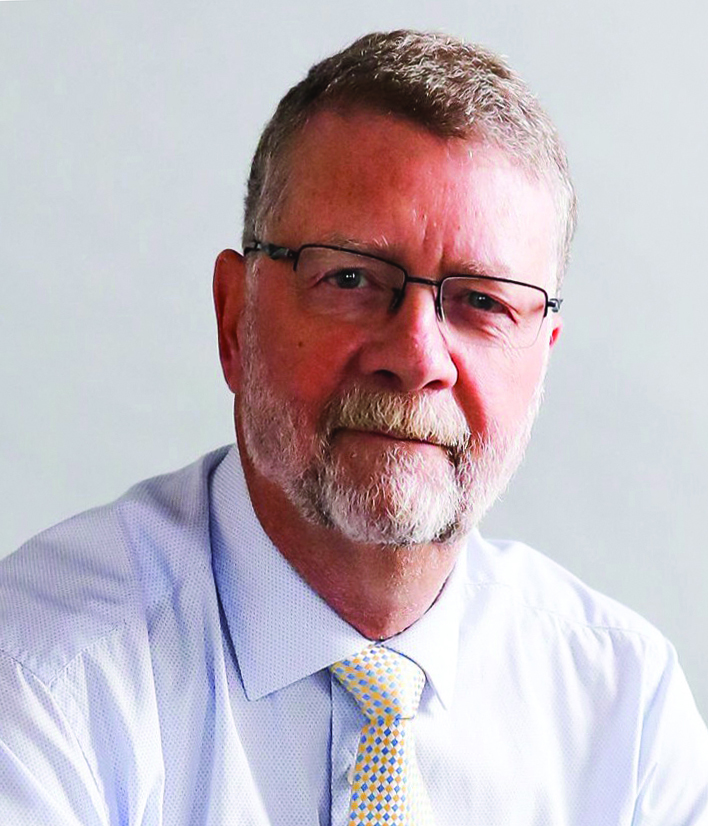
The Long Strange Trip Episode 29: The Transformation Economy: Why Experience Is No Longer Enough with Joe Pine
About the Episode:
What happens when having more experiences isn't enough anymore?
I've spent a lot of time thinking about what happens after we've built the business, accumulated the wealth, and checked a lot of the boxes we were told would make us happy.
Then what?
I sat down on The Long Strange Trip with Joe Pine, co-author of The Experience Economy and author of The Transformation Economy, to talk about what comes next.
Joe believes we're moving beyond experiences toward something much deeper: transformation.
And transformation isn't just about doing something different. It's about becoming someone different.
That got my attention because retirement may be one of the biggest identity changes most of us will ever go through. You stop being the CEO. You sell the business. You walk away from the career that has defined you for decades.
And then comes the uncomfortable question:
Who am I now?
Joe and I also talked about how trauma and major life disruptions can force us into that messy middle—the place where the old version of ourselves doesn't quite fit anymore, but we haven't figured out who we're becoming yet.
That's not necessarily a bad thing. It can actually be where transformation begins.
From Experiences to Transformation
For years, we've been told that experiences are what people really value.
Go somewhere. Do something. Create memories.
But Joe argues that there's another level beyond experiences: helping people actually change their lives.
That made me think about what we're really trying to accomplish as we get older.
Are we just looking for more things to do?
Or are we looking for ways to become more fully who we want to be?
Retirement Is an Identity Change
I've talked about retirement a lot on this show, but I keep coming back to the same question.
If I no longer own my business, who am I?
Selling a business isn't just a financial transaction. Retirement isn't just about having enough money to stop working.
It's an identity change.
And I think that's one of the reasons retirement can be so disorienting. We spend decades building an identity around what we do, and then suddenly we're expected to figure out who we are without it.
That's a transformation, whether we're ready for it or not.
What Are We Doing With Our Wealth?
Joe and I also got into something that bothers me about the way we often think about wealth management.
We spend an enormous amount of time figuring out how to accumulate, protect, and grow money.
But how much time do we spend asking what that money is actually for?
What's the point of having wealth if it doesn't help you create a better life?
What experiences do you want to have? What kind of person do you want to become? What kind of legacy do you want to leave?
Those are very different questions from, "What's my rate of return?"
The Messy Middle
I think transformation sounds great when we talk about it after the fact.
But when you're actually going through it, it can be pretty uncomfortable.
There's a period where the old version of you isn't working anymore, but the new version hasn't arrived yet.
I've been through that myself.
And I'm learning that maybe we don't need to rush through that messy middle. Maybe we need to get curious about it.
Because sometimes the disruption we're trying so hard to get past is actually pointing us toward something new.
I'm not coming at this as an expert. I'm a fellow traveler figuring this stuff out in real time.
And maybe that's the bigger question Joe and I were really exploring:
Who are you becoming, and what kind of life are you trying to create?
Transcription:
Intro:
Welcome to The Long Strange Trip. I'm Josh, the host of the show. We're going to dig into six areas together, finding real work-life integration instead of that brutal 95/5 split too many business owners live with. We're going to approach retirement as an actual reinvention rather than just stopping work, and we're facing death honestly and avoiding PTSD around death.
We're also building resilience when life throws us curve balls, we're sharing wisdom across generations, and finally, we're understanding the patterns that show up in all our transitions. I'm not coming at this as an expert. I'm a fellow traveler figuring this stuff out in real time, especially now as I navigate my own dual cancer diagnosis at 73.
Welcome to The Long Strange Trip. I'm glad you're here
[01:06] Josh
How are you today? This is Josh Patrick and we're with Joe Pine and you're at the Long Strange Trip podcast. And, and Joe has written a book relatively recently, '26, I guess February 3rd. That's my sister's birthday by the way that it came out. And, um, it's called The Transformation Economy and since a lot of what we talk about here in the Long Strange Trip is transformation and how transformation is actually a part of wisdom, so instead of me yammering on about The Transformation Economy, let's let the expert come out and talk about himself.
Hey Joe, how are yourself? How are you today?
[01:45] Joe Pine
I'm doing, I'm doing fine, Jos. It's always a, a pleasure to talk with you
[01:52] Josh
I always enjoy our conversations. I remember, oh God, I don't know how many years ago, it was up at Keystone. We were at a...
[02:02] Josh
Yeah, experience economy and, boy, the weather sh- certainly didn't cooperate with that, that's for sure
[02:08] Joe Pine
You know, it was bli-, you know, blinding snowstorm coming in horizontally, and we had the event all scheduled for outside, but we, we... The only thing we had done, we had a room in the conference center, like, if it snowed, et cetera, then we'll, we'll, uh, go there and to figure out what to do. So we did that and brought some of the stuff in and, and made the best we could.
But, but it's always, uh, or it's often things that go wrong that, that can turn into the best memories.
[02:34] Josh
Yeah. Well, I, I certainly remember that one, that's for sure. So tell me about the transformation economy. I mean, we know about the experience economy, which, you know, has been something you brought to the world years ago, and now you're saying the experience economy is not good enough, and we need to be working on transformation.
So what do you mean by that?
[02:51] Joe Pine
Well, it's, yeah, it's probably a bit of an overstatement that it's not good enough, but for many, companies that is the case. It, uh, you know, the, the bogeyman I've always talked about is commoditization, and, uh, the reason for the rise of the experience economy was the commoditization of goods and services.
You need to differentiate and shift up what we call this progression of economic value to go beyond first commodities, goods, services, and then onto experiences. Well, we increasingly see experiences being commoditized as well. The, the first case where you saw it was theme restaurants. You know, the, that, uh, you know, they thought that having, uh, uh, poor food and lousy service but a great environment would be enough to sustain a business, but it's not.
You know, you get that been there, done that effect. A colleague and I, uh, wrote an article with Harvard Business Review in June of 2024, where we talked about how Starbucks is commoditizing itself, and it was one of the, the top 10, articles of the year at HBR. And, and I'm sure it's a total coincidence, but three weeks after we wrote it, they fired the CEO and brought in Brian Nichols, who's actually doing a pretty good job of going down a list of stuff that we thought. And so, so, so the answer is, well, what's after, after experiences? In fact, the last two chapters of The Experience Economy talked about this. It talked about transformations, but, um, uh, the world wasn't ready for a full book on it, I didn't think, until the last few years or when I started writing it. Uh, and, uh, and so what, what transformations are is transformative experiences, right?
All... In the progression of economic value, everything's built on top of the other one. You know, you, you make goods out of commodities that you extracted. You deliver services on or surrounding those goods. You, you stage experiences on top of those services, and then, and then use experiences as the raw material to guide people to change. That's what an a- that sort of transformation is, where you help them achieve their aspirations to become who they want to be, uh, and to flourish as human beings.
[06:03] Josh
So if I don't own a business or I don't... I'm not a, a leader in a business, how does this apply to me?
[06:09] Joe Pine
Well, you know, uh, funnily enough, one of the things I did in this book was actually write it as much as I could from a personal perspective. I wanted the reader to viscerally feel that they have aspirations themselves, that they've undergone transformations, they want to undergo further transformation, uh, and then to realize that, that, uh, why there's an opportunity there for them to do it with their customers. So even if you, um, aren't in business, you can get a lot out of this in seeing about, uh, and considering yourself, particularly the first two chapters, which are sort of the big picture chapters, and then the last five are how to go about doing this, which are more business-oriented. But even then, you know, I talk about how, um, for time immemorial, we've always been our own general contractors of our transformations, still a possibility where you can pick and choose.
So like, for example, if you wanna become more fit, you can hire, to use jobs to be done theory terms, you can hire, uh, commodities like organic produce or protein powder. If you, you can hire, uh, barbells at the goods level or, um, um, uh, devices like, uh, to measure your heart rate and your steps and all that sort of thing.
At the services level, you have the apps that you can use that where you can gain information about it. At the experience level, you can pay a membership fee to a gym, uh, and, um, uh, and use their equipment, the access to those to further your fitness journey. Uh, and then at the transformation level, you can hire a personal trainer who's really invested in you completing that journey or, or getting to the place where you are fit and then main- maintaining it. Uh, and so, but, but now it's, it's, um, and companies are increasingly getting in that business helping guide those transformations. It's a lot easier to work with them, uh, more directly at that transformation level, where they, they then hire all the things that are needed to make that happen.
[09:25] Josh
I'm gonna ask you a stupid question, which...
[09:28] Joe Pine
I doubt it.
[09:30] Josh
No, it's actually a pretty stupid question. Why would someone wanna do a transform- be transformed?
[09:36] Joe Pine
Well, we are a bundle of aspirations, Josh. We, we, we often want to improve and, and, and then I'll ment- often it's actually we want transformation for someone else. You think about parents, uh, where they take their kids to taekwondo class or they, they hire tutors. They, um, uh, for, you know, for math, science, whatever it might be. Uh, they may want them to... They help them go to college to be able to become professionals or maybe into sports or whatever it might be. Um, and always, you know, taking into account that, that the kids as they grow older, you know, with their own preferences and so forth. But we want to, um, do right by our kids and help them become, you know, functioning, working adults who have a nice life and prosperity, that they have pro- that they're prosperous. And so they're the beneficiaries of the transformations we hire for them, we buy for them. Um, but even then with our, with ourselves, you know, it's like, do you wanna become a better golfer or tennis player or pickleball player or anything like that? Do you, uh, want to move up into the ranks at, at work? We go- get to be a manager and then, uh, and then an executive.
Maybe you wanna start your own company. Um, even retiring, to retire is a tremendous transformation, and so many people don't do that well.
[12:03] Josh
They do it, I mean, and that's one of the areas we talk about the long strange trip is retirement is reinvention. And the truth is, you know, the question I ask myself, and this is to business owners specifically, if I no longer own my business, who am I?
[12:16] Joe Pine
Right, exactly. So all transformation is identity change,
[12:20] Josh
Yes
[12:21] Joe Pine
and retirement immediately changes your identity. I no longer own that business. Who am I? And so the transformation is discover who you are, uh, beyond being a, a business owner and what that means for the rest of your
[12:32] Josh
And you can't say... I mean, one of the things that you really, people rebel against saying is, "Well, if I'm not a business owner, what am I? I'm retired."
[12:42] Joe Pine
Right. Right
[12:44] Josh
And, and we, I think we kind of rebel against that answer, and we need to have a substantial answer for that, and most of us don't get it
[12:53] Joe Pine
And ideally before you retire,
[12:55] Josh
Yes.
[12:56] Joe Pine
be faced with it right at that
[12:58] Josh
Yes. Although I didn't do it before I retired, but I did happen to have a little help along the way.
I had two, two, uh, diagnoses of cancer, different types of cancer, so that helped me, and then I started running a sub-- and writing in CaringBridge, and then I realized I wasn't writing about my health, I was writing about stuff that Substack would be a better thing.
[13:19] Joe Pine
Right
[13:20] Josh
And I moved over to Substack and slowly but surely expanded, and that's where The Long Strange Trip came from
[13:29] Joe Pine
Right, right. I, you know, I actually wrote the book on Substack. I created Substack to, as a catalyst to force me to write, to be able to, to write that book. And cancer is something... My, my editor actually said, said, "You know, you, can you not talk about cancer so much in the book?" And I looked it up and there's like four mention- four times, so I don't know what her too much was. But, but one of the things I discovered in the writing of the book is that so much transformation be- uh, happens because of trauma. You know, I always view it as like the bluebird of happiness, it lights on your shoulder and whispers in your ear and gives you an aspiration. But no, is, is, is... And the thing about trauma is it often immediately changes your identity.
[15:05] Josh
Yes
[15:06] Joe Pine
is how do you get back to whole? You'll never be the same person. It's a, it's a metamorphosis. You cannot go back, but how do you get back to whole to become a new person with a new identity that is not I, you know, a, a person with cancer?
And that kind of moves you into what, you know, um, what stage are you in a transition. And when you have trauma, you're automatically thrown into what's called the messy middle or as a friend of mine says, passage. And that part of, of a transition is your life is upside down, and you will come out changed.
Never know how that change is gonna be, but you will come out changed eventually. And,
[16:09] Josh
Right
[16:10] Joe Pine
that's part of that. So I have a question for you. It seems to me that there's a lot of new businesses really doing a good job with transformation and helping people get there. What comes to mind is, uh, an organization called the Modern Elder Academy.
[16:24] Josh
Oh yeah, Chip
[16:26] Joe Pine
Yep, Chip's, Chip's thing. And they have grown tremendously, and I think it's because the baby boomers especially are just really, really thirsty for transformation into something that they're happier with. Does that make sense to you?
[16:39] Josh
Yeah, absolutely. The, uh, I, I love Chip. Chip, I, you know, I've known for 25 years now. Uh, and we gave him our third ever Experience Stager of the Year award winner for his Joie de Vivre Hospitality, which is, like, one of the greatest themers of experiences in the world, and continue to follow what he is and, uh, to meet and talk with him on occasion. And, uh, the Modern Er- Elder Academy is a perfect example. One of the things I love is that, um, he calls it a chrysalis, right? And a chrysalis is the metaphor for a metamorphic transformation, a transformation that changes in a way that we can't go, go back.
[18:00] Josh
Ja
[18:01] Joe Pine
Uh- Yeah ... in fact, the, uh, the cover of the book has a, has a metamorphosis going on with a, uh, swan, and then a green swan, I think it is, and turning into a blue and green, um, um, uh, a bird, hummingbird, and then into a, uh, green, um, make sure I got it right, into a blue, uh, airplane, right, paper airplane,
[18:18] Josh
Yes
[18:19] Joe Pine
All, all origami based. And I, and I've, I've come to love that bird in the middle. I call it the chrysalis bird. It's blue and, and, and green and blue. Uh, and so I just did our inaugural transformation, um, ex, uh, transformation accounting expert certification course last week, and one of the two groups where we did an exercise throughout the week on applying all of these concepts, came up with an idea of a hair salon as chrysalis.
[19:14] Josh
Sure
[19:15] Joe Pine
they, and they called it a chrysalis, and I love that it... One of the things I teach them is this transformation journey built off of the hero's journey, right? That goes around in a circle from the ordinary world to the transformation world, and so forth, and they designed theirs as a butterfly, right?
That you, instead of a circle, it's a butterfly that you go through, and it's just a, a beautiful thing. Uh, so, so everything that, that Chip does is about to help people through that midlife crisis get to the other end and gain a new identity as what they, as, as who they really are for, you know, effectively the rest of their lives. And I love the fact that it doesn't end when you go to one of his, um, uh, retreats, I think is the right word that he uses, in Santa Fe or in, uh, Baja Mex- Mexico, where, um, where they then continue to work with you after that with a concierge service, with, uh, um, weekly, uh, updates, with, uh, networking and so forth.
And, and that's one of the things to understand about transformations, is that the, we, as at least as an offering, it doesn't end you actually achieve your aspiration, when you can say, "I was X and now I am Y." Right? Because you have to sustain it. You have to maintain that over time and, and Modern Eld- Elder Academy does, does a great job of that and, and, and every company needs to do that.
It's not just, "Okay, you're done. Go." But, uh, continue to work with them over time to follow through on the, um, um, achievement of that aspiration.
[22:05] Josh
Yeah, I, you know, as, as you probably remember, I, uh, have spent 25 years or so in the wealth management world, and I always have this question is why wealth managers do such a bad job on, you know, the, the majority. There are some people do great job on transformation work with their clients. But for the most part, wealth managers really do the best they can possibly do to ignore the most important part of their job, is to help people transform using their money in an appropriate way, and wealth managers just seem to get stuck.
Do you have any idea why?
[22:42] Joe Pine
I don't know. Uh, I, well, I, I, well, I, I also, I do know. Uh, the, because of the mindset of the industry, it's so focused on money,
[22:50] Josh
Yeah
[22:51] Joe Pine
right? It's focused on the accumulation of wealth, not recognizing that money is a means to
[22:56] Josh
Yes
[22:57] Joe Pine
I mean, well, a few of us for where money is the end, right? Uh, but money is a means to an end, and how do you help them achieve those ends, right?
That's gonna create much more economic value for you 'cause it creates more value for your companies. One of the, the companies I highlight in the book is SimpliFi. They, they actually sent two people to our certification course last week. Uh, but it's a local, um, Minneapolis-based company, and they provide a transformation platform, I call it, for wealth advisors who then can use it with their clients. And one of the key f- uh, uh, one of the, the core focuses of it is that, um, is that they really help people, uh, they help wealth advisors have different conversations with their clients, with their aspirants as I would prefer to call them, um, that focuses on their life and their legacy, to recognize that, that, that your, you know, the wealth you accumulate is so that you can live a better life, is you can, is you can have more prosperity.
But also in terms of what you leave behind to your children, to church, to charities, to causes that you have. You know, what's that legacy and how can we ensure that you achieve that, uh, th- over the, the life of your, your wealth accumulation?
[25:06] Josh
I just did a session with Tom Deans earlier this morning, who's written about that extensively, uh, in his book Willing Wisdom. And what I'm finding is that there's a lot of people who just don't wanna do it. They just resist, and that's all there is to it. Um, and it seems to be a really... It's, it's one of these issues where, um, we are so afraid of death, and I don't wanna go down this rabbit hole.
Or
Death. Death,
Okay.
D-E-A-T-H. We may be afraid of taxes, but we're not mortally afraid of taxes. We're mortally afraid of death. But I do have a question here is that it seems to me that for people to transform, they have to go through a really uncomfortable part of their life to do so. I mean, if you decide to get in shape and you're a hundred pounds overweight or even fifty pounds overweight, it's a very difficult transformation to get yourself to do the things that are necessary for that transformation.
Do you have any ideas or advice for folks along that line of how they get through the hard part?
[27:04] Joe Pine
Yeah, you know, in the transformation journey I c-, you know, call that the crucible that you have to get through where things, uh, really become difficult and so forth. And, uh, and so I'd say, I'd say two things. One is, is make a firm commitment, right? Make a commitment. Make that... Oh, it's three things now that I think about it.
Make a, uh, make that a very strong commitment. Make, tell others about it. Find someone who you can be accountable for so that you know you're disappointing someone besides yourself and, and your, your spouse, family members can be a good one, uh, for that. Um, and then, uh, two I was g- uh, uh, I would say is to identify as the person who has lost the weight Is that, is that I, or I just said I am a f- fit person, I am a thin person, whatever makes sense for you to say. Uh, and, and I'm, and I'm not there yet, but I'm going to, to match who I am with that identity. And if you focus on that as your identity, then of course you're gonna do the things to be able to make that happen. And third is find a guide. You know, in the, in the, in the, in the hero's journey it's meet the mentor is a, is a step there. But find a guide who will help you do that, who will hold you accountable, who will do what it takes to ensure that you continue, uh, to do that. One of the other, um, examples I highlight in the book is a longtime friend of mine, one of our experience economy, our certified experience economy experts, Frances Turner, who ever since I'd known her weighed over 300 pounds. And, and she has, you know, since a child had a, had a, had a, you know, lifelong issue with weight, and she tried everything including bariatric sur- surgery, and sometimes she'd lose 100 pounds or more, but always gain it back. so then of course we got GLP-1s, but she did a very smart thing, which was not just take the GLP-1s and, uh, who, who, uh, and the companies there I think are doing a disservice to people because they're just sub- prescribing the goods, right?
They're delivering the goods based off a doctor's prescription, but they aren't helping you transform. They're help- helping you with the behavior change. So there's a company that she used called Calibrate that does that. It subsumes the physical goods into a transformation offering, where she's paying a membership fee, uh, and they have a, a diagnosis up front about, uh, about, you know, what she wants to...
how much weight she wants to lose, why she wants to lose it, but go beyond that to, to look at rest and sleep, to look at em- very much emotional factors and, and other fitness factors. One of the things they've discovered with GLP-1s, particularly for older people, is it tends to make us more frail, right? We lose bone mass and muscle mass and that sort of thing, so you've got to handle that con- uh, uh, concurrently with the, uh, with taking the, the, the medicine. Um, and then they have... You know, she has a coach. She has a, uh, a weekly inspiration. She, she meets, I think, monthly, uh, with them, uh, uh, personally. Uh, and over the course of, of time, she actually was able to lose And, and that was over a year ago when I wrote it up in, in the fir- first draft of the book. Uh, and every... and I check with her every two months and said, "Still off. Still off." Right. Why? 'Cause Calibrate has a, a, a portion of the program they call sustaining, which is perfect, or sustain, right? It's sustaining that transformation through time. They continue to work with her with that, and in fact, if you don't meet your, um, weight goal, uh, I think it is, uh, or, or lose, I think it's lose 10, at least 10% of your weight over 12 months, they give you 50% of your money back Right?
Which is, which I love it, is I call it a transformation guarantee. You know, you came here for a particular outcome. If you didn't get that outcome, why, why are you having to pay all this money? So many companies, I know I do it myself now, have a transformation guarantee where in some way, shape or form, uh, if you don't e- if you don't get them to, uh, achieve the outcomes that they wanted, then you give them some, in some cases all of their money back
[32:00] Josh
I think that's a, a moral and a, a good ethical thing to do. I mean, if you're telling somebody you can provide a particular transformation or outcome from that transformation, your client doesn't get it, sure, the client needs to bear some responsibility, but the vendor needs to s- bear at least as much responsibility because they didn't provide the services that were needed.
You know, it's sort of like why online courses seem to have died, is that there's... The, the online course puts all the responsibility on the buyer of the course, none on the vendor of the course. And those courses all, m- you know, they're really promising a transformation. They're saying, "I'm gonna take your business from being marginal at best to being something that can provide a living for you."
Well, that's a transformation that you're gonna have to go through to get there. And the industry for years and years and years got away with, you know, just saying, "Here's a course. Read it, take it, do it." And what they found was nobody was doing the courses. And then people finally figured that out after buying enough courses.
They said, "I'm not buying another course because I don't get a result."
[33:27] Joe Pine
Right.
[33:28] Josh
So now, the good ones are providing a strong coaching component for more money, but at least you get a result and you're guaranteed a result
[33:36] Joe Pine
Right. That's the economic function of transformation is guide. You stage experiences, you guide transformation. It has to have a coaching, uh, component. There's sort of a paradox that you can't guarantee somebody change. Like you said, there's, you know, at least half of it is on the, the, the, the aspirant who wants to change, and that's why getting commitment before you go through this process is so important. But you can't guarantee they change, but the best way to ensure they change is to in fact guarantee it, a little different sense of the
[34:15] Josh
Yes
[34:16] Joe Pine
Uh, because charging for outcomes is also a catalytic mechanism for you as a transformation guider, is that, is it forces you to, to change your business, uh, to do what it takes, and to learn in particular from those who say, "No, I d- I, I..."
Who, the failures. You know, learn in particular from the failures, uh, so that you can improve the business so, so that doesn't happen, uh, again.
[34:49] Josh
Yeah, I think it, what it does is it forces the, um, vendor to be personally responsible, which is something that we have woeful little of in this country on average
[35:00] Joe Pine
Exactly. And you, and you don't feel that responsibility unless you make your income dependent on your customers' outcomes
[35:10] Josh
that's just, that's been my experience along the way. Hey, Joe, unfortunately we have run out of time.
[35:18] Joe Pine
Uh-huh. It's too bad, we could talk for an hour or
[35:21] Josh
Well, we could. We've done it before, so maybe we'll do it again. Um, so how would people find you and what would you like them to do and what's the next step that would be best for the listener for this?
[35:32] Joe Pine
Yes. So you can, you can find me on LinkedIn if you have any questions and that sort of thing fairly easy, just look up Joe Pine. Uh, the, the next thing to do, if you haven't already, is buy the book, read the book, uh, understand it. Uh, one of the things I talk in, in there about, uh, al- and always having to practice what I preach, uh, to make it as transformational as I can, is there's, there's, um, uh, I talk about encapsulation, where, where you surround an experience with preparation, uh, reflection, and integration. And there... So the opening of the book is not an introduction or a preview, it's a preparation. The closing of the book is not an appendix or afterward, it's a reflection. And at the end of the reflection and the preparation, I think, it tells you go to our website, strategichorizons.com, strategichorizons with an S .com/integration. And then there are other things that, that are there that can help you on your own journey, uh, to transform your business to become a premier transformation guider. And, and as I said, substacktransformationsbook.com, transformations.substack.com as well
[37:12] Josh
And, uh, Substack's a great place to read stuff because it's where you're probably putting your most recent thoughts, I would assume
[37:17] Joe Pine
Yes, yes. how many new ideas I've come up with since the, the book
[37:20] Josh
Yeah, that
[37:21] Joe Pine
And you can also go back and see all the stuff that didn't make it into the book, but still, still is good for, in your
[37:29] Josh
Right. That's great. Well, thank you so much, Joe. I really appreciate it. And I've got two things I'd like you to do. First, I've been asking for almost 500 episodes of various podcasts that I've done over the years, is please go to where you're listening to this podcast or watching this podcast and give us an honest rating and review.
If you love us, you give us five stars. If you hate us, you give us one star. I cry, but you won't care about that if you don't like it anyhow. And, uh, second thing is, hey, if you like this podcast and you think you'd be a good guest and you have a story to tell or something you might wanna discuss that would be interesting for one of the six areas of The Long Strange Trip, please send me an email at [email protected].
That's the number two, and solution is singular. So it's [email protected], and we'll have a conversation. I'll send you a link, we'll have a conversation, and we'll see where it goes. So this is Josh Patrick. We're with Joe Pine. You're at The Long Strange Trip, and boy, the long strange trip has been strange.
Thanks a lot for stopping by. I hope to see you back here next week
Outro:
Thanks for spending this time with me today. I really appreciate you being part of this journey. I'd be grateful if you'd leave an honest rating and review. It helps other people find these conversations, lets me know what's landing with you and what isn't. If you love the show, give us five stars, and if you hate it, give it one star and I'll just cry a little bit.
Keep asking the hard questions. Keep being honest about what's difficult. And remember, we're all just trying to figure this out together. I'll talk to you next time on The Long Strange Trip. Thanks for stopping by
