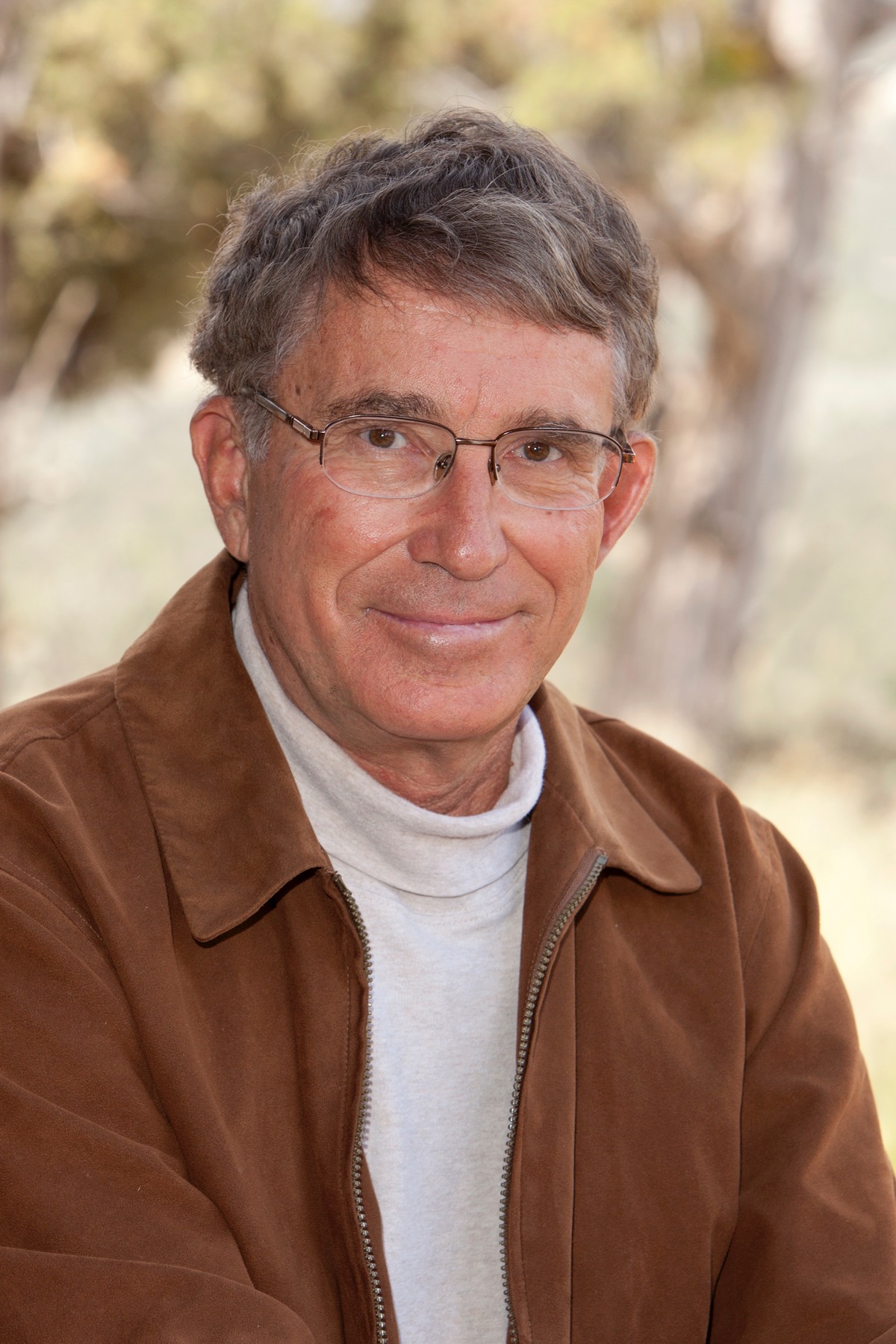
The Long Strange Trip Episode 27: Resilience Isn't About Being Strong. It's About Letting Go. | Ron Pevny
About the Episode:
What if resilience isn't about white-knuckling your way through life, but learning how to let go?
Most of us spend decades trying to control outcomes. We build businesses, hit targets, and manage every little detail. I know I did. But as I navigate my own health battles with a dual cancer diagnosis at 73, I've had to learn that holding on too tightly usually just makes the ride a whole lot rougher.
I sat down recently on The Long Strange Trip with Ron Pevny, an author, educator, and pioneer in conscious aging. We dug into one of the six core areas I'm trying to unpack: resilience.
And right out of the gate, Ron said something that hit home: real resilience in the second half of life isn't about muscle or willpower. It's about emotional fluidity—the willingness to let go of how you think things should go and actually flow with what is happening.
If you're facing a major life transition, or just wondering how to grow older without becoming rigid, here are a few things from our conversation that gave me pause.
Why White-Knuckling Doesn't Work
Ron and I talked about why so many people struggle when they hit their 60s, 70s, or beyond. In our younger years, our culture trains us to focus almost entirely on outward achievement. We're taught to fix problems by pushing harder.
But when life throws you a curveball—a health diagnosis, a career ending, or just the physical realities of getting older—pushing harder against the river doesn't stop the current. It just wears you out.
Ron put it simply: if you don't learn to flow with the changes, you end up fighting a futile war against reality. That's where the anxiety, distress, and frustration come from.
Inner Work and the Curiosity Secret
I asked Ron how someone actually learns to "go with the flow," especially if they've spent 60 years doing the exact opposite.
His answer came back to something I've become passionate about: curiosity.
When you get genuinely curious about what's happening, your perspective shifts. Instead of saying, "This is terrible and it shouldn't be happening," you start asking, "I wonder what this next chapter looks like?"
Ron shared a personal example. He's currently dealing with severe back pain. Part of him wants to fight it and complain about what a bummer it is. But his curiosity allows him to step back and think, "Okay, my back hurts, but this is part of the journey of getting older. What else is fascinating about this stage of life right now?"
It turns out curiosity gives you a little bit of space between yourself and the discomfort.
Stepping Outside the Comfort Zone
So how do you start doing this kind of inner work if you've never done it before?
Ron pointed out two main doorways:
Life hits you over the head: A crisis forces you out of your comfort zone whether you're ready or not.
You choose to step out: You start taking tiny, intentional steps outside your safe bubble.
I'm a big believer that taking massive, sweeping swings for personal change rarely works. My mantra has always been fail fast, fail cheap. Try small experiments. Step an inch outside your comfort zone today and see what happens. Most of the time, you realize the monster under the bed wasn't nearly as scary as you thought.
You Can't Do It in Isolation
We also talked about why community matters so much as we age. We are wired to resonate with the people around us. If everyone in your circle is clinging to the past or resisting change, it's going to be tough for you to build resilience on your own.
You don't need a crowd, but you do need a few fellow travelers who share a vision for growing, learning, and staying flexible.
What Are You Flowing Toward?
At the end of the day, resilience isn't about gritting your teeth to survive what life throws at you. It's about self-awareness, stepping out of your comfort zone in small ways, and letting go of rigid expectations so you can actually enjoy the life you have right now.
I certainly don't have all this figured out. I'm just a fellow traveler asking questions and trying to learn in real time.
If you want to check out Ron's work, his book is Conscious Living, Conscious Aging, and you can find his programs at centerforconsciouseldering.com.
If this conversation struck a chord with you, I'd be grateful if you left an honest rating and review wherever you listen to podcasts. If you love the show, give us five stars. If you hate it, give us one star—I'll cry a little bit, but I'll get over it.
And if you have a story or perspective that fits into the six big areas we're exploring on this show, drop me a line at [email protected]. Let's figure it out together.
Transcription:
Introduction: (Josh)
Welcome to The Long Strange Trip. I'm Josh, the host of the show. We're going to dig into six areas together, finding real work-life integration instead of that brutal 95/5 split too many business owners live with. We're going to approach retirement as an actual reinvention rather than just stopping work, and we're facing death honestly and avoiding PTSD around death.
We're also building resilience when life throws us curveballs. We're sharing wisdom across generations. And finally, we're understanding the patterns that show up in all our transitions. I'm not coming at this as an expert. I'm a fellow traveler figuring this stuff out in real time, especially now as I navigate my own dual cancer diagnosis at 73.
Welcome to The Long Strange Trip. I'm glad you're here.
Josh:
Hey, how are you? This is Josh Patrick, and you're at The Long Strange Trip podcast, and my guest is Ron Pevny. And we're gonna start off talking about resilience in the later years of life. And Ron has some programs that help people do that, and I'm sure we'll hear about that as we go into the conversation.
So let's bring Ron on. Hey, Ron. How are you?
Ron:
I'm doing well. Thanks for inviting me, Josh.
Josh:
My pleasure. So tell me, um, if you were to tell a person one thing, and I know this is a really stupid question, but I'll ask it anyhow. One thing about building resilience later in life, what would you tell them?
Ron:
I would tell them that the most important quality for living well in later life and for building resilience is developing the flexibility to let go of expectations, to let go of how they think everything should unfold each day or in the larger unfolding of their life, and to allow themselves to really flow with what's happening.
Because there are gonna be many, many changes that happen in the latter chapters of our life that are gonna require this kind of flexibility or emotional fluidity. And if we don't have that, and if we're continuing to try to hang on to how things used to be or how we think things should be, well, we're gonna find that that's a really difficult way to live because things are not gonna stay the way they have been or the way we think they should be.
Josh:
And what kind of things might happen if you don't do that? And what kind of things might happen if you do do that? Let's go with both sides of that.
Ron:
If you do not cultivate the ability to go with the flow, then you're gonna find that more and more you are gonna be fighting and resisting in futility the changes that are inevitably gonna happen. And there are gonna be a lot of changes. There always are in life, but especially in our later chapters.
And that resistance is only gonna cause frustration. It's only gonna cause emotional distress because we're fighting against the river rather than cultivating the ability to flow with it.
If we're able to flow with it, the second part of your question, then as these changes happen, we are able to align our energy with it. Our sense of wellbeing will—it will be supported because we are flowing with the river. We're not fighting everything that is happening, trying to make it be otherwise.
We feel much more peace, much more calm inside, and that's, I think, what we all wanna feel, especially in the latter chapters of our lives.
Josh:
So I'm gonna guess that most, many people, maybe not most, but at least many people don't do very well with going with the flow in their younger life.
Ron:
Mm-hmm.
Josh:
And they likely won't do it so well in their later life unless they learn how to do it. But how does one learn how to go with the flow?
Ron:
Oh.
You know, I think the importance of most of the personal growth processes and practices that are available to us now, either from the realm of psychology or from the access we have to all of the world's wisdom traditions, and we've got incredible access to that wisdom now.
I think they all teach the necessity of practicing and being willing to practice going with the flow. I think they all teach that fighting what wants to happen does not serve us. It only causes misery and disappointment.
And so I think it is so important, the younger the better, to develop a commitment to doing some inner work. And a big part of any of the inner work that I think is available to us now is learning how to not be attached to having everything look the way we want it to look.
And so I recommend that people, long before they reach their elder chapters, really start doing some of this inner work that enables them to flow rather than resist.
Josh:
In my experience, I have not met a lot of people in my life that have done any inner work. And when they get to be 60, 65, 70, they still haven't done any inner work, and life seems to be a struggle.
Yeah. Why do you think that's true? That they haven't done any inner work?
Ron:
Yeah, that they haven't, and they kind of resist it, even when they get older.
You know, Josh, I think that's because the world we live in, the culture we live in, the society we live in doesn't value inner work, doesn't value personal growth.
It values achievement in the material world, and that's where we put our energy. And if we're not raised in a way that teaches us the importance of learning how to look within, learning how to get in touch with our own inner voice rather than all these voices that are constantly telling us what we should be doing, if we're in a culture that doesn't do any of that, then it's inevitable that most of us are not going to see that that's even possible, and certainly not gonna think that it is important.
But I think the good news is that more and more in the world we're living in, Josh, there is a realization from so many different directions that our wellbeing does depend on doing some kind of inner work.
And so I think that that's slowly but surely changing. And I don't pretend that I can sit here or anybody can sit here and give people a prescription for all of a sudden becoming more resilient.
But I think that the work that I do, and many, many other people do, is designed to help people develop this kind of emotional resilience.
And so I encourage people to find, you know, do a little investigating. Find something out there that seems to resonate with you, that would motivate you to do a little inner exploration, to do a little bit of this inner work.
Josh:
So Ron, where do you think curiosity fits into all this?
Ron:
Curiosity, I think, Josh, is such an incredible quality, and I think if we're—
Josh:
And I'll talk for myself. When I am really feeling curious, and I'm a pretty curious person, I'm always wondering about this, what happens if this, what happens if that.
I think the more we have developed an appreciation for our natural innate curiosity, the more then we're gonna be interested in seeing what happens as changes happen in life.
Changes happen, and rather than having some idea in our head that all change is to be resisted and fought against, I know my curiosity is that, boy, I wonder what it'll look like when this changes or when that changes. I wonder what it'll feel like if I decide to kind of flow with this change instead of fighting it.
And I know, just to give you a personal example right now, I've got some problems with my back that are causing me a bunch of distress, and there's a part of me that wants to fight it and change it.
Yeah, I don't want my back to hurt like it's hurting, and I'm doing my best to find ways to deal with that situation.
But I see that my curiosity really wants to take a look. What's it like if this is hurting in this kind of a way right now? What's it like if I just kind of let go of a bunch of my thoughts that, oh, this is such a bummer?
What's it like if I just think, wow, you know, this is all part of an incredible journey of getting old, and sure, my back is hurting, but there's a bunch of other fascinating stuff that I really love about aging, and I'm just kinda curious to see how these all fit together.
I think that curiosity is a sense of wanting to explore everything that is happening in us and to us rather than approaching it with firm conclusions of how it should be.
Josh:
Now, is it possible to do—
Excuse me.
Ron:
Mm-hmm.
Josh:
To do inner work when you're not curious?
Ron:
Oh, let's see. That's a good question.
I suppose maybe it is, but I think that it goes two ways.
I think that if you're really doing inner work, you know, psychological and spiritual growth work, that naturally leads to curiosity.
And so I think the work leads to curiosity, and I think having a strong sense of curiosity can lead to being willing to try doing some of this work to see how it's all gonna unfold, what difference it makes.
And so I think that they feed each other.
Josh:
Seems to be sort of a chicken and an egg situation.
Ron:
Yeah. Yeah, I think so.
Josh:
Yeah. Where, you know, for some curiosity leads to inner work, and for some inner work leads to curiosity.
Ron:
Yeah.
Josh:
Although I suspect, and I have no idea if this is true or not 'cause I'm just guessing, is that curiosity, if you're curious, it's easier to go to inner work than the other way around.
Ron:
Yeah, I think that's probably true. It has less, it has, it has less pushback—
Josh:
Mm-hmm.
Ron:
...because...
Josh:
The other thing which I think is really interesting, you've mentioned resilience a couple of times, and I find that resilience is a fascinating topic. In fact, it's one of the six topics at The Long Strange Trip.
And the reason I find it so interesting is that, just my observation, and again, I may be right or may be wrong, is that most of the world uses brute force for resilience. They push from the outside.
Ron:
Mm-hmm.
Josh:
And in my experience, resilience, real resilience comes from the inside.
Ron:
Yeah, I definitely think that that's true.
Josh:
So again, here we are again with the same sort of chicken and the egg question, but not really, is why is it the world thinks that brute force is the way to build resilience?
Ron:
You know, the modern world we live in does not have a whole lot of psychological and emotional and spiritual sophistication.
Josh:
I think I would agree with that.
Ron:
I think we know that. And so therefore, we're not gonna understand some of these things that might be a little bit more subtle than just brute force. We're not gonna understand how important they are.
But, you know, the world's wisdom traditions from cultures around the world have understood more about human growth, human wellbeing, human fulfillment. They've understood these kind of things and they've taught them.
The world we live in, most of our young people are not taught these very well at all.
And so they grow up living just like their parents lived, like their parents lived.
And I can't give you a better answer for why, but I think what's most important isn't the why, but it's what can we be doing once we realize that resilience is important and we don't have those qualities maybe?
What can we be doing to start to learn about them and to start to see if we can focus on them?
Josh:
You know, one way, one place we might wanna look, and I'm curious about your opinion on this, is to look past Western religion to Eastern religion.
Eastern religion seems to me to be more about, "Gee, I wonder how the world is," and, "What I believe may not be true," versus Western religions seem to be pretty darn rigid.
And if you have a philosophical religious belief of rigidity, it would seem to me it would be very difficult to get into that inner world unless you start questioning some of that Western religion belief.
Ron:
And I totally agree with you.
I think what you're saying is really right, Josh.
And maybe that's the reason that so many people these days, you've seen the studies, your listeners have seen the studies, so many people do not identify as being a committed member of a mainstream Western religion.
But a great many of these people identify as being spiritual because they understand there is something to spirituality that is not just about rigidity and dogma.
It's about the kind of things that the Eastern religions that you were talking about, for instance, that is very much about the underpinnings of their whole worldview.
And I think that appeals to a lot of people.
And so that's why a lot of people who identify as spiritual and not religious, I think if you really were to have a good long conversation with them, I think they would say that, "Yeah, these elements that you find in a lot of the Eastern religions are the things I resonate with, and not the doctrinaire stance, and not the dogma, and not the rigidity."
Josh:
So I'm wondering if I am not naturally curious—
Ron:
Mm-hmm.
Josh:
...and I'm not naturally inclined to look at the inner world, I'm wondering what is a good doorway in?
Ron:
Whoa!
You know, I think there are two kinds of doorways in, Josh.
Josh:
Okay. Which is?
Ron:
One doorway is one that most of us would never choose.
Josh:
Which is?
Ron:
And that is the doorway of life hitting us in the head or hitting us in the body or hitting us wherever it hits us, where some of those kind of events and occurrences that shake us up enough, shake our sense of who we are and we know how the world works and we have control, shakes us up enough that all of a sudden we almost feel forced to begin to look at life in a different way, or at least somewhat a different way.
And so that happens, that happens for all of us, and that is a doorway in.
The other way is that—
I think it might be important if we're not naturally curious to kind of make a bit of a discipline for ourselves and tell ourselves, "You know, maybe I'm not this curious about this, but I think it might be important for me to strengthen this curiosity a bit and this resilience.
So I'm gonna go and I'm going to see if I could see what I could learn, you know, from psychology or from some of the spiritual traditions, and just see what they have to say, and see if that piques my interest at all.
I'm gonna step outside my comfort zone a little bit and explore something different, and just see how I relate to that."
And I think if somebody does this with, makes any kind of an effort, they're gonna find all of a sudden that you're naturally gonna start to wonder about some things that you've been holding pretty rigidly.
Josh:
Yeah. Unfortunately, I kind of think that's a big if. And I've dealt with tons of people who are pretty rigid—
Ron:
Yeah.
Josh:
...and who are not really willing to take a look, because it scares them.
Ron:
Uh-huh.
Josh:
And sometimes we have to put ourselves into a position where we're willing to be scared a little or maybe even a lot, depending on who you are, before you take a step into that world.
And if you're scared, do you have any recommendations or suggestions for people who say, "Gee, you know, I've been told I should do this."
Like, for example, I tell my sister that it would be a really good idea for her to learn how to meditate, and she says she can't do it.
And I say, "Well—"
Ron:
Mm-hmm.
Josh:
..."I think you're trying to be perfect at it. Nobody's perfect at it."
But I think at the bottom line, there's a bit of being resistant and scared to what might happen or what I might learn or what will change in my life, and that really scares the heck out of me.
Ron:
Yeah. You know, I...
Well, first I'd say, Joseph, you touched on something that I think is one of the main things that I share in the work that I do, that my writing and my retreats and all.
And that is that I don't think any real personal growth happens in our comfort zones.
Josh:
Okay, would agree with that.
Ron:
You need to be out of your comfort zone either by making a choice to step out a little bit or a big bit, or having life, back to what I was saying earlier, having life present you with situations force you out of your comfort zone.
Josh:
Okay, so I think that's just a basic, a basic given.
Ron:
If you are somebody who's scared—
Josh:
And then taking a big leap out of your comfort zone is not the kind of thing that is for you.
Ron:
No.
But looking for small ways in your daily life or whatever, small things you can do that might feel a little bit uncomfortable, but to do them just so you can get a little bit of practice stepping out of your comfort zone.
And then having the experience, as most people do—excuse me—that when you step out of your comfort zone to do something that feels scary, but something about it feels, yeah, like, you know, it's a good thing, I'm just a little scared.
When you step out of your comfort zone, most of the time you find that almost immediately you think, "God, I'm glad I did that."
What was so scary doesn't have to be scary because stepping out of the comfort zone, the pluses certainly outweigh the minuses.
And so it's making small little steps, almost like making...
You know, I know some people who kind of have a daily discipline that every day I'm gonna do something that takes me just a little, little bit out of my comfort zone just to see what it's like and to develop the ability and the confidence to do that.
And so starting really small is what I would tell the kind of person that you're asking about here.
Josh:
Yeah, I think that makes a lot of sense.
And one of my mantras in life is, taking great big swings for change rarely works.
Ron:
Yeah. Yeah.
Josh:
My mantra is fail fast, fail cheap, which means take small experiments that don't have much of a psychic or an economic cost, and if it works, you might keep going.
If it doesn't work, then you say, "Well, that didn't work."
That's right.
Except most people, for whatever reason, and I have been coaching people for years and especially in the business world, wanna take great big swings.
They are sure their big swing, their big idea is what's gonna move them to the next thing, and more often than not, they spend years before they're willing to give up on it.
Does that fit into the stuff you do?
Ron:
No, I think I totally agree, agree with what you're saying there, Josh.
And I think people learn from experience.
If you keep doing things a certain way long enough, and if you are self-aware enough to at least take a look every now and then to see what the results are, at some point you're gonna come to the understanding that, yeah, the way I've been approaching this maybe just, it just ain't working.
So maybe there's another way to, another way to approach it.
But you know, I—
Josh:
Yeah...
Ron:
I guess I—
Josh:
Go ahead.
Ron:
I would say that the kind of people who listen to your podcast, and to a lot of other podcasts, and good webinars and things, are the kind of people who are already somewhat curious, the kind of people who are already willing to step outside their comfort zones at least somewhat, the kind of people who already are committed to inner work in one way or another, the kind of people who've already developed some resilience and want more.
And so they're looking to you or to me and my work, or to others for some guidance as to how to find more.
And so, you know, you and I right now are talking to certain people who've already done some inner work.
We're not... I don't think we're talking to anybody who has done absolutely none.
And so—
Josh:
Yeah, we're talking to the converted.
Ron:
Yeah. Yeah, or at least people curious enough to start to think about being converted.
Josh:
Yeah.
Now here's a question I have.
Those who are committed to inner work are surrounded by people who are not.
What's your recommendation to them to help those who are not become, at least take a first step?
'Cause this is something I hear all the time, is that, you know, and it is almost like I'm blaming others for them not being able to do it—
Ron:
Mm-hmm.
Josh:
...which I think is a wrong way to look.
You should never blame anybody 'cause they don't do what you want them to do.
But what, you know, you've got lots of programs, or you've got programs anyhow.
What would your recommendation be to those people?
Ron:
Well, Josh, I would say that the way we are wired as human beings—
Josh:
Mm-hmm.
Ron:
...is that we are strongly influenced, mentally, emotionally, by those around us.
We're wired to resonate with the people and the messages that fill our lives.
And so therefore, if we want to make some changes in our attitudes and our approaches, we need to find some people that we resonate with, who resonate with us with the vision we have for what might be possible for our lives.
We can't do it alone.
I do not think that people can grow emotionally, spiritually, in any way in isolation.
We need to find at least a few other people that can be part of our lives and that we could be around on a regular basis, that we resonate with and the way they are and what they say and what they do supports our vision for what's possible.
And the way we are and what we say and what we do helps to support their vision.
It's only, at least in small groups, in community, that we can make any kind of significant change.
Josh:
I think there's a lot of truth to that.
And Ron, unfortunately, we're out of time.
And I'm gonna bet there's people who are listening that might wanna find out more about what you do or get in contact with you.
So how would they go about doing that?
I know you've got some programs, so why don't you talk for a second about that?
Ron:
Yeah.
For many years we've been offering a signature program, if you will, called Choosing Conscious Elderhood.
And that's for people who have a pretty strong commitment to their growth, but they really, really want a deep immersion in understanding the possibilities of aging, possibilities for growth, for resilience, for service, for purpose, and they want some support in doing that.
It's a week-long program called Choosing Conscious Elderhood.
You can learn about that on our website, which I'll talk about in a minute.
We also offer one-day programs and weekend programs that are for people who are more just beginning to want to explore or become aware of some of the possibilities for growth in their later chapters.
We generally call it Conscious Aging, Aging with Intention and Passion.
And I think for many people, the doorway into learning about a lot of what you and I are talking about now and the kind of work I do is my book.
It's called Conscious Living, Conscious Aging: Claiming the Gifts of Elderhood, available anywhere that books are available.
And we have a website that many people find is really attractive and really inspiring.
And so if people go to... Well, this is a, here's a mouthful, but it's centerforconsciouseldering.com.
centerforconsciouseldering.com.
You can learn a lot.
There's plenty of articles.
There's poetry.
Josh:
Cool. There are resources left and right.
Thank you so much.
Say that again.
Thank you so much.
We have to cut it off here.
And I've got two things I would like you to do.
The first is I would like you to give us an honest rating and review.
If you love us, give us five stars.
If you hate us, give us one star.
And if you give us one star, I might cry a little bit, but I'll get over it.
And if you give us five stars, maybe I'll jump up and down, do a happy dance.
The second thing is, if you found this podcast interesting or have listened to other podcast episodes, and say, "Gee, I might make a great guest," why don't you send me an email?
We'll have a short conversation to see if it would be right for you.
My email address is [email protected].
That's [email protected], and solution is singular, and the two is the number two.
So this is Josh Patrick.
We're with Ron Pevny.
You're at The Long Strange Trip podcast.
Thanks a lot for stopping by.
I hope to see you back here really soon.
Outro: (Josh)
Thanks for spending this time with me today.
I really appreciate you being part of this journey.
I'd be grateful if you'd leave an honest rating and review.
It helps other people find these conversations, lets me know what's landing with you and what isn't.
If you love the show, give us five stars.
And if you hate it, give it one star, and I'll just cry a little bit.
Keep asking the hard questions.
Keep being honest about what's difficult.
And remember, we're all just trying to figure this out together.
I'll talk to you next time on The Long Strange Trip.
Thanks for stopping by.
