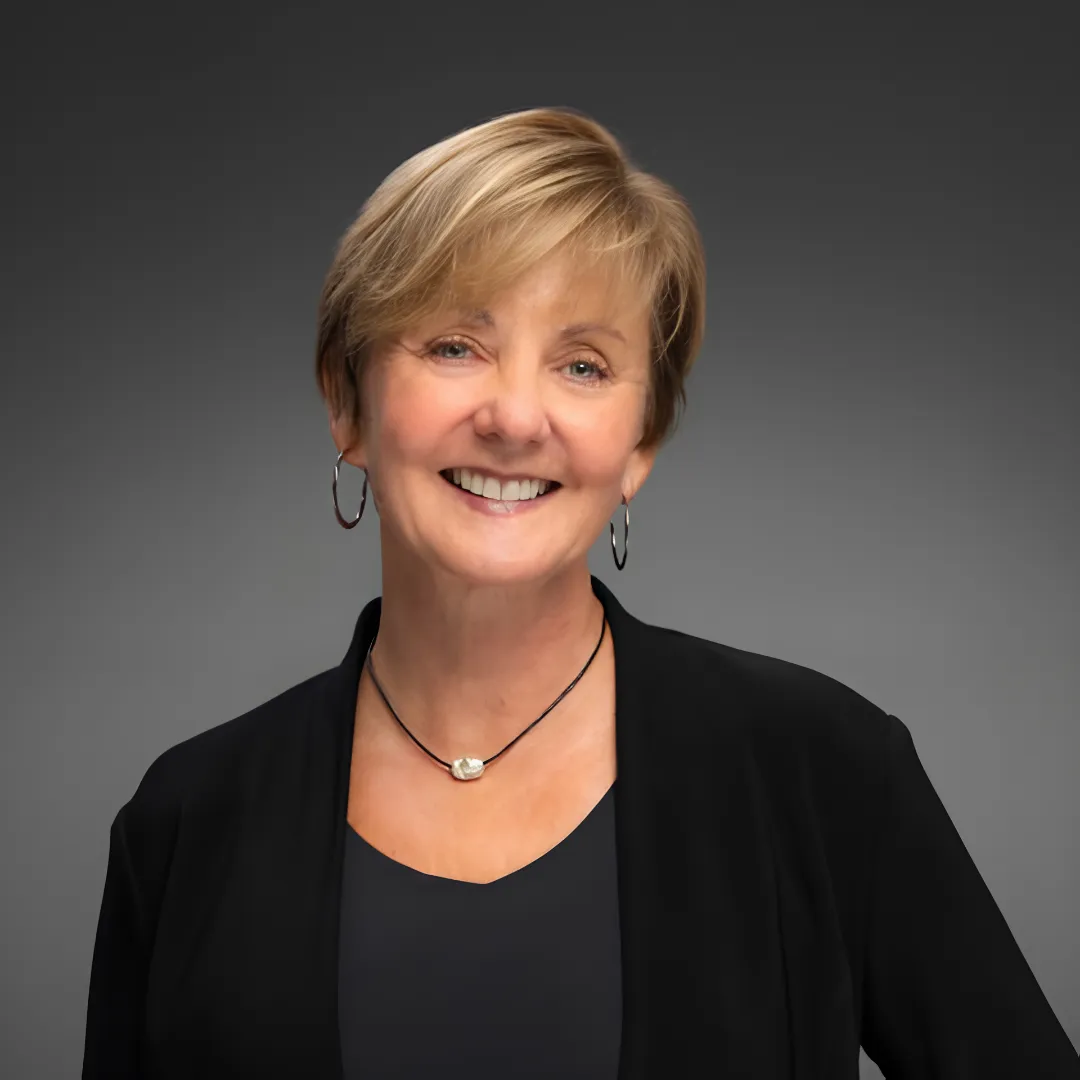
The Long Strange Trip Episode 26: Can Psychedelics Change Your Life? Michelle Ash on Psilocybin & Spiritual Growth
About the Episode:
Can Curiosity Be More Powerful Than Certainty?
Most of us spend our lives trying to find answers.
Lately, I've become much more interested in asking better questions.
One of the unexpected gifts of getting older—and especially of navigating my own health challenges—is realizing I don't need to have everything figured out. In fact, life has become far more interesting since I've stopped pretending I do.
That's exactly where this conversation with Michele Ash begins.
Michele and I have known each other for years. When we talked before recording this episode, she started sharing experiences that challenged the way she sees life, death, and consciousness. Rather than debating whether any of it was "true," I found myself asking a different question:
What would happen if we stayed curious?
That question took us into places I never imagined discussing on this podcast.
We talked about Michele's guided psilocybin experience—not as an endorsement or a prescription, but as a deeply personal experience that changed how she thinks about connectedness, perspective, and what it means to be fully alive.
She described feeling connected to something much larger than herself, a sense of oneness that continues to shape how she responds to life's challenges. Whether you interpret that spiritually, psychologically, or simply as an interesting human experience is entirely up to you.
From there, the conversation naturally wandered into territory that makes many people uncomfortable.
We talked about mediums.
We talked about the possibility that relationships continue after death.
We talked about Michele's father, who promised he'd come back as a crow after he died—and the remarkable experience she had after his passing.
Do I know what any of this means?
No.
And that's okay.
One of the things I've discovered since retiring is that certainty is often overrated. Earlier in my career, I had an opinion about almost everything. These days, I'm certain about very little.
Oddly enough, that's become a much more peaceful way to live.
Instead of asking, "Is this true?" I find myself asking, "What would happen if it were?"
That question opens doors instead of closing them.
Our conversation also explored what makes a good death, why so many of us fear mortality, and whether accepting that life is temporary actually makes us more grateful for the days we have.
Michele shared an exercise she practices almost every day.
When she wakes up, she reminds herself:
"Today is a good day to die."
Before going to sleep, she says:
"Today was a great day to be alive."
At first glance, those two statements seem contradictory.
To me, they fit together perfectly.
When we stop pretending tomorrow is guaranteed, today becomes far more valuable.
This episode isn't about convincing you to believe in psychedelics, mediums, reincarnation, or any particular spiritual philosophy.
It's about curiosity.
It's about being willing to ask questions that don't have easy answers.
It's about recognizing that the older we get, the less interesting certainty becomes—and the more valuable genuine curiosity is.
None of us knows exactly what happens after we die.
But we can choose how we live before we get there.
And maybe that's the more important question.
If this conversation challenges your assumptions, makes you uncomfortable, or simply leaves you thinking long after it's over, then we've accomplished exactly what I hope this podcast can do.
We're not here to tell you what to believe.
We're just fellow travelers asking hard questions together.
Transcription:
Josh:
Welcome to The Long Strange Trip. I'm Josh, the host of the show. We're going to dig into six areas together: finding real work-life integration instead of that brutal 95/5 split too many business owners live with. We're going to approach retirement as an actual reinvention rather than just stopping work, and we're facing death honestly and avoiding PTSD around death.
We're also building resilience when life throws us curve balls, we're sharing wisdom across generations, and finally, we're understanding the patterns that show up in all our transitions. I'm not coming at this as an expert. I'm a fellow traveler figuring this stuff out in real time, especially now as I navigate my own dual cancer diagnosis at 73.
Welcome to The Long Strange Trip. I'm glad you're here.
Josh:
Hey, how are you today? This is Josh Patrick, and you're at The Long Strange Trip podcast. My guest today is an old friend of mine, Michele Ash. I knew Michele when she was just a young pup, you know, starting her career. Over the years we've run across each other many times. When we were doing our pre-interview for the podcast, Michele told me a whole bunch of stuff that just had me fascinated with the life that she lives and the belief systems she has.
So I could yammer on for another three or four minutes, but I think I'll stop and we'll bring Michele on.
Hey, Michele, how are you today?
Michele:
Good. How are you, Josh? Nice to see you.
Josh:
It's great seeing you, as always. I've always enjoyed our conversations over the years. The last one we had might have been the most interesting of all.
In the last conversation, we were talking about guided journeys and using hallucinogenics to help us learn more about ourselves.
So could you take us into that world a little bit?
Michele:
Well, like I think many people, I was curious and thought, "You know, I'm gonna give this a try."
So I did have a guided journey with psilocybin, and it was a weekend retreat. I went with a friend, and it was fantastic. There were about 12 of us. The guide was very experienced, so we spent some time prepping for it. We had a meal together. We shared a circle. Everyone shared what they were hoping to get out of it.
Then the next day, we gathered in this really cool large teepee in a circle, feet all toward the center. I now understand there's certain music that you can play to help you with your guided journey.
There were three doses of psilocybin, and they were distributed during the time that we were doing the journey, and I took all three.
It was a trip.
I went into this journey really with one question. I wanted to know—I needed to know.
I was like, "Teach me. What do I need to know?"
So I was really asking the mushroom, "What do I need to know?"
I went in very open-ended. Everybody there had different things they were hoping to get out of it, but that was mine.
It was super interesting.
I think probably the biggest takeaway for me—there's lots of things I could share—but the biggest takeaway is I became the mushroom during this spiritual journey.
My lesson was: I am the mushroom. The source. The ultimate source. The ultimate source of creativity, of oneness.
I literally, in my journey, became the mushroom, and through me, through the ground, into all the other folks were the mycelium connecting us all.
So there was this real feeling of oneness and connectedness, and the mycelium was just shooting out of me. I had this overwhelming sense of connectedness and oneness and love.
Since then, I haven't had a desire to do it again because my big learning was I don't need to do that.
I am the mushroom.
That was my journey.
Josh:
It's a pretty interesting journey.
So what does that practically mean, if anything?
Michele:
I think practically speaking, in day-to-day life, it really means having more context.
So when there's a big decision to be made or stuff's happening in the world that's really upsetting, having a broader context that our life on this planet is short, we're all connected, and we're all part of this.
However evolution happens and time happens—circular, linear, both—for me, it's just helped me keep things in perspective and not get sucked down into these tiny rabbit holes of despair.
Just to understand that this is the journey.
Josh:
So do you believe that there's a connection between people who are alive now and people who were alive who are now dead?
Michele:
One hundred percent.
Josh:
Okay, so let's go there for a little while because I think there's a nice little segue into what the hypnotherapist world says about life between lives.
So can you talk a little bit about that?
Michele:
Sure.
I'll start a little bit... I'm a little bit metaphysical. I don't see time as linear. Time has all sorts of fourth dimensions.
Having said that, I've always been interested in exploring what are some ways that I can tap into the in-between world—the folks that have been before us and have passed on.
Growing up, my family has always been really interested in going to psychics. So I didn't grow up with that being weird. I grew up with that being very normal.
I can't even tell you how many psychics and mediums I've been to in my life. I have no idea. It's just too many.
But I had a very direct experience with my dad that I'd love to share if you...
Josh:
Please.
Michele:
...would be interested.
My dad passed away three years ago.
Josh:
Mm-hmm.
Michele:
Something I didn't share with you, Josh, but I will now, is he died on January 27th.
I didn't know that was an important date to my mom until my dad became really sick with pancreatic cancer, and we didn't know how much time he had left.
My mom said, "I hope he doesn't die on January 27th."
What are the odds, right?
There was this month that he could have died.
I said, "Mom, why not?"
She said, "Well, my dad died on January 27th, and that is a really sad day for me."
My mom's dad died when she was 15.
So I said, "Well, what are the odds that happens, Mom? Maybe if it does, it was meant to be. Your dad is helping my dad transition."
Sure enough, he died on January 27th, even though the doctor said he had much longer to live.
But my dad was sick with pancreatic cancer, Stage IV.
I was supposed to go on a trip with my husband and friends to Belize. The doctors said he had weeks to months left, so I decided to go and then go back to Florida where my dad was.
While I was there, my husband and I were paddling on a river without a cellphone—no connection.
All of a sudden, Josh, everything went technicolor.
I got goosebumps all over my body.
I turned to Pete and I said, "I think my dad just died."
We didn't have any way to call anybody.
When we got back to the little eco-lodge we were staying at, I ran to our room. As I picked up my phone that was face down, my sister was calling at that exact moment.
I answered, and she told me that my dad had passed.
Before my dad passed, I said, "Dad, what are you gonna come back and visit us as?"
He said, "I'm coming back as a crow."
I was like, "A crow? Maybe an eagle or a hummingbird—but a crow?"
The reason was when he was 13, he had a wild crow that befriended him. It used to sit on his shoulder, pull at his little bomber jacket, ride on his handlebars, and wouldn't go to any other kids.
Well, in the eco-lodge, the entire time we were there after he died, we had a crow that kept pulling apart our screen.
It completely shredded the screen.
I knew it was my dad.
I'm like, "Dad, what are you doing?"
So that's one experience.
Josh:
What do you think the message he was trying to send you when he was being a crow and tearing your screen apart?
Michele:
I think it was just, "I'm here. I'm here. I told you I'd come back as a crow."
I don't think there was a deeper message.
Josh:
Yeah.
Michele:
I think the essence was that he was there with me because, of course, I felt incredibly guilty.
I would not have left if I thought he was going to die while I was gone.
I wanted to be there.
But it was clear that he was there.
One of the things my dad wanted us to do—it's my mom and there's three kids—before he died, he said, "I want to be cremated and I want you to spread my ashes between four wooden boxes."
He was very specific.
So we did.
I had my wooden box.
We all have our wooden box.
I went to a medium who knew nothing of this, and she said to me, "Your dad's here, and he's got a message for you: stop talking to the box. He's not in the box."
I started laughing.
I'm like, "This was his idea to go into the box."
She said, "Well, what we know when we're alive and what we know when we've crossed over are two different things. He's telling you that you can think of him, you can talk to him, he's with you all the time.
He's not in the box."
Josh:
It's a nice thought.
Michele:
Yeah.
Josh:
I like that a lot. So do you think your dad had a good death?
Michele:
Me?
Josh:
Yeah, you. Do you think your dad had a good death?
Michele:
I do. I do mostly because he was really not afraid to die. He would've chosen to stay alive if he could've, but he was not afraid to die.
Josh:
Is that your definition of what a good death is?
Michele:
I think that's part of it, having fear and anxiety... having a sense of peace about it. Yeah. I mean, that's what I would imagine a good death is.
Josh:
Do you actually think about that yourself at all?
Michele:
All the time. All the time.
I've actually experimented, Josh, just recently for about a month. The first thing that I would say to myself is, "Today's a good day to die."
And just experimented with what that felt like.
Oh, and I also coupled it with going to bed at night saying, "Thank you. Today was a great day to be alive."
So I paired the two.
What I felt was just a deep sense of joy and gratitude for the day and for life.
Again, for me, it's all about gaining perspective.
Josh:
So you've seen a ton of mediums in your life.
Michele:
Yes.
Josh:
What have you learned?
Michele:
I have learned that it is definitely...
So on a practical level, just like we all have skills and talents in different things, not all mediums are equally as talented and as skilled.
So it definitely is a skill, and they're humans, right? So not all of them share the same moral compass on what they should say or shouldn't say.
So it's really important to try to find someone that you trust to make recommendations for mediums.
But I've also learned that there's definitely a mystery to energetic healing.
Folks knowing, seeing maybe time not being linear...
I mean, I've had people share with me something that was going to happen in the future that was spot on.
And spoken to different folks that have passed on.
I mean, I had a medium...
My dad was visiting, and every medium—every single medium—that I have spoken to about my dad passing has the same message from my dad, which is:
"You don't have to work as hard as you're working. You think you do. You've done enough."
That's been the message.
Josh:
By the way, I agree with that.
Michele:
Pete and I had our beloved dog, Riley, die.
After he died, I saw a medium, and he said, "Your dad is petting a dog, but I can't tell if the dog is a golden retriever or a cocker spaniel."
My dog was a blend of both those dogs.
Josh:
Right.
Michele:
A cocker spaniel and golden retriever.
I said, "Well, I know who that is. That's Riley. He just passed away."
He said, "Well, your dad is with..."
My dad loved that dog.
Josh:
I loved that dog too. That was a great dog.
It was a great dog.
But be that as it may, dog energy is something I find really fascinating.
I'm actually more interested in meeting my dogs when I die than I am other humans.
I'm not sure why that's true, but I tend to have a better relationship with dogs than humans.
Maybe that's just because I'm a very strange person.
Michele:
I am sure you are going to meet your dogs, Josh.
Josh:
I'm pretty sure I will too.
Michele:
That's awesome.
Josh:
Yeah.
I'm not looking forward to dying, but when I die, there's a lot of things that I'm curious about that I'm hoping I'll get some answers to.
What I've read is that in life between lives—which I actually like that term a lot—there's kind of this liminal space, and there are guides.
Those guides are teachers.
I'm wondering what I need to learn that I haven't learned in this life.
Wondering if I've learned enough and won't reincarnate, which happens, from what I understand, to some people.
Or I will reincarnate with lessons I still need to learn.
You have any thoughts about that?
Michele:
Well, it's interesting.
I don't know if you've read Brian Weiss' Many Lives, Many Masters.
Josh:
I have.
Michele:
The interesting thing that you said there...
Again, it's about context.
Because I do think we come down to learn lessons.
For me, I feel like I have a deep knowing of that, and I have to constantly remind myself, right?
Because we're humans living this human life, and sometimes we just lose perspective.
The things that happen that are really, really hard, or the things we struggle with...
When we look at them through the lens of there's lessons I need to learn, I feel like I just approach them differently.
There's an opportunity to say,
"Okay, this pattern is repeating itself in my life. There's got to be something I need to learn."
So rather than fighting it, or rather than thinking, "Why me?" it's like there's a lesson.
It's easier to apply that to myself than it is to my kids, right?
Because we always want to help our kids and save our kids.
Well, they come with lessons they need to learn too.
Again, I think when we allow ourselves to be curious and expand, we can live, I feel, a more joyful and fulfilled life in so many ways without getting too attached to ideas or things or outcomes.
We don't know what the outcome's going to be.
Josh:
You know, my favorite question...
I was talking with a friend of mine about this yesterday, actually.
What would happen if?
I believe we need to be asking "What would happen if?" about almost everything that's in our life.
The Long Strange Trip has been a really interesting project for me because in my prior life, I was very definite about almost everything.
Michele:
I know.
Josh:
Yes.
Well, you've known me for a long time.
Since I've retired, I'm definite about almost nothing, which I'm finding is a way more interesting place to be.
Michele:
I love that. I love that, Josh.
And I have to tell you, because of your curiosity, I have never been asked these questions, right?
I mean, I have this professional life, and you're asking me, and I'm talking about things that I never imagined talking about on a podcast.
So thank you for that gift.
Josh:
Well, I'm more than happy to provide it.
You know, the interesting thing about...
One of the reasons I podcast is I get to talk with interesting people about interesting things, which is actually my personal mission in life, and it has been for a really long time.
And there's all these people showing up who are teaching me things I never...
Like, I've never really had a conversation about mediums.
I'm not sure I believe in mediums, but I'm also not sure I don't either.
You know, sort of like...
What would happen if I did believe it?
What would happen if I don't believe it?
What would happen if maybe, as you're talking about—and I think it's true for almost every person that does a professional thing—there's a very small group who are really good at what they do.
There's a bigger group that's mediocre at what they do.
And the biggest group is incompetent.
The challenge is they all talk a good game.
Michele:
Yep.
Josh:
So how do you, when you're choosing a medium, choose somebody who's going to help you?
Michele:
A lot of times it's word of mouth, or I'll go on and read about somebody.
And I'm okay if it's not the best experience.
I'm just okay.
I look for threads of consistency through some of the messaging.
Yeah, I guess I'm just, Josh, not attached to the outcome of what that experience is going to be.
I'm like, "Let's just see."
Over the years, some have been just the way you characterized them—really competent, really talented.
Others are... eh.
I have to say, there's only been a couple that I thought, "Nah, they're a hoax."
I wouldn't go back.
Or they're just inexperienced.
They may have something there, but...
My sister has an innate talent, I would say.
But she's freaked out by it, and so she does not want to work with someone to explore what she could develop.
I say, "I wish it was me."
She's like, "No, you don't. It's freaky."
Josh:
Maybe freaky, but it's probably interesting.
Michele:
Yeah.
Josh:
Would be my guess.
You know, sometimes if we put ourselves into an uncomfortable space, that's where real value comes.
I found that back in my early 30s when I did some New Age seminars.
Back then, putting me in a New Age seminar was really putting me in an uncomfortable space.
I was taught to be linear the way I grew up.
Being in a New Age seminar, you are definitely not in a linear space.
You are in a space where there's stuff going on, and you just can't explain it.
But the truth is, I've had a couple of experiences in those New Age seminars which have been earth-shaking, I would say, for myself.
Michele:
Wow.
Josh:
Unfortunately, Suzanne had the opposite experience.
Michele:
Yeah.
Josh:
So I've continued to kind of go down that path, and she has no interest because of her unhappy experience.
There were some good reasons they were unhappy.
There were some leaders who were unethical, and that always, always, always...
There's a lot of that in the New Age world, unfortunately.
Michele:
Yep.
Because ego...
We still have ego.
Whether you become suddenly a spiritual leader, the ego takes over.
Which is why some of my favorite folks I love to read include the Dalai Lama.
I still read Thich Nhat Hanh.
I mean, he passed away, but those are folks that...
They didn't fall into that category, right?
They didn't have the seduction of fame that kind of took over.
Josh:
I kind of like Eckhart Tolle a lot in that world also.
Michele:
I've read all of his books.
Josh:
Because I think too often we live in the past.
We live in the future.
We forget about living in the present, where life really happens.
Michele:
Right.
Josh:
At least that's been what I've learned.
Michele:
Yep.
Josh:
It's not something that I learned a long time ago.
I actually learned it probably in the last five or six years.
A lot of my learning has been in the last five or six years because I've stopped trying to control everything.
Michele:
Interesting how that happens.
Josh:
No.
Michele:
I think, Josh...
I don't know about you, but I need constant reminders.
For me, my daily reading is the Tao Te Ching, Thich Nhat Hanh.
I actually have just started getting into David Whyte's poetry.
Josh:
Mm-hmm.
Yeah.
Michele:
For me, I need that grounding.
A reminder.
It's a constant...
The Tao Te Ching I've read I don't know how many times, front to back.
Just a passage a day, and then I go back to the beginning again.
Josh:
I really love Ryan Holiday's stuff on the Stoics.
Michele:
The Stoicism.
Josh:
Yeah.
That's actually where I kind of started this trip.
I ran across a Ryan Holiday book.
As you know, I read way too much.
I found it really interesting, and it sort of is a good roadmap, at least for me, in how to live my life.
Michele:
Yep.
I think it also resonates a lot with men.
I have The Daily Stoic by Ryan Holiday.
I've also given it to my adult sons, and they really like it.
Josh:
The good thing with The Daily Stoic, if you have the discipline to do it—which I don't, I do it occasionally—is that you read today's passage and then write about it.
Michele:
Yeah.
I've not done that, but that's a good idea.
Josh:
What I'm thinking about is actually talking about it into a journal.
I have found—and we're probably going to have to end here—that speaking instead of typing with a computer gets you much, much, much deeper and much better information.
Michele:
Interesting.
Josh:
Yes.
I'm reading a book now called How Not To Use AI, and that was one of her suggestions.
When you're having a conversation with Chat or Claude or whoever you want to talk with, do it vocally.
Walk around and talk as if you would, and you get much different and much deeper information.
Michele:
So the AI then summarizes it, puts...
Josh:
No, the AI gets into a conversation.
Well, I would say, "Here's what I'm thinking. What would you recommend I do next?"
And I do that for several thousand words.
Then I take that information, and then I start using AI as, you know, giving the normal prompts that people normally do, but they're much deeper and much better prompts.
So it's an interesting thing.
But at any rate, unfortunately, we are out of time.
We could probably wander on for a couple hours about this.
Michele:
Oh, one hundred percent.
I've so enjoyed this, Josh.
Thank you so much.
Josh:
It was my pleasure.
So, Michele, if somebody wants to contact you, would that be okay?
Michele:
Absolutely.
Josh:
And how would they go about doing that?
Michele:
Probably the best way is my personal email.
It's Asch, A-S-C-H, dot Michele with one L, M-I-C-H-E-L-E, @gmail.com.
Josh:
Cool.
I've got two things I'd like you to do—or actually one thing I would like you to do and one thing you might want to do.
The thing I would like you to do is give me an honest rating and review about this podcast.
If you love it, give me five stars.
If you hate it, give me one star, and I will cry a little bit, I promise you, but not much.
The second thing is actually quite easy.
If you've enjoyed this podcast, this episode, or any of the episodes we do, and you think you would be a good guest for the show, send me an email.
Let's have a conversation and see if this would be a good thing for you to do.
The easiest way to find me, again, is through my email:
That's the number two, and solution is singular.
We'll have a conversation, and we'll see where it goes.
That's how Michele and I started, and it's always been fun for me.
So this is Josh Patrick.
You're with Michele Ash.
You're at The Long Strange Trip podcast.
Thanks a lot for stopping by.
I hope to see you back here next week.
Josh:
Thanks for spending this time with me today.
I really appreciate you being part of this journey.
I'd be grateful if you'd leave an honest rating and review.
It helps other people find these conversations, lets me know what's landing with you and what isn't.
If you love the show, give us five stars, and if you hate it, give it one star and I'll just cry a little bit.
Keep asking the hard questions.
Keep being honest about what's difficult.
And remember, we're all just trying to figure this out together.
I'll talk to you next time on The Long Strange Trip.
Thanks for stopping by.
