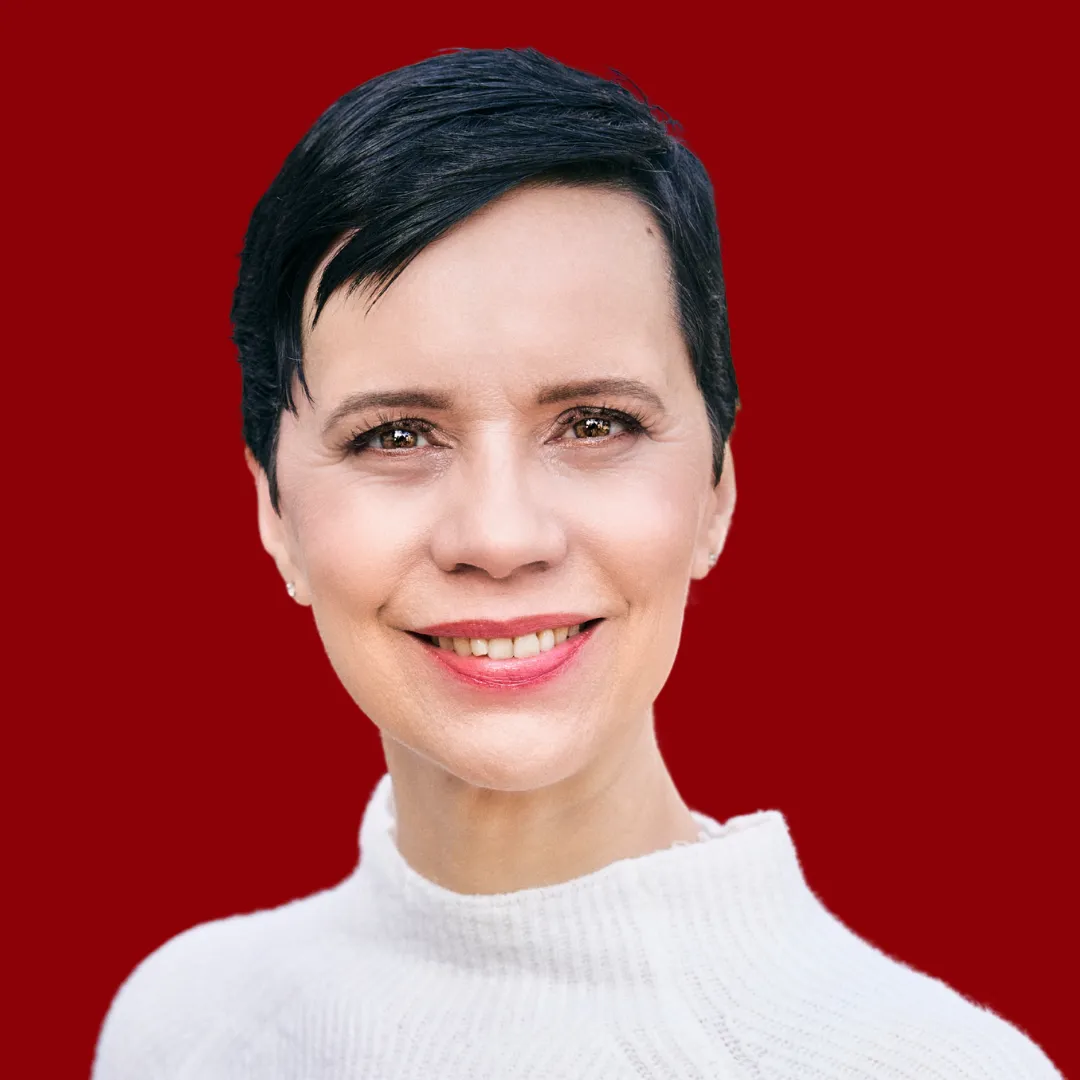
The Long Strange Trip Episode 22: Cancer, Resilience & Reinvention with Ana Melikian
About the Episode:
What do you do when a doctor sits you down and tells you that you only have a 40% chance of surviving the next five years?
I’m thinking most of us would freeze. I know I’d want to. But for my longtime friend Ana Melikian, the answer was a bit different, and a whole lot harder: you make a plan, you take it one day at a time, and you just keep moving forward.
We sat down recently on The Long Strange Trip to talk about one of the six core areas I’ve been trying to unpack lately: resilience. What came out of it wasn't some polished, expert lecture on how to be tough. It was just a raw, honest, and—honestly—pretty hopeful conversation between two people who have stared down mortality and had to figure out how to keep putting one foot in front of the other.
If you're dealing with a massive transition, or just wondering how people survive the unimaginable, I suspect Ana's story might give you some comfort. It did for me.
Who Is Ana Melikian?
Ana is a business coach, a solopreneur, and an AI technology consultant. She spends her days helping small to mid-size businesses figure out how to navigate the crazy, fast-moving landscape of artificial intelligence. We’ve actually known each other for over a decade through various coaching and mastermind communities.
She’s also a two-time cancer survivor.
Back in 2016, Ana was diagnosed with inflammatory breast cancer. It’s one of the rarest and most aggressive forms out there, carrying that terrifying 40% five-year survival rate I mentioned.
But here we are, ten years later, and she’s still here. Still fighting, still building, and still smiling.
What We Tucked Into
We covered a lot of ground in this episode, mostly because when you're talking about life and death, you tend to skip the small talk. Here are a few things we got into:
The diagnosis no one sees coming: Ana talked about the exact moment she knew something was wrong, and how she forced herself to move from denial into action. Her strategy was simple: get a plan, figure out the very next step, and focus only on what’s directly in front of your face.
The treatment gauntlet: Six rounds of heavy chemo every three weeks, a mastectomy, and then 30 straight days of radiation. It was a grueling seven-to-eight-month tunnel. She shared what got her through, which really came down to a mental shift: breaking the timeline down into tiny, manageable goals.
Running a business through chemo: As a solopreneur, Ana didn’t have a massive corporate team to hand her work off to. If she didn't work, things didn't happen. So, she leaned on her partners, told her clients the absolute truth about her diagnosis, and kept working in small bursts. Turns out, keeping her brain on business gave her a sense of normalcy and control that was psychologically vital.
The "rubber band" theory of resilience: Ana offered a beautiful metaphor here. In materials science, resilience is a substance's ability to be stretched and return to its original shape. But for humans? There’s a catch. We don’t just bounce back to who we were. We actually grow through the stretching. Resilience isn't about remaining unchanged; it’s about expanding your capacity because of the difficulty.
What people get wrong about cancer support: We both had a good laugh—and a few sighs—over the well-meaning things people say to cancer patients. You know the ones: "You're a warrior! You're going to beat this!" We talked about why forced optimism usually falls flat, and why real community, transparency, and just acknowledging the crappy uncertainty of it all is so much more powerful.
The mortality question: Look, I’m 73 and navigating my own dual cancer diagnosis right now, so this hits close to home. Ana and I spent some time talking about the psychological gymnastics of sitting with the possibility of death. How do you make peace with that uncertainty without letting it completely paralyze your daily life?
A Few Things to Take With You
If you don't have time to listen to the whole episode right this second, I think these few nuggets from Ana are worth holding onto:
Take one day at a time. When the future feels too big and heavy to look at, the most resilient thing you can do is shrink your vision down to just today.
Plans reduce fear. Even when the news is awful, knowing your next microscopic step gives your mind something steady to hold onto.
Honesty builds an army. Ana didn't hide. She told her clients and her community exactly what was happening, and instead of losing them, she was met with a wall of support.
You can't brute-force resilience. You can't just grit your teeth and will yourself to be resilient. It’s something that grows quietly through self-awareness, leaning on your people, and being honest about what hurts.
What This Show Is Really About
If you're new around here, The Long Strange Trip is just me trying to explore the corners of life that most people avoid at dinner parties: work-life integration, retirement as a reinvention, death, resilience, and life transitions. I'm turning 73, I've got my own health battles, and I've realized I have way less life going forward than I do behind me.
I’m certainly no expert on any of this. I’m just a fellow traveler, figuring it out in real time, and hoping to find some good company along the way.
If you want to check out Ana’s brilliant work with businesses and AI, you can find her over at anamelikian.com.
Take a listen to the episode, and if it hits home for you, I'd love it if you left an honest review. And hey, if you have your own story that fits into these weird areas of life I'm digging into, drop me a line at [email protected]. Let's figure it out together.
Transcription:
INTRO (Josh)
Welcome to The Long Strange Trip. I'm Josh, the host of the show. We're going to dig into six areas together, finding real work-life integration instead of that brutal 95/5 split too many business owners live with. We're going to approach retirement as an actual reinvention rather than just stopping work, and we're facing death honestly and avoiding PTSD around death.
We're also building resilience when life throws us curve balls, we're sharing wisdom across generations, and finally, we're understanding the patterns that show up in all our transitions. I'm not coming at this as an expert. I'm a fellow traveler figuring this stuff out in real time, especially now as I navigate my own dual cancer diagnosis at 73.
Welcome to The Long Strange Trip. I'm glad you're here
Josh (01:36 – 02:50)
Hey, how are you today? This is Josh Patrick. I'm near at the Long Strange Trip Podcast, and my guest today is Anna Malian. I've known Anna for, I don't know, 10, 15, maybe 20 years. It's a long time. I met her in a, in a program called Book Yourself Solid,
a ballot.
where she was a certified coach. I became a certified coach, but she's more of a certified coach than I.
And um. She is one of the more interesting people. I mean, Anna's been in a, uh, mastermind group with me for four or five years, and I thought she would make a great guest because she's been through a very serious several serious cancer episodes, which require a huge amount of resilience. And since resilience of one of our six areas that we're investigating, I thought having Anna on would be a perfect thing.
So let's bring her on the show. Hey Anna, how are you today?
Anna (02:51 – 02:55)
My pleasure.
Josh (002:56 – 03:05)
Um, so Anna, when you first were diagnosed with cancer, what went through your head?
Anna (03:06 – 05:05)
through your, so the first goal, uh, with cancer for me was in 2016. Um, I, I was disbelief honestly, because I was eating very, very healthy, having very, extremely active with a young daughter. Everything what you say was going well, I cool uh, believe that that was happening to me. Um, the, the first thing was totally denial. And then, um, I go from denial to action very quickly and as long as I have a plan of action to, to a, uh, to have something that I can focus on, that helps me a lot.
Josh (05:06 – 05:12)
When you say plan of action, can you give us an example of that?
Anna (05:13 – 08:40)
Yeah, so, because the first thing I noticed something, so I had breast cancer in 2016. Uh, I noticed that something was off, but, uh, I honestly, I didn't win. As quick as to the doctor as I should have gone because I was doing the, the regular thing going once a year to my gynecologist doing the MAs, uh, the, the scans, everything that they usually ask us to do.
So I thought okay, everything, we didn't detect anything. So everything is okay. Um, this must be something that is nothing until it was not going away. I, um, was in December when my daughter was finally in the, uh, the break for the winter break that I decided, no, let me go, uh, check what is going on. And the, the face of the, I didn't manage to get with the doctor was with the nurse practitioner. their face went white. That is where I knew that something was really off, they didn't let me go out of the building without it. Having an appointment a breast surgeon that is usually the person that does the biopsies, that for me, show me the seriousness of the situation, and at the same time gave me. The next step that I had to do. But I still remember all walking out of the building, uh, with a sense of disbelief. This is not possible to be happening. Um, and then this was around the holiday, so I went to the breast surgeon, but I only received the results of the biopsy. But he told me, he told me, that day that. I visit him, that he was sure that I had inflammatory breast cancer, but we were going to confirm it with the biopsy. But all these years of experience, he could tell me that that is what I had. Um, but the confirmation of the biopsy can in January 4th, so 'cause of the holidays and all the things that, of the end of the year delay a little bit, the results to come out.
And I, I remember the day because of all of that, and it's just before my birthday too. That was, okay, this is real. is real.
Josh (08:41 – 08:48)
So how long was it between your first, um, thought of diagnosis and you started treatment?
Anna (08:49 – 11:10)
It was really quick. So, so, uh, uh, like of, for me to go first to that doctor that he, connect me immediately to the oncologist. They had to ask me, what is the area of the valley in Arizona where you live? he say, okay, I can recommend, uh, this person, uh, Dr. Albert Twin, that is, uh, a legend here. Um, he managed, how you say, the amazing thing is that, um, first having insurance and second. Uh, lucky with the, the doctors, your team. I was very lucky. The first, uh, the, my team was really top-notch and they knew each other very well from the best surgeon to an oncologist to the radio, uh, radiologist. So, the thing people don't, uh, I think. understand until going to something like this.
The complexity of the treatment and how many people it involves until you end in the beginning is doctor appointments more than anything else. We are going from a doctor appointment to the next doctor appointment, to the next doctor appointment, uh, and the, because of the nature of the cancer, they want me in treatment as soon as possible, so, and Usli. In most breast cancers, uh, they start with the surgery in this type of breast cancer, inflammatory breast cancer, they start with the chemo first because they have to reduce the size of the tumor before doing the surgery. So was a matter of weeks and hours doing the, the chemotherapy.
Josh (11:11 – 12:05)
So your experience was, uh, faster than mine. It seemed to take forever before they took me seriously and forever before we started treatment. But once they decided they were gonna treatment, they wanted to start the next day, I said, no, no, no, no, no, no. We need to do some things beforehand. So they gave me three days.
Yeah, but uh, uh, but even in your first, go ahead with cancer.
Anna (12:06 – 12:50)
Yeah, that was my first go around.
Yeah, because I still remember when I, in 2016, that we already knew each other and, uh, I communicate to the group, the book yourself, solid group that I had cancer and you reach out to me and, uh, your advice at the time was really important to me.
You told me take one day at the time. are days that you cannot lift your head out of the pillow and it's okay. Just take one day at a time, and that was a very helpful advice.
Josh (12:51 – 13:55)
That's my advice to everybody going through cancer because we want to, you know, we like to catastrophize and if you do forward thinking, you're gonna be catastrophized, you know, almost without doubt. And the other thing is the oncologist, at least my oncologist was not especially forthcoming about the side effects I was gonna have.
I dunno if that was true with you.
Anna (13:56 – 16:05)
It is not what they say they, and nowadays I have to say. That they really at least. And, and that is the thing about, for people that with this cancer diagnosis is each person has a different story and each
Yes.
cancer is a different, uh, journey. So I think it's really, really important for people to have that awareness that, uh, there are things in common that we can connect with.
Absolutely. But each journey is unique. And in the breast cancer, in my case, uh. I think they have then 10, comparing to 20 years ago to the, the the chemo, uh, let us, uh, as is medically possible for us the day of the chemo. The day of the ca they put us with so many stuff before and during the, and just before the infusion. That, that day is not a big deal, the three days after. It's like I, uh, the way that I used to describe, it's like, it's like being run by a truck and you don't know what hits you. feel like what happened here. 'cause the body after all the, things that they gave you to handle the thing the system and you just have the chemo to act is really, uh, and for me was the three days I was only, my treatments were on a Thursday and I know that Saturday I will be out. Uh, and then is recover. Go back in front of the same truck and do it again until they say that we are, done.
Josh (16:06 – 17:15)
You know, it's, well, you know my, in my particular case. Um, the side effects were amazing, and I don't mean amazing in a good way. I mean, amazing and horrible.
Yeah.
And I asked my doctors, you know, when I was like halfway through this treatment, I said, why didn't you tell me what was gonna happen? They said, well, if we told you, you wouldn't have done it.
done? Yeah,
And I think that's the attitude of many chemo doctors. Um,
Anna (17:16 – 18:40)
Um,
and I think it depends on the patient, on what you should be, how much information you should be sharing.
carry.
So a part of resilience I think is having, um, accurate information, but does that make any sense to you?
Anna (18:41 – 21:35)
sense to you? And like you are touching Each person is unique and knowing ourselves is really important and having a team that we trust. For me, having all the information on the table is something and I ask and I read, um. So having the, and I had the, the support of a really supportive family that really could, uh, step in to help me in relation to my doctor. That was seven at the time. Um, but for me, I. Having the information and like I said in the beginning for me, having the plan, I knew, okay, there was the rounds every three weeks. Six, I think was six go six treatments initially six rounds of chemo. And then the next step was recover for the chemo. Then the surgery.
So I always add a plan. I knew that was a very serious this type of cancer because that I look also. And the big warning for everybody with this kind of disease is when we look to the survival rates, first of all, that they are red. I just say a couple. They are older than what is happening to us at the moment because, uh,
That's true.
rates, that is a little bit.
So that is a good, that we are always bit better than the survival rates are in the literature, but in my case was a five year survival rate of about 40%.
Oh.
10 years later I'm still here. So that is a good sign. Uh, but, um, was, how to say that was also, oh my gosh. But speaking with people was really, really important in terms of resilience, learning that there were other people that had a similar cancer as I had that had make it through 20 years. That was, gave me hope that was possible. And having the doctor believe, no, this is a difficult thing, but it's possible. Uh, that was really helped me to keep the hope, um, and keep just looking what is the next goal? What is the next goal? And is I'm responding, I'm handling the treatment. What is the next goal?
What is the next thing that I have to do?
Josh (21:36 – 21:50)
So what was the timeframe for your treatment? In other words, how long did your treatment go for?
Anna (21:51 – 24:05)
Uh, so like was less than uh, uh, so was six treatments every three weeks apart. So a little bit shy of the five months. Then if memory doesn't betray me, because this was or was the first time that there was three other rounds, uh, I think I was about the six weeks, uh, to recover from the chemo until, uh, they considered that my body was strong enough for the mastectomy for the surgery. then again, another six weeks of recovery or something like that, until they considered that I was strong enough to start with the, uh, radiation therapy. And that was like 30 days, 30 sessions for Monday to Friday, uh, going there every single day of the week get the radiation and come back home. So, um. Uh, uh, wa was, uh, a grueling, uh, maybe seven, eight months, uh, until they say, okay, things seems to be you, seems to be out of the worse, and now you can start to recover.
Josh (24:06 – 24:12)
So you're a solopreneur? Correct.
Anna (24:13 – 26:35)
Yeah.
How did you keep your business running while you were going through treatment?
That was an interesting thing because, uh, the, the good thing at the time is I, uh, yes, I was an, I still am a solopreneur, but at the time I was working with two different, collaboration teams, in the book yourself solid with another group, uh, with a training around LinkedIn. And, uh, being in a collaboration allow me to, uh, keep, uh, going a little bit more to the background, but still keep working.
And for me, keep working was very important. Psychologically was the only thing, like kind of normality the thing that I could control. And again, it's person is d uh, different, but for me, I had to reduce. The, the workload, absolutely. I had to really be very focused and, uh, on my strengths. Uh, being, working with other people in collaboration kind of initiatives help a lot. But, um, uh, and I have to say, uh, shout out to Michael Port of the book yourself. Solid, the creator of the book yourself. Solid. He was really super. Uh, supportive and how long you take. No worries. and with my other group, I was, so you say more in the background with the technology behind making sure that all the funnels were working. So even if was one keystroke at the time, I could make things happen. Um, and he kept my sanity going so I didn't, um. Um, the, the business kept, kept going, not growing, but he kept going and he kept me in a sense, okay, I can do this.
Josh (26:36 – 26:50)
So it sounds to me like you were relatively transparent about your cancer.
Anna (26:51 – 28:35)
I told the groups yes, about I, I, I, at the time, I felt that I didn't have the. That was the best choice. I don't like to use the expression, I didn't have any choice. No. I thought that the best choice was, okay, this is happening. I cannot, uh, this is the priority. And I told the people that I was even my one-on-one clients, I informed them, okay, I'm going.
Uh. I was diagnosed with cancer. I'm going to be doing the treatment. It's going to be my number one priority. Uh, I believe that I can keep working and supporting you, um, will be some limitations, but I can keep doing the work. If that works for you, I'll keep going. And I have to say from one-on-one private clients to groups, the two groups that I was working with, I only had support.
Josh (28:36 – 29:35)
That was my experience. Also, for some reason, there's an awful lot of people get cancer and they decide that it needs to be a secret. I don't think that helps with resilience one single bit because, you know, one thing I learned is resilience is not a blunt force game. You know, you can't say, you know, you can't beat yourself for the house.
I'm gonna be better. I'm gonna be more resilient. I'm gonna blah blah. Resilient is something that grows with you. I think you grow resilience.
Anna (29:36 – 31:25)
it's like a. And the interesting, the word resilience in itself, because resilience comes, I think, from physic, forming from materials. Material was named resilience by its capacity to regain a previous shape. So a rubber band, you can stretch a rubber band, and then the rubber band has the capacity to return to the additional shape because it's a resilience material.
And then in psychology, we adopt. That term, there is a a big difference between materials and people. Because materials, there is a limit to the resilience of a material. A rubber band is a great example because if you keep stretching above a certain limit, it will break. If you keep stretching within even the limits of it, eventually we'll start to deform. Who the, the forces that are apply on it. And in the human being, we have this incredible capacity of learning. Doesn't mean that we don't have limits. We have limits, within our limits we can grow. That limits we can learn in the process and we can get support. We are connecting beings. We, we work better together.
And even in a situation like cancer, like an illness, if we are surrounded by the right support, we have more possibilities.
Josh (31:26 – 32:20)
That's the key, right? Support. You know, you have people who might be mean well, and they say things to you like, you're a fighter, you'll beat this. One of the things that really annoyed me when people used to say that, or, um, well, you're gonna, you're gonna be okay.
Yeah.
the truth was, I didn't know I was gonna be okay.
I didn't really think about all, I thought I was putting one step in front of the other because I felt so crappy.
Anna (32:21 – 33:40)
And, and I think because I don't take, uh, at, you say there was all that awkward situations, but I have been in the other side, like it's a little bit like when we meet kids and uh, the only question that we know to ask of kids, how is school going? Who is your favorite teacher? What is your favorite mother? And there's the adults, they have a lack of imagination. And I think sometimes we have a lack of imagination of what to, sometimes I for, uh, can I, uh, there is anything that I can do to support you because also depends of the people, but people don't know what to do with that. So.
Josh (33:41 – 34:15)
Well, and the reason I believe that's true is they're very uncomfortable with the whole process and in the back of their mind and saying, boy, you sure hope this doesn't happen to me.
Anna (34:16 – 35:55)
Oh, absolutely. And cancer is a very interesting dynamic because. There is the, the mortality anxiety thing for the person going through it and for people around it, because we are still from a generations that cancer was a death sentence. Okay. I, my grandmother pass away with cancer and at the time there was not many things that we could have done to help her.
So there, there is the, and I think that is still part of the culture a lot. At the same time, the the interesting thing, comparing with the other very tough illness that people have to go through, there is an empathy and a support of the Society for Cancer patients that I think we have to acknowledge. That other more invisible, like a chronic pain that is also very incapacitant In so many situations, people are not so empathic and supportive, like for a cancer patient. So as the two dimensions playing around, I.
Josh (35:56 – 36:40)
That's true. And the, um, you know, I, I think that when it comes to cancer and support, well, the patient really needs to be comfortable with death because there's always that possibility. And with certain cancers a probability
Anna (36:41 – 38:15)
Yeah.
And the, in, in the spirit of being flexible and resilience and knowing yourself, I remember at the time, and I even have a little bit that instinct, uh, something that I had to accept. So I was meeting other people with cancer. And like I said, when I was meeting survivors that had lived 10, 20 years after, that was really inspiring and feed, my
All.
and my resilience and my hopefulness. When I knew people that had passed away, I almost just eliminate them from my mind. Not because I didn't care about them, but I didn't want to consider that a possibility for me.
Josh (38:16 – 38:55)
That's one. That's one of the strategies that you can use when you're building resilience. It wasn't my strategy, but there's certainly a strategy that works for you and probably works for lots of other people. I.
Anna (38:56 – 40:05)
I, I yet forgive myself for that because I blame my why. I just say that person and the I people that I had correspond to the email and that, and then uh, I, through social media, through family members, okay? Things really got to turned from the worst. And the person passed away? Uh uh. I did. just kept going forward. I didn't, and I said, maybe you should contact the family and the members, but I, I didn't get the energy. I just kept forward and then I was starting to blame myself, but I said, no. Okay, this is what I have to do at the moment. I'm
Josh (40:06 – 40:40)
this self-talk is such an important thing that we don't think about. You know, it's, uh, there was really no reason for you to feel as guilty because you had a bigger fish to fry.
Anna (40:41 – 42:05)
I know, but, uh, it's my expect we are, we have these expectations about what is, should or not should be.
Of course we.
we are so good. And that is part. So you are speaking about resilience and this conversation? Yes. With the cancer diagnostic and with the resilience. And resilience and I was speaking about the, our capacity of learning. of it is awareness. We have to give time to become aware of what we are feeling about what we are going through, and when to listen to our own shelf shutter and when just, uh, say is enough and keep moving forward and just put one foot foot in front of the other. Self-awareness is so vital for personal development and resilience is personal development, in my opinion.
Josh (42:06 – 42:35)
I would agree a hundred percent with that. And we're gonna have to leave it there, Anna, 'cause we are out of time. So you're a fascinating person. Why don't you tell people what you do into your real life a little bit and how they can find you.
Anna (42:36 – 43:35)
Now I'm devoting my energy and focus to helping small to mid-size business to navigate all these AI technolo technology revolution to create better businesses, uh, and a better place for people to work. So it's um, my big thing 'cause I think this is a so big change for everybody. And I want to, my mission is to help them, okay?
More profits, but a better place for people to be there too is so, so important for the people. So, and people can find what I'm doing it in my website and ian.com, so A-N-A-M-E-L-I-K-I-A n.com.
Josh (43:36 – 45:00)
And I've got two things I would like you to do. First is please go and give us an honors radio review. If you love us, you can give us five stars. If you hate us, you can gimme one star and I'll only cry a little bit before I get over it, but I will get over it, I'm sure. And the second thing is, if you like this podcast and you say, gee, I've got a good story to tell.
And it fits into some of our six areas of investigation, and it is an investigation. Uh, send me an email at [email protected] .That's the number 2 in Solution is singular, so it's [email protected].And, uh, we'll have a conversation and see if this podcast is right for you. So this is Josh Patrick with Anna Melikian.
We're at the Long Strange Trip Podcast. Thanks a lot for stopping by. I hope to see you next week.
OUTRO (Josh)
Thanks for spending this time with me today. I really appreciate you being part of this journey. I'd be grateful if you'd leave an honest rating and review. It helps other people find these conversations, lets me know what's landing with you and what isn't. If you love the show, give us five stars, and if you hate it, give it one star and I'll just cry a little bit.
Keep asking the hard questions, keep being honest about what's difficult, and remember, we're all just trying to figure this out together. I'll talk to you next time on The Long Strange Trip. Thanks for stopping by.
