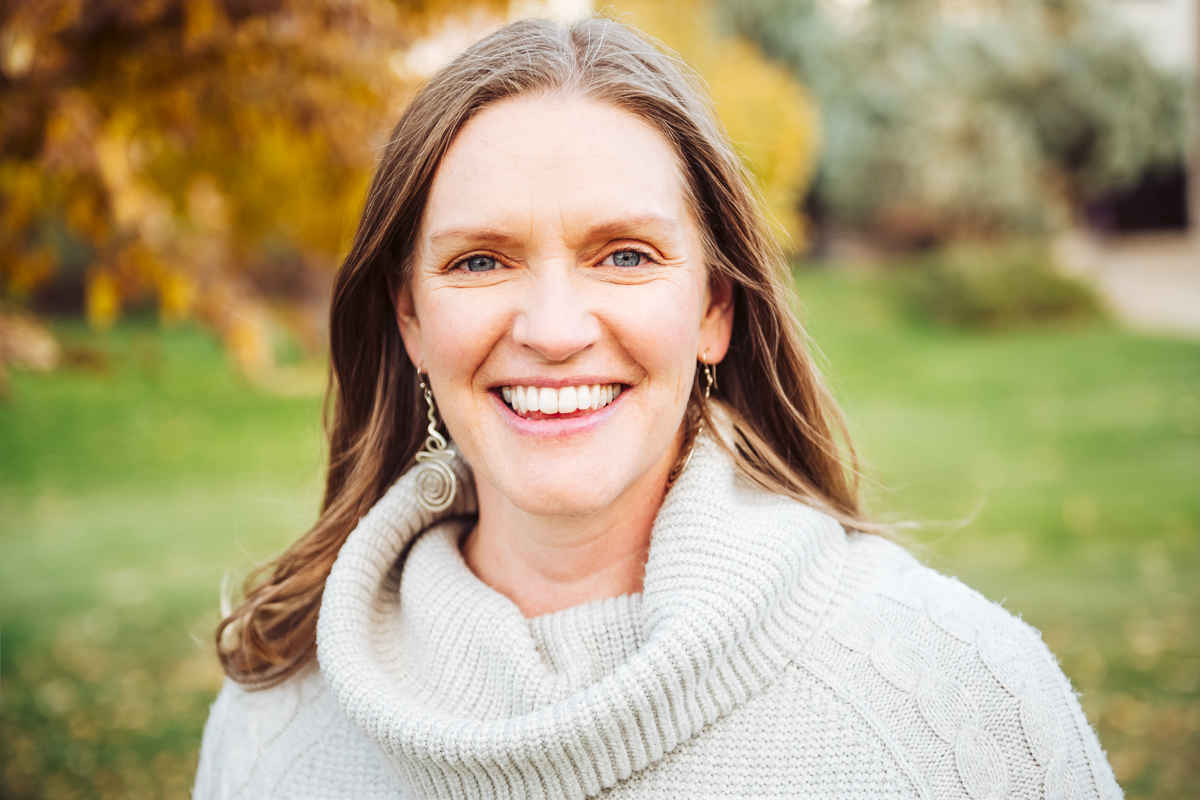
The Long Strange Trip - Episode 20: Redefining a Good Death: Insights from a Death Doula Rose Zealand
About the Episode:
Navigating the End: Some Thoughts on Death and Doulas
I’ve been thinking a lot lately about how we handle the "end." It’s funny or maybe not funny at all how much we avoid the one thing that is guaranteed for every single one of us. We spend our lives building businesses, managing wealth, and planning for the next quarter, but we rarely talk about the final exit strategy.
I recently caught up with Rose Zeeland. She’s a bit of a hybrid: a certified financial planner and a death doula. It’s an interesting mix, isn't it? She spends her time helping people navigate terminal illness, specifically focusing on folks in their 40s and 50s. That hit home for me.
What does a death doula actually do?
I suspect most of us hear the word "doula" and think of birth. But Rose works on the other side of the threshold. She provides a kind of "wrap-around" support for the dying and their families. It’s not just medical; it’s emotional, educational, and maybe most importantly advocacy.
Education: Helping you understand what the process actually looks like.
Advocacy: Making sure your wishes are actually honored, even when the medical system wants to push a different path.
Emotional Support: Just being there. A compassionate presence in a room usually filled with fear.
Why the 40s and 50s?
Rose focuses here because this is the "unfinished business" age. If you're 85, there’s a sense of a race well-run. But at 45? You’re still in the thick of it. You have kids, a career, and goals that aren't even close to being checked off.
It creates a unique kind of turmoil. You’re part of that "sandwich generation" caring for your own kids while watching your parents age and suddenly, you're the one facing the end. It’s very disconcerting.
Defining a "Good Death"
What does a "good death" look like to you?
Rose shared a story about a man who wanted to go naturally, with zero medical intervention. His family was distraught; they wanted to fight, to do something. But it wasn't their death. It was his. It reminds me that we often project our own fears onto the person who is actually leaving. Are we listening to them, or are we just trying to soothe our own upcoming loss?
How do we start the conversation?
I know I’ve struggled with this. It feels heavy. But Rose suggests a few things that seem manageable:
The Annual Check-in: Maybe it’s a family meeting once a year to just talk about preferences.
Real Listening: Not just waiting for your turn to speak, but actually hearing the fears your loved ones have.
Getting Help: If the family is fighting, bring in a neutral third party. Sometimes we’re too close to the fire to see the smoke.
Some Final Reflections
At 73, I realize I have way less life going forward than I do behind me. It makes these conversations feel less like "someday" and more like "now".
We spend so much time trying to be effective and successful in life. Why wouldn't we want to be just as intentional about how we leave it? It’s not about being morbid; it’s about being human.
If you're feeling stuck on how to start these talks, maybe reaching out to someone like Rose is a good first step.
What’s stopping you from having that conversation today?
Transcription:
Introduction (Josh)
Welcome to the Long Strange Trip. I'm Josh. the host of the show. We're going to dig into six areas together, finding real work-life integration. Instead of that brutal 9 to 5 5 split too many business owners to live with. We're going to approach retirement as an actual reinvention. Rather than just stopping work. and we're facing death honestly, and avoiding PTSD around it. We're also building resilience,
when life throws us curve balls. We're sharing wisdom across generations. And finally, we're understanding the patterns that show up in all our transitions. I'm not coming at this as an expert I'm a fellow traveler figuring this stuff out in real time.
Especially now as I navigate my own dual cancer diagnosis at 73.
Welcome to the Long Strange Trip. I'm glad you're here.
Josh Patrick (00:01.026)
Hey Howard, today this is Josh Patrick and you're at the Long Strange Trip podcast. And my guest today is Rose Zeeland. Rose is a certified financial planner, certified financial transitionist. And for the most importantly for today's conversation, she's a death doula. We had a death doula on a few weeks ago and Rose has a different way of doing the work. So we're going to talk to her about that.
and who she serves, which is a different population than most death doulas serve. So let's bring Rose on and start the conversation. Hey, Rose, how are you today?
Rose Zealand (00:41.696)
Have great, Josh. Thank you so much for having me.
Josh Patrick (00:44.65)
My pleasure. So the question I have is, first of all, can you explain to folks what a death duel is?
Rose Zealand (00:52.842)
Yeah, absolutely. So death doulas, also known as end of life doulas or end of life transition guides, there's a lot of different ways that we can be referred to. We are people who sit with others through the ending stage of life, as well as their circle of care. So for example, sometimes the people we work with are the person who's dying. Sometimes the people we work with are a daughter or a child or a...
a sibling, somebody who needs a little extra support, even when the dying person themself doesn't want a death doula immediately available. So we can support the people who are losing somebody they love as well. And the work that we do is about, it's multifaceted. Part of our work is education. So helping people understand what the dying process is, what that looks like, what to not be afraid of, for example. There's a lot of...
open-ended exploration about what it means to be dying, what life has looked like for that person, giving the person at end of life the opportunity to tell their story and have it heard and captured and witnessed. And with that too, helping to explore what they are needing and wanting at end of life and helping to then advocate for those desires as well. So if it is, for example,
all the medication, all the care, all the procedures, all the treatment, helping to advocate for that. If it is the opposite of that, helping to advocate for that as well. So it's a lot of witnessing, it's a lot of exploration, education, advocacy, those are the key components of working with the person at end of life or their support. And then many doulas also work in the after-loss space as well, helping to process some of the grief initially of the people who are
left behind and you know kind of orient sometimes to the logistics that are involved after a death as well. So not all doulas do that part but it is a common thing that we do do.
Josh Patrick (02:57.717)
So, your specialty is working with people who are 40 and 50 years old or at end of life. Is that correct? How did you end up there?
Rose Zealand (03:02.336)
Mm-hmm. Mm-hmm. Yep.
Great question. and the forties and fifties is not a hard cutoff, but if you're not in your forties or fifties, I won't work with you. But generally I'm going for people who are dying too soon, which I regard as kind of pre retirement age, generally speaking. And the reason that I chose this demographic is because my dad died too soon and he died just a few weeks after his 61st birthday, which is still that's too soon. And seeing.
Josh Patrick (03:24.415)
Right.
Rose Zealand (03:37.933)
where he was in life financially, seeing where he was in life emotionally, you know, he was very mid stride in so many ways. There were a lot of things that he was still looking forward to. There was a lot of unfinished business. And unfortunately, in my dad's case, there were also a lot of regrets as well that didn't get to be resolved at the end. So just.
Being with him, seeing that, that kind of the unique challenges, the unique concerns that come up when you are mid-stride in life and you're interrupted by a terminal diagnosis or a diagnosis that we don't know yet if it's going to be terminal. You know, in the case of cancer, maybe you survive it, maybe you don't, maybe you're living with cancer for a number of years, however that transpires. It's a unique constellation of considerations, both financially and emotionally and cognitively. And there's not a lot of people
who focus in that specific demographic. Typically we think of end of life as ripe old age. We're a cute little old person and we have lived a good life and we're passing. That's perhaps the ideal, but we don't all get to have that ideal. And I'll just say too, that there are some doulas who focus on working with kids, infants and children and teenagers. Yeah, yeah, yeah.
Josh Patrick (04:44.502)
So I have a... Go ahead.
Josh Patrick (04:52.319)
man, that's tough. That's a tough one. So you mentioned your dad had a lot of regrets before he died. Do you think he had a good death?
Rose Zealand (05:00.78)
Mm-hmm.
Rose Zealand (05:05.164)
Okay, I'm really glad that you asked this question, especially the phrase good death, because I kind of struggle with this phrase.
Josh Patrick (05:14.186)
I would say it's sort of my, know, my question with, you know, not having PTSD with death is, mean, the counterpoint or counterpart of that is how do we have a good death? So I'm curious that if somebody has a lot of regrets and gets to the point where they die with a lot of regrets, do they have, is it possible for them to have a good death and how do they do it?
Rose Zealand (05:20.352)
Mm-hmm.
Rose Zealand (05:34.422)
Mm-hmm.
Rose Zealand (05:40.331)
Yeah, I think I want to start just by talking about good death in general, because it's alluring, I think, to have a standard definition for what a good death means. But I really want to emphasize that this is something that is highly individual and highly personal. And what I define as a good death may not be what you define as a good death. I believe that the definition of what a good death is lives with the person who is dying.
Josh Patrick (05:44.638)
Sure, please.
Josh Patrick (06:08.811)
I would agree with that by the way.
Rose Zealand (06:11.156)
Yeah, and it's part of their autonomy to be able to express what that is and to have it respected and upheld by the people around them. And to just give a quick story of something that in the eye and the perspective of the dying person constituted a good death, but was incredibly difficult and painful for his circle of care to witness. I read this story in a book called Advice for Future Corpses and People Who Love Them, which is a phenomenal book, highly recommend it.
Josh Patrick (06:19.455)
Right.
Rose Zealand (06:40.784)
but it was a story of a gentleman. could be get some of these details wrong, but he, he wanted to die like an animal. That was his explicit and express preference. So no medication, no bathing, no company, no interventions whatsoever. He wanted to experience all of the pain, all of the secretions, all of the changes. He wanted to experience all of that. That was to him, a good death.
And meanwhile, the people who cared about him, his family and friends, were extremely uncomfortable by his choices because of their perspective, they were seeing him suffer because he was in pain. They were seeing him, his body kind of erode in part because he wasn't taking care of it with bathing or eating or drinking or things like that. So there was this dynamic that existed between the circle of care that was trying to impose pain management and
cleanliness on him and he didn't want any of it. So I like to bring that up because it kind of widens the field and definition of what it means to have a good death.
Josh Patrick (07:43.676)
Well, it's what was a good death for him. But the question I would have about that, the family have a discussion about this before he got into the final stages of life? See, that's where the challenge comes in, I think, is that a good death really requires. And a good death for me is just not the person who's dying, it's the wider group that
Rose Zealand (07:56.47)
No.
Yeah.
Josh Patrick (08:10.762)
is close to the person. It could be just family, could be family and good friends, but for this conversation, I would say just family. And I think it's really important, and maybe I'm wrong about this, but I think it's really important for the person who's going to die to have several conversations with their family about what that means for them. And to listen to what the family is saying about what they think
Rose Zealand (08:19.328)
Mm-hmm.
Rose Zealand (08:35.062)
Mm-hmm. Yeah.
Josh Patrick (08:40.944)
about the person, know, it's, kind of Tom Deans who I really like a lot. He's written a book called Every Family's Business and Willing Wisdom. He wrote a third one, I can't remember the name. But Willing Wisdom talks about doing wills and having conversations with the family about what's in the will before you die, well before you die, and have family meetings every year where people are allowed to, you know, voice
Rose Zealand (09:02.156)
Mm-hmm.
Josh Patrick (09:07.849)
their opinion about what you're going to do with your money because at end of the day it impacts them greatly. Same thing with how you're going to die. And in my opinion, yes, he had a good death the way he felt, but his family probably feels a whole different way about
Rose Zealand (09:16.47)
Mm-hmm. Yeah.
Rose Zealand (09:29.526)
You
Josh Patrick (09:31.369)
I would rather see everybody be have consensus and agree that this is the right thing for my father or my mother when it gets time for them. You know, I've had several conversations with my family. In fact, I came up with a new idea is that, yes, I will be in control of my life up until my death. Once I'm dead, you decide what you want to do with me. Do you want to have a memorial? Do you not want to have a memorial?
Rose Zealand (09:57.782)
Mm-hmm.
Josh Patrick (10:01.053)
You want to have, you know, we're not going to do a standard burial or standard cremation. We already know that because we decided against it or they've decided against it. But I'm leaving that up to them. I'm going to be gone. What they do should be appropriate for them. But I want to make sure we have a discussion about that as a group before it happens. So that's my, you know.
Rose Zealand (10:25.259)
Right.
Josh Patrick (10:30.076)
That's sort of my definition of what a good death is.
Rose Zealand (10:32.8)
Yeah, yeah, I appreciate that. And I think you mentioned the word consensus that everybody is in agreement basically about how things are gonna go. And I think that's also interesting too, because there's a lot of families and circumstances where consensus isn't possible. An example being where religious faith of the dying person and the rest of the family is different. And the person who's dying would like to have rights performed according to their.
set of beliefs, but the family would prefer to have rights performed according to their different set of beliefs. know, consensus isn't always possible. And that's where having the support of a death doer also can be helpful, or sometimes a mediator or somebody else can help to have those conversations. Maybe it's working towards certain compromises, or in some cases, it's up to survivors to accept the decisions and the preferences of the person who's dying.
or vice versa, we don't always get to agree. And understanding is the goal, hopefully, that's an ideal situation perhaps, to at least be at the point where I can understand why this person wants it and I can accept that and I can support that even though I don't agree with it. That would be kind of a very evolved way to go about managing those differences.
Josh Patrick (11:51.596)
How about differences between siblings, which I think happens probably a lot more than between parents and children?
Rose Zealand (12:02.252)
Yeah, this is a really tricky one. And it's probably the one where I see the most fracture and trauma and hardship that is either carried on or introduced in a family system is between siblings. It's really difficult when there's grudges that have been carried for, in some cases, decades for a whole lifetime since childhood.
And the way that those grudges manifest in differing opinions and perspectives and personalities in the choices that are made for the parent who is passing or in the decisions that are made afterwards or in squabbling about who gets what after the passing, if it wasn't clearly outlined with, know, here's why I'm giving such and such to so and so. So, yeah, siblings can be really, really tricky and
Again, that's another area where there may not be consensus. And it may be difficult.
Josh Patrick (13:01.158)
So when there's not consensus, how do you do the cleanup after the event happens?
Rose Zealand (13:08.94)
Yeah, that's a great question. So, and I'll say too that both in the position of financial planner and death doula, there's going to be an element to the cleanup afterwards that is beyond the scope of the skill and training that we have to provide. In some cases, it may require mediation, it may require coaching or therapy. And unless the death doula or the financial advisor is trained for that,
the best we can do may be a referral to somebody who can help that person. But what is...
Josh Patrick (13:42.343)
Well, I'm glad you said that because in my experience, people in the life coaching world, which I kind of put this in, often go past what they should be doing when they should be referring out to therapists or mediators. I find it really disturbing that there are people out there doing stuff they're not qualified to do, and they often do more damage than good.
Rose Zealand (14:11.4)
Mm-hmm. Yeah, having boundaries around the scope of what you're doing is quite important. And I think, so as far as my role and the way that I would help somebody in that situation, it's primarily about listening and validating what the person is saying, trying to create an environment in which they feel heard and seen. And it's not my place to impose judgment on whether what they're seeing or feeling or thinking is
correct or right or wrong. It's just to allow them to say what they need to say to express the hurts, to acknowledge that, normalize it to some degree. And then I do have some degree of training in somatics, which is an approach that kind of tunes in with the body. It's a very trauma-informed way of working with somebody. So there are some very, very basic exercises that I will use from simple breath work. If somebody is
Josh Patrick (15:02.277)
Mm-hmm.
Rose Zealand (15:09.408)
Like if I can see that their nervous system is clearly in fight, flight, freeze, or fawn, simple breathwork techniques, simple like tapping techniques, simple, simple things to in the moment kind of help that person regulate their own nervous system to kind of bring them back to a place where they have access to.
more advanced cognitive thinking, we'll say, instead of like a fight or flight response to the situation. And that's my scope. So when it starts to get really deep or, you know, we're working with decades worth of wounding here, I'll do my best to be present in the moment, but also strongly encourage and help make references and connections to a therapist or somebody who's more appropriate.
Josh Patrick (15:55.045)
It makes a lot of sense. So you're working with 40 and 50 year olds, or at least that's your target that you're working with. And I'm going to assume that's a much more challenging age group to work with than somebody in their 70s. Only because you probably have a spouse who you've not been with for 40 or 50 years, and you likely have young children. And
Rose Zealand (15:59.671)
Mm-hmm. Mm-hmm.
Josh Patrick (16:25.689)
How do you help the young children understand what's going on?
Rose Zealand (16:31.7)
Yeah, yeah. So this demographic is very much the sandwich generation. So it's not just young children, but it's also potentially parents that this, person with the diagnosis is caring for, which is, you're right. It is a very challenging demographic because there's a lot going on for 40 and 50 year olds.
Josh Patrick (16:40.6)
Right.
Josh Patrick (16:49.295)
There's more moving parts than there is with older people.
Rose Zealand (16:52.436)
Yes, generally speaking, yes. So when it comes to talking to younger kids.
I start with just exploring with the person their fears, their worries, what they think that they want to say or not say, why they think they want to say or not say it. Because there's, you know, with parents, there can be a tendency in some cases to overshare and there can be a tendency to undershare as well. And that I think is a perpetual challenge for parents is to kind of find the right amount of sharing that's also age appropriate for that kiddo. So
We spend some time just kind of exploring that, kind of where they see that spectrum of how much to share and what not to share, when and how. We can pull in resources about how to talk to kids. I'm not a specialist with kiddos, so this is another area where if it's very complicated or very tricky, I would make a referral to somebody who does specialize in working with kiddos. But there's a lot of resources out there. There's so many, you know, if they're really young kids, there's a lot of children's books about
death and dying and even about this mostly about grandparents dying, but there are some starting to come out now about mom or dad dying as well. And stories are such a powerful way for kids to start to relate to difficult information and for them to start coming up with their own questions. There's also a lot of support groups and resources for the parents in discovering age appropriate ways to talk to their kiddos. And so those are things that we do too is my general
perspective is to allow the child to express their natural curiosity about what's going on and to answer them honestly in age-appropriate ways and to not hide or sugarcoat what's happening because kids are so perceptive. They see everything. They notice everything. And their little brains are working overtime to make sense of what's going on around them.
Rose Zealand (18:55.506)
If the adults in their life aren't talking to them about what's going on, but they sense that they're stressed and strain, they pick up on that and they start to make up stories that explain why mommy and daddy are so upset or stressed out or crying all the time or whatever. So they're going to invent their own story, which is going to have a significant impact on them for the rest of their lives. So my personal perspective, which I do not impose on the people that I work with, but
I think an ideal situation would be for the parents to provide the kids resources that are age appropriate that allows the kids to generate their own questions and ask freely and then to be answered honestly.
Josh Patrick (19:39.892)
So,
Josh Patrick (19:46.605)
Well, somebody who is my age, I'm 73 years old, and they get a terminal diagnosis and they have a conversation with somebody. It could be a healthcare provider, could be a palliative person, it could be a hospice person about the difference between a medicalized death and a non-medicalized death. And most people my age,
Rose Zealand (19:51.115)
Mm-hmm.
Rose Zealand (20:09.452)
Mm-hmm.
Josh Patrick (20:13.143)
will choose a non-medicalized death when they understand what a medicalized death actually is. I call that being part of the medical industrial complex. And it's not a fun way to die. It just isn't. How about with people in your demographic, the 40s or 50s? Are they more inclined to do everything possible? Or are they
Rose Zealand (20:23.084)
Mm-hmm.
Rose Zealand (20:26.7)
You
Josh Patrick (20:39.459)
more inclined or are they inclined to say once they learn what medicalized death means if they learn it and most people never learn it by the way which is challenge. Do they decide to go with that or do they decide to do a natural death of some sort? And by the way natural death can include pain management.
Rose Zealand (20:47.126)
Mm-hmm. Yep.
Rose Zealand (21:02.348)
Correct, yeah, yeah. That's a great question and it really varies. I think if there were to be a trend or what's most common, I would say that it is individuals fighting for their life up to a certain point and then.
sometimes allowing or accepting death at that point and others continue to fight until the very end. So one of the things that I do with my clients is we spend a lot of time talking about what quality of life means to them and defining it and also marking out milestones for when.
there start to be significant departures from quality of life. And the tricky thing about humans is that we're really good at redefining things and moving the line. So if today right now in my perfectly healthy state, I define quality of life like this, and then I get into a situation where I have encroached upon my definition of quality of life, I might be inclined to move my definition a little bit over here to adapt. That's one of the most brilliant things about being human.
So that's part of our conversation as well. What is quality of life to you today? And when we start to encroach upon that, how do we want to make decisions and how do we want to do self-inquiry and inquiry with our people about whether or not we're gonna move the line or we're gonna hold the line on what quality of life is? So we do a lot of exploring of that idea. And this is the other role of the doula as well is to educate around what a medicalized death means.
and to talk about that explicitly, to say, so would you want this if it means this? you know, and talk about what scenarios look like with the medicalized death when you have the full, like intubation and CPR and all of the drugs and everything that are pumped in you to try and keep you alive. Yeah, you're right. Most people don't understand what an incredible impact that that has on the body. I mean, it's painful. Their ribs are broken. it upsets all these delicate systems that we have. can make.
Rose Zealand (23:11.942)
living even harder and it significantly compromises quality of life in many ways. And some people recover from it and some people don't.
Josh Patrick (23:22.21)
Well, they do. mean, it's the difference between, you somebody who's 73 years old, I would have to question whether they really should have a medicalized death. They should have a natural death, even if it means they die early. Because at 73, you've lived a life. mean, yes, and that's my opinion, and I should not put that in front of other people, which I don't, but it's my...
Rose Zealand (23:33.942)
Mm-hmm.
Mm-hmm. Mm-hmm.
Rose Zealand (23:50.838)
Mm-hmm.
Josh Patrick (23:51.135)
Sort of my own opinion is that I can't think of anything worse, frankly. But that's just me. There are people out there that consider a good death everything that can possibly be done. you know, if someone is highly religious, that's likely going to be their choice. Especially with certain religions in this country.
Rose Zealand (23:56.748)
Right.
Rose Zealand (24:03.468)
Mm-hmm.
Rose Zealand (24:11.286)
Mm-hmm.
Rose Zealand (24:16.332)
Mm-hmm.
Josh Patrick (24:18.784)
You know, for example, a friend of ours died recently and she should have died two years ago. And she could have done it two years ago if she if she wanted to. But because of her religious beliefs, she held on to the very end and did everything that was possible. I don't think she had a good quality of life at the end, but you know, that's just my opinion. But she got what she wanted, which was what's important. And that's the thing that we don't
Rose Zealand (24:24.267)
Mm-hmm.
Rose Zealand (24:34.55)
Mm-hmm. Mm-hmm.
Rose Zealand (24:41.964)
Right.
Correct.
Josh Patrick (24:48.709)
Often, you I find as advisors, we often play the expert role of knowing what our client should do. And we tell them that's what they should do instead of listening and helping people get what they want. It's one of my biggest complaints about if I have a long story about an ESOP once where all the advisors were talking from what they wanted.
Rose Zealand (24:58.06)
Mm-hmm.
Rose Zealand (25:02.271)
You
Yes.
Josh Patrick (25:17.569)
And I finally open my mouth and say, hey, that's not what the client wants. The client wants this. What you want will guarantee he doesn't get X. And I've watched for this for years since that particular experience. And I find that experts often will say, here's my expertise. It's a thing I know. It's what I'm going to try to shut down your throat. Whereas a generalist will have a wider
Rose Zealand (25:38.625)
Mm-hmm.
Mm-hmm.
Josh Patrick (25:45.3)
you know, the death duel is basically as a generalist, is that you have a very wide base of knowledge, maybe not be incredibly deep, but enough to know what you're talking about. So you're more likely to not try to drive a solution for somebody you're working with. You're more inclined to say, what can we get that the solution works for the client with all the things that I've known that I've learned over life?
Rose Zealand (25:47.468)
You
Josh Patrick (26:14.4)
Does that make sense?
Rose Zealand (26:15.53)
It does make sense that it also speaks to something that's really important to understand about the work of a death doula. So the training that I have received, I have worked with an organization called ENELDA, which stands for International End of Life Doula Association. And the core training and the certification program is all about developing our capacity to show up for our clients agnostic, meaning that
we need to have had evaluated our own beliefs and biases around what a good death is or the shoulds or what anything should look like. And any opinion, any belief, any preference, like those are all biases. And part of the work of being a really good death doula is to self-examine and to try and uncover as many of those biases as possible so that we can intentionally check them at the door.
and show up without agenda and without any type of leading for the client and just allow them to self lead and support them with the resources that they need to do that. So whether that is really good questions that open up self reflection.
and self-inquiry and help them go a little bit deeper in that, whether it's providing educational resources that help them make informed choices about what it means to choose this path or that path. That's the role, it's the support, but a death doula at their finest is not going to have an outcome, an ideal, a goal, an agenda for a client other than just to be present and support them.
And that, like you just said it so beautifully, because this is one of the things that I've really been confronted with in my own training about how difficult it is to self-examine and to be aware of your own biases and perspectives, and then how to not impose them upon anybody else. It's really hard, especially when you come from a financial planning background. I've got about 14 years now under my belt where I'm literally hired by people to give them advice. People hire me to
Rose Zealand (28:29.526)
tell them what to do, or that's the perception, right, of the work. And then you have the death doula work, which is without agenda entirely. Financial planning, heavy agenda, lots of check boxes, lots of checklists that we have to work with. So that's part of what makes my work so interesting and challenging is to kind of stand in both of those spaces simultaneously. it's, I just find it so compelling. And then I think coaching kind of falls in the middle of that as well, where there's
It's still about helping the client discover what's important to them and help them remove the barriers in their life that are preventing them from accomplishing what's important to them. But it's all client directed, all client led.
Josh Patrick (29:13.181)
So Rose, unfortunately, we're out of time. I wish we had more time, because I was about to go into a conversation with you about financial planning without an agenda. Because that's how I did it when I was doing it. I was of the opinion that clients had all the answers. I just had to have the right question.
Rose Zealand (29:15.997)
shoot.
Rose Zealand (29:26.112)
Mm-hmm.
Rose Zealand (29:37.086)
Right.
Josh Patrick (29:40.178)
How would people find you? Because you're fascinating and you do something that's really, really unique. And I'm hoping that some of the folks who are listening to this podcast will look you up. So how would they do that?
Rose Zealand (29:52.277)
Yeah, thank you, Josh. Best way is my website, which is deathandmoney.com. I'm also on LinkedIn. That's the only social media I do. And on my website, deathandmoney.com, you can sign up for a newsletter. I put it out once or twice a month. It's called Threads of Insight. And in it, I have different essays that explore the intersection of money, meaning and mortality. education and yeah, my website, LinkedIn and my newsletter, those are the best ways to get a hold of me.
Josh Patrick (30:21.918)
Cool. And I've got two things I'd like you to do. First is wherever you're listening or watching to this podcast, please give me an honest rating review. If you love me, give me five stars. If you hate me, give me one star. And I only cry for 10 or 15 minutes when I get one star, but I get over it. And the other thing is, and I'm serious about this, if you're listening or watching to this podcast and you think you would be a good guest, just raise your hand, which is what Rose did. That's how she got on the show.
Rose Zealand (30:24.683)
Yeah.
Rose Zealand (30:50.206)
You
Josh Patrick (30:52.081)
I was making a presentation and she raised her hand and here she is. So if you're interested in being on the show, send me an email at jpatrick at stage two solution. That's number two solution is singular. Jpatrick at stage two solution dot com. I'll send you a link. We'll set up a time to talk and see if this podcast will be good for you. So this is Josh Patrick. We're with Rose Zeeland. You're at the Long Strange Trip podcast.
Rose Zealand (30:56.236)
You
Josh Patrick (31:20.493)
And I thank you for spending some time with us and I hope to see you in our next episode. Bye.
Outro:
Thanks for spending this time with me today. I really appreciate you being part of this journey. I'd be grateful if you leave an honest rating and review. It helps other people find these conversations. Lets me know what's landing with you and what isn't. If you love this show, give us five stars, and if you hate it, give it one star and I'll just cry a little bit.
Keep asking the hard questions, keep being honest about what's difficult, and remember. We're all just trying to figure this out together.
I'll talk to you next time on the Long Strange Trip. Thanks for stopping by.
