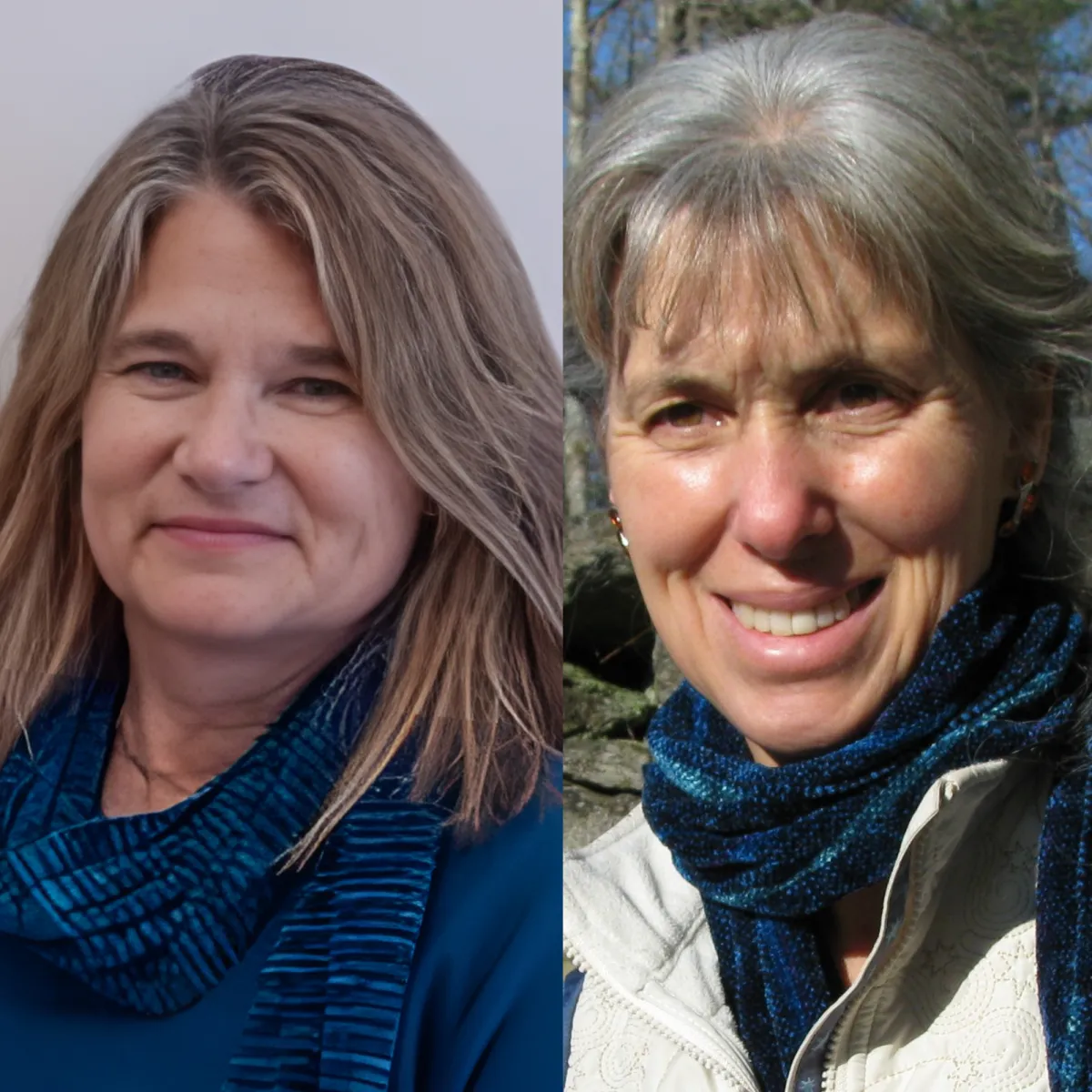
The Long Strange Trip Podcast Episode 12: Facing Death: Understanding Medical Aid in Dying with Betsy Walkerman and Amy Bruce
About the Episode:
A Conversation We Usually Avoid: Thinking Through End-of-Life Choices
I turned 73 recently, and I’ll be honest—I think about the "exit strategy" more than I used to. It’s not about being morbid; it’s about the reality that there’s way less life ahead than there is behind. For most of us who spent our careers "managing" things, the idea of losing control at the very end is, frankly, very disconcerting.
I’ve been reflecting on a conversation with Amy Bruce and Betsy Walkerman from Patient Choices Vermont. They deal with a topic most of us push to the basement of our minds: medical aid in dying. If I’m looking at a terminal diagnosis and six months or less to go, what does autonomy actually look like?
What are we actually talking about?
When we talk about medical aid in dying, we’re talking about a legal process for folks who are still cognitively "all there" but are facing an end-of-life timeline. It’s about the request for medication to end one's life on their own terms. Betsy mentioned this started taking shape in Vermont back in 2002. It’s a heavy topic, I know. But isn't the desire for autonomy something we’ve spent our whole lives chasing?
The long road to Act 39
It took 11 years of advocacy to get Act 39 passed in Vermont. They were the first to do it through legislative action rather than a referendum. Now, about a third of Americans have access to these kinds of laws. It makes me wonder—why does it take us so long to create frameworks for the one thing we are all guaranteed to face?
The agency we lose (and want back)
Amy Bruce hit on something that really resonated with me. When you get a serious diagnosis, you feel like you’ve lost the steering wheel. Everything is happening to you. Searching for agency in those moments isn't a "crisis"—it’s a necessity.
I suspect a lot of us feel that medical professionals should be the ones to open this door, to create a safe space where we can ask the "what if" questions without judgment. Have you ever had a doctor who actually invited that kind of honesty? I know I haven't always felt that's possible.
It’s more personal than professional
Betsy shared a story about her own father choosing this path. What struck me wasn't the medical side of it, but the personal side. She said it actually opened up more profound conversations in their family.
By taking the "how" and "when" of death off the table as a looming, terrifying mystery, they were able to focus on the life that was left. It’s a paradox, isn’t it? That planning for the end might actually let you be more present for the finish.
It’s not a "quick fix"
This isn't something you decide on a Tuesday and finish on a Wednesday. There are waiting periods, multiple doctor assessments, and a lot of paperwork. It’s a process designed to make sure you’re sure.
I’m thinking about my own life and the lives of the people I work with—we spend decades planning our business exits, our wealth management, and our retirements. Why do we treat the literal final transition as something to just "deal with" when we get there?
Some things to chew on
The work being done at Patient Choices Vermont isn't just about a law; it’s about changing the culture of how we die. It’s about empowering us to have a say in our own final chapter.
If you found yourself in that position, would you want the option? Or does the very idea feel like too much to handle? I don't have the answers. I'm just a guy at 73 trying to figure out how to navigate the transitions that actually matter.
Transcription:
Introduction (Josh)
Welcome to the Long Strange Trip. I'm Josh. the host of the show. We're going to dig into six areas together, finding real work-life integration. Instead of that brutal 9 to 5 5 split too many business owners to live with. We're going to approach retirement as an actual reinvention. Rather than just stopping work. and we're facing death honestly, and avoiding PTSD around it. We're also building resilience,
when life throws us curve balls. We're sharing wisdom across generations. And finally, we're understanding the patterns that show up in all our transitions. I'm not coming at this as an expert I'm a fellow traveler figuring this stuff out in real time.
Especially now as I navigate my own dual cancer diagnosis at 73.
Welcome to the Long Strange Trip. I'm glad you're here.
Josh Patrick (00:00.839)
Hey, Howard, today this is Josh Patrick and you're at the Long Strange Trip podcast. Thanks a lot for joining us today. Today we're going to have a really interesting conversation. And our conversation fits in generally with my broad scope of how do we die without having PTSD or how do we face death without PTSD is actually a better thing. And today I am really, really happy that we have two folks with us to talk about this topic and
They are from Patient Choices, Vermont. have Amy Bruce, is the executive executive director, and Betsy Walkerman, who is a board member of Patient Choices. Betsy and I have known each other for years, and her father was very instrumental with doing what's called Act 39, which is the legislative piece that talks about this. But since I am not an expert on this and Amy and Betsy are, let's bring them on and start the conversation. Hey, how are you folks today?
Amy Bruce (00:59.522)
doing really well. Thanks for having us.
Betsy Walkerman (00:59.603)
Great.
Josh Patrick (01:02.227)
Thank you so much for coming on and this is really interesting. So I don't know who wants to start. Do we want to do a history of Act 39? Or do you want to talk about why it might be important for folks? But we do want to talk about both and I don't really care what order we do it in. So who wants to start?
Betsy Walkerman (01:19.827)
Well, great. think I can do a little history. Yeah, Patient Choices Vermont started in 2002. That's when my dad, Dick Walters, and my mother, Jenny Walters got started with the idea of getting a medical aid in dying law passed in Vermont. At that time, there were only two other states that had a medical aid in dying law.
That was Oregon and the state of Washington. We'll get more into more detail about what medical aid and dying is and isn't, but just the brief summary is that medical aid and dying provides a legal process for people who are facing a terminal illness with a prognosis of six months or less to live to make a decision to request
terminal medications so that they can control the timing of their death. And it's only available to people who are cognitively able to make their own decisions.
Josh Patrick (02:31.981)
What do we mean by cognitively able to make your own decision?
Betsy Walkerman (02:36.137)
It basically means that the person is already making other decisions about their health care. So it's the same kind of standard that a medical professional would use when they're speaking to a patient about any of their other decisions such as, you know, if you have cancer, whether I'm going to pursue surgery or whether I'm going to pursue chemotherapy.
So the same kind of judgment call there. So if I, I'll just sort of finish the history really quickly. So the process to get our Act 39 in Vermont passed took 11 years. There was a great deal of discussion all across the state and in the legislature. And in 2013, the legislation passed.
We were the first state in the country to pass it by legislative action rather than referendum, which was a very big deal because the next few states that adopted medical aid in dying were California, has a lot of population, and Colorado and New Mexico. Now we have 13 states, soon to be 14 states, we think, that allow medical aid in dying.
So about a third of Americans have access to medical aid in dying. So here in Vermont, once the legislation passed, we turned our attention as a nonprofit organization to education, helping both patients and physicians and families and hospice organizations understand how the law was intended to work and coaching people through
Josh Patrick (04:07.59)
So.
Betsy Walkerman (04:31.133)
their process considering their options.
Josh Patrick (04:35.26)
So you folks do the coaching for this.
Betsy Walkerman (04:40.009)
We do some of it. mean, at this point, there are quite a few people in the state who have a lot of experience with medical aid and dying, especially doctors and hospice professionals.
Josh Patrick (04:54.63)
So Amy, why would somebody want to use medical aid and die?
Amy Bruce (04:59.31)
So first off, I'll say something that will be, I guess, really obvious, but receiving a serious diagnosis of an illness that could be life threatening is probably one of the most terrifying moments that any of us may experience. And I think when that happens, people's brains tend to jump ahead to what could the end look like now that someone is telling me that my end may be in sight.
or potentially foreseeable. Things go from theoretical to real really quickly. And people deserve to be able to understand what that path may look like. Of course, none of us know, not the oncologist, not the pulmonologist, not the priest, not yourself. None of us know exactly what that path will look like and what it may require of us and what it won't, but we deserve to know what all of our options are.
And to feel, think, especially I think in this Western culture, to have some agency, some control in a moment where we feel like a lot of control has been taken from us, to understand these are my options. And this is what I'm legally entitled to and deserve to be able to talk about openly with my doctor, with my family, to really understand
know how to make the best decisions about life from that moment of getting that diagnosis until you draw your last breath.
Josh Patrick (06:33.967)
Yeah. This is something that's really interesting. I've had three cancer diagnosis. One was 18 years ago where I went through a really serious thing. It was very interesting when I went through my cancer experience 18 years ago. I never thought about dying. It wasn't something that even came in my eye. And it may be because I was 55 years old. Now I'm 73 years old and I've been re-diagnosed with
my non Hodgkin's lymphoma as well as prostate cancer. So now it's real. And the reality is I'm probably going to die from one of those two cancers. When who knows, but that's the problem. I would say that's a probability. Now the thing that I have found, which is really sort of, uh, I'm finding it disturbing is that none.
of the medical team I've been working with has talked about end of life.
Betsy Walkerman (07:33.629)
So many.
Josh Patrick (07:39.784)
And this includes I have an oncologist up here. I have a radiation oncologist up here. I have a team I'm working with at Dana Farber. None of them have mentioned there's options in how do you want to die? And I know that's not what they're trained for, and I know that's not what they have. They get paid for. But how do we change that? Because that, to me, seems to be a hugely big deal.
And these are all really good doctors. And I know at least my oncologist is fine with medical aid and diet. He just, when I brought the subject up of, of my, my demise, he really kind of almost curled up into a ball, not really, but metaphorically. And he's a great doctor. And I know that, that, you know, it's just why, what can we do to change that? Cause I think that's a big deal.
Amy Bruce (08:39.992)
Well, I think I'll go first. mean, I think it takes work on so many levels of our society and our culture, certainly medical education, ensuring that people, regardless of the specialty that they're going into, have some grounding in how to have end of life care conversations, goals of care conversations with people. People have to understand that, you know, your physician's office and those appointments should be the safest space for you.
to have those conversations. But if you're quickly getting the message from that person that I'm not comfortable talking about this, you're certainly not going to pursue it. So starting with medical education and providing them the training, we want them to be able to do this, but it is a skill. Having goals of care conversations and helping people explore this topic is a skill to be learned, like any other medical skill.
And then culturally, you know, the work that you're doing in this podcast and that the growth of the end of life doula movement is doing so much, know, death cafes, you know, sprouting up all over rural and urban America. So I'm doing so much to help people understand we are all going there and it's only going to be harder if we continue to look away and we may miss so many opportunities to pursue life and live life in a real much more full way.
So it's work, you know, very technical work on training people on if medical aid and dying is legal in your state as a healthcare worker, this is your responsibility to understand it and be able to talk to people, but also having those cultural conversations, supporting art and film around death and dying. It's also important. So it takes everybody.
Josh Patrick (10:28.531)
So it appears, I mean, some of the stuff I've read says that even folks who qualify for medical aid and dying and go through the whole process and get all the pills they need and all that is that often they end up not using it and going through with alcohol and natural death. Have you guys done any research into why?
Amy Bruce (10:57.666)
PCB hasn't done specific research into this. think that, again, like going back to where I started, that when we first are experiencing a serious illness and take cancer, for example, we may make assumptions or have fears that this is going to inevitably lead to a high degree of pain or an unbearable level of existential suffering that we would choose to not.
go through. And so to have a prescription for a medication that you can take independently, if that moment arises for you, what we do hear from people is that, I'll let Bessie speak to this because I think she's talked with people personally about this, it allows people to relax and really be able to live the life that's still in front of them.
Betsy Walkerman (11:42.569)
Thank
Betsy Walkerman (11:51.112)
Yeah, I'd like to comment on that. really, having been involved in this work for more than 20 years, once the legislation passed and people started, that we started to have at first a few and then more.
people who use medical aid in dying, I started to have more conversations with people and we have actually quite a few videos on our website that capture those conversations and some of these questions with both families and people who are planning to use medical aid in dying. It's a very, very personal decision. And the, and
You can always change your mind. So you can start your way through a process. We actually encourage people who want to consider it to start the process. And then they can decide whether to finish the process or use the medication or not. But the process does take some time. So if you want to have the option, you can't decide on the spot on a Friday morning, get me that medication today. It's not going to work that way.
So people do have, this is really the value of having these kinds of conversations because people really do have to plan ahead in order to have the option at all. But once they do qualify and they either have the medication in hand or they know that the arrangements have been made to obtain it through their doctor and the pharmacist quickly, then.
then it really provides a beautiful window for people with a measure of control. I went through this with my father who died from lung cancer in 2015. It really opened a beautiful time for connection for our family in the week after he had made the decision but before he used the medication.
Betsy Walkerman (13:54.716)
you know, he his his words were that he had some of the deepest, most, most important conversations of his life in that last week. And it opened a really special time he said because people knew he was leaving, they spoke to him in ways that it just never happened. And he was a talker, know, so
He loved to have deep conversations with people and that really came out. So that really made me shift my perspective on medical aid and dying to the perspective that it's a life-giving treatment, that it's about the life that you're living in your last week or two weeks or two months, six months.
less about your death.
Josh Patrick (14:54.862)
So it sounds like the process is relatively complicated to get approved. What is the process?
Betsy Walkerman (15:04.189)
Yeah, Amy, why don't you run through.
Amy Bruce (15:05.592)
Sure. Right. So as Betsy said, it is good to start these conversations early, ideally with your own doctors, regardless of whether or not you're in Vermont or elsewhere, to talk with those doctors about what you're thinking, that you'd like to talk with them about what they see as a potential trajectory of your disease and what options might be for you. And then after that, ask them,
Is this something that you, not just do you support, can you support me at the end? Because of course every doctor we hope would say, of course, I will be with you to the end of your life. But do you prescribe medical aid in dying? Or can you refer me to a doctor who can prescribe medical aid in dying medication? Because identifying that prescribing physician is the first really important step. And then once you do that and you have an initial appointment, that's considered if you.
request the medication and that appointment, you make that first oral request for the medication. That doctor then assesses, it determines if you're eligible and if things are going to move forward, you need to have a second appointment with that same doctor no sooner than 15 days later. There's a built-in waiting period of 15 days that's designed as a safeguard to give everyone time to really reflect on this very most serious decision.
And then you would meet again with that doctor 15 days later, make a second or longer, a second oral request. You also need to submit a written request for the medication that's signed by two witnesses and have an additional appointment with another doctor that's called a consulting physician who's going to affirm, yes, you are eligible. You meet all the requirements. Once all those conditions are met, then the doctor can prescribe the medication and send the prescription to a
participating pharmacy.
Josh Patrick (17:04.894)
So I'm assuming that unless you're in that six-month window, you can't even start the conversation. Am I correct with that?
Amy Bruce (17:16.588)
You wouldn't be able to make an official first documented oral request for the medication. You would not be eligible unless you have that six month prognosis. But it certainly doesn't mean that you can't talk about it, right? That you always should be talking about the goals you have for your care and the rest of your life.
Josh Patrick (17:37.206)
Yeah, I mean, everything I've been reading, especially books by doctors about end of life saying you really need to rethink how you go. You want to go through the end of your life because the medical industrial complex is not the way to go. That's not going to lead to a good death. That's going to lead to ICU. And dying by yourself, which I don't think any of us really want. Do you folks get into that sort of
education about what the difference between a good death and a bad death is.
Amy Bruce (18:13.688)
Well, really, well, we don't frame it that way because I think it's a highly personal experience. There are people who may choose to pursue treatment to the extent that they understand that their death may occur in an ICU. And that may be appropriate for them. That may be desirous for them because they are interested in pursuing options, medical options, until the very last possible moment.
Betsy Walkerman (18:18.989)
you
Amy Bruce (18:42.348)
that may be for them a good death, right? So, but what we do is we do talk to people about, encourage people to think about this, you know, let's all be brave together and have a conversation. We do this in person, we do this online with people, let's not turn away from this, but think about if you reach a point where you aren't capable of speaking for yourself, who would you like to speak for you, right? And to help people with that advanced care planning, we collaborate with the Vermont Ethics Network who really,
does the bulk of this work and supporting those conversations in Vermont. provide people in support on how to talk to your doctor about medical aid and dying, how to bring this up. And we provide people these little wallet cards, which people really seem to love, that are just a guide to end of life conversations and how to talk with your doctor and your family, the questions that you should be asking.
Betsy Walkerman (19:36.87)
I'd like to just mention some of the resources available on the website. So our website, PatientChoices.org. mentioned, so for people who are patients or families, there is a guide to medical aid in dying, which gives you all the basics and a very clear, simple presentation.
There is also a section specifically on how to talk to your doctor, what kinds of questions to ask and how to evaluate those responses. There's also a full clinicians guide for medical professionals. You mentioned before, Josh, about trying to have a conversation with one of your doctors about end of life and medical aid in dying.
One of the first sections in that clinicians guide is, summarizes some key questions and conversation topics that medical professionals, especially doctors can use to understand the patient's values around end of life.
to understand what's important to them. Is it most important that I'm able to listen to music till the very end? Is it most important that I'm able to have a conversation with my family? Is it most important that I'm able to get up and walk into the garden? What are the values that are really going to drive what kind of end of life support you might want?
Josh Patrick (21:15.573)
So what kind of professionals would be able to help with this besides doctors? And my next question is, is it better to have a conversation with your general practitioner or with the specialist you're working with about your particular disease?
Betsy Walkerman (21:35.933)
Okay.
Amy Bruce (21:37.187)
Well, I'll answer the last question, the second question first. I think it's important to talk to both. If you're in active treatment for an illness, then that person certainly needs to understand the goals you have for the rest of your life so they can help you make treatment decisions. If a chemotherapy is going to be so debilitating that you cannot meet those goals like Bessie just mentioned, if that's going to be taken away from you either temporarily or permanently, is that OK with you? So that's that. But a general practitioner,
Josh Patrick (21:42.357)
Okay.
Amy Bruce (22:06.772)
they may have much more experience with you. That may be somebody that has known you for decades. And so they might be one more comfortable to talk to about that. may be able to have perhaps more time with them. And it may be... So it's really dependent, I think, on your relationships. And frankly, you're going to maybe dip your toe in that water and who are you getting a strong response from? In one way or another, I think it's really going to be kind of situational.
But I would encourage people to talk to everyone that they're getting care from. And then regard to who besides doctors. Certainly, if someone is at the point where they're no longer seeking curative treatment and they're enrolling in hospice care, there isn't anyone on that hospice team that you can't talk to about it. The hospice nurse, the hospice social worker, the spiritual advisor.
Often people have very close relationships with the home health aides that work for hospice that do that very personal care. And sometimes those home health aides come back and share with their care team, do you know what Mrs. Jones told me today? I think this is really important. So everyone on a care team, and if you're not on hospice, if you're getting home health and talking with the home health nurse, there's, think anyone that you're interfacing with that you want to...
that you want them to know you, to know what you're thinking about, to seek their input is important. And again, I firmly believe, and we work at PatientChoices Vermont to ensure that everyone in Vermont that works in health care understands this law exists, and this is a legal right, and this is how people qualify, and everyone deserves to have the knowledge about it. And you as a health care worker, it's your responsibility to have an educated conversation and supportive conversation.
regardless of your own personal beliefs, because again, people are not compelled to participate, right? Physicians are not compelled to offer this service and provide this medication. And the same is true throughout the healthcare system. But that doesn't mean that it's not a responsibility to learn about it and be able to talk about it.
Josh Patrick (24:17.831)
So, I have two more questions we're going to ask you, and then we're running out of time. So, but my first one is, where's hospice and palliative care health professionals fit into your world?
Amy Bruce (24:33.614)
Well, we work very closely with them. One of our very important medical advisors and board members is a palliative care and hospice physician, actually two of them on our board and another on our advisory board. We really see medical aid and dying as part of comprehensive end of life care. So it's not a binary choice. It's not you choose hospice or you just grit your teeth until you take the medication, right? It's people deserve to have full support that hospice can provide.
Palliative care, ideally from the very beginning of a serious illness all the way through. Hospice is one form of palliative care, but palliative care can be offered earlier than hospice because it doesn't have the requirements that hospice has. So we're partners with hospice and palliative care. don't, we support that, we support the growth and we encourage everyone who reaches out to us with questions about medical aid and dying. One of the first things that our volunteers say is,
We strongly recommend you enroll in hospice when you become eligible. Yeah.
Josh Patrick (25:35.616)
Cool. Thank you. And my last question is my weird question. I have personally experienced and I've read a lot about there's what I call this liminal space between life and death. And in that liminal space, I've seen people have conversations with people who are not in the room. They might use their hands and flap around a bit.
Sometimes they pop up and are completely lucid even though they're really in the end stages of dying. And if I use medical aid in dying, do I lose that liminal space?
Amy Bruce (26:29.336)
So such a profound question. I very much appreciate it. People do wonder, you know, and we get a lot of questions about what does this really look like and how does it feel, right? And so I think your question gets to that. And what we can say is that when people take the medication, they fall into a deep sleep and then unconsciousness within a matter of minutes, five minutes, 10 minutes. It happens very quickly. What happens after that moment?
Josh Patrick (26:39.604)
Yes.
Amy Bruce (26:59.786)
is not known to anyone except the person that is in that state, right? I will also say though that in hospice care, sometimes people will push away medication, they'll decline pain medication because they want to maintain their lucidity. And perhaps that's one of the things that they're thinking about. I want to be present and conscious of this transition that I'm about to make. But if you're so crippled with pain,
That's also going to, I would think, this is kind of my personal opinion, but I would think that's going to make it hard to be attentive to that higher level of consciousness.
Josh Patrick (27:34.121)
Bye.
By the way, I am a huge believer there is absolutely no reason for anybody to die in extreme pain. We have tools for that and we should be using them. That's just my, that's an editorial comment.
Amy Bruce (27:47.694)
I agree.
Amy Bruce (27:53.006)
But I'd love to hear, Betsy, do you have thoughts on?
Betsy Walkerman (27:55.924)
Yeah, actually, I've seen both just with my parents. My dad, of course, used medical aid in dying, and his process was very much as Amy described, fell into a deep sleep very quickly. I would say also that he had the combination of both medical care, palliative care, and hospice care, and the combination was really helpful. Everybody brought a different.
slightly different perspective to his situation. But he was very clear that he did not want to face the very end stage of that disease. My mother, on the other hand, somehow she knew she was dying in the next two weeks. She went through the process. On a Wednesday, she wanted us to connect her with her
you know, with various old friends, which we did, had a series of Zoom calls, because she, she somehow knew that this was the end. By Thursday, she was calling my sister saying, I'm seeing things in the room that I know aren't there, you know, very much like, and, and what she wanted, she wanted this to be documented, because she was fascinated, she was a scientist. And so she was fascinated by what was going on in her brain.
and she wanted people to know what was going on in her brain. And by Friday she died in her sleep.
Josh Patrick (29:30.933)
That's a lovely story. And I'm glad it's true.
Betsy Walkerman (29:35.978)
Yeah, yeah, it was very interesting. just I do want to say that we provide support for people at various levels, community meetings, educational sessions, we have an online series called Exit Matters. There's a calendar on the website for people to sign up, no matter where they are in state or out of state.
And we have a team of fabulous volunteers who staff our helpline. So people, most of our helpline inquiries come in through the website, which is what we encourage so that people can be thoughtful about their questions and and we provide whatever support we can within that framework. And, yeah, really appreciate.
the collaborations that we have with the many organizations around the state of Vermont and with our team of volunteers.
Josh Patrick (30:41.535)
So, unfortunately, we're out of time. So, how do people find you guys? And what would be the first step they should take?
Amy Bruce (30:50.402)
Right. So as Bessie mentioned, our website is a treasure trove of information. So patientchoices.org. Go there. It is the most comprehensive website and one of the few websites about medically and dying in Vermont. So clinicians, doctors see our website and use our website as the source to find all the information from the text to the actual law.
to videos from family members and everything in between. That's all there for people. There's a specific page on people who live outside of the state of Vermont that really walks people through what the process will look like for them because there are logistical challenges. There's other things to think about. We have a newsletter that we put out. We post that there. We put recordings of all of our events. So encourage people to go there. And I will say,
We provide all of this for free, largely volunteer driven. There's myself and one part-time staff person and that's it. So there's not a big group of people behind the curtain. We have a fabulous, very dedicated board, most of whom have been with us since the beginning and amazing volunteers. So encourage people if they're interested, definitely look at that. And then it's a lot to digest. Our volunteers can help people break it down.
And if you find it useful, if you attend an event or an online webinar and it helps you, if you consider it a small donation, donation of any size, we would be grateful because we are completely driven by donations. We don't receive any money from the state of Vermont or any other government source.
Josh Patrick (32:28.959)
So let's go for large donations, a heck of small ones.
Betsy Walkerman (32:31.465)
I like the way you think about that.
Amy Bruce (32:35.31)
We have been very blessed by people mentioning us in their obituary like people do and people have left us bequests of some considerable size. So we're very, very grateful for the support.
Josh Patrick (32:47.647)
Cool. And thank you so much. And I have one thing I would like you to consider, which is if you enjoyed this podcast and you say, hey, I have stories that are worthwhile, too, and I would love to get them out in the world. Why don't you send me an email at jpatrick at Stage 2 Solution? That's the number two and solution is singular. Jpatrick at Stage 2 Solution dot com. And we'll have a conversation about whether being on the Long Strange Trip podcast is right for you.
So this is Josh Patrick. We're with Amy Bruce and Betsy Walkerman. You're at the Long Strange Trip podcast, which are just repeated 18 times. Thanks a lot for stopping by. I hope to see you back here really soon.
Outro:
Thanks for spending this time with me today. I really appreciate you being part of this journey. I'd be grateful if you leave an honest rating and review. It helps other people find these conversations. Lets me know what's landing with you and what isn't. If you love this show, give us five stars, and if you hate it, give it one star and I'll just cry a little bit.
Keep asking the hard questions, keep being honest about what's difficult, and remember. We're all just trying to figure this out together.
I'll talk to you next time on the Long Strange Trip. Thanks for stopping by.
