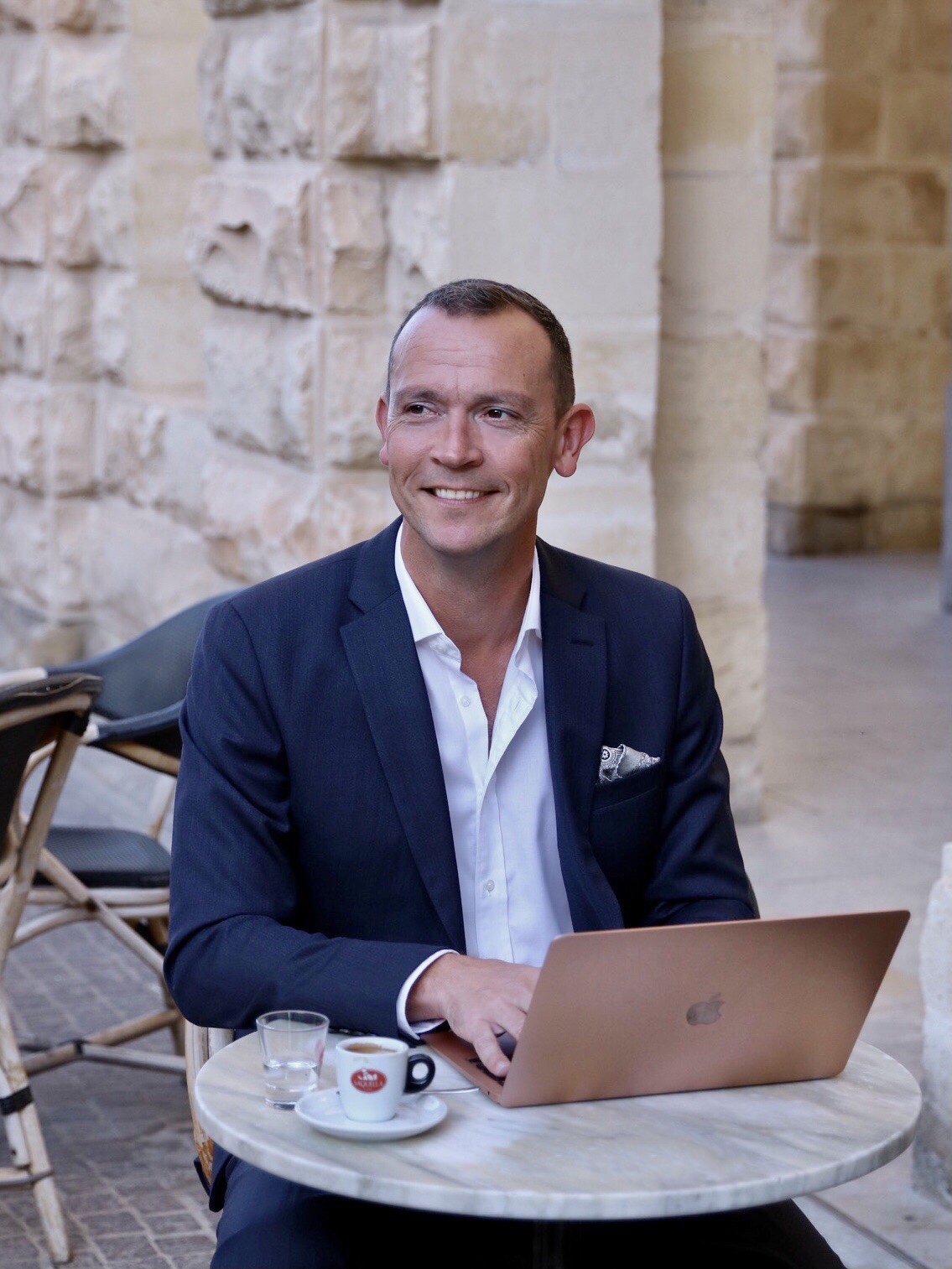
The Long Strange Trip Podcast Episode 10: Navigating Parenting and Wisdom with Matthew Kimberley
About the Episode:
Have you ever looked back at your thirty-year-old self and winced just a little bit? I know I have. There’s a certain brand of youthful arrogance that makes us think we have all the answers, only to find out later that we weren't even asking the right questions.
In this episode, I’m sitting down with Matthew Kimberley. You might know him from his work with Book Yourself Solid, but we decided to go a bit deeper than just marketing and self-employment. We spent some time wandering through the tall grass of wisdom—how we get it, why it hurts sometimes, and what it actually looks like when it shows up.
What We’re Chewing On:
The Wisdom Curve: Matthew opens up about his journey from knowing everything to realizing he knows… well, a lot less than he thought. We talk about how wisdom isn't a trophy you win; it’s more like a slow softening of your edges.
The Mirror of Parenting: We dive into the messy, beautiful reality of raising humans. How do you stay present for your kids without hovering? We explore that delicate balance of giving them roots while making sure you aren't blocking their sun.
The "Absolute" Trap: We discuss the danger of speaking in certainties. It turns out, the more "absolute" we are, the less room we leave for curiosity—and curiosity is usually where the good stuff lives.
Legacy and Loss: Matthew shares some poignant reflections on losing his father and how that shift in the generational line changes the way you view your own journey.
I’ve spent a lot of my life teaching frameworks and business systems, but conversations like this remind me that the "soft" stuff—the self-awareness and the recognition of our own limitations—is actually the hardest work we’ll ever do.
Whether you’re navigating a career shift or just trying to be a slightly better version of yourself than you were yesterday, I think you’ll find something in Matthew’s story that resonates.
Transcription:
Introduction (Josh)
Welcome to the Long Strange Trip. I'm Josh. the host of the show. We're going to dig into six areas together, finding real work-life integration. Instead of that brutal 9 to 5 5 split too many business owners to live with. We're going to approach retirement as an actual reinvention. Rather than just stopping work. and we're facing death honestly, and avoiding PTSD around it. We're also building resilience,
when life throws us curve balls. We're sharing wisdom across generations. And finally, we're understanding the patterns that show up in all our transitions. I'm not coming at this as an expert I'm a fellow traveler figuring this stuff out in real time.
Especially now as I navigate my own dual cancer diagnosis at 73.
Welcome to the Long Strange Trip. I'm glad you're here.
Josh Patrick (00:00.994)
Hey, how are you today? Welcome to the Long Strange Trip podcast. And I'm Josh Patrick. You probably already know that. And my guest today is Matthew Kimberly. I've known Matthew. I'm thinking for pretty close to 15 to 20 years. And we met at Book Yourself Solid, which was a thing Michael Port does. And if I'm not mistaken, Matthew is back being president of Book Yourself Solid again.
But we're not gonna really talk about that. What we're gonna talk about today is wisdom. And Matthew is one of these guys who is relatively young and has developed a ton of wisdom. So let's bring him on and we'll start the conversation. Hey Matthew, how are you today?
Matthew Kimberley (00:46.244)
Josh, thank you for having me here. And nothing sends bolts of fear through my body, quite like being introduced like that. This is a man with wisdom. The imposter who sits right, right inside me starts shouting, no, you've got the wrong person, Josh. I'm not the right person for this interview.
Josh Patrick (01:06.166)
Yeah, I know about that. But the truth is you do have a lot of wisdom and you've developed wisdom in some really interesting ways. So what do you think you've done that has allowed you to gain wisdom? And the other side of the question is, how do you go about disseminating that wisdom and having it heard?
Matthew Kimberley (01:34.19)
disseminating the wisdom when you've got it. Is that what you said? Okay, first Josh, thank you. I would be the last person to say I've got wisdom. I will graciously accept it from you, not least because, you know, I believe you've got plenty of wisdom and I'm happy to nod to that. And here's what's happened. So I'm 45 years old. Sometimes I feel like I'm...
Josh Patrick (01:36.301)
Yes.
Matthew Kimberley (02:03.386)
18 years old. Sometimes I feel that I'm on the downward slope and the only thing left to look forward to is the end. I mean, mathematically, I'm firmly in the middle, I guess. And when I was younger, I knew everything. I knew everything. I remember knowing everything. remember my dad took me on.
Josh Patrick (02:23.918)
And don't we all?
Matthew Kimberley (02:31.802)
A weekend trip to the north of France. We did a one-day coach trip in a bus, ostensibly to visit a seaside town. But I think the vast majority of people there were stocking up on cheap alcohol from the French supermarkets on the other side. And I remember I'd studied two years of French at this point, maybe one year of French at this point. And I'd just had the slight edge over my dad.
Josh Patrick (02:50.542)
You
Matthew Kimberley (03:02.138)
And I remember thinking at that stage, I'm smarter than my dad. I was, you know, 12, 12 years old, maybe, maybe 13. And I remember thinking, I know how to say three quarters in French. My dad doesn't, that makes me smarter than my dad. And so of course I went through my teens with a certain amount of disdain for the wisdom of my parents. And now of course, age 45, my dad died a couple of years ago and there was a long period when I didn't ask his advice.
probably started when I was about 12 or 13, didn't want to hear it until I was roughly 40. And now I really want it and I can't get it anymore. Right? So this has been what I know, what I think I know and how I hold myself in my mind's eye. And when I was 27, 28, I wrote a self-help book and the self-help book was called How to Get a Grip because I had the answers.
Right? I knew what was what. And more than the answers, I had the confidence to say, this is the way that you should approach things. This is the way that you should do things. I know because I'm invincible. And this became, you know, a book which I published, which I was proud of. It was called How to Get a Grip. It was re-released with a different title. And then various things started to happen in my life. I got married.
I had a kid who was, who continues to have, you know, learning difficulties, learning disabilities. I then had another kid who ended up in hospital for an extended period of time with a life threatening heart problem very soon after he was born. And I remember I'm sitting by his bed in pediatric intensive care. had cardiac issues. And I remember sitting by his bed in pediatric intensive care.
and he's desperately unwell. He's on all sorts of life support and I am 30.
Matthew Kimberley (05:04.953)
33 years old. And I'm praying like mad to a God I had previously disowned regularly and loudly on many occasions when I was younger. And one of the doctors approached and he said, listen, one of the intensive care doctors approached, it was a massive team of very competent doctors at this children's hospital in London. And he said, look, I have to ask you, are you that Matthew Kimberly?
Josh Patrick (05:07.918)
Okay.
Matthew Kimberley (05:33.7)
And I said, what do mean that Matthew Kimberley? He said, did you write the book, How to Get a Grip? I said, yes, I did. He said, I read it and it was really useful. It really helped me through quite a dark period. And I said, well, it doesn't seem like a very fair trade, but if you're willing, then how about you look after my son and make sure that he's okay and he comes through on the other side. And he did. So there was always a part of me which was very grateful for.
Somebody saying, okay, we like your words, Matthew. We think you've got an interesting angle. We'll publish your book. But when I went back to revisit the book, almost immediately, and certainly when it was republished a decade later, a part of me cringed, a part of me said, oh my goodness, what was I thinking? The bravado, the arrogance. But then a little bit of me said, well, look, if it helped this doctor and this doctor helped my son.
then I'll be grateful. And I can't remember who it was, know, like my philosophy studies are in the ancient past now, but probably Socrates or Aristotle or somebody said, the only thing I know is, you know, as I grow older, the only thing I know is that I know less and less, or I know very little. And I forget who said that, but that's certainly been my approach.
Josh Patrick (06:52.334)
So, it appears to me that one of the pieces that you just described in a roundabout way for how to be wise or how to gain wisdom is to be self-aware.
Matthew Kimberley (07:15.214)
and my self-awareness, but yes, thank you. And I think you're right. And I think I have grown in self-awareness with time.
Josh Patrick (07:22.06)
You I mean, you just described how you gain wisdom, which is one of the pieces is becoming self-aware. I mean, there's a whole bunch of other stuff. mean, I know that you're a very curious guy and literally everybody I know who has a significant amount of wisdom is unbelievably curious.
But.
Matthew Kimberley (07:43.738)
And what you interpret as self-esteem, interestingly, I may have interpreted as lack, sorry, self-awareness, I may have interpreted as a lack of self-confidence or lack of self-esteem because if you look at the 29-year-old...
Josh Patrick (07:54.413)
No, no, no, no, no, no, no. Self-awareness is you're willing to look at the picture in the mirror, you see what's really there.
Matthew Kimberley (08:05.818)
has come with time and that brings
Josh Patrick (08:07.662)
that comes with time. I don't know anybody. I'm sure there's people, there's someone in the world, but I really don't know anybody who is self-aware or 30 years old.
I think that 35 or 40, if you're curious enough and you're willing to take a hard look at why things may or may not be working in your life, that's self-awareness. And that will grow in my experience over time.
Josh Patrick (08:39.64)
Does that make sense to you?
Matthew Kimberley (08:41.4)
It does, and it's fascinating because if you were to ask me, Matthew, what's your path been over the last 10 years since the age of 35, I would say my self-confidence and my self-esteem have diminished. But perhaps it's that, my self-awareness and my spatial awareness of where I sit in the universe is actually becoming bigger, and this kind of foundationless, baseless, cocksure-ed-ness is rightfully diminishing a little bit.
Josh Patrick (09:10.19)
We start learning that our answer is not the only answer. You know, I have a real problem is I have a tendency to speak in absolutes. And I've been working really hard over the last three years to stop doing that. But the first thing with gaining wisdom is self-awareness. And I believe that my...
I became self-aware that I was being unconsciously arrogant with my opinions. So, my first goal was to recognize when I was doing it. And then when I recognize when I'm doing it, I can stop.
That was, my first go around with that was personal responsibility. Back when I was in my early 30s, I went to one of these new age seminars and the theme was you have to be personally responsible in your life if you want to be successful. And I'm not talking about monetarily successful, although that's part of it, is being successful in your own self-esteem.
in the fact that if you're blaming and justifying your life, how can you show any wisdom around what you would like to teach others? That's just being an arrogant brat. And that was me. And then I recognized, said, gee, I really need to be personally responsible. Like a jerk, I went and I said to everybody in my company, I well, our new goal, our new core value is personal responsibility.
And I'm sure they all went into the back office and just went, yeah, right. Let's see if he ever shows any. So it was a long process, but eventually people came around and they realized that to be successful in our company, you couldn't blame others and you couldn't justify your way through life. But I had to make the change first. And it was a slow change because I had to start with awareness before I could actually take action.
Matthew Kimberley (11:25.802)
And Josh, your binary decision making, where you, sorry, opinion making, you express your opinions in absolutes, which is, you know, this is a fact, this is, you know, this is bad, this is good, this is a preferred course of action, this is the not preferred course of action. Did you, because something I'm learning to do at the moment is very quickly realize that sometimes it's better not to have an opinion, you know, just because we have a platform doesn't mean we need to...
use it for voicing everything. Did you feel an obligation to have an opinion upon everything? Because I'm certainly moving away from that now. Someone says, what do you think Adrian had to say?
Josh Patrick (12:00.982)
No, not anymore. This whole Long Strange Trip project is a project of seeking. And the truth is, I might have some information about something. It may be correct, it may be incorrect. But it's not the final answer for anything. I this whole piece about wisdom is going on this, what is wisdom? And how do we develop wisdom and how do we share wisdom?
That's an issue that is really difficult for most of us to get our arms around. If we are wise, we have a tendency to say we're not. And if we're not wise, we have a tendency to say we are. least that's been my experience. I don't know if that's true.
Matthew Kimberley (12:54.746)
Are we saying empty vessels make the most noise?
Josh Patrick (12:59.491)
I'm not sure what that means.
Matthew Kimberley (13:05.786)
Well, I think a very base level empty vessels make the most noise that, if there's nothing between the ears, then, you you bang that and it's hollow and it makes a loud sound. But I think more broadly, what I've recognized and noticed is that having an opinion on things lately, they might be things that, and I say lately, you know, as I see things today, every generation says the problem with today or...
The way things are today, what I'm observing is that there may be many issues which previously were not.
Josh Patrick (13:38.381)
Right.
Matthew Kimberley (13:44.623)
related to your
identity or your belief system or your tribe becoming politicized, which means therefore that, you if you say, sit in this camp, then my belief set is this, therefore my opinion or my stance, which might be categorical or it might be nuanced, but it's more likely to be categorical, is preformed, therefore X is bad, Y is good, and I'm going to go along with this and I feel a need to express it. The other thing that we see is
if you have a voice as so many of us do. And I think, you know, we've probably reached the point where we realized that.
Matthew Kimberley (14:25.646)
We, my opinion, we have maybe not, we're maybe not supposed, just because we can speak to the entire world from our living room, maybe that's not a good thing, maybe we're not supposed to be able to speak to the entire world from our living room. But if we are used to doing that, then not expressing an opinion or not packaging up our wisdom or not saying, believe this is good or this is bad.
The whole idea that silence is violence, the whole idea that not commenting on something is comment in and of itself, I think is a dangerous message to many people who might say, well, I'd like to give an opinion, but I really need a few more years and a few more, you know, experiential points to be able to give you that. you might say, well, Josh, we've noticed that you haven't weighed in on this. So therefore, you know, you're...
You're throwing up your hands, you're saying, I will not take up my civic responsibility to have a voice in this situation. I think all of this is frankly quite dangerous. It's okay to be milling around saying, I don't know. The problem is because empty vessels make the loudest noise, there'll be somebody to stand in and say, if you're unsure, I offer certainty. And we are all deeply attracted to certainty. That's what we look for in leaders. We don't want leaders who are men are. We want leaders to say, follow me, I know the safest route out of
or the safest path out of this. And this is the lack of nuance, that we are facing a lack of nuance which I think is devastating and dangerous.
Josh Patrick (15:58.735)
Yeah, my belief is now is that if it's something that you might disagree with or want to know more information about, I say, my, isn't that interesting? And some people could see that as a screw you. But the truth is it is interesting. And I think I want to do a little bit more research into a little bit more investigation into it. And I think it's interesting that you brought up, you know,
binary either yes black white yes no I don't think people who have a fair amount of wisdom they don't do that a lot you know they realize that the you know black and white is has lots of you know there's lots of shades of black and lots of shades of white and at some point they actually kind of merge and there's a bit of each and both
And I'm not talking about politics. Politics are a whole different kettle of fish. I'm talking about how you live your life, how you know, how are you with your kids? You you appear to be really good with your kids. And I was not as good at your age. In fact, I was probably a whole lot worse because I was either absent or treating my kids like employees. And the challenge with that is
Fast forward 30 years when you realize that was not the right way to parent. You don't have a chance to go back and fix that.
Your kids are where they are. And most children, not all, but many children, maybe most, they resent their parents.
Josh Patrick (17:51.393)
And I think they resent their parents for good reason in that when they were young, their parents weren't there when they needed them, especially dads. I have a theory moms do better at that, but I'm not sure that's true. I just think it's true. It certainly was true in my family.
Matthew Kimberley (18:12.354)
It's fascinating, isn't it? You know, I worry about this more than anything else. And I appreciate you, Josh, as always. You you said you think I'm probably doing a good job. I hope I'm doing a good job. I know that my kids trust me because, you know, my 11 year old is having conversations with me that I would never have had with my dad. And I trusted my dad. But it's a different, it's a different type of relationship. It's really difficult, isn't it? It's the thing that keeps me awake at night, of course. And I think it's the thing that kept my dad awake.
My dad was like, you know, on his deathbed, he were not literally on his deathbed because he was never quite aware that he was dying. But in the year, in his latter years of life, he would say, you know, I wasn't a good son and I wasn't a good father. He would. And these are the things that keep people with a conscience, I believe, awake at night. I went to boarding school when I was 11 years old and it was quite stark. was capital punishment.
Josh Patrick (19:00.227)
Mm-hmm.
Matthew Kimberley (19:11.64)
This was in the 90s in the UK. So capital punishment, I didn't experience that. had been a corporal punishment. We weren't physically punished by the teachers, although they would occasionally give the nod to the prefect who would slap us around a bit. And we would sleep 25 to a barely heated dormitory with horsehair mattresses and shed.
toilet blocks where the pipes would be frozen in the winter. It was Boy Scout camp, right? But it wasn't for everybody. But I remember, I don't think I've been a great dad. I think I've been a good dad. I don't think I've been a great dad. think I was absent when the kids, we are amazed to travel frequently to the United States. Even now, I live in two countries and the kids live in two countries. So we're not always in the same place at the same time.
Josh Patrick (19:43.49)
Ha ha!
Matthew Kimberley (20:09.05)
But I also think, and I wrestle with this, but I think there's a certain amount of, because I was a fiercely independent young man, and because I have no, I have only love and warm feelings towards my parents, even if they beat themselves up for sending me to boarding school, which I don't believe is the case, I seem to have lobbying pretty hard to go, because pre-Harry Potter, it looked like the kind of Harry Potter adventure.
after.
I believe there's a certain, and this might be deeply controversial, I was very happy being bored. I was very happy being left to my own devices. I was very happy having to bail myself out of the difficult situations I got into as a kid. And I think there's a certain amount of fetishization of parenthood. It's like, you know, if you're a parent, you're a saint.
You have to drop everything to look after your children. Children should be entertained. Children should not be bored. I definitely see this. know, parenting books abound in a different, you know, I almost wrote a parenting book. It was going to be how to get a grip on parenting. And then I thought that's just a, that's just a push too far for, for how I, how I see myself. But the only kind of person I believe who, the kind of people who worry about
investing in parenting books are the kind of people who probably don't need to worry too much about investing in parenting books. You know, the parents who are going to be neglectful, the parents who are not going to care, the parents who are not going to prioritize aren't even thinking about which one of these parenting books should I buy. And I think it's okay to say, listen, if you need to, if you're in your thirties and your forties and you need to work, as long as your kids are fed, you don't, you don't need to be sending them off to
Matthew Kimberley (22:04.234)
know, kayak camp every summer. It's okay.
Josh Patrick (22:06.54)
Now, what they do need is they need you and they need you to take them seriously.
And I find that many parents, I was one of them, I didn't really take my kids seriously when they were, you know, they were complaining about something I did, I would, you know, kind of just brush it over and continue on with my ways. Better parents, in my opinion, they actually listen and they ask their kids questions.
You know, there's a person I had on my podcast a couple of weeks ago, and he was telling me about a ceremony or routine that he did between leaving his law practice where he was a managing partner and going home. He would go to a lake. He would stop his car. And for 15 minutes, he would meditate on how he was going to change his demeanor when he walked in the door.
was house. And I thought that was just brilliant. And it also shows a huge amount of wisdom, in my opinion. Is that if you can break a pattern, and the challenge for men, especially I think is more than women, is that we have a pattern of just being a bull in a china shop. And if we took a few minutes just to break from the bull in the china shop,
to the sympathetic parent, I think that shows a fair amount of wisdom. And I think children would definitely benefit from that.
Matthew Kimberley (23:59.822)
I my dad used to, I would tell, I would ask my dad why and he would say, because I said so. And I remember that being deeply frustrating.
Josh Patrick (24:05.869)
Right.
Josh Patrick (24:09.902)
Yeah, where the frustration comes in for parents is when you do why, why, why, why, why, why instead of why do you get an answer and you say, OK, can we talk about that instead of saying, well, why is that right? And why is that right? And why is that right? And that's where it gets to be ridiculous.
Matthew Kimberley (24:16.152)
Right.
Matthew Kimberley (24:28.378)
I'm wondering whether I, well I'm just asking myself out loud now whether I repeating exactly the same patterns that my dad did.
Josh Patrick (24:36.974)
In my experience...
We as parents do a version of our parents. If we didn't like our parents' version, we're going to have pieces of it, but not as bad. And if our parents were really good, we're going to do a version where we try to emulate that.
I mean, sort of like, you know, often issues rhyme. They're not the same. So when we grow up and we become parents ourselves, I believe for the most part, because this was I've observed, we rhyme what our parents were. But it's not just our father. It's also our mother that we bring into the into the conversation.
Although I think males, their fathers probably have a bigger influence than their mothers. At least that was true for me.
Matthew Kimberley (25:40.096)
even if their fathers are much less prison, which was...
Josh Patrick (25:45.773)
Yes, even even if they're much less present. My son is much more likely like me than my daughter. And I wasn't present much for either of them, but they both picked up pieces of me, which they brought into adulthood. Unfortunately, not all those pieces are positive, but they do the same thing with me. I brought pieces of my father and that wasn't all positive, but.
It's a challenge, I think, and I think is a big challenge for folks in business.
Matthew Kimberley (26:19.77)
because you've got the weight of greater responsibility in the place.
Josh Patrick (26:25.314)
Well, you know, the skill set you need to be successful in business is not the skill set we need. This is, again, my opinion and only my opinion. It's not the same skill set you need to be to parent.
I think they're quite different.
Matthew Kimberley (26:42.146)
It's the...
It's the farmer versus the explorer. As you go back to the prehistoric times when we were still exploring the world and every tribe, every community needed the people who were going to tend to the crops. They needed the people who were going to keep the house and cook the meals, but they also needed the small handful of adventurers who would go over the mountain just to see what was there. And I think that's probably the entrepreneurial streak.
Josh Patrick (27:01.538)
Yes.
Matthew Kimberley (27:15.33)
which is these people who feel the need to push the envelope just a little bit further, probably not going to sit still, probably going to be more inclined to rock the boat and see what's over there and start the new company and do the thing that most people won't do. And yes, it's true. They do sit very differently. They really do. They really do. I asked my therapist years ago, said, what can I do to... Who was the poet? Was it Larkin?
Josh Patrick (27:34.146)
Yes. question.
Matthew Kimberley (27:43.96)
I'm getting all of my quotations wrong this time. sure there'll be somebody to fact check when they listen to this. But there was a famous poet, you know, that said, they fuck you up, your mom and dad. They might not mean to, but they do. They fill you up with things they had and maybe throw an extra just for you or something like that is the kind of the idea of generational trauma. And I asked my therapist who was experiencing this, I said, how do I avoid this? She goes, it's way too late for that.
No, no, you did that when they were babes in arms. Don't worry about it. All you can do at this stage is manage it. So the idea that maybe your kids inherited bits of you that were good and bits of you that weren't so good objectively, maybe we just make peace with that. Maybe that's okay. Maybe that's just part of the rich, tacky, and weird life, isn't it? Be aware of yourself and have some self-awareness and see how that impacts those around you.
Josh Patrick (28:15.79)
You
Josh Patrick (28:26.464)
I think that's what I'm working on right now.
Matthew Kimberley (28:39.072)
if for what they're worth we give the words of caution to our children so they can ignore them at their will.
Josh Patrick (28:45.39)
Yes. So, Matthew, unfortunately we're out of time. I'm good. Yeah, well, I kind of have a limit of a half an hour. Nobody wants to listen to me for three hours. Maybe you, but not me.
Matthew Kimberley (28:50.074)
Well I could have saved another three hours,
Matthew Kimberley (29:02.042)
I would lose you for two hours.
Josh Patrick (29:04.608)
So, so anyway, how would folks find you? And I, and I assume you are interested in finding folks for book yourself salad stuff.
Matthew Kimberley (29:16.088)
Absolutely. you know, what's all at the moment I am in charge of, I'm the caretaker in charge of book yourself solid, which is a marketing and management system for small businesses. If you're a small business owner, go to book yourself solid.com. And if you're interested in whimsical and esoterical philosophizing on the nature of being self-employed, then you can go to matthewkimberly.com where I write emails about just that.
Josh Patrick (29:43.586)
by the way, Matthew's emails are about the most enjoyable emails I ever read. don't read many marketing emails, but his are just a level beyond. He has a service, do call it? The thing where you write every week.
Matthew Kimberley (30:01.774)
a single Mock Mastermind, the email.
Josh Patrick (30:03.042)
Yeah, the single malt mastermind, which I highly recommend if you're in business and you're not lazy like me, but is a really good and his emails every week are just so entertaining. So, anyway, I have something that I'd you to think about also, if that if you're interested in being a guest on the show, want to drop me an email, we'll set a time to talk and see if the show is right for you.
Pretty easy to do. Just go to jpatrick at stage2solution.com. That's the number two in Solution Singular. jpatrick at stage2solution.com. Send me a line and tell me what you think. And by the way, if you have any comments about this episode, drop them in the comment area. So thanks a lot for being with us today. You're with Matthew Kimberly and Josh Patrick and you're at the Long Strange Trip Podcast.
Thanks a lot for coming. I hope to see you back here really soon.
Outro:
Thanks for spending this time with me today. I really appreciate you being part of this journey. I'd be grateful if you leave an honest rating and review. It helps other people find these conversations. Lets me know what's landing with you and what isn't. If you love this show, give us five stars, and if you hate it, give it one star and I'll just cry a little bit.
Keep asking the hard questions, keep being honest about what's difficult, and remember. We're all just trying to figure this out together.
I'll talk to you next time on the Long Strange Trip. Thanks for stopping by.
