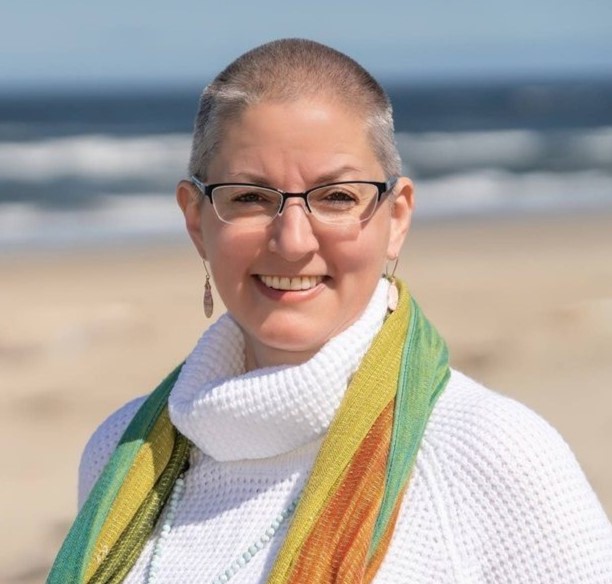
The Long Strange Trip Episode 16: Exploring Psilocybin Guided Journeys with Michelle Glass
About the Episode:
I’ve spent a lot of my life looking at spreadsheets and business models, but lately, I’ve been much more interested in the stuff that happens under the surface. You know, the internal shifts we usually ignore while we’re busy being "productive."
I recently sat down with Michelle Glass on the podcast. She’s an Internal Family Systems (IFS) practitioner and a licensed facilitator for psilocybin journeys in Oregon. If you’re like me, you might find the idea of guided journeys a bit out there, but the more I look into it, the more I suspect there’s something vital here for those of us navigating big life transitions.
What Does This Actually Look Like?
In Oregon, this isn't some back-alley experiment. It’s a regulated process involving licensed growers, licensed facilities, and facilitators like Michelle.
It’s not just about the four to six hours you spend in an altered state with an eye mask and a curated playlist. It’s the preparation—building rapport and understanding the "why" behind the journey. When you’re in it, you might see visual patterns or feel a rush of euphoria, but you might also hit a wall of anxiety. That’s why having a guide is so important; they help you surrender when you’d rather push back.
The Parts of Us We Hide
The most fascinating part of Michelle’s approach is how she mixes psilocybin with IFS therapy. Think of your personality as a collection of "parts"—different aspects of yourself that take the wheel at different times.
Sometimes, the medicine brings these parts to the forefront, including the ones carrying old traumas or suppressed emotions we haven't touched in years. It’s a way to connect back to your true essence. I’ve found that as we get older, we have way less "life" going forward, and it becomes more urgent to clear out this internal clutter.
My Own Journey
I’ll be honest: I went through a journey with Michelle as my guide. It was transformative, but not in a "one-and-done" kind of way. The insights I gained are still unfolding. It’s a bit like peeling an onion—uncomfortable at times, but necessary if you want to get to the core.
I’ve often felt stuck or ineffective in my own transitions, even though I teach this stuff to others. Admitting you don't have the answers is unusual in the business world, but it’s where the real work starts.
A Few Things to Chew On
If you’re curious about this, here’s what I took away from our chat:
Structure matters: These aren't solo trips; they are structured, safe environments with professional support.
The internal map: Using IFS can seriously deep-dive the experience, helping you talk to the parts of yourself you’ve been avoiding.
Your mileage will vary: Everyone’s experience is unique. Some find peace, others find a bit of a struggle, but both can lead to a breakthrough.
I’m 73 now, and I’m finding that reinvention isn't just a midlife crisis—it’s a late-life necessity. We have to be willing to look at the parts of ourselves we’ve kept in the dark.
Transcription:
Introduction (Josh)
Welcome to the Long Strange Trip. I'm Josh. the host of the show. We're going to dig into six areas together, finding real work-life integration. Instead of that brutal 9 to 5 5 split too many business owners to live with. We're going to approach retirement as an actual reinvention. Rather than just stopping work. and we're facing death honestly, and avoiding PTSD around it. We're also building resilience,
when life throws us curve balls. We're sharing wisdom across generations. And finally, we're understanding the patterns that show up in all our transitions. I'm not coming at this as an expert I'm a fellow traveler figuring this stuff out in real time.
Especially now as I navigate my own dual cancer diagnosis at 73.
Welcome to the Long Strange Trip. I'm glad you're here.
Josh Patrick (00:01.292)
Hey, how are you today? This is Josh Patrick and you're at the Long Strange Trip podcast, but you already knew that because you went to our intro. And today my guest is Michelle Glass. And Michelle owns a company called The Listener. And she is an IFS practitioner and she is an Oregon licensed facilitator for psilocybin guided journeys. And guess what we're going to talk with Michelle about today? We're going to talk about psilocybin guided journeys.
My first question, Michelle, is what the heck is that?
Michelle Glass (00:34.823)
Yes, great question and I will answer that in terms of what it is here in Oregon because as every state rolls out their new laws, it'll be a little bit different but there's going to be some similarities. So here in Oregon, there are three main components. One is that the mushrooms are grown by a licensed grower.
The second is the journey has to be at a licensed facility itself and then guided by a licensed facilitator like myself. So what that looks like is if you're interested, you go to any one of these facilities, look up the facilitators and find a facilitator that sounds like somebody you'd want to have guide your journey. And through a few
usually online sessions though they can be in person get to know that facilitator through preparation sessions where you're really helped to prepare for what you're going to be undergoing and we can talk hopefully in our conversation today about what that looks like but nonetheless in the preparation sessions you're really guided to be as prepared as possible and then you arrive the journey day at the facility and
You'll be planning to spend about four to six hours, maybe a little longer depending on your dose and if you've had a booster dose or how your body metabolizes them psilocybin and you'll have a usually have a playlist a music playlist especially curated music that's designed to be novel for you usually and
non-language that you understand and it has a typical arc that follows the medicine. So a slow build to a peak and then a come down. Most people do wear an eye mask although it's not required.
Michelle Glass (02:38.193)
they're finding with more and more studies that the people who do wear eye masks have more deeper journeys and better outcomes. So people place their eye masks on, get comfortable on a chair or bed or the floor wherever it feels best for them, and take the medicine, take the psilocybin, ground up mushrooms usually, and wait for them to come on and then enjoy your long strange trip.
Josh Patrick (03:06.446)
For me, it was a long strange trip, a very long strange trip. So, what is the journey itself? I mean, what does that look like?
Michelle Glass (03:16.947)
Yeah, I'm really glad you asked that because it's different for everyone, but I'm going to give some typical markers. So on the physiological level, many people will see some visual colors or geometric patterns or other kind of visual distortions. Not everyone has that, but I would say 90 % do.
depending on the variety as well. You'll have pupil dilation, accelerated heart rate and blood pressure, nausea sometimes. No one's vomited in my journey rooms, but nonetheless, sometimes vomiting does happen. And then on the emotional or psychological level, you can have some anxiety or panic. You can have some euphoria and just
complete awe, being connected to something bigger than yourself. You can meet young parts of yourself and if we talk about IFS, we'll talk about what parts are, but you can get to know the different places inside of yourself that have been longing for healing and then connecting to your undamaged true essence inside. So in this journey, as the medicine's coming on, you begin to go into what we call an expanded
or a non-ordinary state of consciousness where your typical mind relaxes and takes a break and lets a lot of things that have been dormant or needing attention to unfold.
Josh Patrick (04:57.582)
So, just to be clear, a journey is a psilocybin hallucinogenic trip, correct?
Michelle Glass (05:07.527)
In this state, yes, you can have other kind of...
Josh Patrick (05:10.412)
Yes, we're talking about your state. are plenty of other places, legal and illegal, where people use all sorts of different types of hallucinogenic or psychotropic drugs. And if you're interested after you listen to this, Michael Pollan, at least in my opinion, has written some really good stuff about the general whole place of guided journeys, unguided journeys.
Michelle Glass (05:17.609)
Yes.
Josh Patrick (05:40.734)
And I would highly recommend his book, which I can't remember the title of, but it was very good.
Michelle Glass (05:46.793)
Yeah, it's called How to Change Your Mind. Yes, yes.
Josh Patrick (05:49.059)
That's it. So. Just to let you know, because I did, I should have said this upfront, Michelle was my guide in a journey that I did in December. And I will say that the journey itself was fascinating. The aftermath of the journey was even more fascinating. Continues to this day, believe it or not.
coming up with stuff, like there are things that have changed.
after doing the journey. Now, can I say it's the journey's fault? Maybe. Probably. And it has been remarkably good for me. So, and I had a very strong dose and a very strong reaction. So, in my opinion, worrying about
Michelle Glass (06:27.808)
Hmm.
Josh Patrick (06:45.742)
The downside of a guided journey is relatively small because you have a guide there to help you if things do go sideways. And there are drugs where things will go sideways. So, I haven't really, does that happen with, least in my experience. So, let's talk about IFS. Because IFS stands for internal family systems.
Michelle Glass (06:55.242)
That's right.
Michelle Glass (07:01.182)
Yeah, that's right.
Michelle Glass (07:07.914)
great.
Josh Patrick (07:10.862)
It's a psychological school that a fellow named Dick Schwartz came up with years and years ago. Highly, highly effective form of therapy, in my opinion, and combining it with a psilocybin journey in the state of Oregon is a really good thing to do. So tell us how that works, you, Michelle?
Michelle Glass (07:20.928)
Hmm.
Michelle Glass (07:32.882)
Yeah, I love this. is the heart of what I do most of my days aside from being a facilitator. also teach psychedelic guides how to use IFS. So the marriage between IFS and psychedelics is really beautiful because the medicine wants to support
The opening or access to what we call in IFS self-energy, that undamaged place inside of you. The medicine wants to facilitate giving you much more access and that is the healing agent that's inside of all of us.
Aside from that, it likes to bring us the parts of us who have been hurt or traumatized in our life. So there are, I don't know if we want to go into the minutia of different parts, but we'll say that there are some exiles who have with staying the damage or the trauma.
who are really literally pushed away and forgotten and this is why what I said earlier is germane that the medicine can open up things have been laying dormant for healing. So the medicine really wants to work with your unconscious with your consciousness to help heal. And aside from exiles we have two different types of protectors.
managers and firefighters and those protectors are what most people call ego defenses. So those are the parts that try to help get us through our day and those are the parts that usually if people have worries about having a psychedelic journey are going to voice those worries in our preparation sessions.
Michelle Glass (09:12.456)
you know, what is going to happen? What am I going to remember? Nothing's going to work for me, all these different kinds of concerns that they have, which we want to work with upfront in our prep sessions. so working with parts and self in psychedelic journeys is just really, I would say, super conducive to respecting one system.
Josh Patrick (09:38.062)
So Michelle, for us who are not up on what IFS says, what are parts?
Michelle Glass (09:45.321)
Yeah, parts are those different aspects of us who they're just the younger versions of us. You know, a long time ago they used to call it the inner child work. So it's inner child work, but very specific. So your inner child can be different ages and have different stuck points in their development where their traumas happen that we want to go back to and be with.
Josh Patrick (10:12.716)
I just finished a book on attention deficit syndrome. the author tied it directly into younger life and what happened in the traumas that happened in a younger life where you became ADD. I was definitely ADD 30 years ago. I'm wondering whether I am now.
Michelle Glass (10:29.034)
Mm-hmm.
Michelle Glass (10:40.522)
because of your journey or
Josh Patrick (10:42.798)
I'm because mostly after the journey, I realized I was moving in that direction already. But I do think that there's an opportunity for us to grow out of ADD. I'm not sure why that's true, but do you do a lot of work with ADD and IFS?
Michelle Glass (10:49.696)
Mm-hmm.
Michelle Glass (11:07.961)
I don't particularly know, but I would like to say one thing.
Josh Patrick (11:10.208)
Okay.
Michelle Glass (11:13.772)
You know, I think there's a lot of different schools of thought on ADD. And one of my favorite mentors, Gabor Mate, says that ADD is really comes down to the fear of the present moment, fear of being in the present moment. So what you said of your journey, maybe having helped those younger parts of you, and you don't really tend to skew that way anymore, makes sense.
Josh Patrick (11:38.957)
Yeah, for me, was I spent some time with my three year old self and my three year old self was traumatized. And according to this author, I mean, I'm way off track now, by the way, according to this author, that when somebody is traumatized, what it means is as far as development at ADD.
Michelle Glass (11:47.988)
Mm-hmm.
Josh Patrick (12:08.686)
is that they would likely move in that direction because they're looking for acceptance and love from a parent. And I found that fascinating. I actually am going to send this book to my son and say, what do you think? Because I think it'd be an interesting thing. But at any rate, I have fast in journeys.
Michelle Glass (12:17.244)
Mm-hmm.
Michelle Glass (12:23.455)
Mmm.
Josh Patrick (12:34.956)
Would you say that what it really does is that helps magnify the work you're doing in IFS?
Michelle Glass (12:41.567)
I would say yes, a journey absolutely magnifies the work we're doing in IFS. And it can be a real, I would just say like looking through a microscope, the journey really opens that up pretty wide.
Josh Patrick (12:46.423)
Yeah.
Josh Patrick (12:57.304)
So would you encourage people to journey who are not using IFS?
Michelle Glass (13:05.063)
I think that that's fine to do. I think that you'll have better outcomes if you do have an IFS informed or trained guide. and that is because, Rick Doblin of the MAPS organization, multiple discipline, multiple disciplinary association for psychedelic studies has found out that in over 80 % of journeys parts work arises spontaneously.
So you want a guy who has some training in IFS so that when that does emerge, they know how to work with it aside from just saying, that's a part. We've got a whole protocol to really help deeply heal that part.
Josh Patrick (13:48.367)
Cool. So, the people who are going on a journey, I'm assuming there's a pretty wide range of how they react as they're going through. What would a range look like?
Michelle Glass (14:00.927)
Mm-hmm.
Michelle Glass (14:05.288)
Yeah, earlier I kind of gave some markers of what one might expect but this all comes down to the different parts we mentioned earlier, the different managing typical parts that have worries about holding on to control is a really big one because the medicine is asking you to surrender, to relax, to just really trust.
your self energy or your higher self, trusting the medicine in those parts can really, if they're not worked with upfront, can really make for difficult or challenging journeys. So that can look like people.
You know, I've seen people writhing in their bed or their seat, just really trying to stop the flow of the medicine or trying to get comfortable but can't. Some people spontaneously go right into the exile work and so it's really deep sobbing and crying. Some people, they've just opened up to self-energy or God.
and they're just in rapture for hours so it's it's a full spectrum of what you can see yeah you have to be trained to be able to be with whatever is there so you can support if it's a challenge challenging journey.
Josh Patrick (15:27.182)
I'm curious, what does the training look like for psilocybin guide in origin?
Michelle Glass (15:32.881)
Yeah, well, it's interesting. I was the first in the first cohort for Naropa, which is in Colorado. And I say this because I was undergoing this training before our law got established here in Oregon. And with Naropa psychedelic training, we were trained in the three three different medicines MDMA therapy, psilocybin and ketamine.
And then as our law unfolded and training schools developed here in Oregon that were only on psilocybin, I didn't go through one of those, but they had certain requirements, a lot of different studies to read on, and then learning the pharmacology, learning best practices and supporting difficult, challenging, emerging situations with clients. So.
Josh Patrick (16:30.158)
So if you have a difficult thing emerge with a client, what would the guide typically do? I mean, that didn't happen with me. I, you know, in fact, I don't think I said more than 25 words, but. How do you handle that?
Michelle Glass (16:35.539)
Mm-hmm.
Michelle Glass (16:41.287)
No. Yeah.
That's right.
Michelle Glass (16:51.483)
Yeah, well we are trained to be what is called minimally directive and maximally present. So just going back to a regular journey for a moment, we're not doing therapy during the journey and anyone's journey. We're really trusting the medicine to unfold.
So it doesn't look like talk therapy or IFS therapy during the journey. However, when situations do arise where managers are maybe trying to let go but can't or refusing to surrender or the exiles are flooding with their memories and it's very uncomfortable for somebody.
We can do just a couple different things. We've talked with our clients in preparation sessions about using breath. So really following the breath and letting that guide you into the medicine. We also talk about the best course of action is to go towards whatever's the most scary or dangerous or difficult piece of the journey because going towards it and through it is what's going to get you out because
So if you resist, it's going to persist. So we've talked about a little bit of that in the prep, but nonetheless.
Sometimes it goes in sometimes it doesn't and and so my simple Interventions are really just to ask that person Can they see this part of themselves? How how do you feel towards this part? These are just very gentle Unblending techniques what we call an IFS unblending. It's the differentiation between self and part and That little unblending can be a huge stepping stone for somebody
Josh Patrick (18:35.57)
Cool. So, I know this is another stupid question, but why would somebody decide the journey?
Michelle Glass (18:36.466)
Yeah.
Michelle Glass (18:43.748)
Yeah, I you know, I don't think there are any stupid questions, by the way. Okay, well, we might disagree to disagree there. Yeah, so I think there's a wide variety of people who journey some people when we first started our law here in Oregon.
Josh Patrick (18:48.308)
I can give you some really stupid ones, but that's okay. We won't do that.
Michelle Glass (19:05.21)
I heard from many service centers that the first groups of people were elderly people who've always wanted to have a journey but wanted someone safe to journey with and to journey at a safe place. They just wanted the experience because maybe they grew up in the 60s and they just never did it or they were just curious and so they wanted to know what is this experience. Some folks come with a lot of different mental health challenges and there's
Josh Patrick (19:16.397)
Mm-hmm.
Michelle Glass (19:33.594)
Over the last 10 to 15 years, a lot of studies now on different psychedelics and mental health outcomes. So they may be coming with depression or anxiety, maybe they're coming for ADHD.
We know that this is a little off the topic, but ketamine is really useful for cutting suicidal ideation. You're starting to use it in ER clinics. So people can come with mental health issues, they can come with wanting to get in touch with their spiritual side. It's a full range of why people want to try to have a long strange trip.
Josh Patrick (20:15.626)
One of the things that I've been interested in is that the relationship between treating PTSD and having a good death. One of the things that I, one of my six areas of investigation is death without PTSD. It's kind of hard to have PTSD before you have an event, but we'll leave that aside.
Michelle Glass (20:32.094)
Mm-mm.
Josh Patrick (20:45.618)
And it seems that the Army is using guided journeys quite successfully with PTSD. Do you get much of that in Oregon?
Michelle Glass (20:50.397)
Yeah.
Michelle Glass (20:54.448)
Mm-hmm. yes. Yes, there are lots of clients who come through with PTSD. And yeah, there's been a lot of studies on psilocybin and MDMA, used separately for PTSD and war veterans or other veterans who need that deep support. So it's been very useful.
Josh Patrick (21:20.398)
So, if somebody is coming to you with PTSD, where do you combine IFS with that?
Michelle Glass (21:29.278)
Well, for an IFS therapist who can use, so let me back up and say that when our law first unrolled, you could not use any form of therapy, even in prep and journey or prep and integration and only did we start using IFS therapy or other modalities of therapy.
in prep and integration this year. So if an IFS therapist is trained, they can start prep sessions with that person with PTSD, getting to know those different parts of themselves, the protectors, the exiles, and really, this is where I think it's so crucial to get consent from every part. It may not be 100 % consent, but the consent can look like, yeah, it might be skeptical.
about this journey, but I'm going to give it a try. so getting all those managers and firefighters on board with having a journey first, because when you've got PTSD, you've got a lot of trauma, right? So you want to respect the system and not push, push past any parts that are trying their best to protect. So in the prep.
Josh Patrick (22:40.014)
What kind of parts would come out with anybody going through a guided journey? I would assume there's a bunch of younger parts, but are there older parts also?
Michelle Glass (22:53.766)
Yep, there can be any variety of parts. Literally, you just can never know. And it's one of the things I love about this guided journey work is you can never know what's going to happen, literally. You can see young parts, old parts, you can see protectors and exiles, or you can see no parts and just have it all be on the larger scale.
Josh Patrick (23:08.622)
Right.
Josh Patrick (23:18.744)
What are protectors and exiles?
Michelle Glass (23:22.47)
What are protectors in exile or and excels? Okay, we have a different term in IFS that is protector in exile, which we're not going towards. Yeah, no, our exiles are those parts that hold that pain that they've endured from trauma. So in PTSD, they're the ones who have the live memories of things that have been done to them that are very hurtful and painful.
Josh Patrick (23:24.739)
index size.
Josh Patrick (23:31.444)
No, we don't want to go too deep today.
Michelle Glass (23:50.57)
And our protectors are those that really try their best to get us through our day. They try to prevent the activation of those exiles. Or once the activation of the exiles are felt, maybe it's deep sadness or belief systems.
Once that's tapped into our firefighters come to the rescue and they try to get us higher than that pain or douse the fires of that pain. So those protectors really keep us going in our lives.
Josh Patrick (24:21.678)
The firefighters actually start fires every.
Michelle Glass (24:24.829)
Some probably have done so yeah.
Josh Patrick (24:28.846)
In the work that I've done over the years, I've used the term firefighters for somebody who likes to start a fire because they get bored. Especially true with business owners. Business owners will often if the business starts running really well, they're going to get bored and they are going to do something to screw up their business. Yeah, yeah, that's and it's remarkable how much that often often that.
Michelle Glass (24:36.399)
Mm-hmm. Yeah, yep.
Michelle Glass (24:50.513)
That's, there you go. Good example. Yeah.
Michelle Glass (24:58.085)
Hmm. Yeah. And how unnecessary it is.
Josh Patrick (24:58.84)
Thank
Well, yes and no, because many of these business owners have ADD and they get bored and they need to do something. And the something they do is I've got this great idea, but they haven't tested it. So I don't know if it works or not. And that's where the issue comes in with the business owners a lot. I actually think most business owners would do themselves a lot of good.
Michelle Glass (25:24.903)
Mm-hmm.
Josh Patrick (25:33.675)
if they got themselves into some sort of therapy and did some sort of work like this, especially if they're 30 to 40 years old. And the reason is young business people are incredibly arrogant. And they probably shouldn't be because they don't know enough to be arrogant. They just maybe got lucky like I did, or they're just, you know, they're very good at what they do and they're very arrogant about it.
Michelle Glass (25:37.499)
Yes.
Michelle Glass (25:44.381)
Hmm.
Michelle Glass (25:55.015)
Mm-hmm.
Josh Patrick (26:03.532)
And I think a guided journey with folks like that would likely take some of the edge off.
Michelle Glass (26:09.382)
Yeah, yeah, and the reason I said unfortunate or unnecessary is because if we could get into those exiles that are driving those protectors, you know, they wouldn't have to be bored and set off fires.
Josh Patrick (26:22.86)
Right. They might find something else to do that's positive. That's not in their business. is our recommendation often is. And Michelle, unfortunately, we are out of time. And I'm going to bet that there are lots of folks who are listening to this. podcasts have what I call a very long tail, which means people will be listening for potentially for years. How would they find you if they're interested in learning more?
Michelle Glass (26:24.795)
Yes, that's right. Yeah. Yeah. Yeah.
Michelle Glass (26:52.175)
Yeah, you can go to my website, which is the listener, LLC.com. There's a whole page dedicated to psilocybin services. I would love to support you.
Josh Patrick (27:03.438)
Cool. Cool. I have something I'd like you to do if you're interested in it. And it's really pretty easy. that if you like this podcast and you think you would be a good guest on this podcast, you think you have something interesting to talk about the 95.5 business owner or retirement is reinvention or learning how to build and maintain resilience.
or how to have a good death without PTSD or how to develop and share wisdom so you're not ignored and how to handle transitions that come your way and effectively identify them. Send me an email. It's jpatrick at stage2solution.com. That's the number two and solution is singular, unfortunately. jpatrick at stage2solution.com.
Say, hey, I was listening to a podcast episode of yours and I'm interested in being a guest. We'll set up a time. We'll have a short conversation and we'll see if being a guest on this show will be good for you. So this is Josh Patrick. We're with Michelle Glass. You're at the Long Strange Trip podcast. Thanks a lot for stopping by. I hope to see you back here really soon.
Josh Outro:
Thanks for spending this time with me today. I really appreciate you being part of this journey. I'd be grateful if you leave an honest rating and review. It helps other people find these conversations. Lets me know what's landing with you and what isn't. If you love this show, give us five stars, and if you hate it, give it one star and I'll just cry a little bit.
Keep asking the hard questions, keep being honest about what's difficult, and remember. We're all just trying to figure this out together.
I'll talk to you next time on the Long Strange Trip. Thanks for stopping by.
