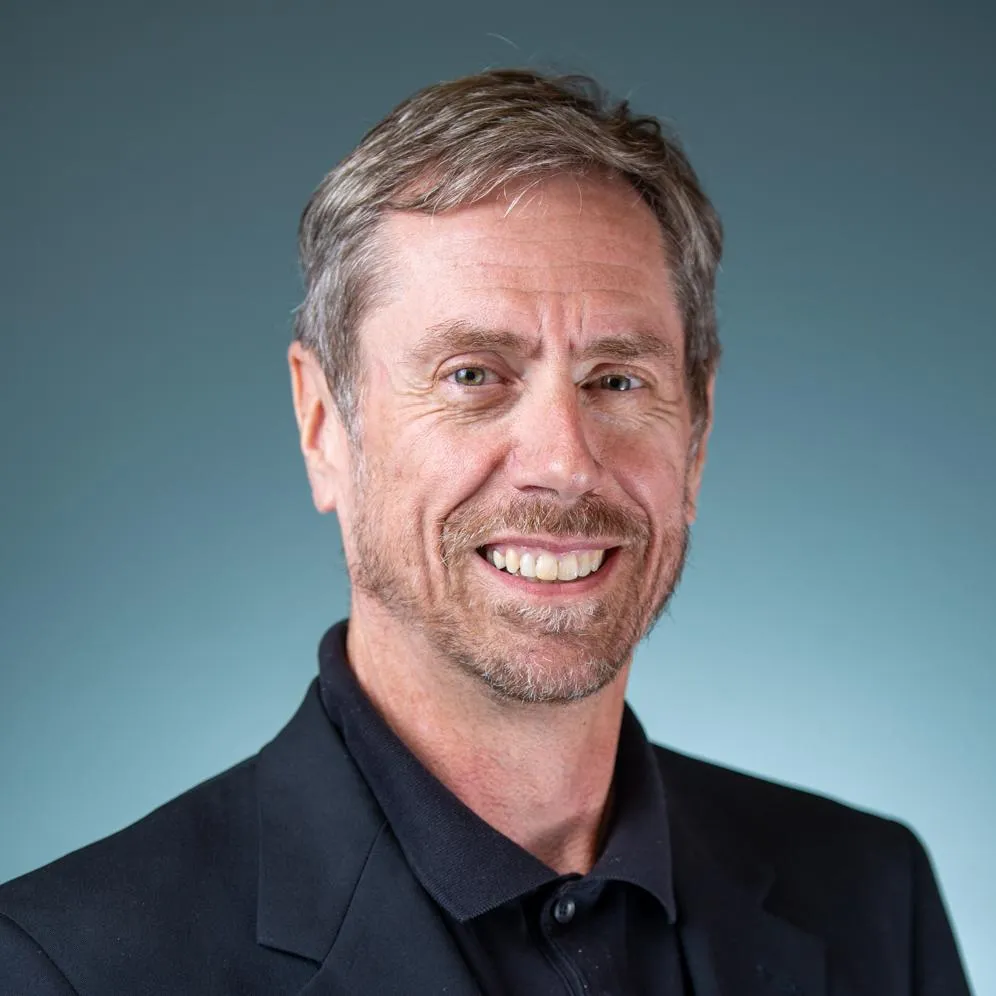
The Long Strange Trip Episode 15: Empowering Families Through End-of-Life Conversations with Michael Haubrich
About the Episode:
The Conversation We’re All Avoiding (But Shouldn’t)
I’ve been thinking a lot lately about how bad we are at talking about the one thing that’s guaranteed to happen to all of us. No, not taxes—though those are a headache, too. I’m talking about the end of the road.
I recently sat down with Mike Holbrook, who runs the Financial Services Group, to talk about something he calls Elder Life Planning. Now, I know that sounds like just another piece of industry jargon, but stick with me. It’s actually a much deeper, messier, and ultimately more human way of looking at our later years.
I’ve spent years teaching people how to manage their businesses and their wealth, yet I’ve realized how often we skip the emotional heavy lifting that comes with getting older. If I’m being honest, it’s a bit disconcerting how much we focus on the numbers while ignoring the "life" part of life planning.
Why Is This So Hard?
Think about it: when was the last time you sat down with your family and really talked about what you want the end to look like?
Mike told me about a client he’d worked with for 40 years. Even after four decades of trust, they still didn't want to talk about death. We’re all terrified of being a burden to our kids, right? But here’s the irony: by not talking about it, we actually create the very burden we’re trying to avoid.
Bringing the Family Together
We talked a lot about family meetings. I’ve always believed that these transitions are 10% technical and 90% emotional. Having a neutral person in the room—someone like Mike—can make a huge difference. It’s not just about the money; it’s about navigating those old family dynamics that tend to bubble up when things get stressful.
Mike shared a personal story about caring for a surrogate father during his final days. It’s those kinds of "in the trenches" experiences that change how you view this work. It makes it real.
A Shield Against the Darker Side
Here’s a statistic that stopped me in my tracks: Mike mentioned that structured family meetings can reduce the risk of elder abuse and financial exploitation by as much as 60%.
It makes sense, doesn't it? When things are done in the "light of day" with everyone informed and engaged, there’s a lot less room for someone to take advantage.
The Hospital Trap
We also touched on the "medical industrial complex." Most of us say we want to die at home, yet so many of us end up in a hospital bed surrounded by machines.
Have you read Being Mortal by Atul Gawande? Mike and I both highly recommend it. It’s a wake-up call on how to advocate for what you actually want—especially when dealing with things like dementia or terminal illness—rather than just doing what the system expects.
What’s the Legacy, Really?
At the end of the day, elder life planning isn't just about checking boxes on a legal form. It’s about making sure your values and your wishes are actually honored.
I'm 73 now, and I’m realizing more and more that the "way less life going forward" part of the equation means we need to get these conversations right.
So, I have to ask: what’s stopping you from having that first uncomfortable conversation? It might be the most important thing you do for the people you love.
Transcription:
Introduction (Josh)
Welcome to the Long Strange Trip. I'm Josh. the host of the show. We're going to dig into six areas together, finding real work-life integration. Instead of that brutal 9 to 5 5 split too many business owners to live with. We're going to approach retirement as an actual reinvention. Rather than just stopping work. and we're facing death honestly, and avoiding PTSD around it. We're also building resilience,
when life throws us curve balls. We're sharing wisdom across generations. And finally, we're understanding the patterns that show up in all our transitions. I'm not coming at this as an expert I'm a fellow traveler figuring this stuff out in real time.
Especially now as I navigate my own dual cancer diagnosis at 73.
Welcome to the Long Strange Trip. I'm glad you're here.
Josh Patrick (00:00.834)
Hey, hi, are you today? This is Josh Patrick and you are at the Long Strange Trip podcast. And today we are going to talk about, or at least we're going to start talking about retirement as reinvention. as long time listeners may know, well, it's hard to be a long time listener when you only have 10 episodes. If you've listened before, you may know we wander all over the place and may leave that topic and may not. My guest today is Mike Holbrook. Mike is the founder and CEO.
of the Financial Services Group in Wisconsin. And he does a couple of really interesting things. And today we're going to talk with him about something he calls Elder Life Planning. So instead of me yammering on, let's bring Mike on. Hey, Mike, how are you today? I'm doing just great. Thanks a lot for joining me. So give me a definition or an explanation of what is Elder Life Planning.
Mike Haubrich (00:46.099)
Well, great. How are you doing, Josh? Great to see you.
Mike Haubrich (00:57.719)
Well, elder life planning in the domain of financial life planning is really focusing on helping our clients live their great life through late life through end of life. And not only is it with our clients who may be the elder, but it's also making sure that we're looking intergenerationally at the challenges that that represents for the matriarch or patriarch of the family eventually not being with us anymore.
Josh Patrick (01:28.014)
So, give me an example of how elder life planning might work.
Mike Haubrich (01:35.137)
Well, let's look at a real life example with my clients. So I'm in business style, this is going on my 44th year. And like a lot of financial planners, the real focus on our business, the highest value tends to be around pre-retirement planning, retirement planning, and then take that out. And the difference that we talk about with elder life planning is we now are looking at that phase of the
slow, really the slow go to no go and then, and then eventually not there at all. So here I've got a client worked with for 40 years, may know the whole family have facilitated family conversations. And the family has a real difficult time having a conversation around mom or dad's eventual departure in the form of death. Death is a real hard thing for people to talk about. So
By bringing that conversation up, and putting it on the table, and doing the art of hosting that meeting with the family is really the cornerstone of elder life planning. All the planning before that, it might be legacy completion, what's really important to you, when you're no longer here, what do want to make sure is left behind? Most of the time, that client is going to say,
You know, I realize I'm going to be a burden to my kids. And I don't want to be, but I probably will be. And I assure them that they will be. So let's make sure that that burden is as light as possible. So part of it is this planning of making sure they're not a burden to their kids. The other part of it is, how do they wrap up their life around this legacy completion? What's been important to them? It could be values.
and beliefs that they want to make sure that their kids understand, it could be causes that they want to support. You know, I once heard a philosopher say, we're not so much afraid of dying as we are afraid of being irrelevant after death. So the focus on elder life planning is to really be mindful of the issues around this late life through end of life.
Mike Haubrich (03:57.13)
And so anyway, I take take the clients I've worked with for many years and bring them into that uncomfortable spot of let's talk about this.
Josh Patrick (04:05.368)
So I assume you start the conversation about death with your client.
Mike Haubrich (04:10.623)
Yes. well, it's done. We all do it in a way that is nice and sterile. It's called estate planning. Let's take a look at the documents. What happens and we don't even like to use the word death. What happens when you're no longer here? Well, what does that mean? Would you get lost somewhere? If you're not here anymore. So we tiptoe into it, but eventually we're getting into the heavier stuff. It starts the conversation starts around
the estate plan. And then we can get into more of the emotions and all of that and unpack that.
Josh Patrick (04:51.374)
So there's two sides. Apparently, what I'm hearing, Mike, is you do two sides of financial planning with older clients. And one is certainly the technical side, which would include the financial plan for how the money is going to work and estate planning and putting the legal documents in place and all that kind of good stuff. And then there's the other side, which I think is actually way more important, although the other I mean, the technical side is important.
but to have a good death, the other side is way more important. And that starts with the client itself. And then because you do these family meetings, how important do you believe it is to have a third party moderate meetings around death?
Mike Haubrich (05:43.074)
I don't know how a family is going to get through that because there's a lot of emotions. You're dealing with long-term relationships in that family. Sometimes mom and dad, could be in their eighties or nineties and they still remember their adult child when they cracked up the car when they were 17 and that's still mixed in the baby issues around trust or whatever. So an outside facilitator can help manage
the emotions and gently bring them into that conversation. One of the trainings I got early on was called the art of host hosting, which is about how to facilitate meetings. It's very useful to do that. But I'd like to actually back up and just take a moment and say, why is this important to Mike Howbrick and our firm financial service group, Elder Life Planning? It really was around me taking care of a person who did not have any children.
And he sort of was like my surrogate father. I didn't really have a father in my life either. And I took care of him through end of life. And in that process, he had a dysfunctional relationship with his sister. And I didn't understand that until why he wrote her out and why he wanted to make sure she wasn't around until vascular dementia took over his life. And he started to lose it. And then the sister showed up. And then I understood why there was, I mean, she was after the money.
And in that whole process, it was very similar to what happened to Casey Kasem, if you're familiar with Casey Kasem. And if you want to really get a deep dive into this issue, take a look at the podcast, the series called Bitter Blood Kasem versus Kasem. And the point I'm getting at is these family meetings. If we as financial planners actually do these right, we can
reduce the risk of elder abuse financial exploitation by 60 % within our clients. That's a bold claim. How do I come up and say that? It's because the number when you look at elder abuse financial exploitation, 60 % is a family number. And when you get the whole family around in one of those, we call them caring hearts conversations, the potential perpetrator
Mike Haubrich (08:09.227)
when the light of day is shining will not do their black magic. So I'm on a mission with Elder Life Planning and I'm out talking to financial planners to include that in their practice because it's a way to protect vulnerable seniors, the ones that they're working with that they may worked with for decades to protect them against the risk of elder abuse.
Josh Patrick (08:33.376)
So, that's important. But I have to believe to the individual not getting caught up in the medical industrial complex, which happens with way too many people who die. They die in an ICU hooked up to tubes or family isn't allowed in, or they might be getting
Mike Haubrich (08:54.475)
Yes.
Josh Patrick (09:02.144)
extreme cancer treatment when there's no chance for them to continue on or those Alzheimer's and how do you handle Alzheimer's which I need to investigate because it's a really big issue is that if you want to do early if you want to end your life early with Alzheimer's it's almost impossible unless you do it before you get into deep Alzheimer's it has to be in almost early Alzheimer's stages these are all really big issues in my
Mike Haubrich (09:21.036)
Right.
Mike Haubrich (09:25.891)
Right.
Josh Patrick (09:31.854)
you know, with a little bit of research I've done, when seniors have a chance to talk about how they want to die, it's never in a hospital. They want to die at home.
Mike Haubrich (09:44.683)
Right. Right.
Josh Patrick (09:46.231)
And we can help that by understanding palliative care and hospice. And how do you help people, you know, manage the nursing home, the assisted living issue and not having when it gets right down to it, nursing homes have an economic incentive to keep people alive inside their nursing homes, no matter what they do.
no matter what the wishes are of the patient.
Mike Haubrich (10:19.425)
Yeah, let's actually back up. I want to share to our viewers here. So one of the key books I use is called Being, the book is called Being Mortal. And if you haven't read it, for goodness sakes too, it's a great book. And so to frame up the conversation around how you want your life to come to an end by control, by your own control, and not be the victim.
Josh Patrick (10:32.875)
It's a great book.
Mike Haubrich (10:49.341)
of the industrial medical complex, which you're absolutely right. One needs to be clear on what our own individual, I call it engagement standards to living. Under what condition is it no longer worth living? At which point in time, we're going to give up on trying to cure anymore. We're going to look at and even cures that we're looking at.
with whatever the condition is, for goodness sakes, look at what the end game is on it. And in Gwandi's book, Being Mortal, both he and his father are doctors. They were able to look very medically at it. The doctor had developed cancer in his neck and they wanted to recommend surgery. And he looked at the outcome and said, okay, I'm gonna die anyway. But he...
He said, I won't be able to play tennis anymore. Matter of fact, if the surgery goes wrong, I may live a little bit longer, but I'm going to be a quadriplegic. And I don't want to do that. So we decided against against the cure. But if you're manipulated by the, you referred to it, and it's absolutely accurate, the medical industrial complex, they're all about curative and not palliative.
Now I've taken care of six family members through end of life. I was a board member of a nonprofit hospice agency. And the biggest thing and also in my work and elder life planning, I have counseled dozens of clients where I was the one the financial planner was the one talking to the family about the time for hospice and palliative care.
And then they went to the healthcare professionals and talked about it. So.
Josh Patrick (12:38.424)
Well, know, know something, Mike, I just want to cut in here one bit. That's actually the right order to do it in. And here's why I think. And, you know, there's lots of ways to skin a cat. Obviously, this is just my opinion is that the health care professionals and I've got, you know, several types of cancer and all that kind of crap. They do not want to have that end of life conversation with their patients. They're not trained to do it. They're trained to treat.
Mike Haubrich (12:41.634)
Yeah.
Mike Haubrich (13:05.473)
Right. Correct.
Josh Patrick (13:07.648)
and they're trained to treat to the very end of life. And it's up to the patient to initiate that conversation with their healthcare providers or in your case with Elder Life Planning, what an opportunity for you to go with them to their healthcare provider and initiate the conversation and help them get all the things in place. So however they want to die.
there's a better chance of it actually happening.
Mike Haubrich (13:40.696)
Right. So that, I'm gonna slide over a little bit on the topic and talk about the estate planning part of it. so when we're doing a caring hearts conversation and we're reviewing the estate documents, everybody thinks since I'm a financial planner that I'm gonna think the most important estate planning document is the financial power of attorney, or maybe it's the trust or the will or whatever.
And they're shocked to hear that the number one document I really care about is the healthcare power of attorney, along with the communication around what's their, what is their engagement standards with life and death. So that's a, that's a conversation. And actually, I want to share a quick story on that. This was an amazing situation we we in the way the timing worked out. So we have a client, I actually have the
Josh Patrick (14:16.309)
Thank you.
Mike Haubrich (14:36.515)
matriarch and patriarch, plus the oldest son as clients. There's two other daughters, and they live in Arizona. Both of them are educators, and they come up in the summer to Wisconsin because who wants to be in Arizona in middle of summer? And they have a beautiful lake property. And actually, this was at the end of the summer, we talked about we're gonna have a family, we're gonna have that caring hearts conversation.
And mom has some cancer, lung cancer, it's being controlled in a fashion. dad's just getting older. They're in their mid to late 80s. And they wanted to have this conversation around their engagement standards to living. And the reason they wanted this conversation is one of the two daughters was going to have a hard time
with letting their parents go. And they made it really clear that when there's no chance do not we want palliative care and that's the way it is. And you got to be you know, you got to straight square yourself up. And it was a little bit of a religious undertone to the one daughter's attitude. And we had the meeting on a Friday. There was a little there was some tears involved and the daughter acknowledged that mom and dad were right. And if if it happened, you know,
that she would be okay with the decision to make sure that they were comfortable through end of life and not try to cure them. That was Saturday, Friday. They left my office in three cars. The mom and dad were in one car, the son and wife were in another car and then the two the two gals that were the were the teachers were going to continue to drive. They went to a wedding in Iowa.
And the wedding was Saturday. Sunday morning, they all left, said their goodbyes. Mom and dad, the son and his wife came back to Wisconsin and the other two headed off to to Arizona. On the way back, dad, who was dehydrated and got lost consciousness and drove off the road and had a severe car accident. Flight for life. Everybody's called.
Mike Haubrich (17:01.441)
They go over to the hospital. They discover that mom's health condition is way worse. She's alive, but she's on a respirator now. And, you know, there's really not much hope here at all. And they had to decide to disconnect the respirator. Now, the conversation was Friday. This was Sunday.
I never had a situation like that. But what I will tell you is later when I mom passed away, later on, dad passed away too. And I had a chance to work with the kids. They told me that the most value that I delivered to that family was that conversation on that Friday, because they had peace of mind that make that tough decision. They knew that in fact, that's what their parents wanted. And we had that difficult conversation. Now, mom did say to the daughter directly to her.
If you keep me on life support like that, I'm going to haunt you the rest of your life. So it was kind of a way to, it added a little bit of brevity to the conversation. But who would imagine in three days, we would be facing that. So that was one of those bittersweet experiences.
Josh Patrick (18:17.88)
So the lesson here is mom and dad first have to be clear about what they want. And there's no right or wrong here. I if they decide they want to do the medical industrial complex, that's their certainly that's their right. And I have a brother-in-law that is exactly what he wants. And I'm not sure he's going to get it, but that's exactly what he wants. On the other hand, I do not want that. And
Mike Haubrich (18:26.134)
Yes.
Mike Haubrich (18:46.403)
That's right.
Josh Patrick (18:47.628)
I've been very clear with my kids. I have to be more clear with them about what end of life is going to look like.
Mike Haubrich (18:55.915)
Right. Right.
Josh Patrick (18:56.974)
Now, one of the things that I've decided for my family, I haven't informed them yet except my wife, is that once I'm dead, I'm going to let them make all the decisions about what happens. Do I have a funeral? Do I not have a funeral? Do I have a memorial service? How am I going to be buried? Where am I going to be buried? If I'm going to be buried? You know, I find green burial something that's attractive.
My kids may say, that's not, you know, I think that's garbage. So we're going to do a regular cremation. And frankly, the truth is I'm going to be dead.
Mike Haubrich (19:22.647)
Mm-hmm.
Mike Haubrich (19:28.045)
Okay.
Mike Haubrich (19:32.407)
Bye.
Josh Patrick (19:33.81)
And before I'm dead, I get the control. But once I'm dead, they get the control. And I think that's kind of an interesting way to take a look at that.
Mike Haubrich (19:45.604)
Did in the state of Vermont, do they have what we have in Wisconsin, it's called a power of attorney for final disposition. We have a state we have a state pre approved form, Josh, and that's something that the concept is they have a state pre approved form, but then they also have it in codified in statute that they recognize. So you can actually name somebody specific to that.
Josh Patrick (19:56.146)
Mike Haubrich (20:11.831)
But you bring up a really good point as I studied on death and dying and all of this topic of late life through end of life. So I'd be better prepared for the conversation with my clients. There's a I really appreciate the way you're framing up the way that you've decided with your family on how to give them a process for their dealing with the grief. So I talked to some funeral directors about this should
pre-planning always be the answer. And of course, if you talk to most funeral directors, their attitude is absolutely on pre-funding while you're at it, because you know, then they get the money. But actually, when you really look at it, it depends on the family's values, attitudes and beliefs. And that's part of the conversation on these Carenhearts conversation is we use the five wishes as one of the models for having that after death
How do you want to have that handle? Five wishes is you can look it up online. It was actually put together by an estate plan attorney and Mother Teresa, believe it or not. Way back, it's actually a separate 501C3. And it's the five wishes that you want to plan out on how you're treated. It's really a health care directive wrapped up
Josh Patrick (21:12.696)
So what is the Five Wishes,
Mike Haubrich (21:40.77)
with some other pieces and the five with the last wish is how do I want to be treated after I'm dead? And each one of these wishes before how am I treated, you know, before and if I can't make medical decisions, how do I be treated in terms of the care I'm receiving the whole idea of palliative versus curative? How do I want to be treated when I'm actively dying? I want music to be played. want whatever it may be. Those are those are all part of the five wishes. Very intentional.
And sometimes when we do those family conversations, we will have that as an agenda item, and we'll actually fill it out with the whole family there so that they all understand why mom is doing or dad is doing whatever they're doing. But back to the idea of not planning a funeral and allowing the the the family to make that call. A funeral director explained to me once that that is actually part of
the grieving process, it gives them something to do that is not avoiding the fact that this is a death. Like, you can't ignore it because we're actually making arrangements. It wasn't like it was done for me. So I can be sterile and I just show up for whatever the service is. And my hands aren't involved in it. Hands are involved in it. And they have to make these decisions. So there's kind of a mixed opinion. I really do appreciate the way that you've decided to let them
the family left behind, let them determine the best way they want to treat it. I like that idea.
Josh Patrick (23:13.902)
To me, that makes sense. And I've not heard a lot of people, I haven't heard anybody say that's a good way to go. My intention with my family is I would like them to plan what they want to do once before I die, once it starts to become imminent. Meaning that if one of the cancers starts rearing its ugly little head and the treatment is not something I want to do.
Mike Haubrich (23:33.814)
Yes.
Josh Patrick (23:43.435)
At that time, I want them to come up with some pretty solid three years, four years, five years in advance is too long in my opinion. But once death becomes imminent, then it's time for them to make a decision about what they want to do. Just so I know, I'm not going to veto it and I'm not going to say, no, you can't do that. I'm just going to say, you know, okay, maybe I lost some questions around it, but the truth is.
It's their decision. I'm gone.
Mike Haubrich (24:15.415)
Right, right. Well, it's good that the conversation is had, so it was intentional. That's the other part of the value of facilitating those family conversations is my goal in that conversation is to understand what their attitudes, values and beliefs are as a family, not projecting mine into their situation.
Let it come out organically of what's important to them so that we can support that, whatever that might look like.
Josh Patrick (24:54.286)
That's cool. So when someone goes into elder life planning, do you help them find the other professionals they'll need along the way?
Mike Haubrich (25:08.789)
Yeah, that's a big part of it is making sure that you've got a network of service providers all the way from care managers, geriatric doctors that if that's needed, home health care agencies, what are the preferred facilities in the community. So actually, to that point, I want to illustrate that after COVID, it's really dangerous to go into the health care system.
The hospital is one risk, but then under Medicare, they want to get you out of the hospital as fast as possible into the Medicare rehab, short term rehab facilities. That's a conscious choice that I have families make before mom or dad end up going to the hospital because there's some triggering event. We want to know what is what's the first and second choice for
the Medicare rehab after a hospital stay so that immediately upon admission into the hospital, you're talking to the discharge social worker at the hospital and you're giving that person the desires of your first and second choice. Because let's just face reality, the best facilities are gonna be the ones that are gonna be most likely full.
Now, short-term Medicare rehab is a constant revolving door. And if you've got a couple of three days, you probably can get yourself into a better facility because eventually there'll be some opening, especially if you're intentional. the discharged social workers tend to be pretty lazy and they wait until the hospital informs them that we need to discharge this patient in the next 24 hours because Medicare is not gonna pay anymore.
And what do they do? They look at what's the easiest place to put them in? Well, the easiest place is probably the place you don't ever want to go to. So that's one of those practical sides that my own experience has brought that up. But again, it's unusual for a financial planner to say that. this has really been a tremendous value to the families when they're going through the execution of the elder life plan when it comes to long term care.
Mike Haubrich (27:31.861)
Mom and dad's ends up in the hospital. They know what their next action is. Talk to the discharge social worker. And another thing is in that Medicare rehab facility, somebody has to be boots on the ground every 24 hours. At the worst every 48 hours. And if a family member can't be there, a care manager needs to be hired. And we've got a network. There's a network of them around the whole nation.
Josh Patrick (27:57.999)
So what you're bringing to the party, we're essentially out of time, so we'll end it soon, is that you're bringing to the party as a Rolodex of care providers or specialists that you bring in because you're playing the role of the generalist, where you're being the key, you generally looking at the overall situation. And in my opinion, I mean, in my particular case, if you were to say, who should I use for a palliative doctor?
There's 20 of them at UVM at the hospital. Which one should I choose? Yeah, I was amazed by that. Yeah.
Mike Haubrich (28:31.253)
Really?
That's amazing. We're lucky if you got two or three to choose from. That's amazing.
Josh Patrick (28:38.318)
Yeah, I'm really surprised. I was very surprised when I looked that up the other day. But which one do you choose? mean, I can find out very easily who the best doctors are for oncology, for orthopedics, for, you know, podiatry, pretty much anything. But with this, nobody really would pay a lot of attention to it except for somebody like you. And that's great. So, Mike, we're out of time.
And I'm going to bet some of the folks listening today will want to find out more about elder life planning. Where would they go to do that? And would you be willing to talk to them about
Mike Haubrich (29:15.137)
Well, you can shoot me an email or go to our website, actually go to our website. It's to your wealth.com spelled out t o y o u r w e a l t h.com. We have we have a whole section on elder life planning on on the services that we provide. And then also, if you want to reach out to me, there's a contact form, you can just fill it out. Now, I'll respond to you.
Josh Patrick (29:40.728)
Cool. And if you've enjoyed this podcast and you have a story or you have something that you think you could add about what we're doing here on the Long Strange Trip, why don't you send me an email? We'll have a conversation about whether being on the Long Strange Trip would be good for you. It's really easy to do. My email address is jpatrick at stage2solution.com. That's the number two in solution is singular. That's jpatrick at stage2solution.com.
We'll have a little conversation and we'll see if this makes sense for you. So this is Josh Patrick and we're with Mike Holbrook. You're at the Long Strange Trip podcast. Thanks a lot for stopping by. I hope to see you back here really soon.
Outro:
Thanks for spending this time with me today. I really appreciate you being part of this journey. I'd be grateful if you leave an honest rating and review. It helps other people find these conversations. Lets me know what's landing with you and what isn't. If you love this show, give us five stars, and if you hate it, give it one star and I'll just cry a little bit.
Keep asking the hard questions, keep being honest about what's difficult, and remember. We're all just trying to figure this out together.
I'll talk to you next time on the Long Strange Trip. Thanks for stopping by.
