
Running a Business While Fighting Cancer: What Nobody Tells You
I’ve been thinking a lot about what happens when cancer crashes into your business life.
Not in some abstract way. In the very real, very messy way where you’re supposed to be signing payroll checks the same week you’re getting scanned for tumors.
I recently talked with Paul Bond, owner of Bond Safety Equipment. He got hit with a diagnosis that stopped him cold. What he shared changed how I think about resilience, control, and what it actually means to keep a company running when your body stops cooperating.
Here’s what struck me most about our conversation: the isolation.
The Burden Nobody Sees
When you’re a business owner dealing with cancer, you’re carrying weight most people can’t understand.
You’re trying to process life-changing medical news. You’re also worried about making payroll. Keeping customers happy. Making sure the company doesn’t fall apart.
Paul put it this way: “The morning after my diagnosis, I had three emails from the bank about our credit line. I’m sitting there thinking about mortality, and I’ve got spreadsheets open.”
This creates a kind of loneliness that’s hard to explain.
Your friends and family want to support you. But they don’t get what it means to sign the front of checks every week. To be the person everyone depends on. To know that if you stop showing up, other people’s livelihoods are at risk.
Employees with cancer can take sick leave. They have HR departments. Clear protocols for time off.
When you own the company? You are the protocol.
The Questions That Keep You Up
I asked Paul what went through his mind right after his diagnosis.
His answer surprised me: “My first thought wasn’t ‘Will I survive?’ It was ‘What happens to my company if I can’t work?’”
These are the questions he couldn’t stop asking:
Can the company keep going without me for weeks or months?
Who handles approvals if I’m in treatment?
Will customers lose confidence if they know I have cancer?
What happens to my family if the business slows down or fails?
How do I manage bank agreements when I’m not sure I can work full-time?
And here’s what got me: these aren’t dramatic questions. They’re practical, legitimate concerns that need actual answers.
Paul spent years building himself as the center of Bond Safety Equipment. Taking away that center, even temporarily, felt like inviting disaster.
But that kind of thinking? It’s also dangerous. It stops you from doing what you need to do to get well.
The Myth That Falls Apart
Most business owners secretly believe this: “If I’m not involved in everything, it will all fall apart.”
Cancer shatters that myth fast.
Paul’s situation forced a hard truth. He couldn’t maintain his old pace. Chemotherapy drained his energy in ways he couldn’t predict. Some days, he’d wake up feeling okay. Other days, he was exhausted before breakfast.
Fighting against those physical limits didn’t make him tougher. It just slowed his healing and led to bad business decisions.
Here’s the part that really messed with my head: Paul had to stop working for eight months during intensive treatment. His brothers ran the company.
The business did better in his absence than it had in the previous ten years.
At first, that sounds brutal. Like everything he’d done was unnecessary.
But Paul sees it differently now: “It taught me the company was stronger than I thought. And my main job was to let other people step up.”
Stepping back, let his leaders actually lead. It tested his systems. It removed the bottleneck he’d become by wanting to approve too many small details.
I’m still wrestling with this. How many of us slow our companies down by holding on too tight?
Handing Things Off Without Losing Your Mind
I wanted to understand how Paul actually delegated when he couldn’t do everything.
He walked me through his process. First, he sorted every task into three categories:
Mission Critical: Things only he could do. Signing major contracts. Legal decisions. Strategic pivots. He kept these, but limited the time spent on them.
Operational: Day-to-day stuff. Project coordination. Client updates. Staff scheduling. He delegated these immediately to specific people.
Distractions: Networking events. New product brainstorming sessions. Office decisions. He paused or deleted these entirely.
Then he took three specific steps:
Listed his actual must-dos. He was ruthlessly honest about what truly needed his input versus what was just habit.
Assigned temporary owners. For each task, he wrote a name next to it. His operations head. A senior project manager. A trusted adviser. Someone had clear ownership.
Set limits on availability. He told his team exactly when and how they could reach him. Text only for real emergencies during treatment days.
What I’m learning from Paul’s experience: delegation isn’t about dumping work on people. It’s about being clear on who owns what.
The Emotional Whiplash
Business needs you to look ahead with confidence.
Cancer forces you to face the immediate present with fear.
Paul described waiting for scan results as the longest seconds of his life. Watching the doctor’s face, trying to guess the news before they speak.
During those weeks, he still had to show up as a leader. Walk into sales meetings an hour after a scan. Call staff members after nights of terrible sleep.
This stress wears people down in ways that aren’t visible.
I asked Paul about the emotional toll. He was quiet for a moment.
“I started snapping at people over small things,” he said. “A missed deadline that used to annoy me would make me furious. My patience disappeared.”
He thought something was wrong with him. That he was failing as a leader.
But here’s what he learned: that’s a trauma response. Not a character flaw.
People kept telling him to “stay positive.” They meant well. But that advice added pressure.
He didn’t need a perfect outlook. He needed room to feel human.
Paul started keeping a daily journal. Nothing fancy. Just a few lines about how he felt, what happened, what he feared. That simple habit lowered his anxiety and helped him see patterns he would have missed.
The Decision to Tell People
Many owners face a hard choice: keep the illness private or be open about what’s happening?
Paul tried hiding it at first. The energy required to conceal weight loss, fatigue, treatment effects – it burned resources he needed for healing.
He made a choice: be honest with his inner team.
The benefits surprised him:
His team understood why his energy and schedule changed unpredictably.
People stepped up instead of waiting for his approval on everything.
Staff felt closer to him. His vulnerability made them more loyal, not less.
It stopped rumors from creating worse stories than the truth.
His customers became incredibly supportive. They only brought up major issues, not every small complaint.
I asked about his family. How did he tell them?
Paul’s voice changed when he talked about this part.
“The worst moment wasn’t the diagnosis itself,” he said. “It was telling my wife in the car afterward. That first conversation hurt more than anything.”
His adult children reacted differently. One called every day. Another pulled back, struggling to process it. This didn’t mean they cared less. They were just grappling with something huge in their own ways.
Living in “Scan Land”
Here’s something I didn’t understand until talking with Paul: cancer doesn’t just end after major treatment.
Many people get regular scans every six or twelve months. You might learn your type of cancer is likely to recur. So you enter a new phase of life that nobody really prepares you for.
Your company might be stable again. You might be working more and feeling stronger. But you always know another scan is on the calendar.
Some call this “scanxiety.” That rising worry as the appointment date approaches.
Paul described what the week before a scan feels like: “You start noticing every ache in your body. Every twinge. You wonder if that’s the cancer coming back. Sleep gets harder. You’re short with people without meaning to be.”
The night before a scan is the worst. You lie there knowing that tomorrow, you’ll get an answer. But you don’t know what that answer will be.
“I’d walk into the imaging center trying to look normal,” Paul said. “Chat with the technician like we’re talking about the weather. But inside, I’m terrified.”
Then comes the wait for results.
Sometimes it’s a few hours. Sometimes it’s days. You check your phone constantly. Every time it rings, your stomach drops.
The emotional toll of this cycle is exhausting in ways that are hard to explain to someone who hasn’t lived it.
You can have three months of relative calm. Three months where you almost forget you had cancer. You’re running the business. Making plans. Feeling normal.
Then scan week hits and everything crashes back. The fear. The uncertainty. The reminder that your body might be quietly betraying you again.
“People would ask me about quarterly projections,” Paul said, “and I’m thinking, ‘I don’t even know if I’ll be here next quarter.’ But you can’t say that in a business meeting.”
This creates cycles in your leadership energy. Paul noticed patterns. Two weeks before and one week after scans, his decision-making got cloudy. His patience shortened. His ability to think long-term dropped.
His solution? He started marking scan dates on his team’s calendar. Not making a big deal about it. Just flagging those weeks as “lighter meeting load.”
His operations head learned to handle more during those windows. They’d batch bigger decisions for the weeks when Paul’s head was clearer.
“I stopped fighting the cycle,” Paul told me. “I accepted it as part of my new reality. That acceptance actually made the scanxiety less intense. I wasn’t beating myself up for feeling scared anymore.”
But here’s what still gets him: the way the world expects you to just keep going.
You get your scan results – hopefully good news – and fifteen minutes later, you’re expected to be back at full capacity. Back to normal. Like you didn’t just spend a week wondering if you were dying.
“There’s no space for the emotional hangover,” Paul said. “Even when the news is good, you’re wrung out. But you can’t take a ‘scan recovery day.’ People would think you’re being dramatic.”
I asked him how he deals with the ongoing uncertainty. Living with the knowledge that the cancer might come back.
He got quiet for a moment.
“I make choices based on today’s truth,” he finally said. “Not every scary ‘what if.’ I still plan. I still set goals. I just stopped trying to predict my whole future from one medical report.”
He’s learned to be honest with his close team about major health milestones. They don’t need every detail. But if a big follow-up scan is coming or there’s a possibility of more treatment, he gives them a heads-up.
This way, they can plan for potential leadership coverage. Build in buffer room. Take some pressure off him during the hardest weeks.
Living in scan land means accepting that uncertainty is now part of your life. Not something to fix or overcome. Just something to work with.
The business has to be built to handle this pattern. And Paul’s found that building that flexibility has actually made Bond Safety Equipment stronger.
More distributed leadership. Better systems. Less dependence on him being “on” all the time.
“Cancer forced me to build the company I should have built all along,” he said. “One that doesn’t fall apart when I have a bad week.”
The Surprising Gift of Community
Paul told me about something unexpected: the people who showed up.
Friends he hadn’t seen in years. Neighbors bringing food. Old classmates reaching out. Customers sending kind notes.
But what really struck me was how support came from the most surprising places.
A competitor – someone he’d been going head-to-head with for market share – contacted him with genuine concern. They’d never been friends. Barely spoke outside of industry events. But when he heard about Paul’s diagnosis, he reached out.
“We had coffee,” Paul said. “He told me about his father’s cancer battle. Offered to make introductions to specialists. It changed how I saw him. Changed how I saw competition, honestly.”
A vendor Paul had fought with over prices sent a care package. Customer service issues they’d butted heads over for months suddenly didn’t matter anymore.
“People showed me kindness I didn’t know existed,” Paul said. “And it made me realize how much of business is just performance. We’re all pretending to be tougher and more separate than we actually are.”
His old school friends started meeting annually after his diagnosis. They call it the “not dead yet” dinner. (Thanks Monte Python)
Started with ten people. Just guys Paul grew up with who heard he was sick and wanted to reconnect. They met at a local restaurant. Told old stories. Laughed about the stupid things they did as teenagers.
Now the dinner has more than twenty people who come each year.
“Half of them have dealt with serious health scares, too,” Paul said. “Cancer. Heart attacks. Depression. We just never talked about it before. Everyone was so busy performing success.”
These gatherings reminded Paul of something he’d forgotten: his worth has nothing to do with his title or revenue numbers.
It’s the network of people whose lives he’s touched. The relationships he’s built. The moments of real connection buried under years of business transactions.
I asked him about accepting help. That had to be hard for someone used to being the problem-solver.
“It was brutal at first,” he admitted. “My whole identity was being the strong one. The guy with answers. The person who helps others.”
But letting people help him? That vulnerability deepened his relationships in unexpected ways.
His wife told him she felt closer to him during treatment than she had in years. Because he finally let her in. Stopped pretending everything was fine. Let her see his fear.
His kids – adults now with their own lives – started calling more. Not because they felt obligated, but because the relationship felt more real. More honest.
“Being open about cancer gave other business owners permission to share their own struggles,” Paul said. “Illness, burnout, depression, and financial stress. None of us goes through life without getting knocked down. But we all pretend we’re fine.”
When a leader shows vulnerability, it changes the company culture.
One of Paul’s employees came to him six months into his treatment. Said she’d been dealing with anxiety for years but was afraid to mention it. Afraid it would make her seem weak. Seeing Paul be honest about his struggles made her feel safe enough to ask for help.
“That conversation mattered more than any business win I’ve had,” Paul told me. “Because I realized: maybe the best thing I can give my team isn’t strength. Maybe it’s permission to be human.”
The community that formed around Paul’s cancer journey became a lifeline. Not just for him, but for everyone in it.
People who’d been acquaintances became friends. Customers became allies. Competitors became collaborators in unexpected ways.
“I used to think business relationships were transactional,” Paul said. “This taught me they’re human first. The business part is just the excuse we use to connect.”
He started being more intentional about that. Checking in with people beyond project updates. Asking how someone’s really doing, not just how their quarter is going.
Small things. A text to a client who mentioned their kid was sick. A call to a supplier who seemed stressed on their last conversation. Nothing big or formal. Just acknowledgment that we’re all people trying to get through hard things.
“The returns on that have been incredible,” Paul said. “Not in a calculated way. But loyalty increased. Referrals increased. People want to work with humans, not robots performing business success.”
The biggest surprise? How many people had been waiting for permission to drop the performance.
When Paul stopped pretending he had it all together, others did too. Conversations got more real. Problems got solved faster because people weren’t hiding them. The whole tone of his business relationships shifted.
“I wish I hadn’t needed cancer to learn this,” he said. “But I’m grateful I learned it at all.”
Redefining Success
Many owners come out of cancer seeing life differently.
Revenue goals still matter. But they stop being the only measure of success.
Paul cares more now about being present with loved ones. Saying things he kept putting off. Making time for projects, he always saved for “later.”
This didn’t kill his drive. It sharpened it.
He stopped wasting time on pointless meetings or clients who drained his spirit. Less pushing hard, more laughter, more real conversations.
He began asking different questions about Bond Safety Equipment:
Is this actually sustainable?
Is this enjoyable?
Does this serve my life, or am I just serving the machine?
“Cancer gave me permission to stop pretending I’m invincible,” Paul said. “That honesty softened how I treat myself and others.”
I keep coming back to this: we build companies to serve our lives. Somewhere along the way, we flip that relationship.
Cancer forces the question: what are you actually building here?
What I’m Learning
Talking with Paul changed how I think about resilience.
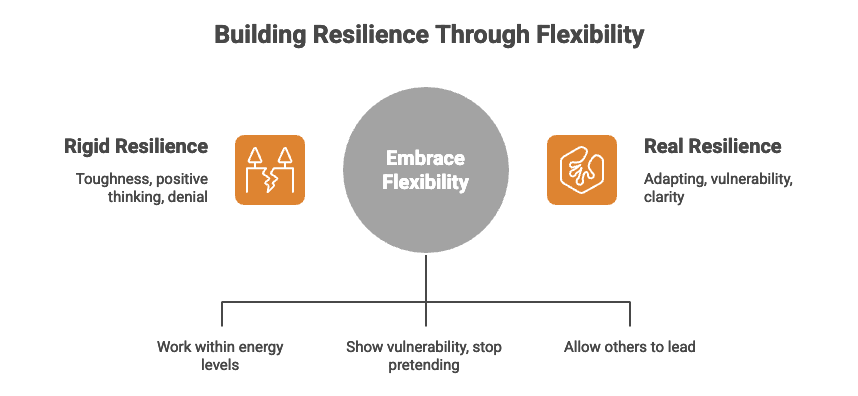
It’s not about toughness or positive thinking or refusing to acknowledge difficulty.
Real resilience is flexibility. Adapting to new realities instead of rigidly insisting that things should be different.
The rigid trees break in storms. The flexible ones bend and survive.
Paul accepted his changing capacity. Some days, he had energy. Some days he didn’t. Fighting that reality just made him miserable and exhausted.
Working within it? That’s resilience.
Here’s what I’m still wrestling with: How much of business ownership is performance? Pretending we have it all figured out? Acting invincible?
What would happen if more of us admitted we don’t have all the answers?
Paul’s company thrived when he stepped back. His relationships deepened when he showed vulnerability. His clarity improved when he stopped trying to control everything.
I don’t think that’s a coincidence.
The Questions I’m Sitting With
I’m not an expert on cancer or business resilience. I’m a student trying to understand how people navigate impossible situations with some grace.
Paul’s story raises questions I can’t answer:
How do we build companies that can survive without us? Not because we want to be unnecessary, but because it’s healthier for everyone?
What if delegation isn’t a weakness? What if it’s the strongest thing we can do?
How do we redefine success to include things that actually matter – health, relationships, presence – not just revenue?
When do we stop pretending to be invincible and start being honest about our limits?
Paul doesn’t have all these answers either. He’s figuring it out as he goes. Some days are better than others.
But he’s doing something most business owners resist: he’s letting people help. He’s being honest about what’s hard. He’s building a company that can flex when he needs to rest.
It is what it is. And what he’s doing with what is? That’s where his agency lives.
I’d love to know: What does resilience look like in your life? Have you had moments where stepping back actually made things stronger? What would it take for you to let people see you’re not invincible?

Facebook
LinkedIn
Youtube