Resilience in the Not-Knowing Moment
About this Video:
Look, I’m 73 and I’m currently learning that resilience isn’t that shiny “bounce back” version we see on motivational posters. Between two cancers and the realization that I’ll never click into my skis again, I’m finding that real resilience is actually a lot messier it’s the quiet, uncomfortable act of sitting in total ambiguity when you’d rather be “fixing” things. In this video, I talk about what it feels like to be a lifelong “doer” who is suddenly forced to wait in the “not knowing” while even the experts don’t have all the answers. I don’t have this mastered, some days I’m just an angry guy staring at a PSA number but I’m learning that being okay with the mess is where the real strength is. What about you; what’s demanding more flexibility than you knew you had right now?
Transcription:
Look, I wanna talk with you about resilience, not the motivational poster version where you get knocked down and bounced right back up like nothing happened. The real version, the messy version, the kind I’m learning to build at 73 while dealing with two cancers. Here’s what I’m discovering. Resilience isn’t about being tough.
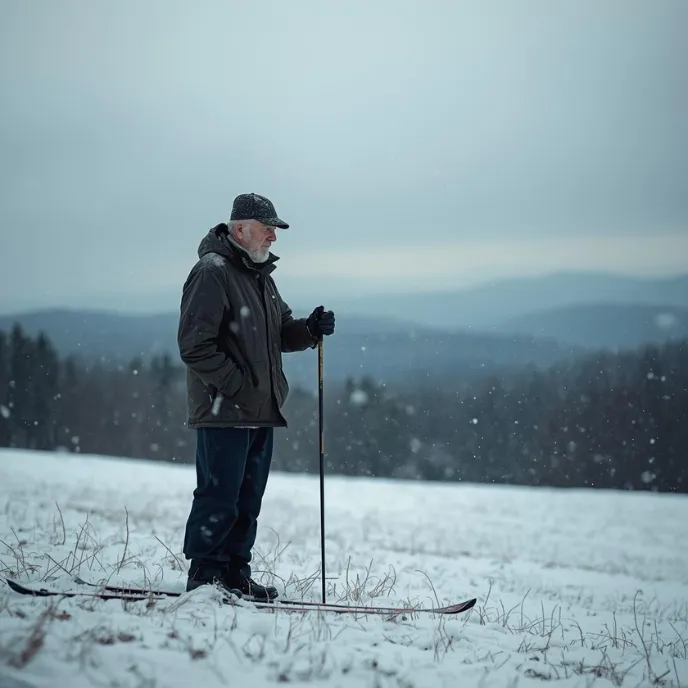
It’s about being flexible enough to bend instead of break. Let me paint you a picture what this actually looks like. I’ve skied 20 to 30 times every winter for most of my adult life. That’s not just a hobby. It’s been my identity, my reason to get outside, my way of staying connected to Vermont winters, this year?
I’m not skiing at all and will never do so again. I have two cancers. I had a brain bleed a couple years ago. Treatment that wipes me out and the slow realization that activities I built my life around might be gone. And some of them really are. And here’s the thing, nobody tells you. You can’t skip the grief part.
You can’t just jump to acceptance and positive thinking. You have to actually feel the loss first. Sit with it. Be angry and sad about what’s changing, but here’s where it gets interesting. You know, my PSA is higher than it should be. That’s a marker for prostate cancer activity, and I have no answers as to why my radiologist wants to watch and wait.
This goes against every instinct I have. I’m a doer. When something’s wrong, you fix it. You don’t just sit there watching it stay wrong. But that’s exactly what I’m being asked to do, and I’m learning something crucial. Sometimes the most resilient thing you can do is nothing, not because you’re giving up, but because you’re strong enough to sit in discomfort of not knowing, without forcing action, just to make yourself feel better.
That’s a completely different muscle than the one I built in business. The push through, make it happen. Take control muscle is well developed. The sit back be okay with ambiguity muscle. That one’s been atrophying for years. Here’s what really tests your resilience when the experts don’t have answers either.
I have two cancer simultaneously. It’s rare enough that even Dana-Farber, one of the best cancer centers in the country, isn’t entirely sure how to handle it. And on top of that, my lymphoma is shrinking for no apparent reason without treatment. My doctors can speculate, but they don’t really know why either, which means I’m sitting in this space of complete unknowing, not the kind where answers are coming soon, the kind where medical science itself doesn’t have clear answers.
I could spend every moment obsessing over what I don’t know, demanding more tests. More certainty, or I can accept I’m in genuinely unknowable territory and learn to live there without letting it destroy me. So here’s what I’m learning about control. I can’t control having cancer, but I can control how I respond to it.
I can’t control my PSA numbers, but I can control showing up for appointments. I can’t control whether I’ll ski again, but I can control whether I spend this winter finding something meaningful or just waiting miserably. The distinction matters. Focusing on what you can’t control creates helplessness.
Focusing on what you can control creates agency even if that control is smaller than you want. But let me be clear about something. I don’t have this mastered. Some days I handle things with grace. Other days I’m angry, scared, and completely overwhelmed. Both of those are okay. Resilience isn’t about becoming some Zen master never struggles.
It’s about developing the flexibility to adapt when life demands it. It’s about sitting with uncertainty without letting it paralyze you. It is about grieving what’s lost while staying open to what’s possible. It’s about learning when to push and when to wait, and here’s the hard truth. No one else can build your resilience for you.
Support helps, love helps, but the actual work, that’s something you have to do yourself. At 3:00 AM when I can’t sleep because my mind is racing, that’s when I have to do the work. When my PSA numbers come back higher than I expected and I have to sit with not knowing what that means, nobody can do that sitting in front of me.
Right now, I’m sitting in a lot of unknowns. I don’t know what my elevated PSA means. I don’t know why lymphoma is shrinking. I do know I won’t ski again. Two years ago, that level of uncertainty would’ve driven me crazy. Now I’m learning to live here in the not knowing. Some days that feels manageable.
Other days it feels impossible. Both are power to building resilience. So here’s my question for you. What are you doing to build resilience around you right now? What’s demanding more flexibility than you knew you had? Drop a comment and let me know, not the polished version, the messy, I’m still figuring this out version because that’s where the real learning happens.
So let’s figure this out together and become more resilient while we’re at it. So thanks a lot.
