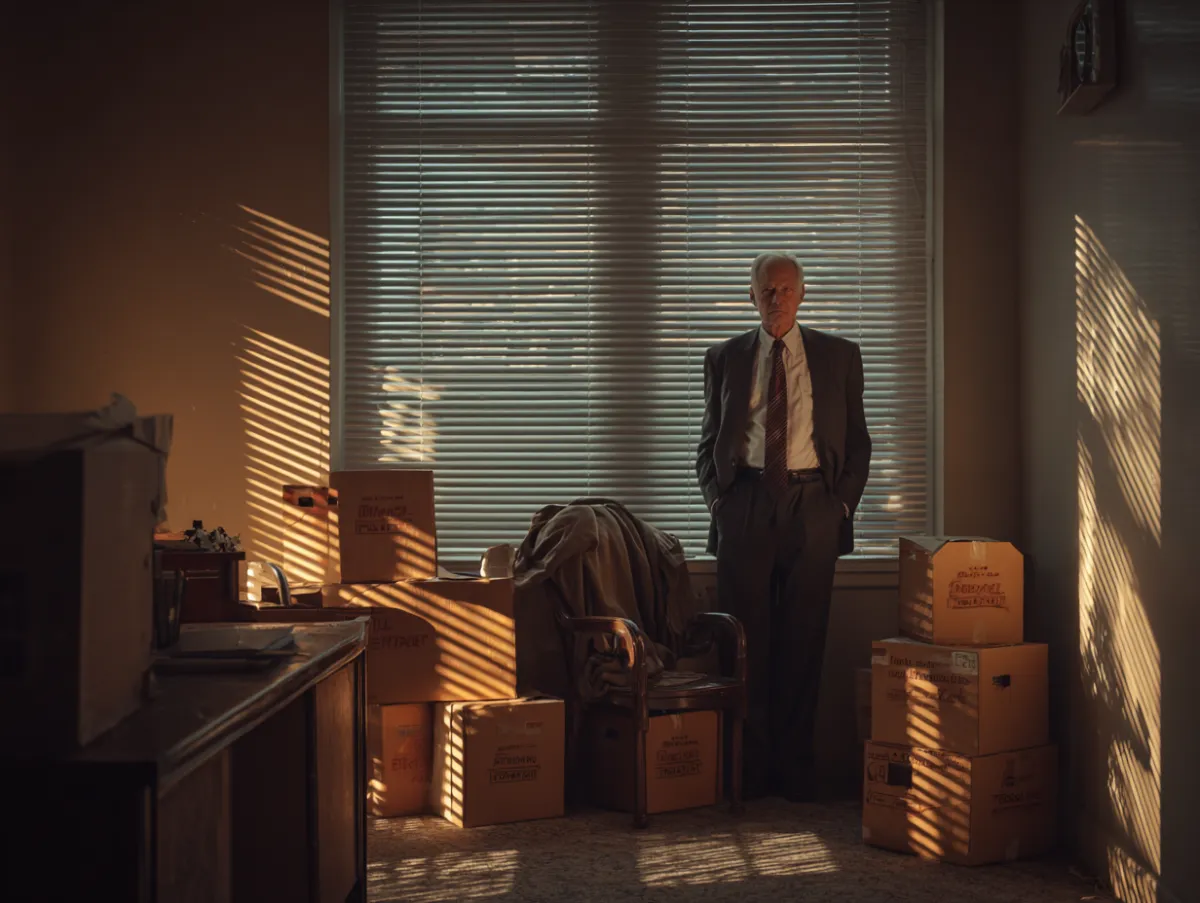
How to Retire Differently Than the Average Business Owner
The Retirement Lie We All Believe
Let me tell you about the biggest lie in retirement planning.
Financial advisors will sit you down with their fancy calculators and projections. They'll ask about your desired lifestyle, your travel plans, and your healthcare needs. They'll show you charts and graphs proving you have enough money to maintain your standard of living for the next 30 years.
And then they'll shake your hand, congratulate you on being prepared, and send you on your way.
Here's what they won't tell you: having enough money is the easy part.
The hard part? Figuring out who the hell you are when you're not "the business owner" anymore.
I've watched dozens of successful business owners retire with more than enough money to live comfortably. And I've watched many of them fall apart within the first year. Not financially. Psychologically.
Because retirement isn't actually about having enough activities to fill your time or enough money in the bank. It's about identity reconstruction. And most of us are completely unprepared for that work.
The Identity Crisis Nobody Warns You About
Think about how you introduce yourself at parties or networking events.
"I'm the founder of..." or "I own a business that..." or "I run a company in the..."
Your business isn't just what you do. For most business owners, it becomes who you are.
You've spent 20, 30, maybe 40 years being "the decision-maker," "the boss," "the person everyone comes to for answers." Your entire social structure is built around business relationships. Your daily rhythm is dictated by business needs. Your sense of purpose comes from building something, solving problems, and leading a team.
Then you retire.
And suddenly you're... what? A guy who plays golf? Someone's grandpa? A person with a lot of free time and no clear purpose?
The phone stops ringing. Not gradually. Immediately.
Nobody needs your opinion on that strategic decision. Nobody's asking you to approve the budget. Nobody's coming to you with problems that need solving.
And it's disorienting as hell.
I remember the first few months after I stepped back from active business ownership. I'd wake up and check my phone expecting emails that needed responses, calls that needed returning, fires that needed putting out. Instead? Nothing. My calendar was completely empty.
At first, I told myself it was relaxing. Then it became uncomfortable. Then it became something close to panic.
Who was I if I wasn't the guy people called when they needed answers?
Why the Standard Retirement Script Doesn't Work
So what do most people do when they hit this identity crisis?
They follow the standard retirement script: travel, golf, hobbies, grandkids, maybe some volunteering.
And look, there's nothing wrong with any of those things. I love traveling. I enjoy spending time with family. These are good parts of a full life.
But here's the problem: if you've spent 40 years building complex businesses, solving sophisticated problems, and leading teams through challenges, playing golf four times a week and taking occasional cruises probably isn't going to feel like enough.
It's not that these activities are bad. It's that they're not sufficient to replace the intellectual challenge, the sense of purpose, and the identity you derived from business ownership.
You can't replace 60 hours a week of meaningful work with 60 hours a week of leisure activities and expect to feel fulfilled. The math doesn't work that way.
I've talked to too many retirees who describe their lives in terms that sound eerily similar to depression: "I'm just going through the motions." "Nothing feels important anymore." "I'm bored, and I don't know what I actually want to do."
They have the money. They have the freedom. They have the activities. But they're missing the thing that actually matters: a sense of purpose and identity beyond "former business owner."
Retiring Differently Starts Before You Retire
Here's something I wish I'd understood earlier: you can't wait until retirement to figure out retirement.
The time to start working on your post-business identity is while you're still in business.
This doesn't mean you need to have everything figured out. But it does mean you need to start asking different questions and making different investments with your time and energy.
Start building relationships outside of business. Most business owners have friend groups that are entirely work-focused. When you retire, those relationships often fade because you no longer have the shared context. Start now investing in friendships that aren't about deals, partnerships, or networking. Find people you actually enjoy spending time with, not people who might be useful to your business.
Develop interests that have nothing to do with work. I'm not talking about golf or fishing (though those count if you genuinely love them). I'm talking about things that engage your mind and give you a sense of growth. Maybe it's learning an instrument, studying history, taking up writing, or getting involved in community issues. Something that makes you think and learn, not just pass time.
Experiment with giving away control. Start practicing what it feels like to not be the final decision-maker. Delegate more. Let your team make calls without your input. Watch what happens when you're not in the room. This is hard for most business owners, but it's essential preparation for eventually not being in the room at all.
Explore what "contribution" means beyond business. What do you actually care about? Not what you're supposed to care about or what looks good on paper, but what genuinely matters to you? Environmental issues? Education? Mentoring young entrepreneurs? Supporting your local community? Start getting involved now, even in small ways.
The goal isn't to have your entire post-retirement life mapped out. The goal is to start building the foundation for an identity that isn't solely dependent on business ownership.
These are just some of the questions I want you to ask yourself. When I tried answering them, the answers were totally unsatisfying.
Redefining Retirement as Transition, Not Ending
Here's a mindset shift that helped me: stop thinking about retirement as an ending and start thinking about it as a transition.
You're not retiring from something and into nothing. You're transitioning from one phase of contribution to another.
The business ownership phase gave you certain things: intellectual challenge, social connection, sense of purpose, daily structure, and identity. The question isn't "How do I fill all this empty time?" The question is "How do I meet those same underlying needs in different ways?"
Intellectual challenge: This might come from learning new things, mentoring others, solving problems in different domains, or writing about what you've learned.
Social connection: This comes from intentionally building and maintaining relationships that aren't centered on business transactions.
Sense of purpose: This comes from figuring out what you actually care about and finding ways to contribute to it.
Daily structure: This comes from creating rhythms and routines that give shape to your days without the external structure of business demands.
Identity: This is the big one. This comes from developing a sense of self that's based on who you are rather than what you do.
Notice that none of this is about activities. It's about understanding what you actually need and then finding ways to meet those needs in your new life phase.
For me, the sense of purpose returned when I started working on The Long Strange Trip and many of the alternative ways of looking at things.
The Integration Approach to Retirement
Here's what I've come to believe: the best retirement isn't about separating your business years from your retirement years. It's about integration.
What if instead of seeing your life as "40 years of grinding, then 20 years of relaxing," you saw it as a continuous arc where different phases build on each other?
Your business years taught you things. You developed skills, accumulated wisdom, learned hard lessons, built relationships, made mistakes, and figured out how to recover from them.
What if retirement were about taking all of that accumulated experience and finding new ways to apply it that don't require 60-hour workweeks?
This might look like:
Selective advising: Not going back to full-time consulting, but offering strategic guidance to a small number of companies or entrepreneurs you actually care about helping.
Teaching and mentoring: Sharing what you've learned with the next generation, whether that's through formal teaching, informal mentoring, or writing.
Applying business skills to different problems: Using your strategic thinking, problem-solving abilities, and leadership experience to address community issues, nonprofit challenges, or personal projects.
Creating something new: Not another business that consumes your life, but something that lets you build and create without the pressure of needing it to be your primary income.
The key is that these aren't just ways to "stay busy." They are ways to continue contributing and growing while having more control over your time and energy than you did as a full-time business owner.
But be aware that ageism will creep in, and if you decide to mentor the next generation, this could be an issue for you.
The Hard Truth About Uncertainty
Let me be honest about something: I'm 73 years old, I've been navigating my own transition away from business, and I still don't have this completely figured out.
Some days, I feel clear about my next chapter. Other days, I'm wondering what the hell I'm doing with my time and whether any of it matters.
And you know what? I think that's actually normal.
The uncertainty doesn't mean you're doing it wrong. It means you're doing something genuinely difficult that requires ongoing adjustment and reflection.
The business world gave us clear metrics: revenue, profit, growth. Retirement doesn't have those same clear measures of success. You have to define your own metrics. And those metrics might change as you go.
That's uncomfortable for people who are used to having clear goals and measurable outcomes. But it's also kind of freeing once you accept it.
What "Retiring Differently" Actually Means
So what does it actually mean to retire differently?
It means acknowledging that the standard script probably won't work for you, and that's okay.
It means doing the hard work of identity reconstruction before you're forced into it.
It means understanding that retirement isn't about stopping or relaxing – it's about transitioning to a different way of contributing and being.
It means being honest about what you actually need (intellectual challenge, purpose, connection) rather than just filling time with activities.
It means giving yourself permission to experiment, to not have it all figured out, to try things and change direction.
It means building relationships and interests now that will sustain you later.
And most importantly, it means seeing retirement not as the end of your productive life but as a transition to a different kind of productivity – one where you have more freedom to choose what you contribute to and how.
Start the Conversation Now
If you're still years away from retirement, start having these conversations with yourself now. What do you actually care about beyond business? Who are you when you're not "the business owner"? What would make retirement feel meaningful rather than just comfortable?
If you're approaching retirement or already in it, be honest about whether the standard script is actually working for you. If it's not, that doesn't mean you're failing at retirement. It means you need to find a different approach.
And if you're in the middle of the transition, struggling with the identity piece, know that you're not alone. Most successful business owners go through this. The ones who do it well are the ones who acknowledge it's hard and start actively working on building a new sense of identity and purpose.
Retirement done differently isn't about having all the answers. It's about asking better questions and being willing to do the work of figuring out who you are beyond your business card.
Let's figure it out together. I would love to hear your thoughts on leaving the working world. Is it something you want to consider, or are you going to die with your boots on, still running your business? Let me know in the comments below.

Facebook
LinkedIn
Youtube