When the Alarm Clock Becomes Optional: What Nobody Tells You About Retirement
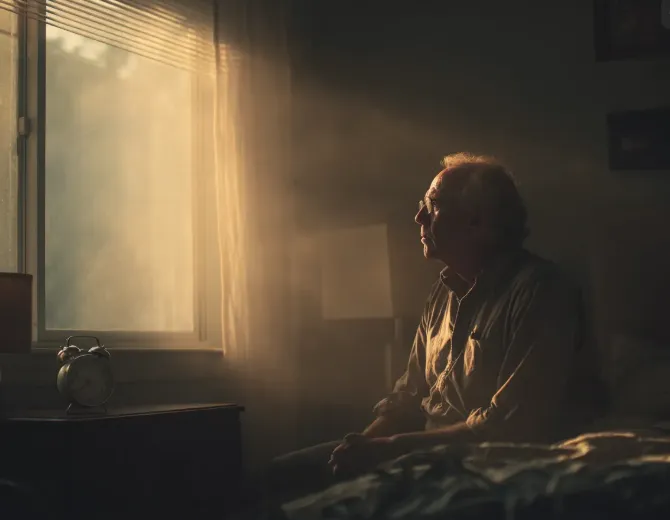
You wake up one morning, and something’s different.
The alarm didn’t go off because you no longer need it. There’s no urgent email demanding your response. No team meeting in an hour. No deal that needs to be closed by Friday.
For decades, work shaped your days. It gave you purpose, structure, and a clear sense of who you were. You were the business owner, the executive, the person people came to when decisions needed to be made.
Now you’re retired. And that structure is gone.
Here’s what I want to talk about: what actually happens during this transition. Not the sanitized version from retirement planning brochures. The messy, complicated, often uncomfortable reality of figuring out who you are when you’re not “the work guy” anymore.
I’m navigating this myself at 73, and I’m also watching friends go through it. One of them is Alan Newman, a recent guest on my podcast who spent decades building businesses like Magic Hat Brewery and Seventh Generation. His experience has taught me things about this transition that I wish someone had told me earlier.
The Reality Nobody Mentions in the Planning Meetings
Here’s what your financial advisor won’t tell you about retirement.
They’ll show you charts proving you have enough money to maintain your lifestyle for the next 30 years. They’ll ask about travel plans and healthcare needs. They’ll congratulate you on being financially prepared.
What they won’t mention is that having enough money is actually the easy part.
The hard part? Figuring out who the hell you are when you’re not “the business owner” or “the executive” anymore.
I’ve watched successful people retire with more than enough money to live comfortably. Then I’ve watched many of them fall apart within the first year. Not financially. Psychologically.
You think you’ll travel and relax, and finally read those books. Maybe take up painting or learn to play the guitar. Then six months pass. You’ve traveled to a few places. You’ve played some golf. You’ve read a couple of books.
And you’re sitting there thinking: Is this it?
The days start blending together. You realize that without work, you’ve lost more than just a paycheck. You’ve lost your purpose. Your community. The thing that made you feel useful and needed.
That’s the part nobody prepared you for.
This might sound pathetic, but I get it. When your identity has been wrapped up in work for four decades, losing it feels like losing yourself. It certainly felt that way to me, and more than once.
When Your Body Starts Making Decisions Without Asking
Alan Newman knows this feeling intimately. At 72, things started changing in ways he couldn’t ignore.
His brain wasn’t processing information the same way. Projects that used to be effortless became struggles. He could still create ideas – his mind remained sharp and creative. But executing those ideas? That became increasingly impossible.
Reading legal documents, something he’d done his entire career, became exhausting. Following multiple projects at once was no longer realistic. The gap between what his mind could conceive and what he could actually execute kept widening.
This is where retirement gets interesting in ways the planning sessions never cover.
You have to figure out what you can still do. What you want to do. And how to make peace with the difference between those two things.
The physical and mental shifts that come with age are real. They’re not something you can just push through with willpower. Alan describes hitting a wall around 75. He watched his stepfather fight against aging for five years, making everyone around him miserable.
Alan decided he didn’t want that path.
But deciding you don’t want to fight reality and actually accepting reality? Those are two very different things. For Alan, it took two to three years to reach a place of genuine acceptance. To stop fighting what was and start embracing what is.
I’m dealing with my own version of this. Managing loss became a challenge, and who I was and what I wanted to do became more than fuzzy. Then, I found The Long Strange Trip project and I once again had a purpose I could be excited about.
Loss wasn’t just about losing an activity or ten. It was about losing a piece of who I thought I was.
The Hero’s Journey You Didn’t Sign Up For
Joseph Campbell wrote about the hero’s journey – that pattern where you leave the ordinary world, face trials, and return transformed. Retirement is its own kind of hero’s journey, except nobody tells you that’s what you’re signing up for.
You leave the world of work (the ordinary world). You enter this confusing transition space where nothing feels certain (the trials). We call this space the liminal space. And eventually, you emerge with a new sense of self (the transformation).
The problem is that most people expect retirement to be the reward at the end of the journey. They don’t realize it’s actually the beginning of a whole new journey that requires its own navigation.
Alan’s journey took him through multiple reinventions. From rural medicine to yacht timeshares to direct mail to manufacturing. Each transition required learning new skills and adapting to new circumstances.
But this final reinvention proved the hardest. Previous transitions had a thread connecting them – they were all about building community and creating something. This transition meant slowing down and accepting limitations.
The hero’s journey framework helps make sense of this. You’re being called to adventure whether you want it or not. You’ll face challenges and discover things about yourself. You’ll have mentors and allies (hopefully). And eventually, you’ll return to the world with new wisdom.
But you’re in the middle of it right now. And the middle is always the hardest part.
The Messy Middle Where Most People Get Stuck
There’s a stage in transitions that Bill Bridges calls “the messy middle.” Susan Bradley calls this Passage. It’s the space between ending one chapter and starting another. You’re not who you were, but you’re not yet who you’ll become.
Most people get completely lost here.
I got stuck here myself. At 71 and 72, I was planning to get consulting clients. I knew exactly what needed to be done. I did all the planning and strategizing.
But when it came time to actually do the work? I just didn’t.
It took me four years to figure out it was time to move on. Four years of being stuck in that uncomfortable space between who I’d been and who I was becoming.
The problem is that my identity was wrapped up in work. When work ends, I lost the community that came with it. The phone stops ringing. People stop returning calls.
Alan experienced this dramatically when he left Seventh Generation. He’d built incredible connections in the sustainable business world. He could reach almost anyone with one phone call.
Then he left. And nobody answered his calls anymore.
That’s when he learned not to read his own press clippings. He had to understand that he was just a regular person, not someone special because of his business position.
It was a humbling moment. But it also forced him to look for other ways to find meaning and satisfaction.
Finding Your Way Forward (Or At Least Trying To)
So how do you actually navigate this transition?
I don’t have all the answers. But I’m learning some things by watching Alan and going through my own version of this.
It starts with accepting where you actually are. Fighting reality only makes you miserable. Alan found that he needed to use his brain and creative drive differently. He took up more travel. He started riding motorcycles more often. He read more books.
But he also found ways to stay involved in business without the pressure of execution. He works with a local business where someone else handles the day-to-day management. He’s launching a podcast called “Too Busy to Die.”
The key seems to be finding things where you can contribute without carrying full responsibility. You can comment and weigh in. But you don’t have to make sure everything gets done perfectly.
This is fundamentally different from your working years. Back then, you thrived on responsibility. You wanted to control outcomes and drive results.
Now you’re learning to let go. To accept that your role has changed.
And honestly? That’s really hard.
For me, the shift has been toward writing and creating content about these transitions. I can contribute ideas and perspectives without needing to manage teams or drive execution. Some days this feels like enough. Other days, I miss the intensity and impact of running a business.
The Arrogance You Have to Release
Here’s something interesting about entrepreneurs and executives in retirement: your greatest strength becomes your biggest obstacle.
For Alan, that strength was arrogance. Not arrogance in a negative sense, but the confidence to think you can pull off anything. When Boston Beer called about starting five businesses in five years, Alan never questioned whether he could do it.
That same confidence kept him pushing at Arts Riot during the pandemic, even with financial partner problems and permitting delays. He believed he could make it work because that’s what he’d always done.
But at 75, he didn’t have it anymore.
Recognizing that truth was brutal. It meant accepting that he couldn’t be who he’d always been. The arrogance that built businesses became the thing he had to let go.
That’s a tough pill to swallow for anyone who’s been successful.
The Community That Vanishes
Work gives you community, whether you realize it or not. Colleagues, clients, vendors, partners. People who share your world and understand what you do.
When you retire, that community vanishes almost overnight.
You might have friends outside work. But work relationships are different. They’re based on shared purpose and mutual respect for what you do professionally.
Alan found this out the hard way after leaving Seventh Generation. The network he’d built over decades dissolved within months. People who’d always taken his calls suddenly weren’t available.
Rebuilding community after retirement takes real effort. You can’t just wait for it to happen. You have to put yourself in situations where you’ll meet people and build new connections.
The Question That Keeps You Up at Night
Who are you when you’re not working?
That’s the fundamental question of this transition. For decades, you’ve been the business owner, the executive, the expert. Work defined you.
Now what?
You’re still all those things in terms of experience. But you’re not actively doing them anymore. So who are you now?
This identity work is uncomfortable. It requires sitting with uncertainty. Trying on new versions of yourself. Some will fit. Others won’t. You won’t know until you try.
The new identity isn’t less than the old one. It’s just different.
Getting comfortable with that difference? That’s the work. And it takes time.
I’m still working on this myself. Some days I’m comfortable being “the guy who writes about transitions and uncertain journeys.” Other days I miss being “the wealth manager people came to for answers.”
The transition between these identities is ongoing. Maybe it never fully completes. Maybe that’s okay.
What Actually Helps (Based on What I’m Seeing)
Looking at Alan’s experience and my own, here are some things that seem to make this transition more navigable:
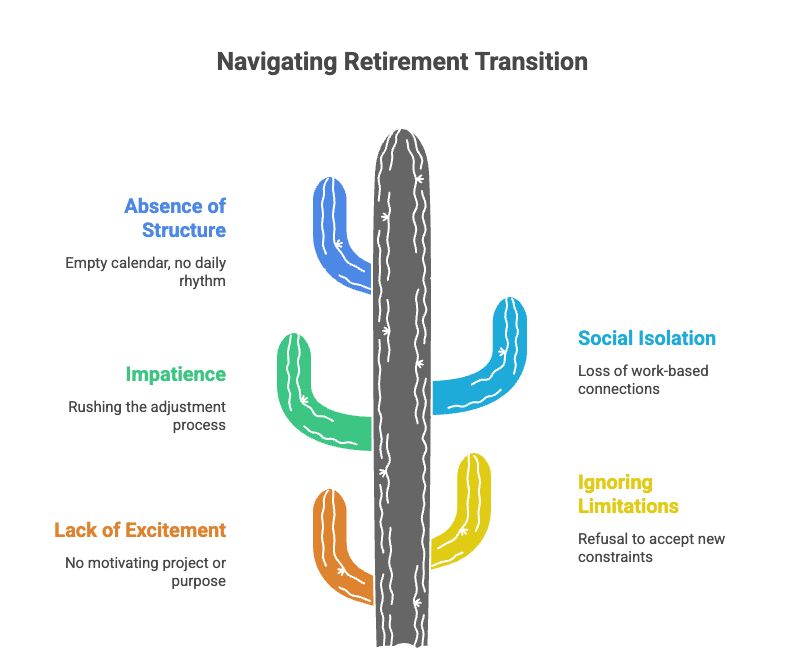
You need something to look forward to. Not vague ideas about travel or hobbies, but a project or purpose that actually excites you. Something that uses your skills and experience in a new way. For Alan, that’s his podcast and advisory work. For me, it’s writing about our six areas of investigation at The Long Strange Trip.
You have to accept your limitations honestly. Alan knew he couldn’t manage a business anymore. The brain fog and physical changes made it impossible. But he could still contribute ideas and guidance. I can’t play tennis anymore, but I can write and think and have conversations. Finding what’s still possible within what’s changed – that’s the key.
Give yourself time. This transition doesn’t happen overnight. Two to three years isn’t unusual. Fighting the process only makes it longer and more painful. I spent four years stuck before I figured out I needed to move on from trying to build and run consulting practice.
Find your community again. Work gave you a built-in group of people. Retirement takes that away. You need to rebuild connections intentionally. This might be the hardest part, but it’s also one of the most important.
Create new structure. One of the biggest challenges is losing the structure work provided. Your calendar goes from packed to empty. You need to create new rhythms and routines that give shape to your days. But they have to matter to you, not just be busy work.
The Part About Endings That Nobody Likes
Sometimes retirement doesn’t come with a clean ending. Maybe you’re pushed out. Maybe health issues force the decision. Maybe circumstances change, and you’re too tired to fight anymore.
These messy endings make the transition harder. There’s grief, anger, and disappointment mixed in with everything else.
Alan’s experience at Arts Riot fell into this category. The business didn’t work out for multiple reasons. Some were external. Some were his own limitations catching up with him.
The ending wasn’t what he wanted. But that difficult ending also clarified things. It showed him that he couldn’t do what he used to do. That acceptance, while painful, opened the door to something different. Something more sustainable for this stage of life.
My own transition has been complicated by cancer. That wasn’t how I planned to step back from work. But here we are. The messy ending forced clarity about what actually matters and what I want to do with whatever time I have left.
Give yourself permission to grieve the endings. Even the messy ones. Especially the messy ones.
You can’t move forward until you’ve processed what you’re leaving behind.
Where We Are Now
I’m still figuring this out. Some days, I feel clear about my next chapter. On other days, I wonder what I’m doing with my time and whether any of it matters.
And you know what? I think that’s actually normal.
The uncertainty doesn’t mean you’re doing it wrong. It means you’re doing something genuinely difficult that requires ongoing adjustment.
Retirement reinvention isn’t about becoming someone completely different. It’s about evolving into the next version of yourself. The version that fits this stage of life.
That version has value, purpose, and things to contribute. It just looks different than what came before.
This is your hero’s journey, whether you wanted it or not. You’ve left the ordinary world of work. You’re navigating the trials of transition. Eventually, you’ll emerge transformed with new wisdom about who you are beyond your career.
But right now, if you’ve just retired? You’re probably in passage. And that’s exactly where you’re supposed to be.
I don’t have a neat conclusion for you. I’m in the middle of this journey myself. But I know this: you can’t just stop working and expect everything to fall into place.
This transition requires intention. It requires being willing to sit with discomfort. It requires accepting where you are physically and mentally, giving yourself time to grieve what you’re leaving behind, and finding new ways to contribute that work within your current reality.
Most importantly, understand that this process is messy. There’s no perfect path forward.
Some days you’ll feel excited about the future. Other days, you’ll miss who you used to be. That’s all part of it.
Let’s figure this out together. Because if there’s one thing I’ve learned, it’s that none of us have to navigate this alone. And, none of us has all the answers, especially me.
What’s your experience with this transition been like? I’d love to hear about it in the comments.

Facebook
LinkedIn
Youtube